There are few places we’ve explored that are as much of a feast for the senses as Portugal. We spent two full months traveling the entire country, from the sun-drenched seafood restaurants of the Algarve to the historic heart of Guimarães in the north. Our mission was simple: to eat everything.
We tried food from tiny tascas in Lisbon, seaside grills serving the freshest catch, and family-run spots deep in the countryside. This guide is the result of that delicious journey. It’s our collection of the traditional Portuguese dishes that you simply have to try, based on our firsthand experience of eating our way across the country.
Traditional Portuguese Food at a Glance
If you’re short on time, here are our top picks to help you decide what to eat first.
Must-Try Dishes: Pastel de Nata, Bifana, Grilled Sardines, Caldo Verde.
Best Seafood: Bacalhau, Cataplana de Marisco, Polvo à Lagareiro.
Best Meat Dishes: Francesinha, Leitão Assado (Suckling Pig), Porco Preto.
Must-Try Drinks: Vinho Verde, Ginjinha.
1. Pastel de Nata (Custard Tarts)
You can’t talk about traditional Portuguese cuisine without starting here. These bite-sized egg custard tarts are a national treasure. The pastry is impossibly flaky, shattering the moment you bite into it, giving way to a warm, creamy custard centre. They’re typically served with a sprinkle of cinnamon on top.
Dave & Deb’s Take: We’ve eaten more of these than we can count, and our rule is simple: eat them warm, preferably standing right outside the bakery. While there are famous spots in Lisbon, almost every local pastelaria has a fantastic version. It’s the perfect companion to a morning coffee.
2. Bacalhau (Salt Cod)
Bacalhau isn’t just a fish; it’s a Portuguese obsession. It’s said there are more than 365 ways to prepare this dried and salted cod—one for every day of the year. Historically, it was the food that sustained sailors on long voyages, but today it’s a beloved staple found in everything from simple fish cakes to elaborate casseroles. WE really got a good taste of it when we were up in Guimaraes. What amazing food scene.
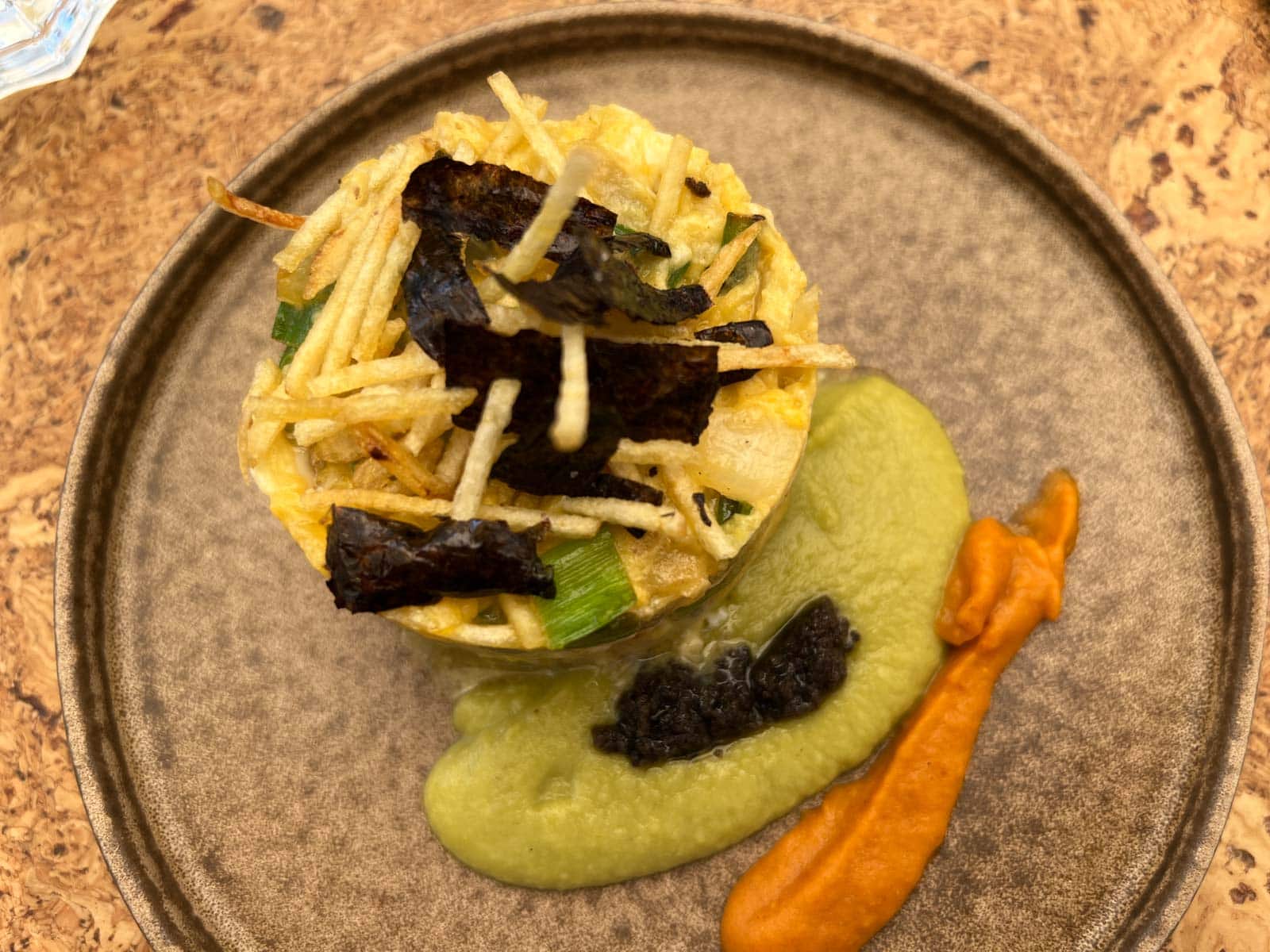
Dave & Deb’s Take: If you’re new to bacalhau, the best introduction is Bacalhau à Brás. It’s a typical Portuguese dish of shredded cod mixed with onions, scrambled eggs, and thinly fried potatoes. It’s delicious, not too fishy, and a perfect way to experience Portugal’s national dish.
3. Bifana (Pork Sandwich)
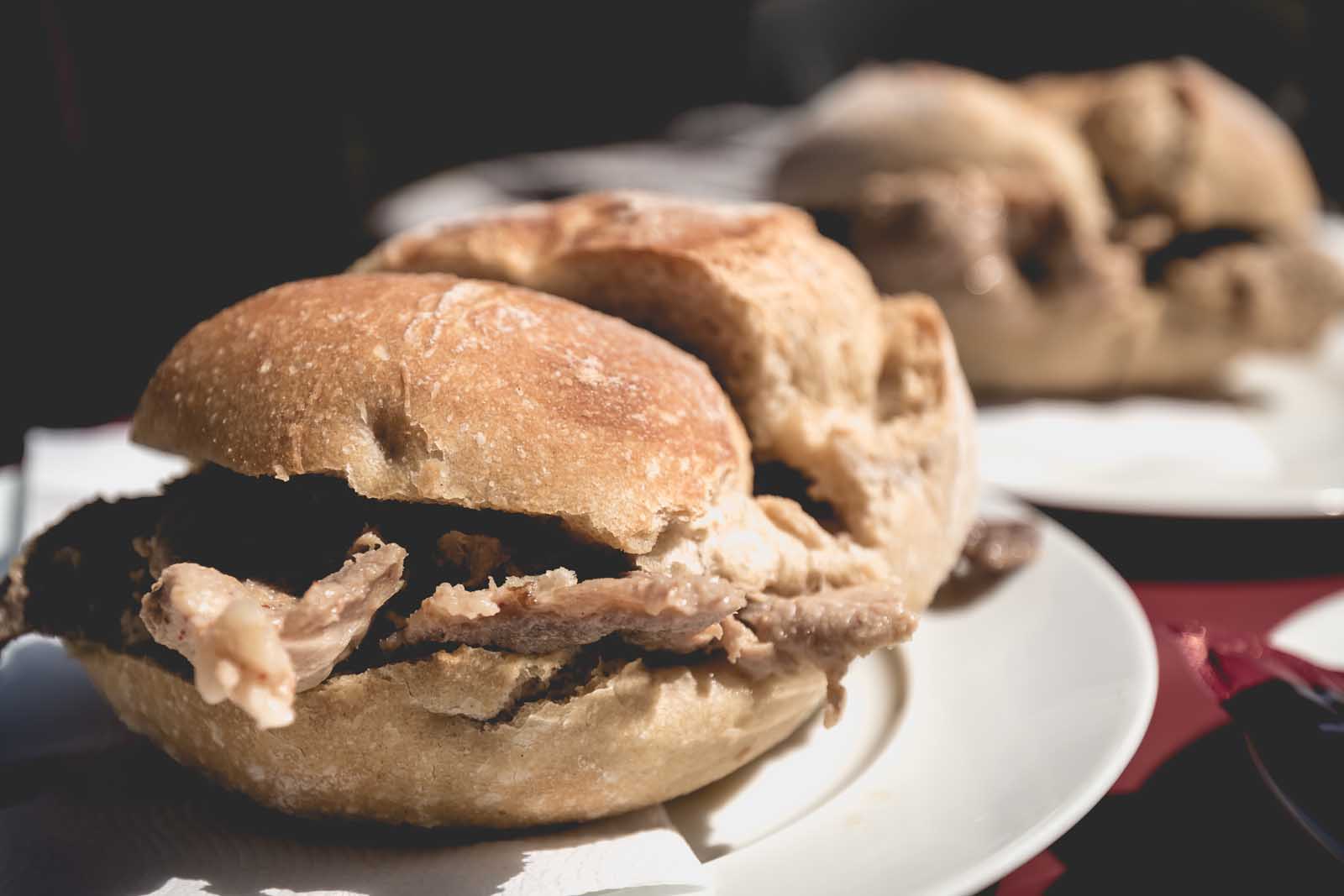
The Bifana is Portugal’s answer to the perfect sandwich. It’s simple, cheap, and incredibly satisfying. The sandwich consists of thin slices of pork marinated in garlic, white wine, and spices, served on a soft, fresh bread roll. It’s the ultimate Portuguese comfort food.
Dave & Deb’s Take: The best Bifanas we’ve had are from tiny, no-frills spots where you can hear the pork sizzling on the griddle. Don’t be shy with the mustard, a squeeze of it cuts through the richness of the pork perfectly. It’s the ideal cheap and cheerful lunch.
4. Grilled Sardines (Sardinhas Assadas)
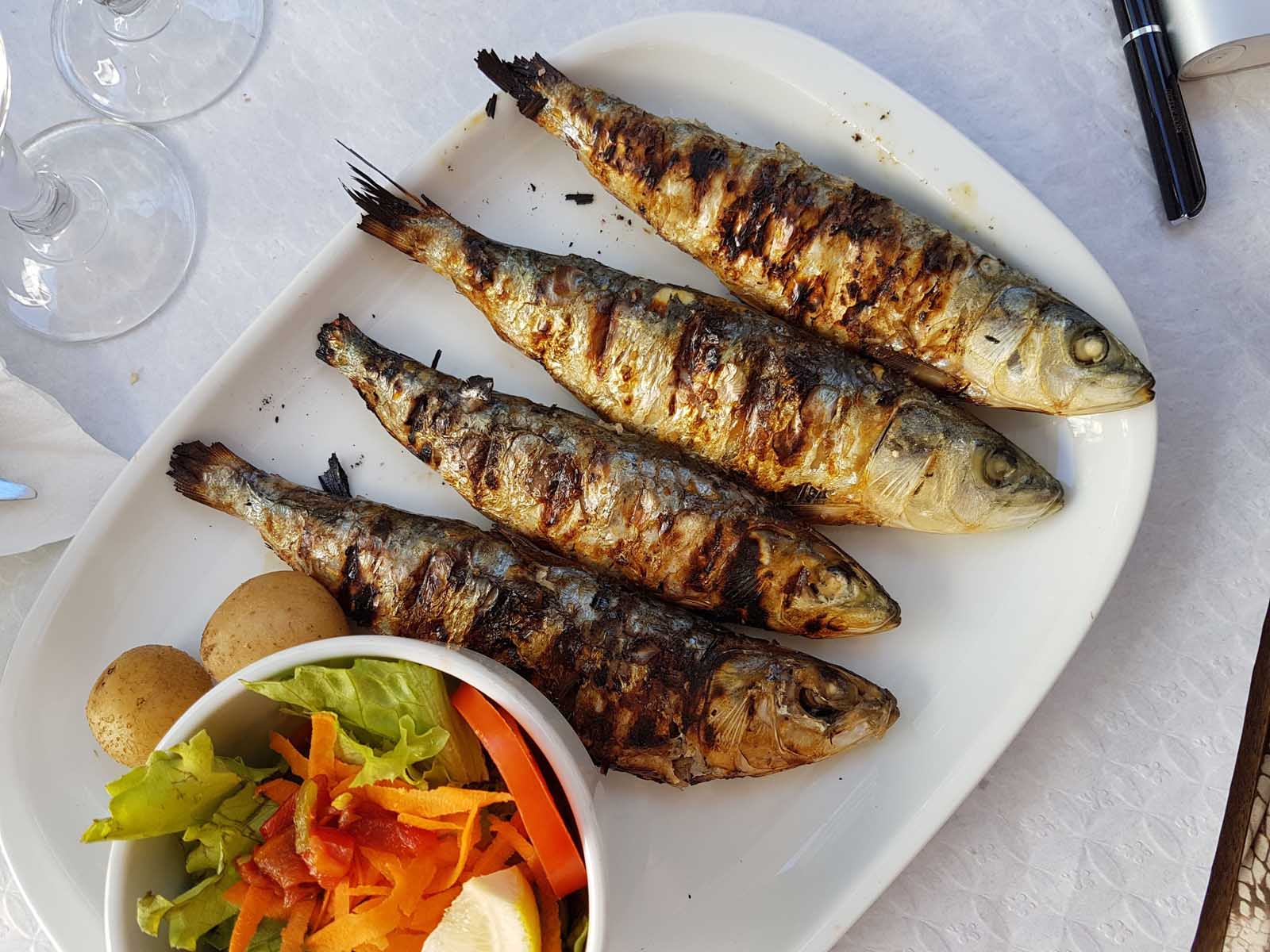
Freshly grilled sardines are a juicy, simple pleasure and a staple of Portuguese cuisine. Historically a dish of the lower classes due to their affordability, they are now a beloved snack or light lunch across the country. The secret is the slow-grilling over charcoal, which keeps the fish moist and packed with flavour.
Dave & Deb’s Take: The best sardines we’ve ever had were from a tiny, no-name grill set up on a side street in the Alfama district of Lisbon during the St. Anthony Festival in June. The whole neighbourhood smelled of grilled fish and charcoal. You eat them with your hands, placing the sardine on a slice of bread to soak up the juices. Don’t be afraid to get messy; it’s all part of the experience.
5. Piri-Piri Chicken
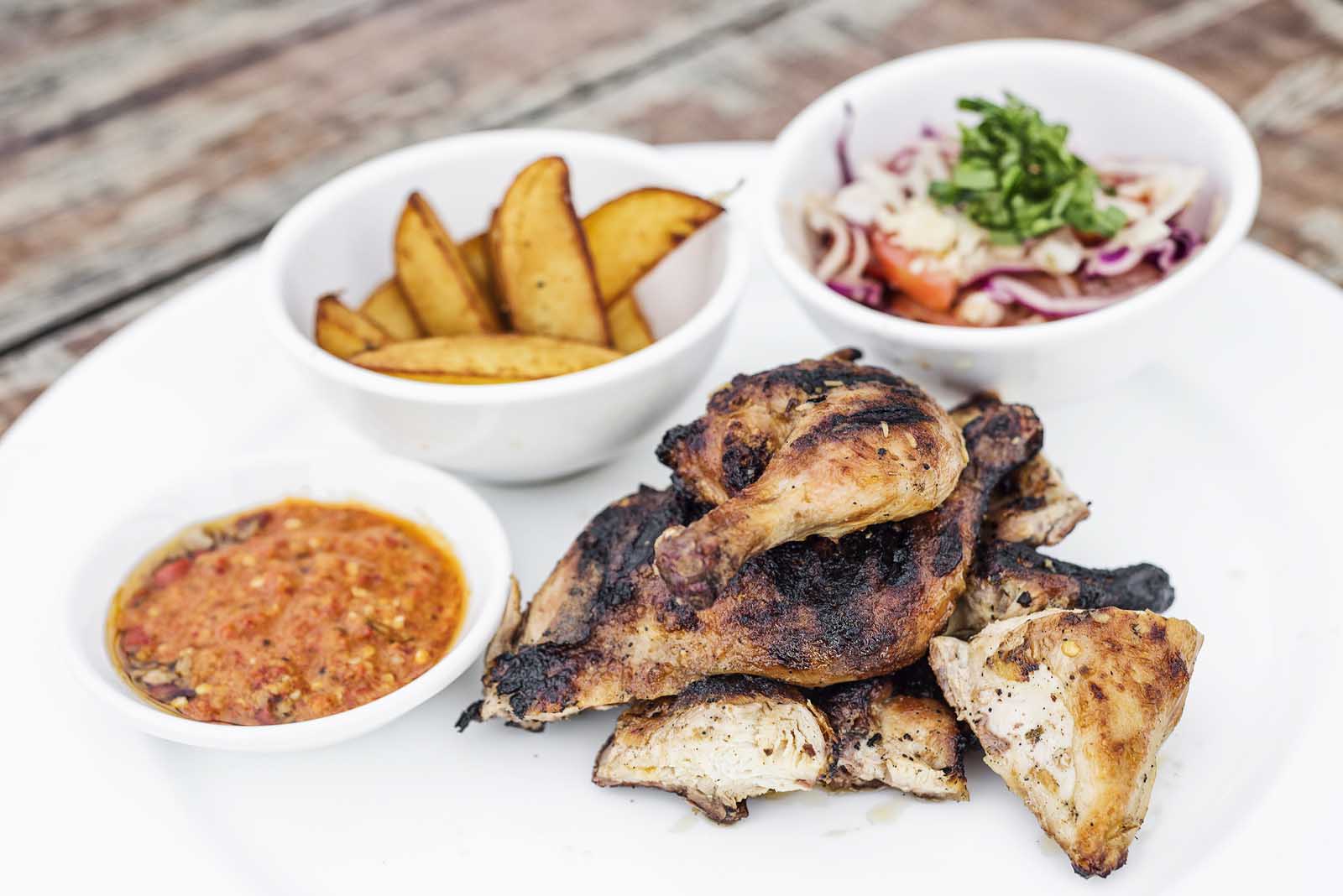
This is one of Portugal’s most famous culinary exports, and for good reason. It’s so much more than just the version you find at chain restaurants. Authentic Portuguese Piri-Piri chicken is spatchcocked, marinated in a flavourful mix of chili, garlic, olive oil, and lemon, and then grilled over charcoal until the skin is crispy and the meat is incredibly juicy.
Dave & Deb’s Take: Every restaurant has its own secret Piri-Piri sauce recipe, and part of the fun is trying different versions. We found the best spots are usually unassuming, local places with a huge charcoal grill out front. It’s typically served with simple fries and a basic salad, which is all you need to accompany the star of the show.
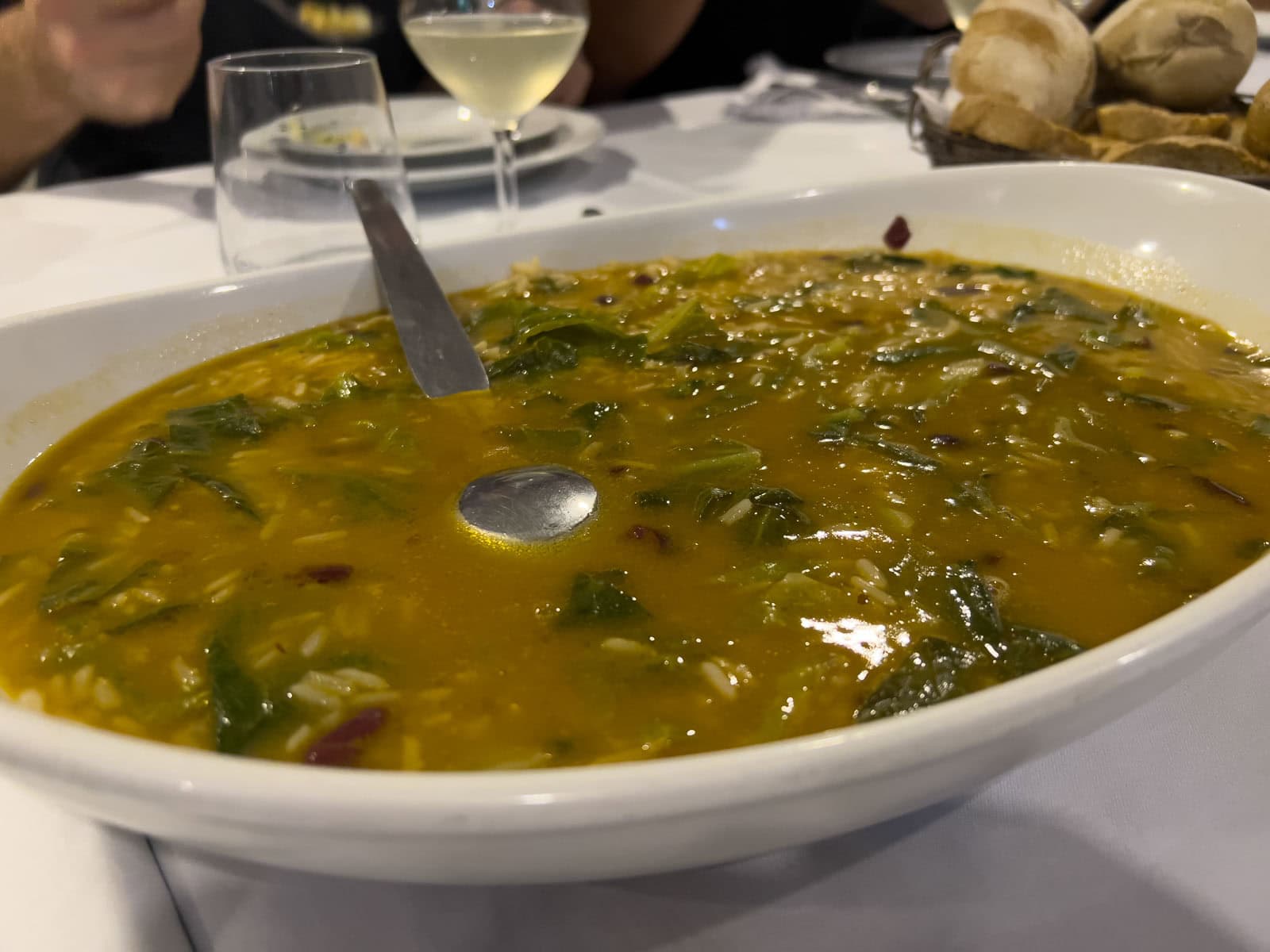
6. Caldo Verde (Green Soup)
Caldo Verde is the ultimate Portuguese comfort food. This warming and flavourful soup originates from the northern Minho region but is now found on menus all across the country. It’s a simple, rustic soup made from potatoes, thinly shredded collard greens (or kale), and slices of smoky chouriço sausage, all brought together with a generous drizzle of olive oil.
Dave & Deb’s Take: This was our go-to starter on cool evenings in Porto. It’s hearty without being heavy, and the combination of the earthy greens and the smoky sausage is perfect. It’s a simple dish, but when it’s done right, it’s one of the most satisfying things you can eat in Portugal.
7. Francesinha (The Queen of Sandwiches)
This isn’t just a sandwich; it’s an event. Hailing from Porto, the Francesinha is a beast of a meal, layered with sausage, ham, and steak, then smothered in melted cheese and a rich, spicy, beer-based tomato sauce. It’s messy, decadent, and absolutely unforgettable. Perfect when accompanied by a side of french fries.
Dave & Deb’s Take: We made a special trip to Porto just to try an authentic Francesinha, and it lived up to the hype. It’s arguably the most popular Portuguese food. Our advice? Come hungry, and don’t wear a white shirt. You’ll find it on menus in Lisbon, but it’s worth waiting to try it in its hometown of Porto.
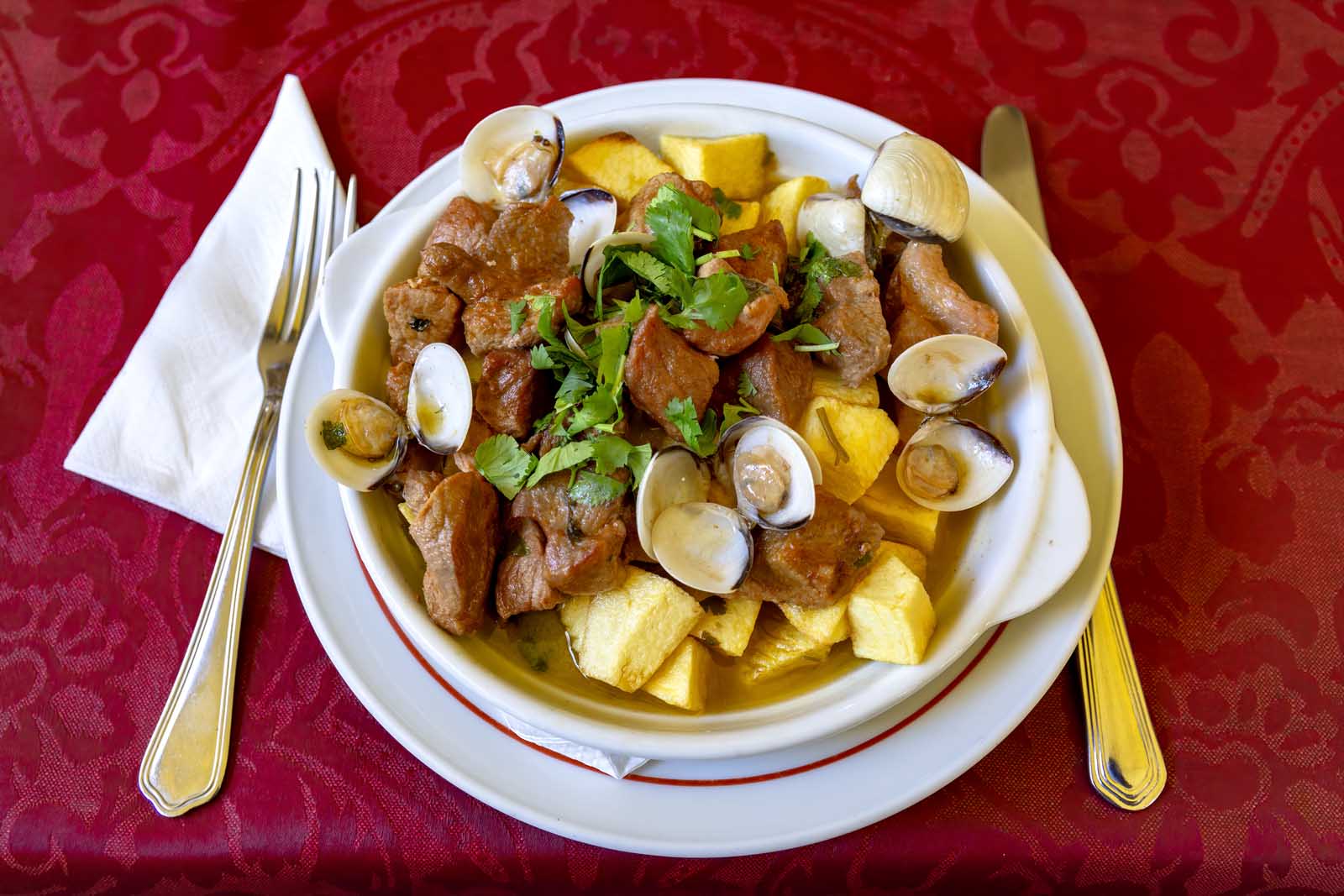
8. Carne de Porco à Alentejana (Pork with Clams)
This is the original Portuguese surf and turf, and it’s a brilliant combination of flavours. The dish combines tender chunks of pork marinated in wine and garlic with fresh clams, all served over a bed of fried potatoes and topped with fresh cilantro. It originated in the Algarve region but is now a beloved classic across the country.
Dave & Deb’s Take: The first time we saw this on a menu, we were a bit skeptical about the pork and clam combo, but it just works. The salty flavour of the clams perfectly complements the rich pork, and the sauce is incredible for dipping your bread in. It’s a must-try for any adventurous foodie.
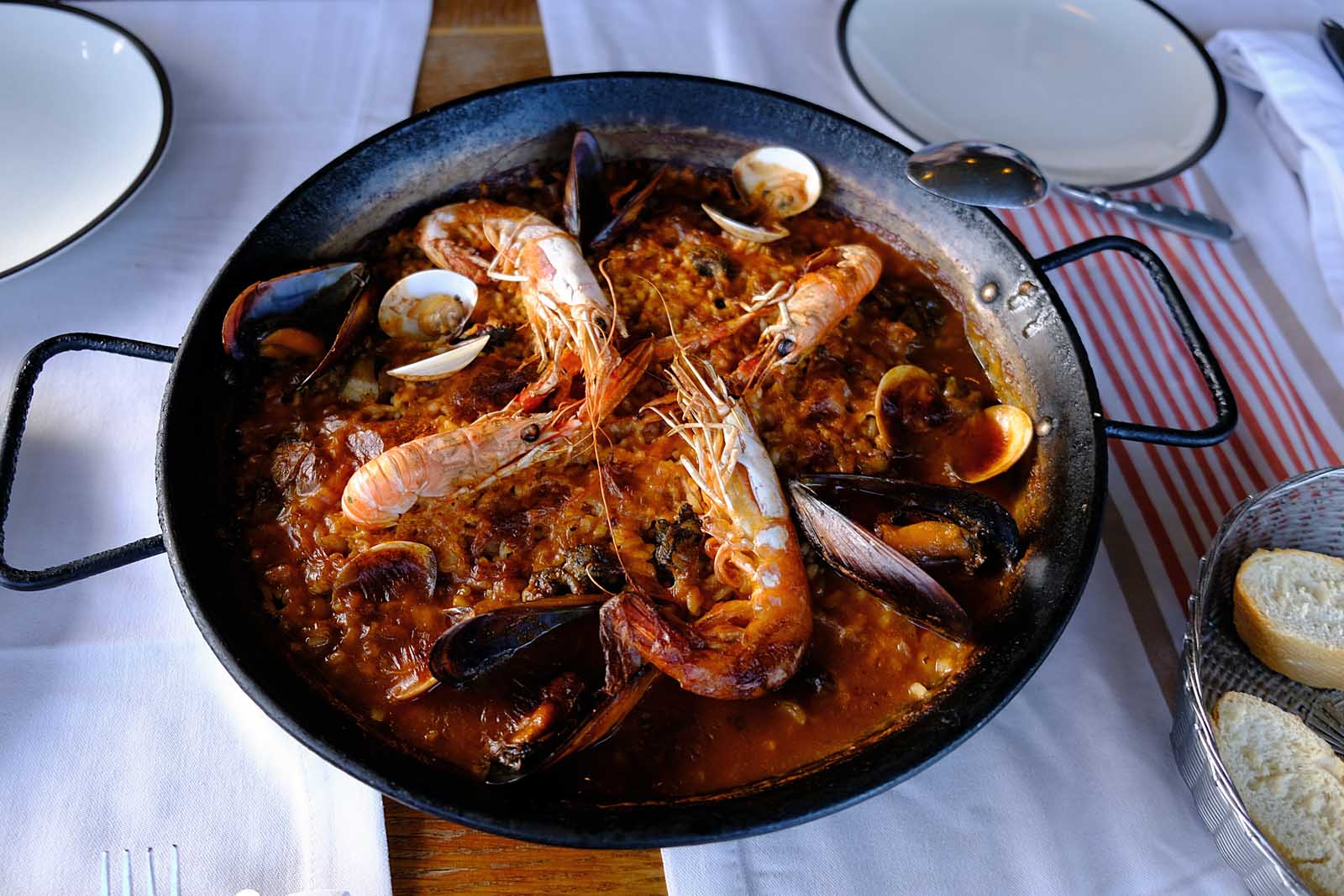
9. Arroz de Marisco (Seafood Rice)
While it might look like a Spanish paella, Arroz de Marisco is a uniquely Portuguese dish. The key difference is that the rice is cooked in a flavourful broth until it’s much looser and more stew-like than a paella. It’s packed with a generous amount of seafood, typically including prawns, mussels, clams, and squid.
Dave & Deb’s Take: This is a fantastic dish to share. It usually comes to the table in a large clay pot, steaming and fragrant. We love the soupy consistency of the rice, which is packed with the flavour of the sea. It’s a perfect meal for a long, lazy lunch with a bottle of Vinho Verde.
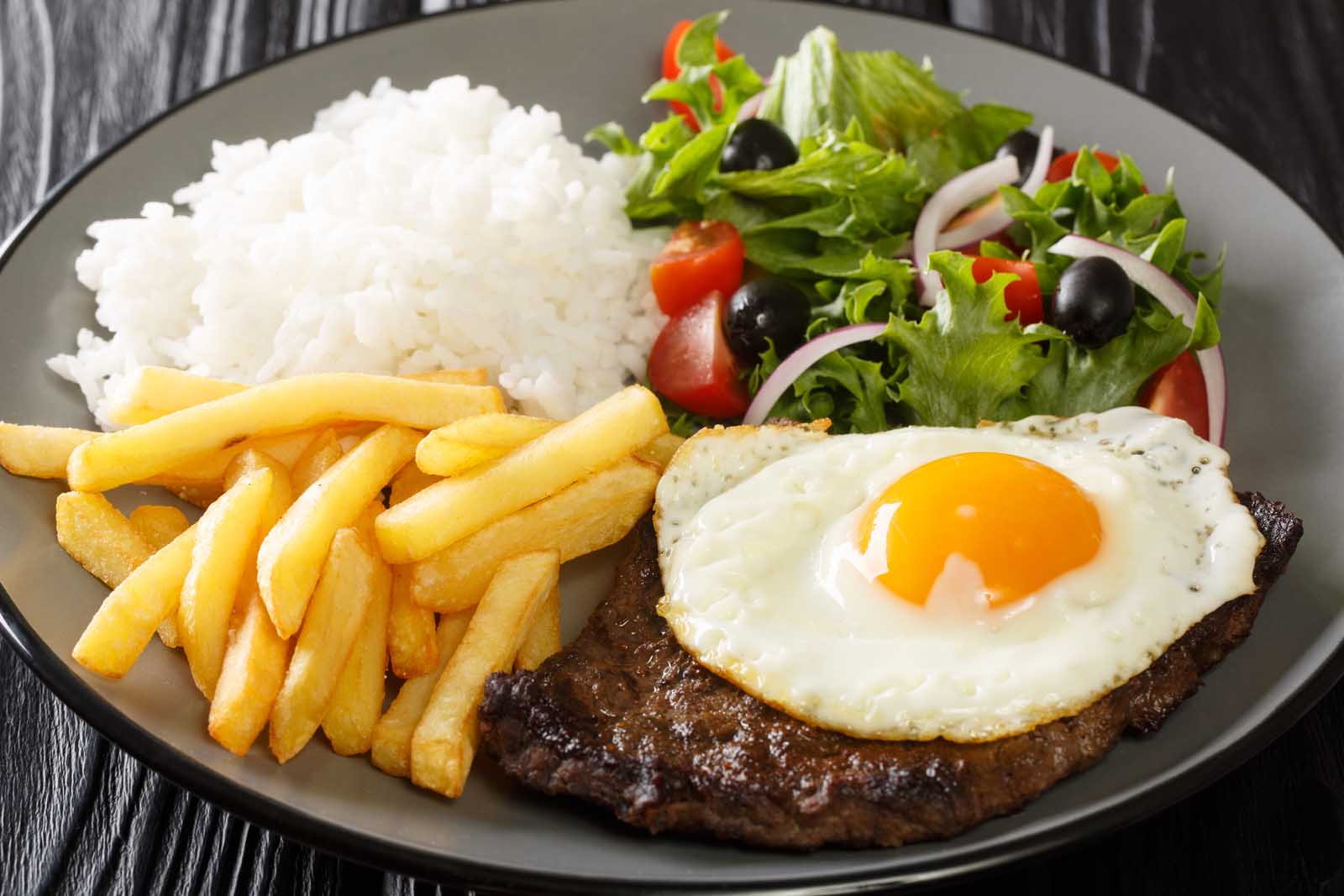
10. Bitoque (Steak and Egg)
Bitoque is a classic Portuguese comfort meal you’ll find in almost every local restaurant or tasca. It’s a simple but satisfying dish of a thin-cut steak (either pork or beef) that’s pan-fried in garlic and butter, then topped with a runny fried egg. It’s almost always served with a side of french fries and rice.
Dave & Deb’s Take: This was our go-to lunch on days when we needed something quick, hearty, and reliable. It’s a no-frills dish, but it’s always delicious. The best part is breaking the fried egg yolk and letting it run over the steak and fries. It’s simple, classic Portuguese cooking at its best.
11. Arroz de Pato (Duck Rice)
This is a classic Portuguese comfort food dish. Arroz de Pato, or duck rice, is a rich and savory dish where the rice is cooked in a flavorful broth made from simmering the duck itself. The tender, shredded duck meat is then mixed into the rice, which is often topped with slices of smoky chouriço and baked until the top is slightly crispy.
Dave & Deb’s Take: We had this on a cool evening in a small, family-run restaurant and it was the perfect hearty meal. It’s much richer and more flavourful than a standard rice dish. The crispy chouriço on top adds the perfect salty, smoky contrast to the tender duck.
12. Polvo à Lagareiro (Octopus with Olive Oil)
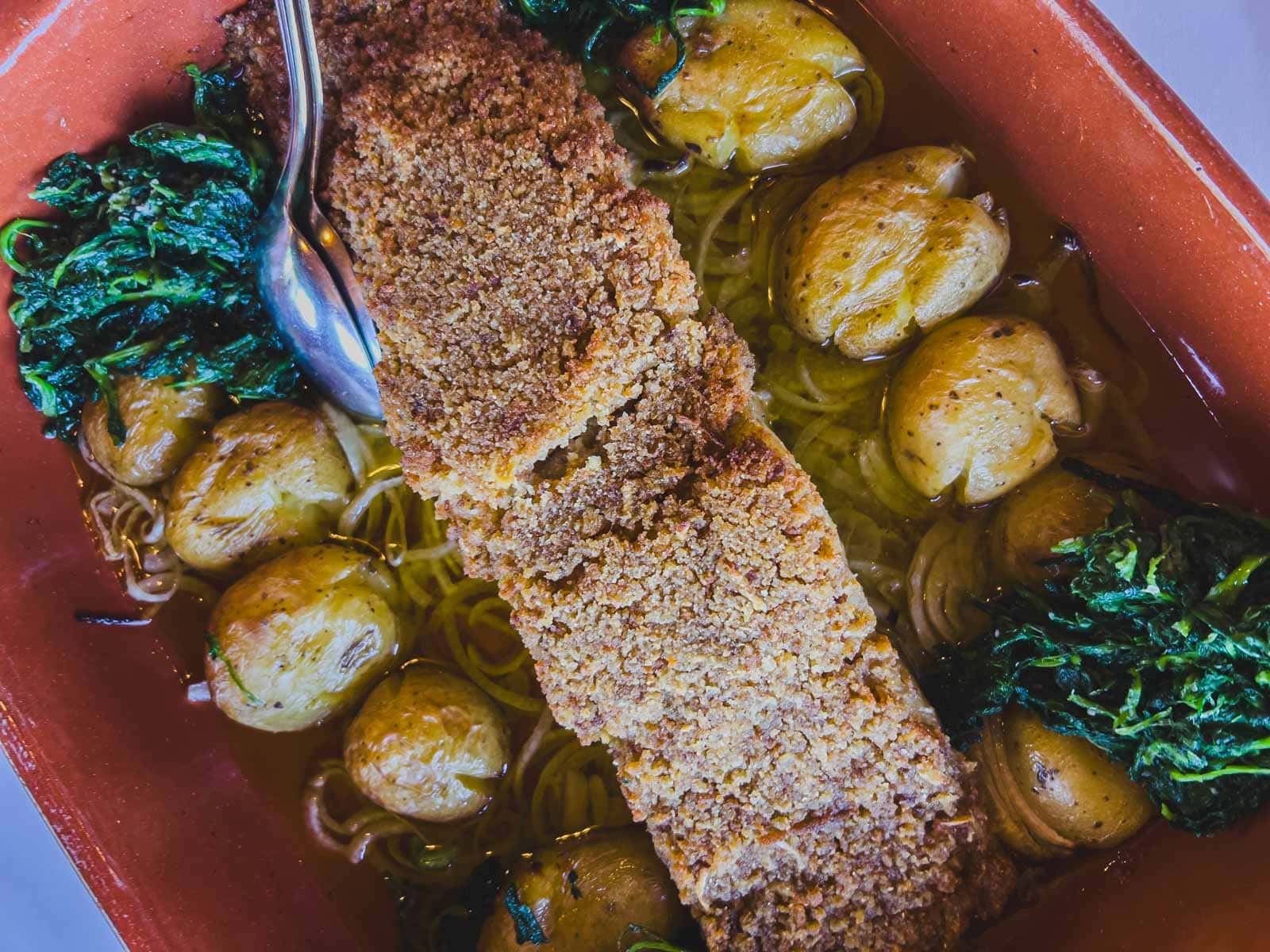
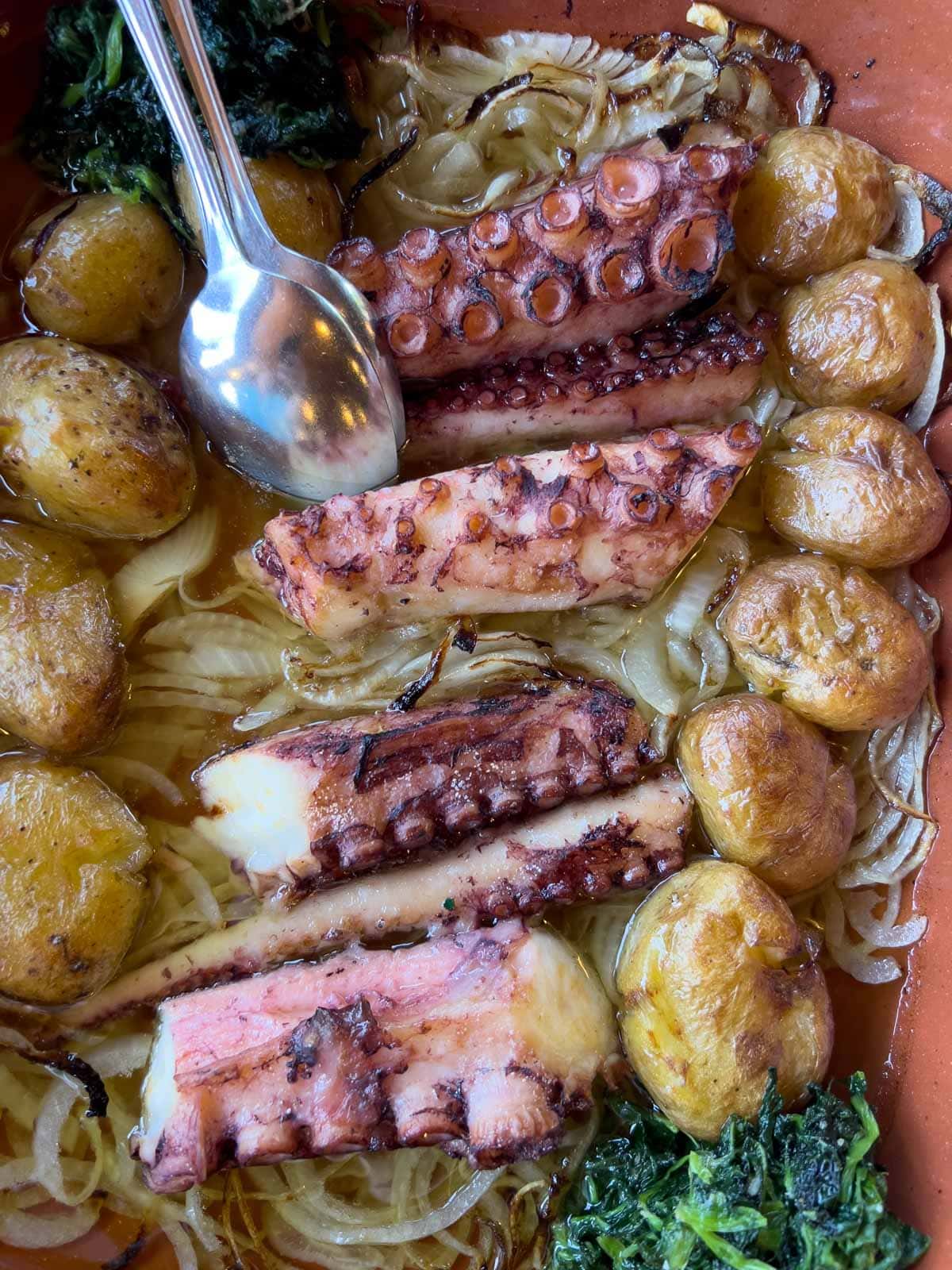
If you love seafood, this dish is an absolute must-try. Tender octopus is boiled and then roasted with plenty of garlic and a generous amount of Portuguese olive oil, and typically served with small, roasted potatoes that have been smashed to soak up all the delicious oil.
Dave & Deb’s Take: We were a bit hesitant about octopus before our trips to Portugal, but this dish completely converted us. When it’s cooked well, the octopus is incredibly tender, not chewy at all. It’s a simple dish that really lets the high-quality ingredients shine. It’s one of our go-to orders every time we’re back in Portugal.
13. Bolinhos de Bacalhau (Codfish Cakes)
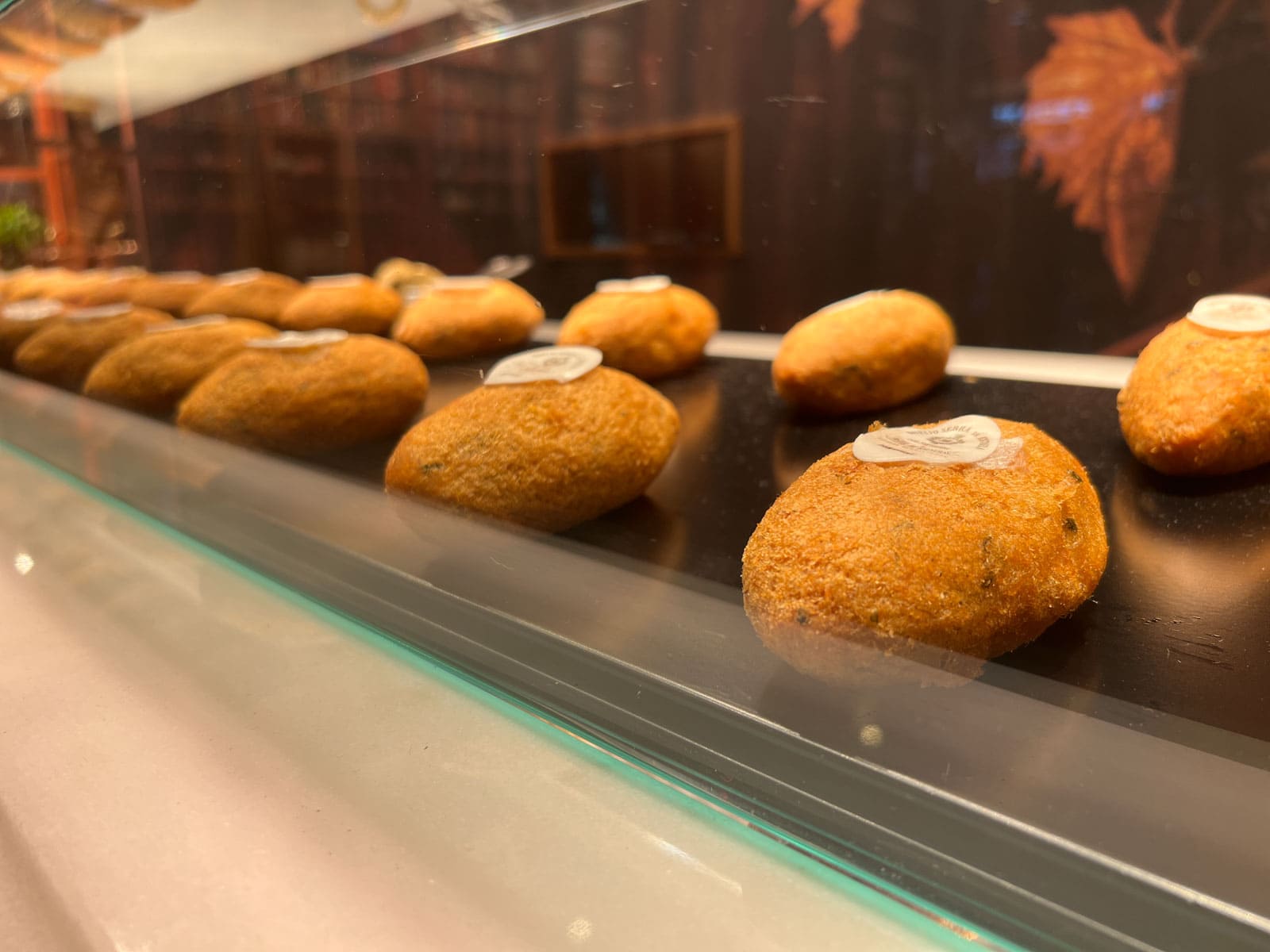
These are one of Portugal’s most popular snacks or appetizers. Bolinhos de Bacalhau are small, deep-fried fritters made from a mixture of salted cod, potatoes, eggs, and fresh parsley. They are crispy on the outside and soft and fluffy on the inside.
Dave & Deb’s Take: You’ll find these everywhere, from small cafes to high-end restaurants. They’re the perfect snack to have with a cold beer on a sunny afternoon. We love how they’re a simple, delicious bite of Portugal’s most famous fish.
14. Cozido à Portuguesa (Portuguese Stew)
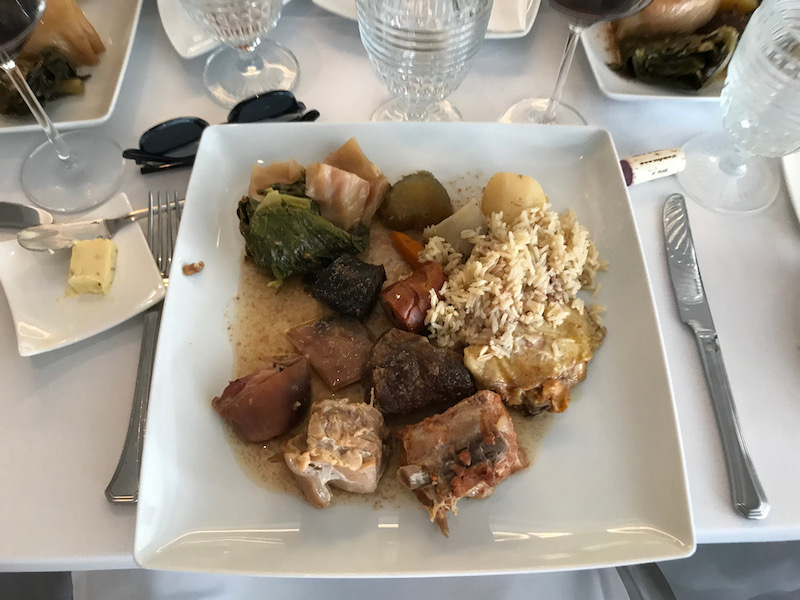
This is a carnivore’s dream and a true taste of typical Portuguese food. Cozido is a hearty boiled stew packed with a huge assortment of meats and vegetables. A typical Cozido can include beef, pork, chicken, and various sausages like chouriço and morcela (blood sausage), all slow-cooked with vegetables like potatoes, carrots, and cabbage.
Dave & Deb’s Take: Be prepared: this is not a light meal. It’s a massive platter of food, meant to be shared. It’s a fantastic way to sample a huge variety of Portuguese meats and sausages all in one go. It’s a classic Sunday family meal for a reason.
15. Cataplana de Marisco (Portuguese Seafood Stew)
This iconic dish from the Algarve region is as much about the presentation as it is about the flavour. It’s a seafood stew cooked and served in a clam-shaped copper pan called a cataplana. The pan acts like a steamer, locking in all the flavours of the fresh seafood, which typically includes clams, prawns, and fish, cooked in a fragrant broth of tomatoes, white wine, and herbs.
Dave & Deb’s Take: This was the classic Portuguese dish that we had heard about from our friends. So, of course we had to try it. We had this at a seaside restaurant in Lagos, and it was a perfect hearty meal. The moment they open the cataplana at your table and the steam billows out is fantastic. It’s a must-do experience when you’re in the Algarve.
16. Peixinhos da Horta (Fried Green Beans)
Don’t let the simple description fool you; this is one of the most addictive snacks in Portugal. The name literally translates to “little fishes from the garden,” and the dish consists of green beans that are battered and deep-fried until crispy. It’s believed that this dish was the inspiration for what the world now knows as Japanese tempura, introduced by Portuguese traders centuries ago.
Dave & Deb’s Take: We first tried these at a little tapas bar and couldn’t stop ordering them. They’re the perfect appetizer. The batter is light and crispy, and the green bean inside is perfectly tender. It’s a simple, brilliant dish and a great vegetarian option.
17. Picanha
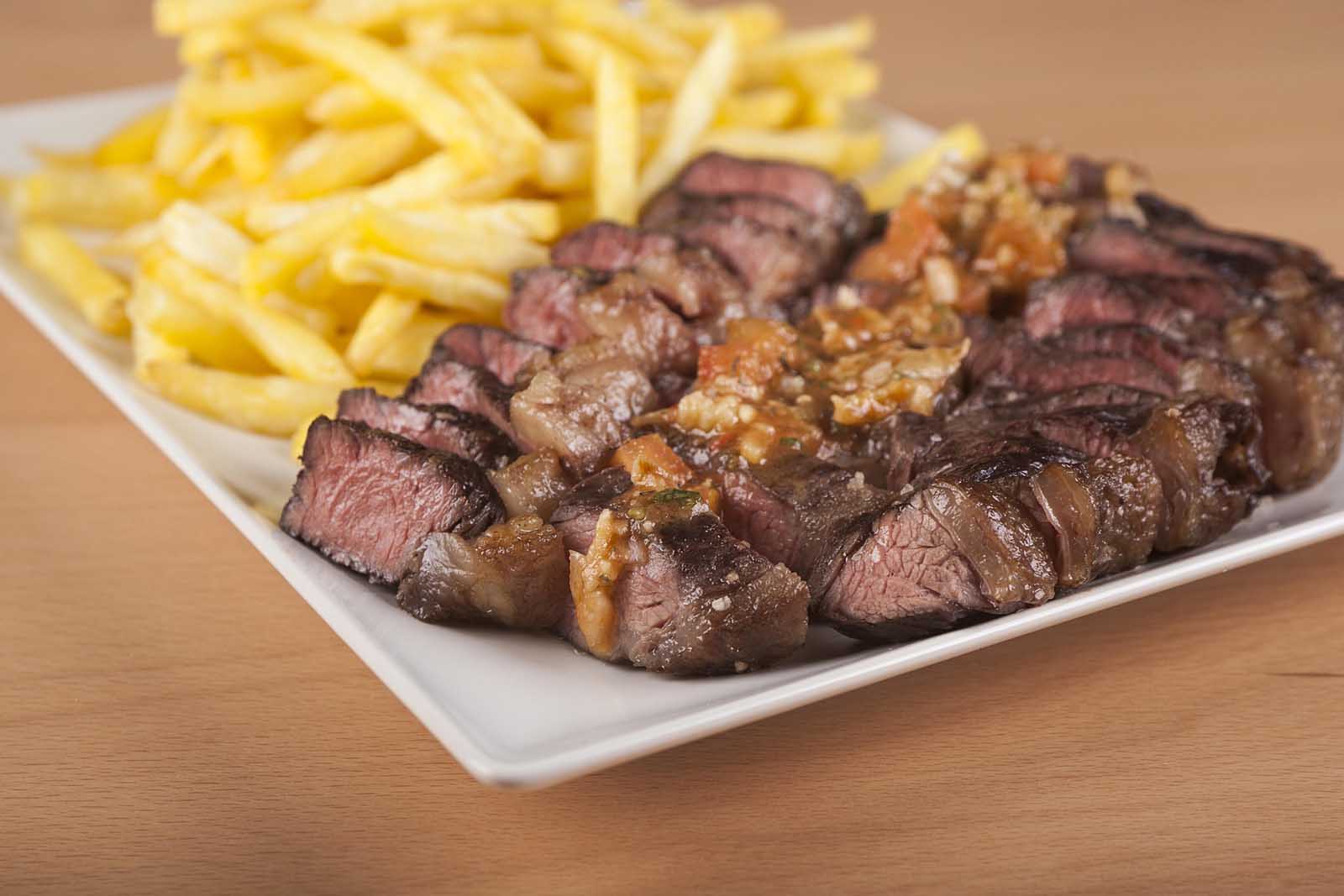
While originally a famous Brazilian cut of beef, Picanha has been wholeheartedly adopted by Portugal. This specific cut, the top sirloin cap, is known for its incredible tenderness and a thick layer of fat that bastes the meat as it grills over charcoal, making it unbelievably juicy and flavourful.
Dave & Deb’s Take: If you see Picanha on the menu and you’re a steak lover, order it. It’s often served simply with fries and black beans. The quality of the beef in Portugal is fantastic, and this is one of the best ways to experience it.
18. Feijoada (Bean Stew)
Another dish with strong Brazilian ties, Feijoada is a rich and hearty stew of black beans and various cuts of pork and beef. While historically made with cheaper cuts, it’s now a beloved comfort food. It’s a slow-cooked, soulful dish that’s perfect for a big, satisfying meal.
Dave & Deb’s Take: This is a true taste of rustic, hearty cuisine. It’s a heavy dish, so it’s best enjoyed on a cooler day. We found it’s a great meal to share, often served with rice and orange slices, which help cut through the richness of the stew.
19. Caldeirada de Peixe (Fish Stew)
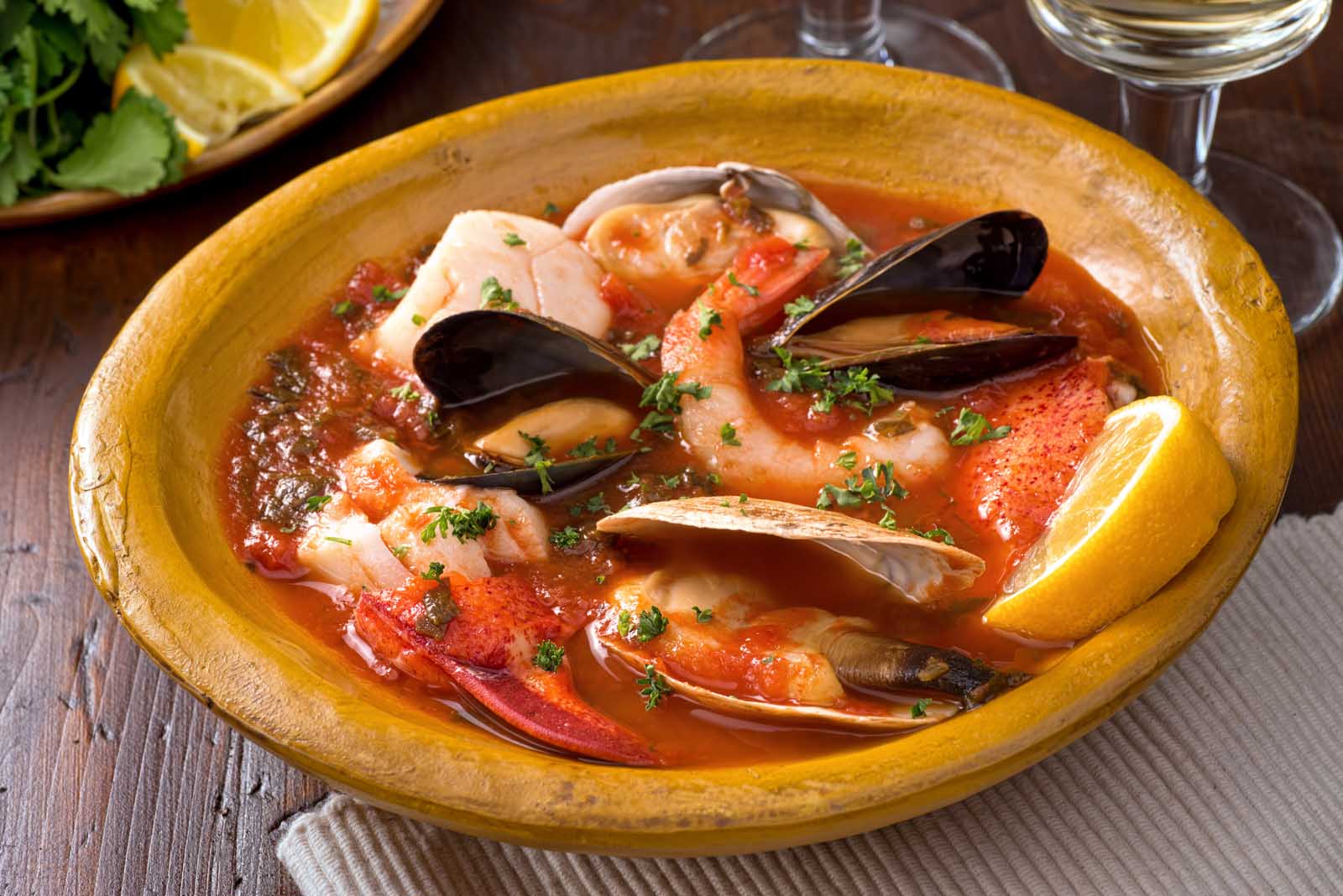
This is the quintessential Portuguese fisherman’s stew. A Caldeirada is a beautiful, layered stew made with a variety of fresh fish and potatoes, all cooked together in a flavourful broth of tomatoes, bell peppers, and herbs. The beauty of the dish is that it traditionally uses whatever the fishermen caught that day.
Dave & Deb’s Take: We had this in a small fishing village in the Algarve, and it was incredible. It’s similar to a French Bouillabaisse but heartier and more rustic. It’s a fantastic way to sample a wide variety of local fish all in one go.
20. Ovas (Fish Roe)
For the truly adventurous eater, Ovas is a Portuguese delicacy made from fish roe (eggs). The entire egg sack, typically from a grey mullet, is boiled and then served chilled, often sliced and dressed simply with olive oil, vinegar, and onions alongside boiled potatoes.
Dave & Deb’s Take: We have to admit, this one was a challenge for us at first, but we were determined to try it. The texture is the most unique part—very smooth and silky. It’s a very traditional and historic dish, and if you’re looking to step outside your culinary comfort zone, this is the one to try.
21. Serra da Estrela Cheese
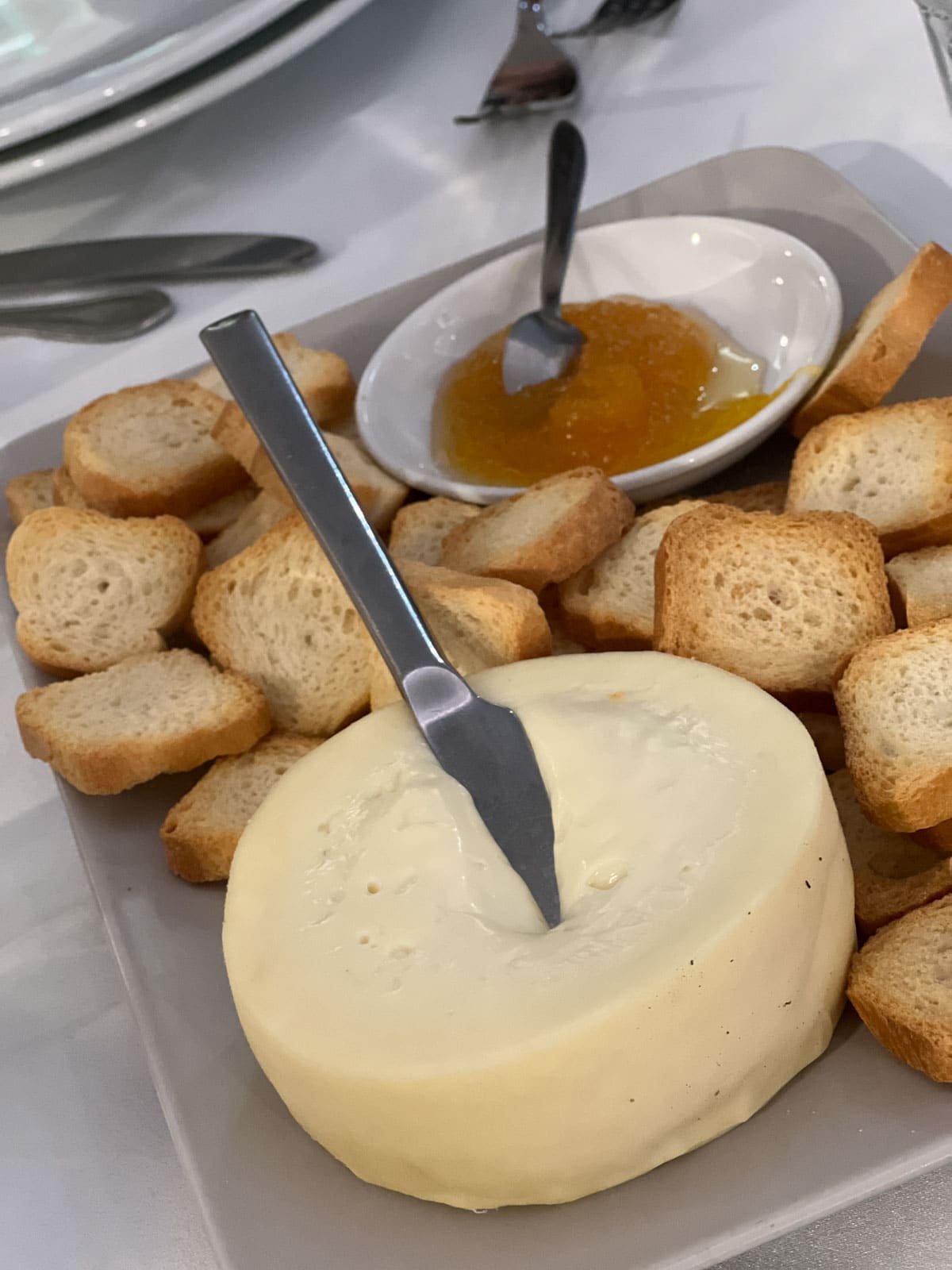
If you are a cheese lover, you have to try Queijo Serra da Estrela. This is Portugal’s most famous cheese, hailing from the Serra da Estrela mountains. It’s a soft, gooey sheep’s milk cheese that is so creamy you often eat it by scooping it out with a spoon. It has a strong, complex flavour that is absolutely unforgettable.
Dave & Deb’s Take: We first tried this Portuguese cheese at a market in Lisbon, and it was a revelation. It’s served at room temperature, and the rind is cut off the top so you can dip bread right into the gooey center. It’s incredibly rich and flavourful. Paired with a glass of red wine, it’s a perfect appetizer.
22. Pão de Deus (God’s Bread)
This is a popular Portuguese bread roll, and its name literally translates to “God’s Bread.” It’s a soft, brioche-like bun with a delicious, sweet shredded coconut topping that gets toasted during baking. It’s a staple in Portuguese bakeries (pastelarias).
Dave & Deb’s Take: This was our go-to breakfast on many mornings in Portugal. It’s not overly sweet, and the soft bread with the slightly crispy coconut topping is a perfect combination with a strong coffee. It’s a simple, delicious way to start your day like a local.
23. Bola de Berlim
These are the Portuguese version of a Berliner or a Bismark doughnut, and they are incredibly popular, especially on the beaches in the summer. They are fluffy, deep-fried doughnuts, rolled in sugar, and traditionally filled with a sweet egg yolk cream (creme de ovos).
Dave & Deb’s Take: You’ll see vendors walking the beaches in the Algarve selling these from coolers, and you should absolutely buy one. They are the perfect beach snack. While the traditional egg cream is the classic, we also love the ones filled with chocolate.
24. Cebolada
Cebolada isn’t a standalone dish, but rather a flavorful onion-based stew or sauce that is a cornerstone of Portuguese home cooking. It’s made by slow-cooking onions with tomatoes and garlic until they are soft and sweet. It’s often served as a base for stewed or pan-fried fish and meat dishes.
Dave & Deb’s Take: We had this served with a beautiful piece of grilled tuna, and it was fantastic. The sweetness of the slow-cooked onions and tomatoes is the perfect complement to the fresh fish. It’s a great example of how simple, high-quality ingredients are the heart of Portuguese cuisine.
25. Linguica (Portuguese Smoked Sausage)
Linguica is a flavourful, smoke-cured pork sausage seasoned with garlic and paprika. It’s a staple in the Portuguese diet and is incredibly versatile. It can be grilled, fried, or added to stews and rice dishes to add a deep, smoky flavour.
Dave & Deb’s Take: This is spicier and more flavourful than a typical chorizo. We love it grilled over an open flame. You’ll often see it served as a simple appetizer, where it’s brought to the table in a flaming ceramic dish. It’s a bit of theatre and incredibly delicious.
26. Port Wine
You can’t go to Portugal without trying its most famous drink. Port is a sweet, fortified wine produced exclusively in the Douro Valley in northern Portugal. It’s typically served as a dessert wine and comes in several varieties, from rich, fruity ruby ports to complex, nutty tawny ports.
Dave & Deb’s Take: We spent a few days exploring the Douro Valley, and it’s one of the most beautiful wine regions in the world. The best way to experience Port is to visit one of the Port lodges in Porto for a tasting. It’s a fantastic way to learn about the history and different styles of this iconic Portuguese drink.
27. Vinho Verde (Green Wine)
Don’t let the name fool you; “green wine” isn’t actually green in colour. It’s a young wine (hence “green”) from the Minho region in the north, and it’s light, crisp, and often has a slight effervescence. It’s the perfect refreshing drink for a sunny afternoon.
Dave & Deb’s Take: We drank Vinho Verde almost every day in Portugal. It’s incredibly affordable and pairs perfectly with fresh seafood. It’s light, easy to drink, and quintessentially Portuguese.
28. Ginjinha (Cherry Liqueur)
Ginjinha (or Ginja) is a popular Portuguese liqueur made by infusing sour cherries (ginja berries) in a brandy called aguardente. It’s a sweet, strong liqueur that is a beloved local drink, especially in Lisbon.
Dave & Deb’s Take: The best way to try this is from one of the tiny, historic Ginjinha bars in Lisbon. For about one Euro, you get a shot served in a small glass, often with a cherry in the bottom. You can also ask for it to be served in a small chocolate cup, which is a fun and delicious way to enjoy it.
Planning Your Food Tour of Portugal
Best Food Tours in Lisbon & Porto: A food tour is one of the best ways to get an introduction to Portuguese cuisine. We recommend taking a tour on your first day to get your bearings and discover some local gems.
Tips for Dining in Portugal:
The bread, olives, and other small plates the waiter brings at the start of the meal (the couvert) are not free. If you don’t want them, just politely say “no, thank you.”
Lunch is typically the main meal of the day, and many restaurants offer a great value prato do dia (dish of the day).
Dinner is eaten late in Portugal, usually after 8:00 PM.
FAQ: Food in Portugal
What is the national dish of Portugal?
The national dish of Portugal is Bacalhau (dried and salted cod). It is said that there are more than 365 ways to cook it, one for every day of the year.
What is a typical Portuguese breakfast?
A typical Portuguese breakfast is light and simple, often consisting of fresh bread with butter, cheese, or jam, and a coffee (like an espresso or a galão – coffee with milk). The Pão de Deus is also a popular breakfast choice.
Is Portuguese food spicy?
Generally, traditional Portuguese food is not very spicy. The famous Piri-Piri sauce is the main exception, and it is usually served on the side so you can add as much heat as you like.
So, Which Dish Will You Try First?
After spending two full months eating our way from the sunny coast of the Algarve to the historic hills of the north, it’s impossible for us to pick just one favourite Portuguese dish. What we truly fell in love with was the honesty of the food.
Whether it was a simple bowl of Caldo Verde on a cool night in Porto or fresh grilled sardines at a festival in Lisbon, the focus was always on incredible, fresh ingredients prepared with care. But if we had to pick one perfect food memory, it would be sharing a steaming Cataplana de Marisco at a tiny seaside restaurant. The moment the waiter opened that copper pan at our table and the fragrant steam of seafood, wine, and herbs filled the air… that, to us, is the taste of Portugal.
This country’s cuisine is a delicious adventure, and we hope this guide has inspired you to try as many of these traditional Portuguese dishes as you can.
For us, a trip to Hamilton is like coming home. Dave’s dad was born and raised in Hamilton, and he spent much of his childhood visiting family in the city. We’ve seen “The Hammer” transform from the industrial “Steeltown” we knew as kids into the thriving, creative city it is today.
Now, with friends living in the area, we visit often and are always discovering something new. Hamilton has blossomed into one of Ontario’s best destinations, with a vibrant arts scene and an incredible natural playground of trails and waterfalls right at its doorstep. With more people moving to the area and others looking to escape the city of Toronto, we have narrowed down the top things to do while in Hamilton, Ontario.
This guide is a mix of the classic spots we’ve loved for years and the new energy that makes Hamilton so exciting. We’re sharing our favourite things to do to help you plan an adventure in this surprisingly diverse city.
Hamilton has a rich industrial and military history. These national historic sites and museums offer a fascinating look into the city’s past and its role in shaping Canada.
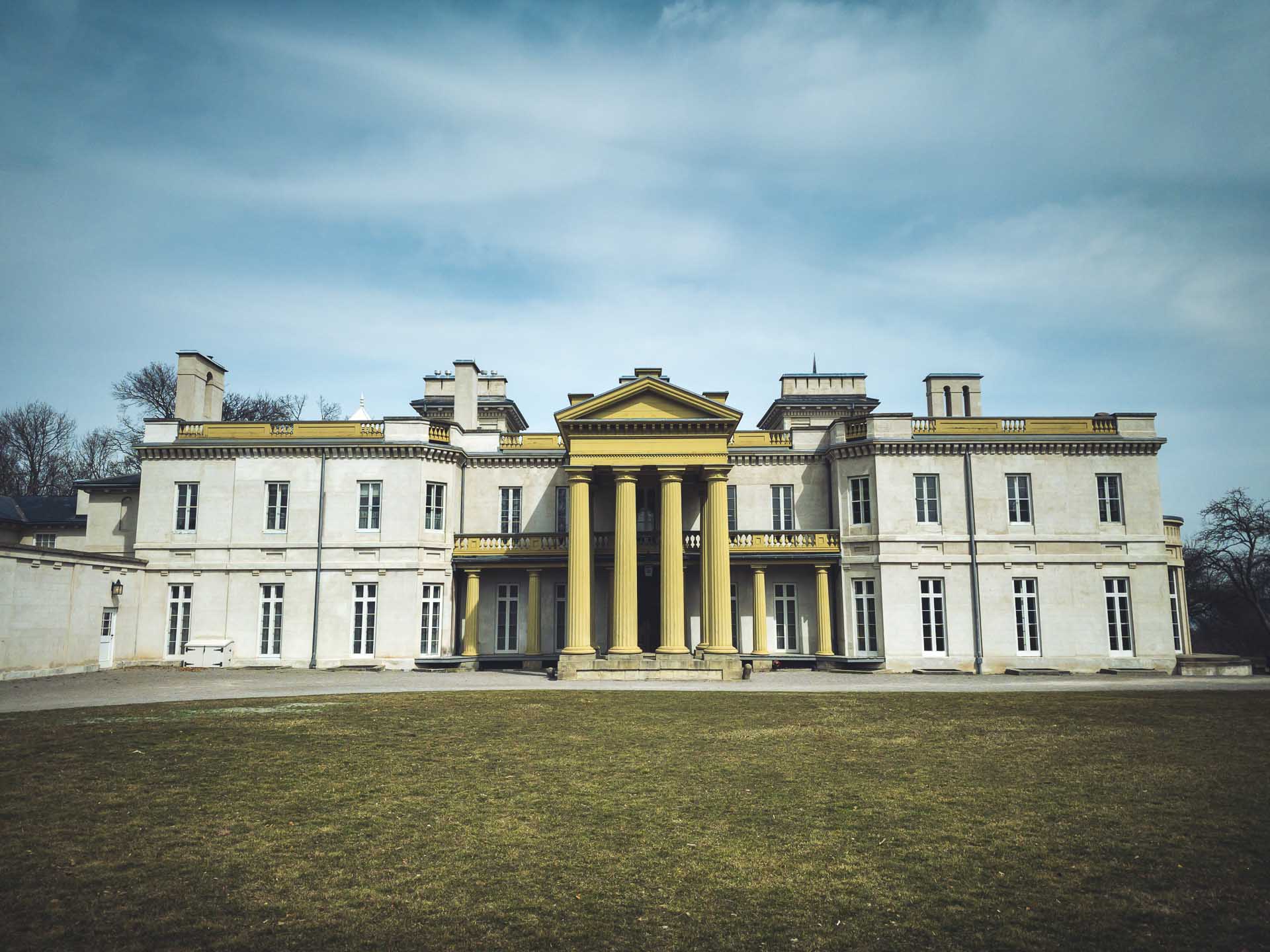
1. Dundurn Castle
A tour of this grand 1830s villa is one of the top attractions in Hamilton. As the former home of Sir Allan Napier MacNab, Premier of the United Canadas, this National Historic Site has been beautifully restored. Costumed interpreters guide you through the home, illustrating what life was like in the 19th century.
Note on 2025 Pricing: Please verify current ticket prices on the official Hamilton Civic Museums website. Adult admission is typically around $16 CAD and children are $10 CAD.
Dave & Deb’s Tip: Your admission includes the Hamilton Military Museum, which is also on the property. Give yourself extra time to walk the beautiful grounds and the kitchen garden, which are free to access and offer lovely views of the bay.
Tickets cost $16 for adults and $10 for children, with children under 5 allowed in for free.
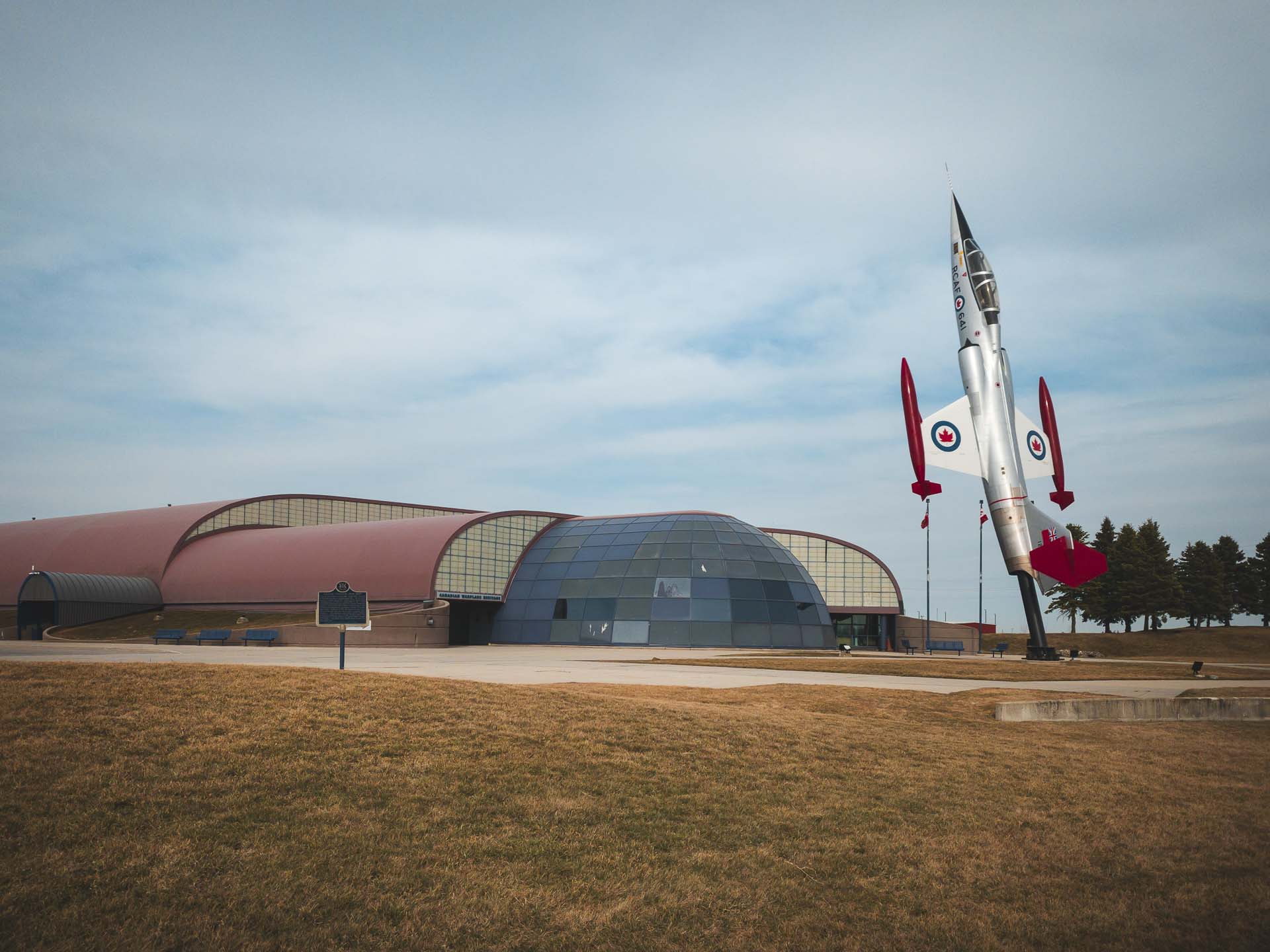
2. Canadian Warplane Heritage Museum
ocated beside the Hamilton International Airport, this museum is a must-visit for aviation and history buffs. It features a collection of over 40 Canadian military aircraft flown since World War II. The highlight is the Avro Lancaster, one of only two airworthy Lancaster bombers left in the world.
Admission to the Canadian Warplane Heritage Museum is around $18 per adult, with children under 5 able to visit for free. Flight simulation experiences are available at an extra cost. Check out the website for more details.
Dave & Deb’s Tip: Even if you don’t book a flight simulation, check their schedule online. Seeing the Lancaster or other vintage planes take off for a flight is an unforgettable experience.
3. HMCS Haida National Historic Site
Known as “Canada’s most fightingest ship,” the HMCS Haida is a floating museum on the Hamilton waterfront. As the world’s only surviving Tribal-class destroyer, this national historic site offers a chance to explore the decks and imagine life as a crew member of the Royal Canadian Navy during its service in WWII, the Korean War, and the Cold War.
Note on 2025 Pricing: Admission is just $4.50 CAD per adult, with those under 17 years of age entering free.
Dave & Deb’s Tip: Wear good shoes with a solid grip. You’ll be climbing steep, narrow ladders between the decks, which is all part of the authentic and immersive experience.
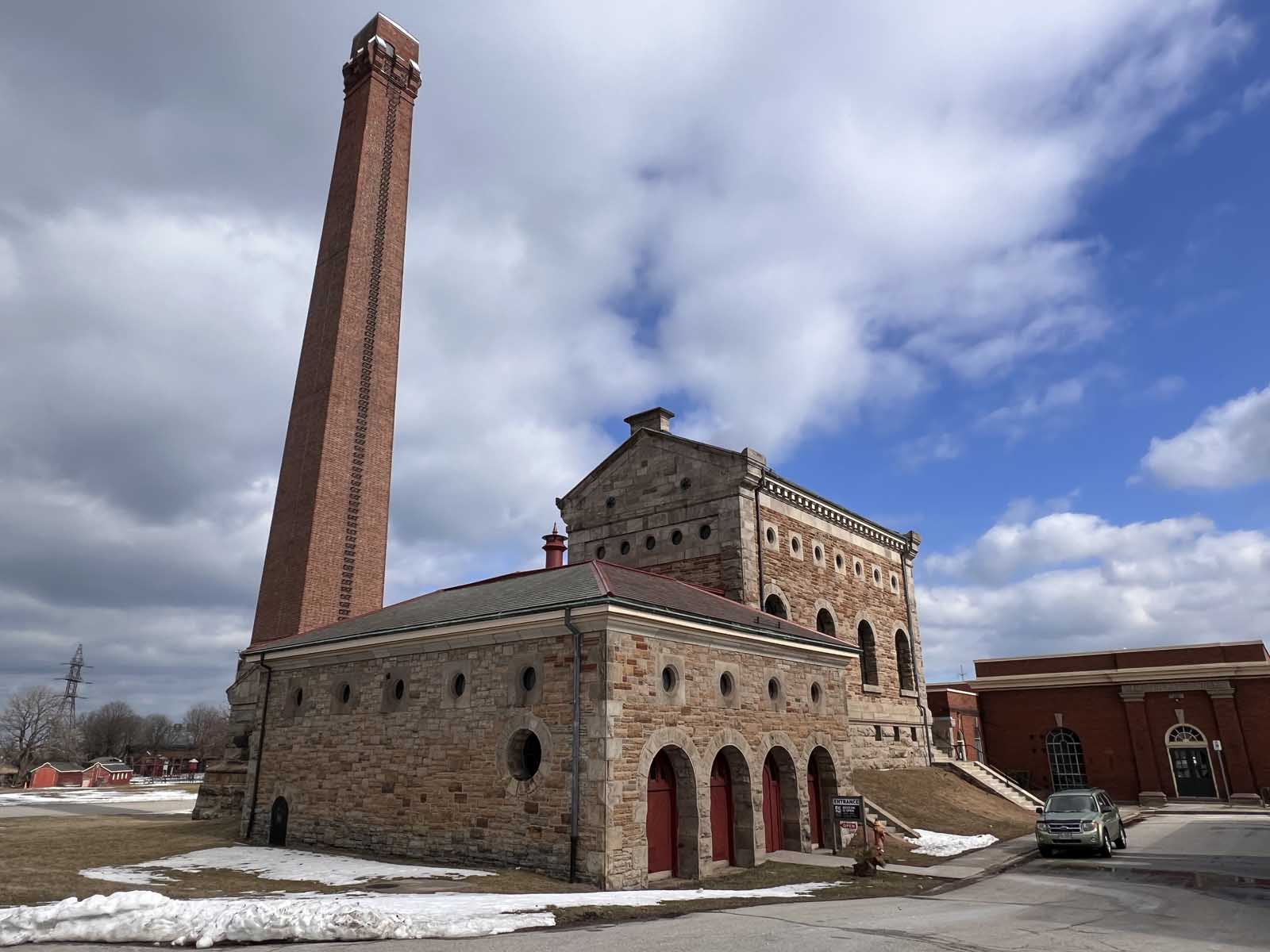
4. Hamilton Museum of Steam & Technology
Housed in the restored 1859 waterworks building, this national historic site is dedicated to the history of steam power in Canada. It features a collection of massive, working steam engines, pumps, and other machinery that once supplied water to the city.
2025 Pricing: Admission is required. Please check the Hamilton Civic Museums website for current 2025 pricing (typically around $10 CAD for adults).
Dave & Deb’s Tip: Try to visit during a live steam demonstration to see the impressive 70-ton steam engines in action. It’s an incredible display of 19th-century engineering power.
5. Battle of Stoney Creek
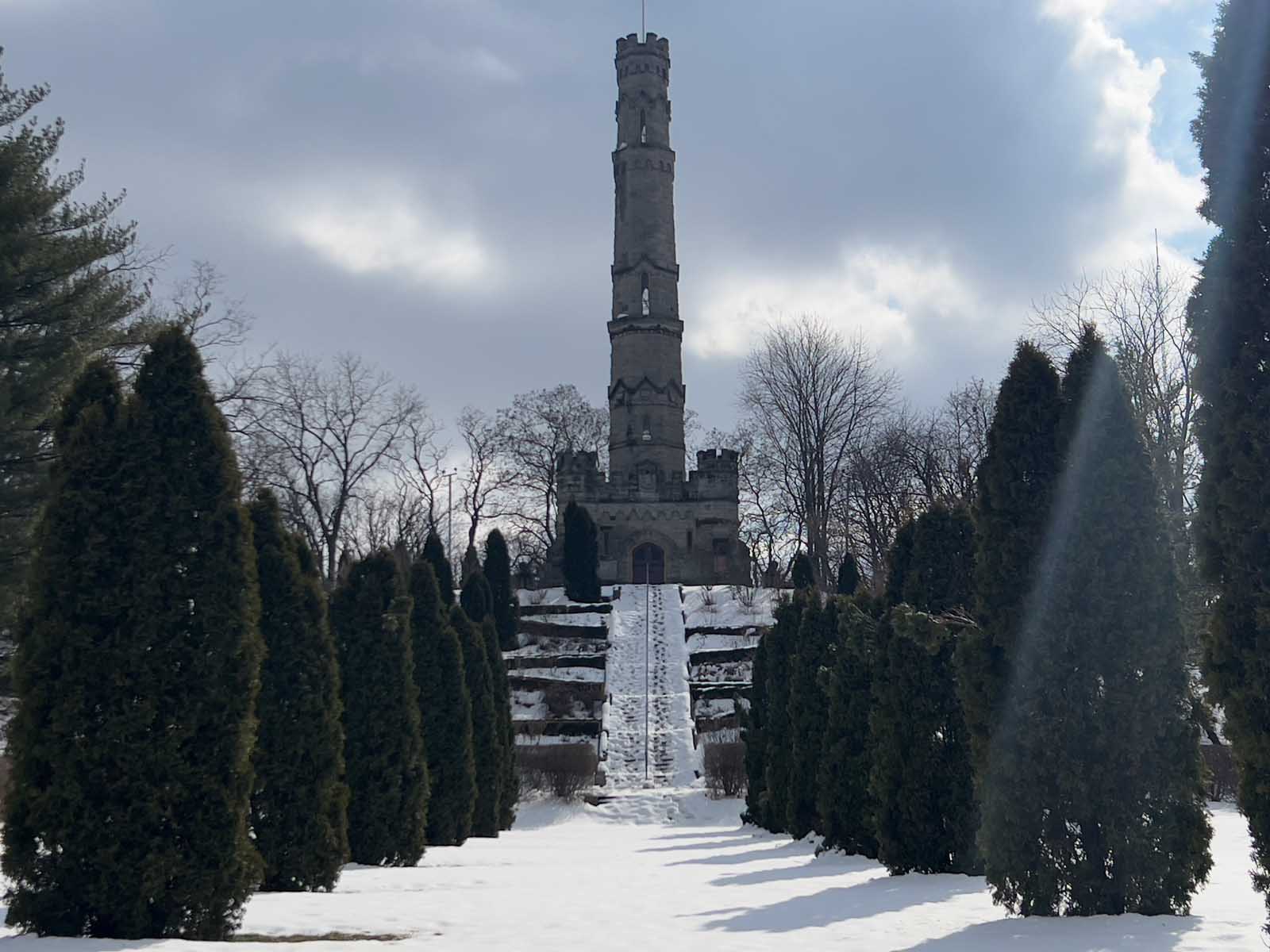
This National Historic Site preserves the location of the pivotal 1813 Battle of Stoney Creek. The grounds include the Battlefield House Museum (the original Gage Homestead, built around 1796) and the impressive Battlefield Monument, which stands high on a hill overlooking the park.
Dave & Deb’s Tip: Be sure to climb to the top of the 100-foot Battlefield Monument. It offers a fantastic view and helps you understand the strategic importance of the location during the War of 1812.
6. The Erland Lee Museum
This 19th-century farmhouse in Stoney Creek holds huge historical significance as the birthplace of the Women’s Institutes, an organization that spread from here to over 70 countries. The museum has exhibits dedicated to the history of the organization and its role in women’s history.
Dave & Deb’s Tip: This is a must-visit for anyone interested in Canadian history, particularly women’s history. The story of the Women’s Institute is a fascinating piece of Canadian heritage that started right here in this house.
Outdoor Adventures & Waterfalls
Hamilton’s unique location on the Niagara Escarpment, a UNESCO World Biosphere Reserve, gives it a stunning natural playground. Here’s where to get outside and explore the trails, gorges, and waterfalls that make “The Hammer” an outdoor destination.
7. Chase Waterfalls (Webster’s, Albion, Tews)
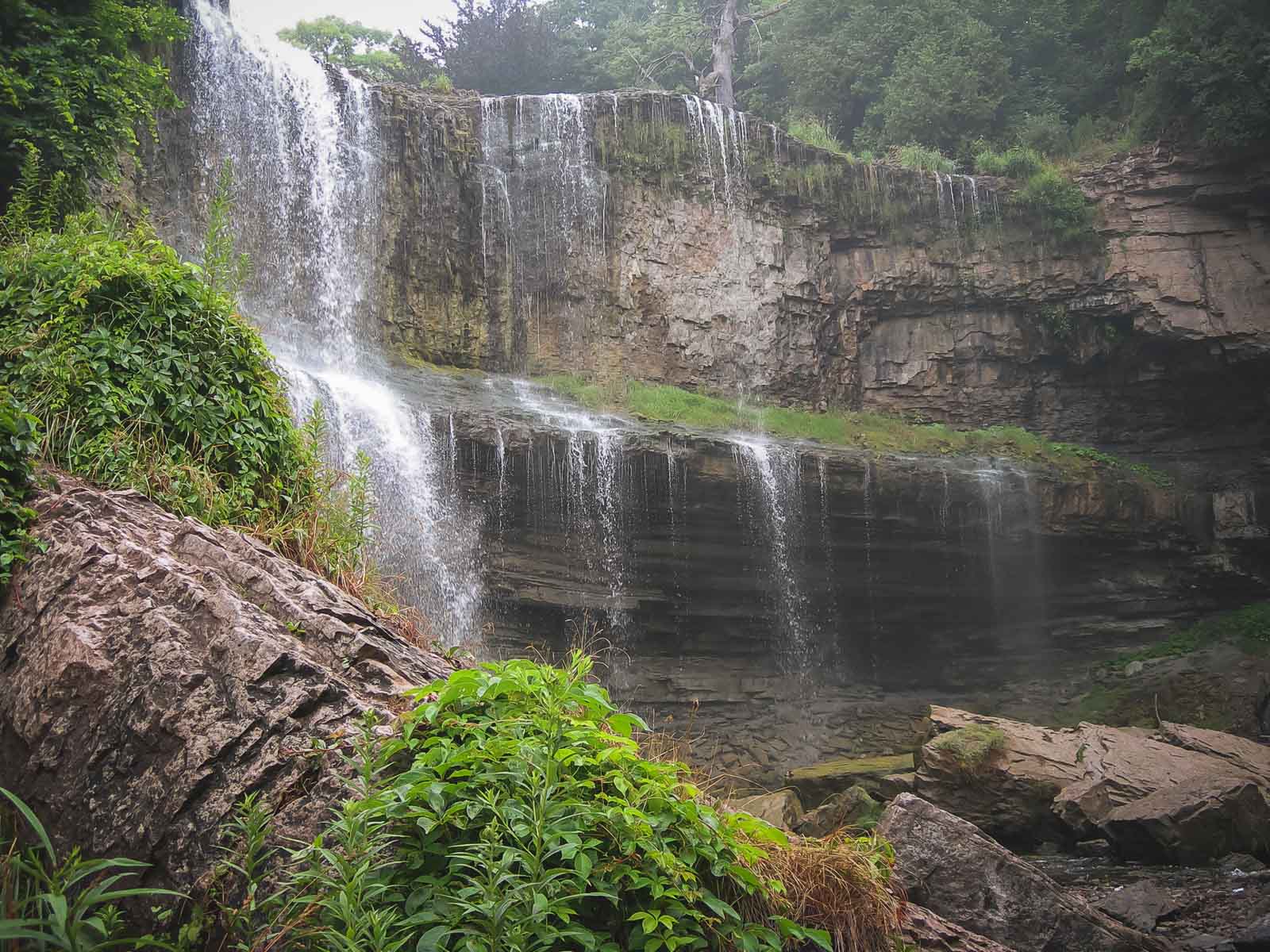
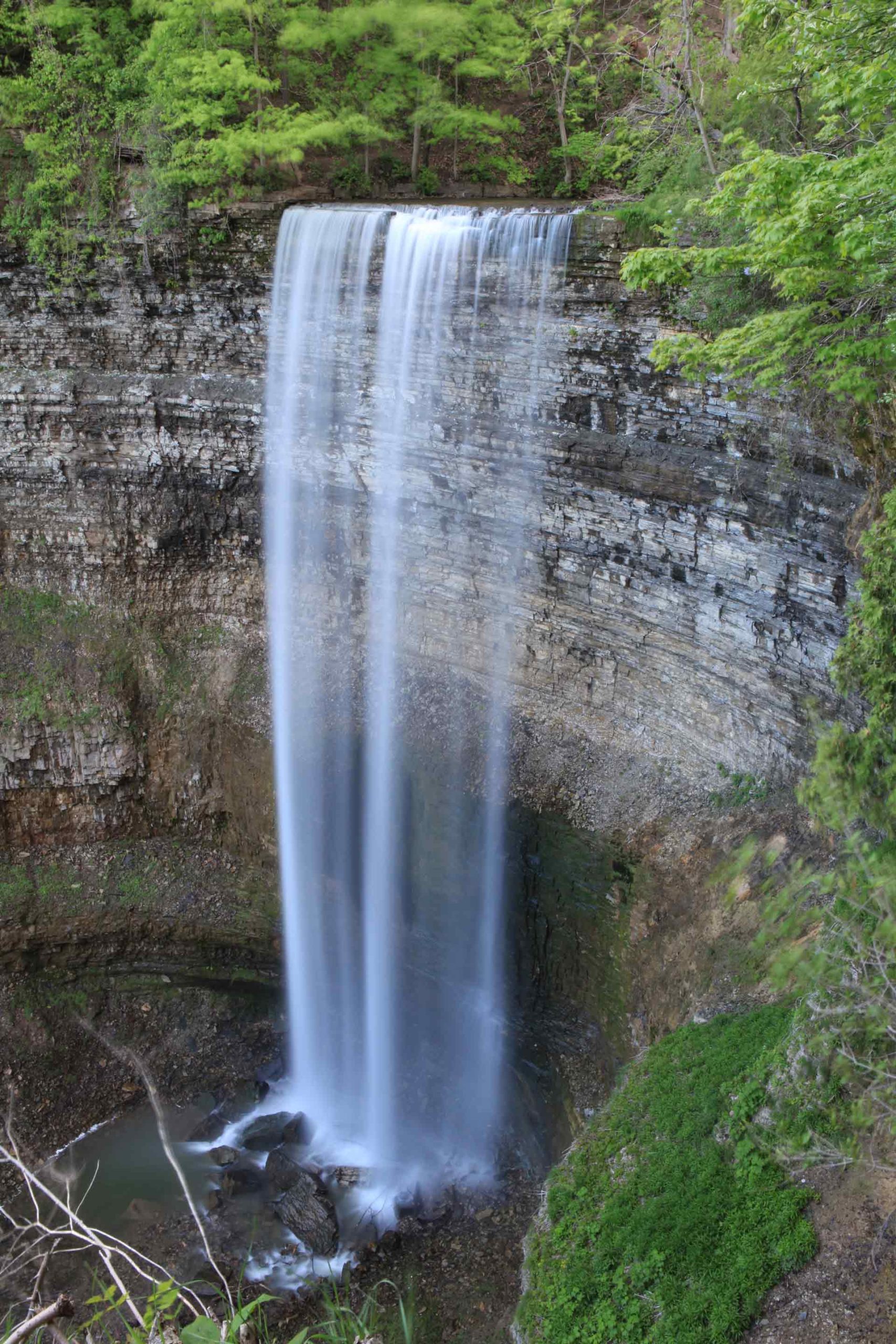
Hamilton is known as the “Waterfall Capital of the World,” with over 100 waterfalls located within the city limits. Chasing waterfalls is one of the top things to do here. Two of the most incredible cascades are Webster’s Falls, a classic plunge-style waterfall, and Albion Falls, a wide cascade that tumbles over shelves of rock. Tews Falls is actually the tallest in Hamilton, standing at 41 metres, just a few metres shorter than Niagara’s Horseshoe Falls.
Important 2025 Note: Access rules, viewing platforms, and reservation systems for Hamilton’s waterfalls can change frequently. Always check the official Hamilton Conservation Authority website before your visit for the most up-to-date information on parking, fees, and trail access.
Dave & Deb’s Tip: While Webster’s and Albion are famous, don’t miss some of the smaller falls. Tiffany Falls is a beautiful, delicate waterfall that’s just a short walk from the road, making it a great and easily accessible stop.
8. Spencer Gorge Conservation Area
This is the star attraction for nature lovers in Hamilton. The conservation area is home to two of the city’s most famous waterfalls, Tews Falls and Webster’s Falls (though they often require separate reservations). The main draw for us, however, is the hike to Dundas Peak, which showcases the stunning beauty of the Dundas Valley.
Dave & Deb’s Tip: The hike to the Dundas Peak viewpoint is a must-do, especially in the autumn. The view overlooking the Dundas Valley is one of the best in all of Southern Ontario. Go on a weekday to avoid the biggest crowds, as this spot is extremely popular.
9. Royal Botanical Gardens (RBG)
Of all the attractions in Hamilton, a visit to Canada’s largest Botanical Garden is a must. A designated National Historic Site, the RBG is Canada’s largest botanical garden, spanning over 2,400 acres. Nestled into the slopes of the Niagara Escarpment, it features five distinct garden areas, including the beautiful Hendrie Park and the restored David Braley Rock Garden. It also boasts the world’s largest lilac collection and over 77 km of nature trails.
Pricing: General admission tickets for entrance to the Royal Botanical Gardens cost $19.50 for adults, with children under 4 admitted for free. There are youth, senior, and family tickets available at a discounted price.
Dave & Deb’s Tip: The RBG is massive, so don’t try to see it all in one day. If you only have time for one section, we recommend Hendrie Park. It has the most diverse collection of themed gardens and is a great introduction to what the RBG has to offer.
10. Go for a Hike on the Bruce Trail & More
The Dundas Valley Conservation Area is a massive forested area with over 40 km of trails. It’s an outdoor lover’s dream and contains several major trail networks:
The Bruce Trail: Canada’s longest and oldest footpath stretches from Niagara to Tobermory and passes right through the heart of the Dundas Valley.
The Main Loop Trail: Starting from the Dundas Valley Trail Centre, this easy 3.4 km loop is a great introduction to the area, passing by ruins and an old orchard.
The Hamilton to Brantford Rail Trail: This is an excellent, flat path for hiking and cycling along an old railway line.
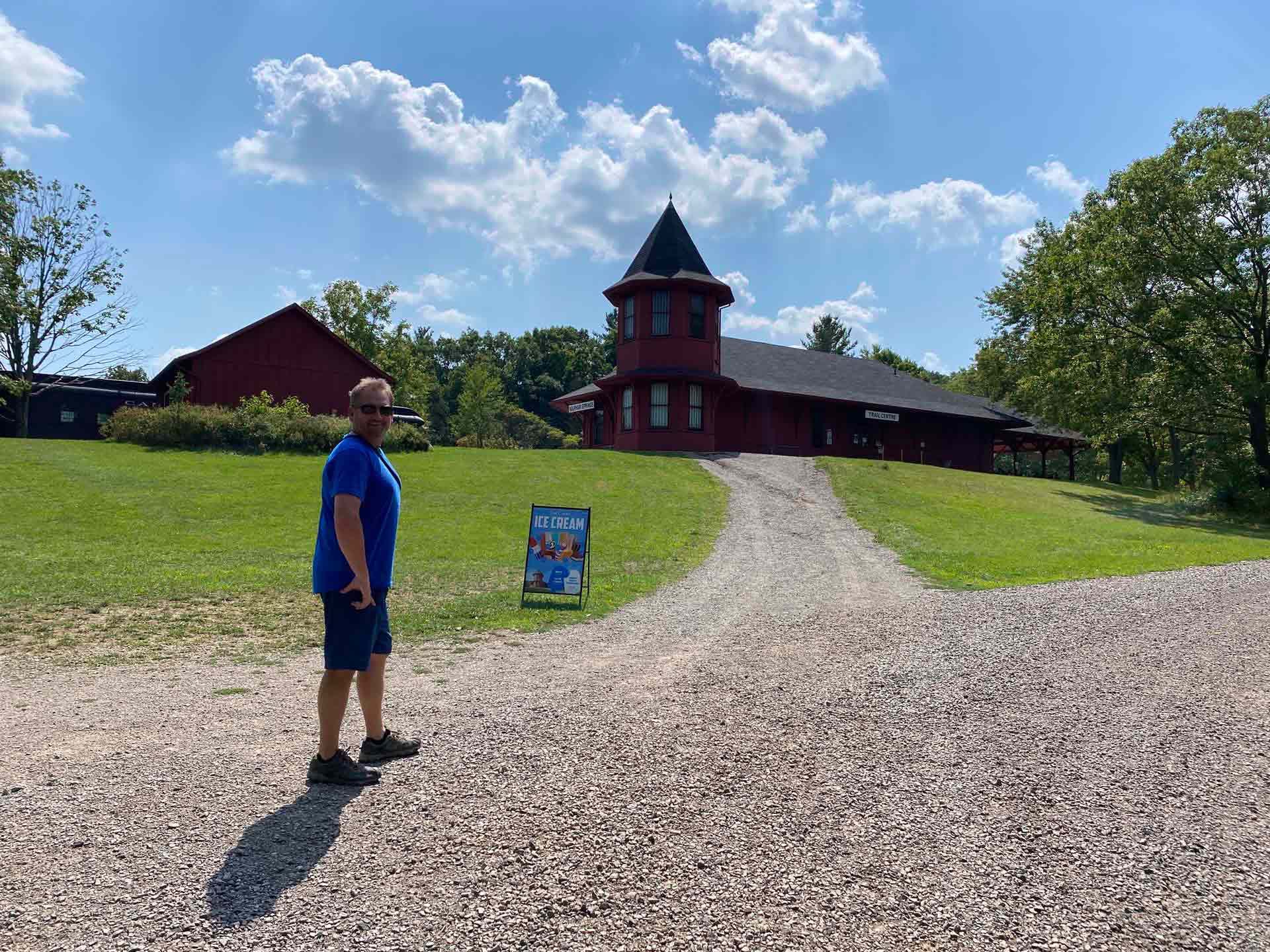
Dave & Deb’s Tip: For a great taste of the area, start at the Dundas Valley Trail Centre. You can do the easy Main Loop Trail, hop on a section of the famous Bruce Trail, and see the replica train station all from one convenient starting point.
Hamilton’s Waterfront & Parks
Once an industrial harbour, Hamilton’s waterfront has been completely transformed into a beautiful space for recreation, connecting several parks and trails. It’s now a popular outdoor gathering place for families and friends.
11. Explore Bayfront Park
This large park covers 16 hectares along Hamilton Harbour and is packed with recreational activities. It features an extensive trail system for walking and cycling, a boat launch for paddling, and a large, popular playground for families with young children. Throughout the year, Bayfront Park hosts a variety of events, including concerts and community festivals.
Dave & Deb’s Tip: Bayfront Park is the perfect spot for a family picnic. There’s tons of green space to run around, a great playground for the kids, and you can watch the boats in the harbour.
12. Stroll the Waterfront Trail
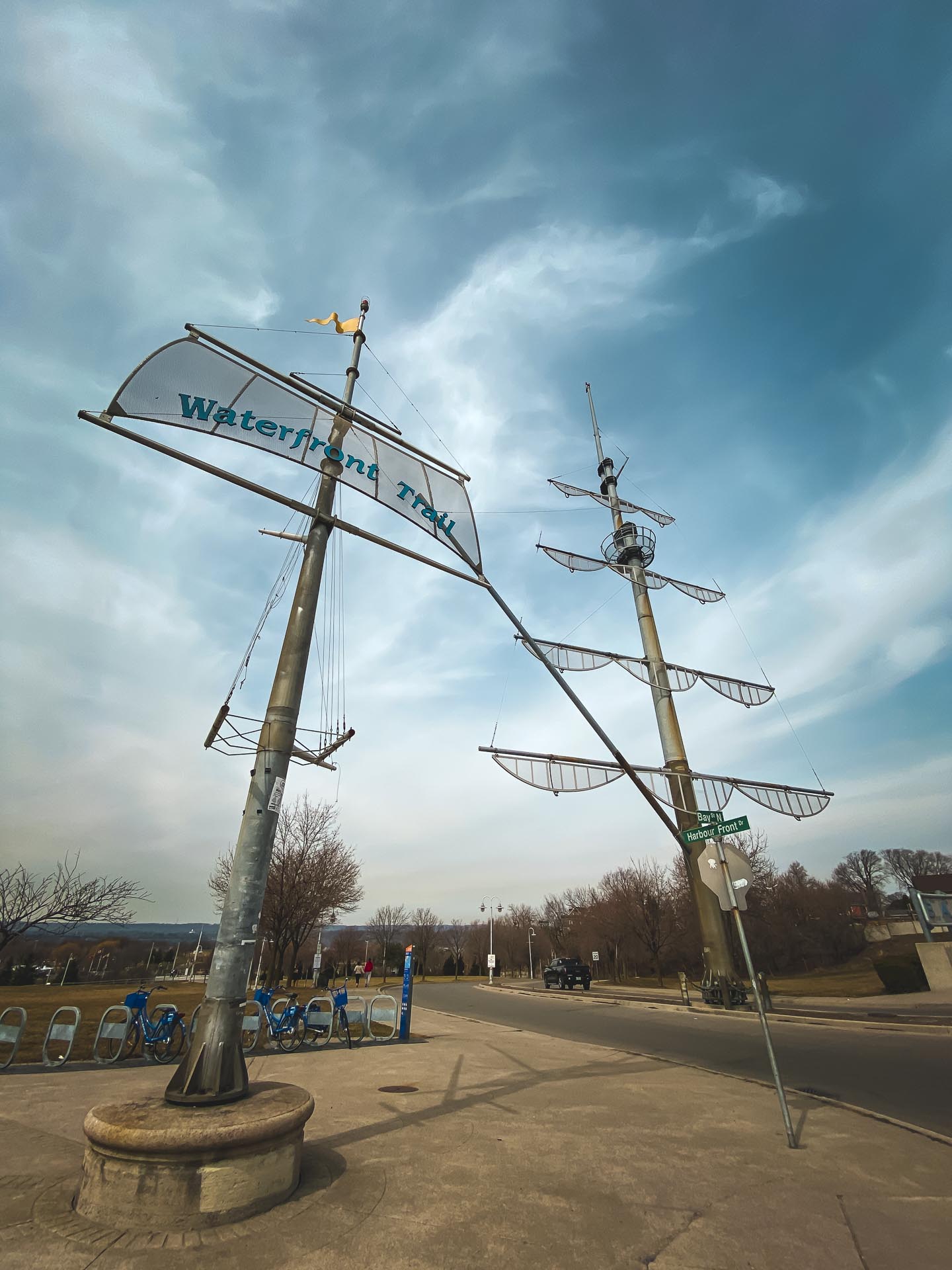
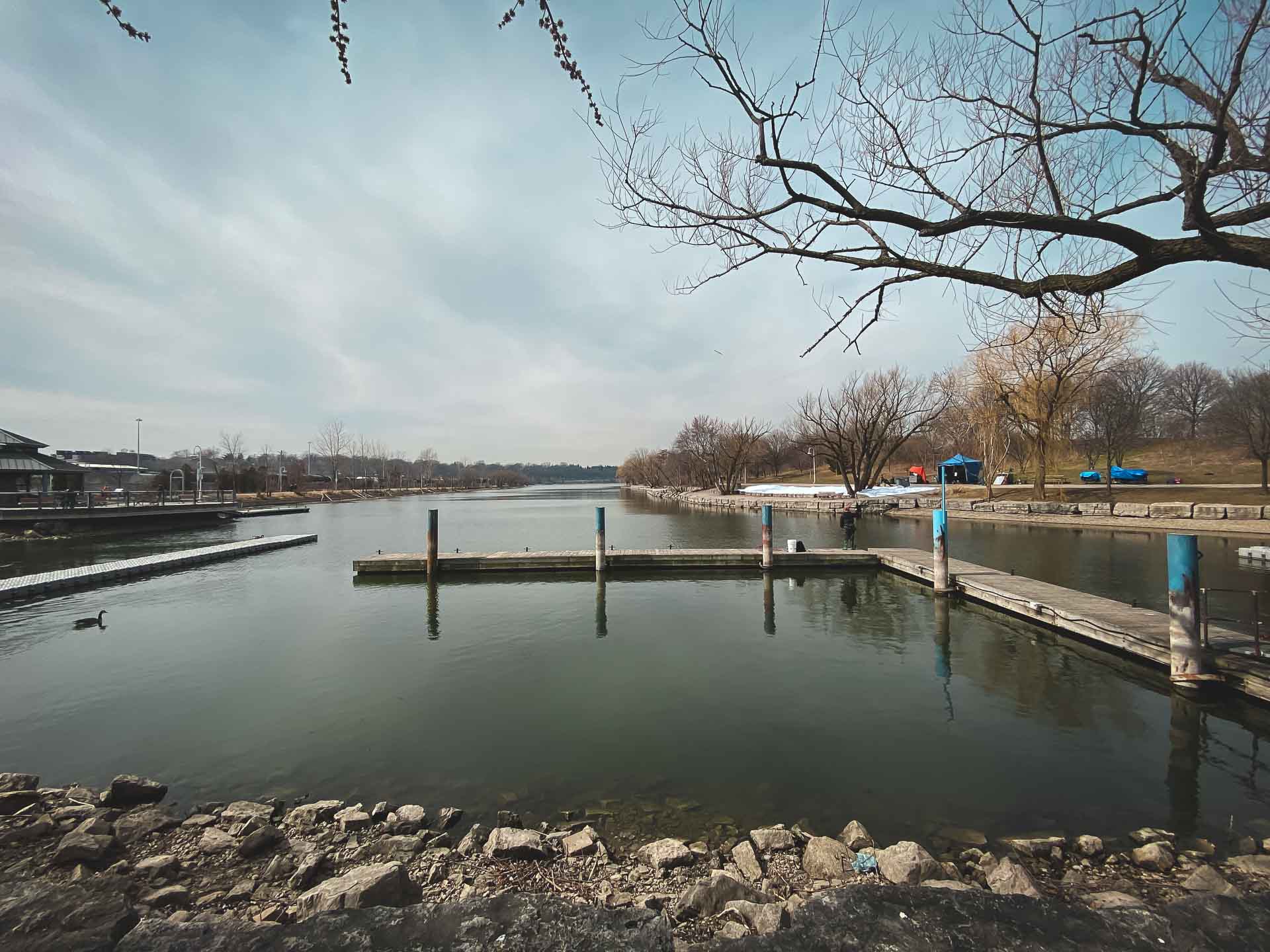
The 12 km Waterfront Trail connects Pier 4 Park and Bayfront Park and is perfect for an afternoon stroll, run, or bike ride. Along the way, you can grab an ice cream cone at Scoops, rent bikes, or watch people fishing from the pier. The Harbour West Trolley also winds along the trail, offering a narrated tour of the area’s history.
Dave & Deb’s Tip: We love renting bikes and cycling a portion of this trail. It’s flat, paved, and offers great views of the harbour. A stop for an ice cream cone at Scoops is a mandatory part of the experience!
13. Take a Harbour Cruise
For a different perspective, take a 50-minute narrated tour of the harbour with the Hamilton Waterfront Trust. The captain shares fascinating details about the history of the area, from its industrial past to its recent revitalization. Longer dinner cruises are also available on the Harbour Queen.
Note for 2025: Be sure to check the cruise operator’s website for the current schedule and availability.
Dave & Deb’s Tip: The sightseeing cruise is the best way to understand the scale of the harbour and its industrial heritage. The captain’s narration is surprisingly interesting and gives you a whole new perspective on “Steeltown.”
14. Relax in Gage Park
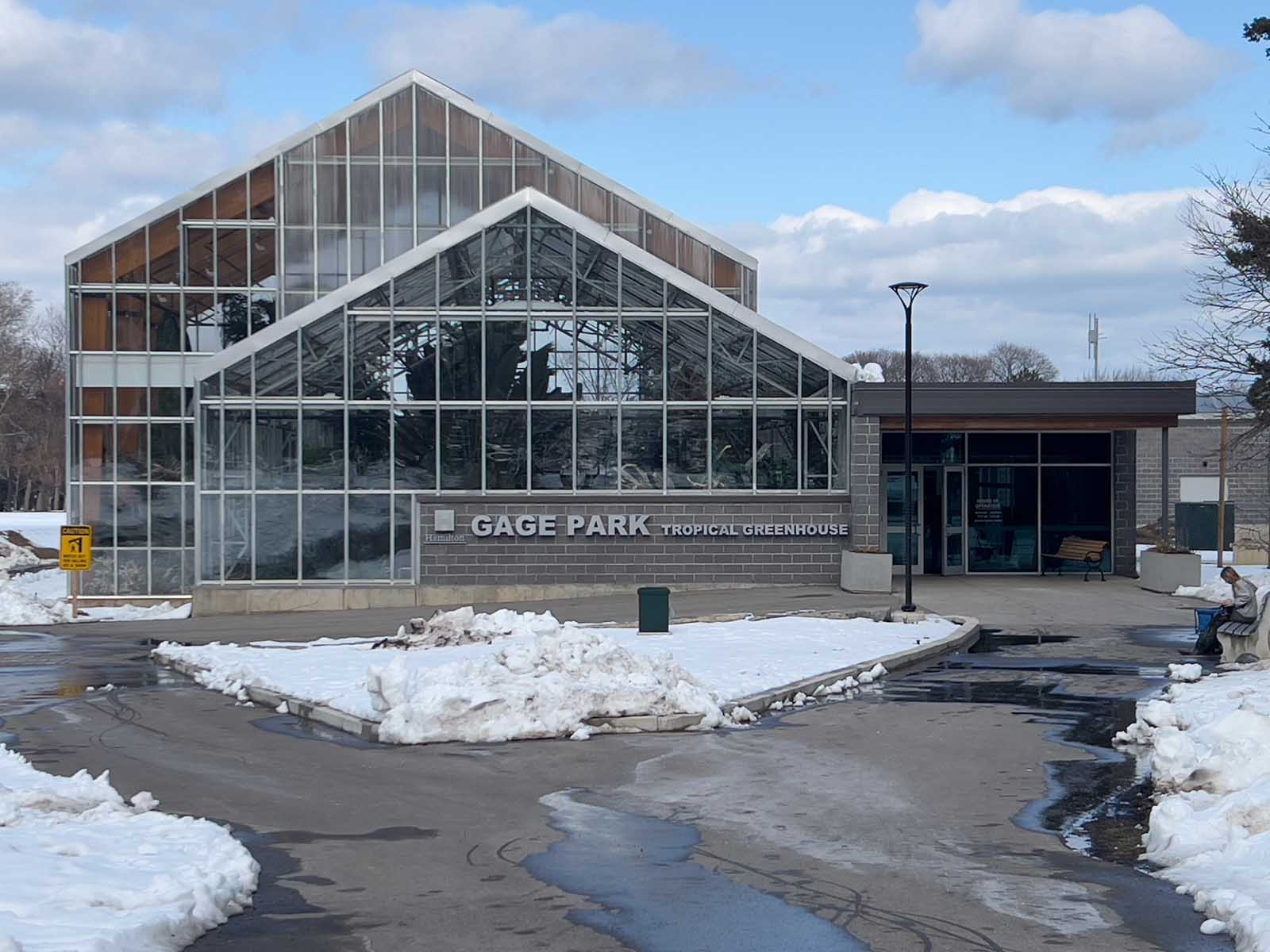
This huge city park in East Hamilton is a destination in itself. Its main features are the beautiful themed gardens and the impressive Tropical Greenhouse. The park also contains the Hamilton Children’s Museum, walking trails, sports fields, and a wading pool. In the winter, it transforms with a free public skating rink and winter lights festivals.
Note for 2025: Please verify the status of the Hamilton Children’s Museum, as it has undergone recent renovations.
Dave & Deb’s Tip: The Tropical Greenhouse is the star attraction here, especially on a cold winter day. Stepping inside from the snow into a lush, warm greenhouse feels like a mini-vacation to the tropics.
15. Grab Fish and Chips at Hutch’s
You can’t talk about the Hamilton waterfront without mentioning Hutch’s. This classic, old-school eatery has been serving up fish and chips, ice cream, and burgers right on the beach for decades. It’s a true local institution. I used to come here all the time when I was a kid. WE lived just down the road in Burlington, and my Dad would take us there for a treat on Sundays.
Dave & Deb’s Tip: Be prepared for a lineup on a sunny summer day—it’s always worth the wait. The fish and chips are a classic, but don’t forget to grab a milkshake. It’s a perfect taste of nostalgia.
Culture, Sports & Entertainment
Beyond the trails and museums, Hamilton has a vibrant cultural scene, from professional sports to live theatre.
16. Art Gallery of Hamilton
Founded in 1914, the Art Gallery of Hamilton is the oldest and largest art museum in Southern Ontario. Its permanent collection is recognized as one of the finest in Canada, featuring a mix of historical and contemporary Canadian art, including works by the Group of Seven, Emily Carr, and Tom Thomson.
Note on 2025 Pricing: This gallery often has a nuanced pricing model (e.g., free for one level, paid for special exhibitions). Please verify the current admission structure on their official website.
Dave & Deb’s Tip: The permanent collection of Canadian art is outstanding. Give yourself at least a couple of hours. The free access to the second level makes it a great, budget-friendly cultural stop on any visit
17. Canadian Football Hall of Fame
Located at Tim Hortons Field, home of the Hamilton Tiger-Cats, the Canadian Football Hall of Fame celebrates the history and heroes of the Canadian Football League (CFL). Through interactive displays and artifacts, it offers a deep dive into all aspects of Canadian football.
Dave & Deb’s Tip: Even if you’re not a huge CFL fan, it’s worth a look if you’re already at Tim Hortons Field for a game. It offers a great look into a unique and important piece of Canadian sports culture, and it is free to enter.
18. Catch a Hamilton Tiger-Cats Game
Hamilton is often called the “birthplace of Canadian football,” and the city’s passion for the game is infectious. To see it firsthand, grab tickets to see the Hamilton Tiger-Cats play at Tim Hortons Field. The CFL season typically runs from June to November.
Dave & Deb’s Tip: The atmosphere at a Ticats game is electric. Hamilton fans are famously passionate. For a true local experience, grab some black and gold gear and join the “Oskee Wee Wee” chants.
19. Hess Village
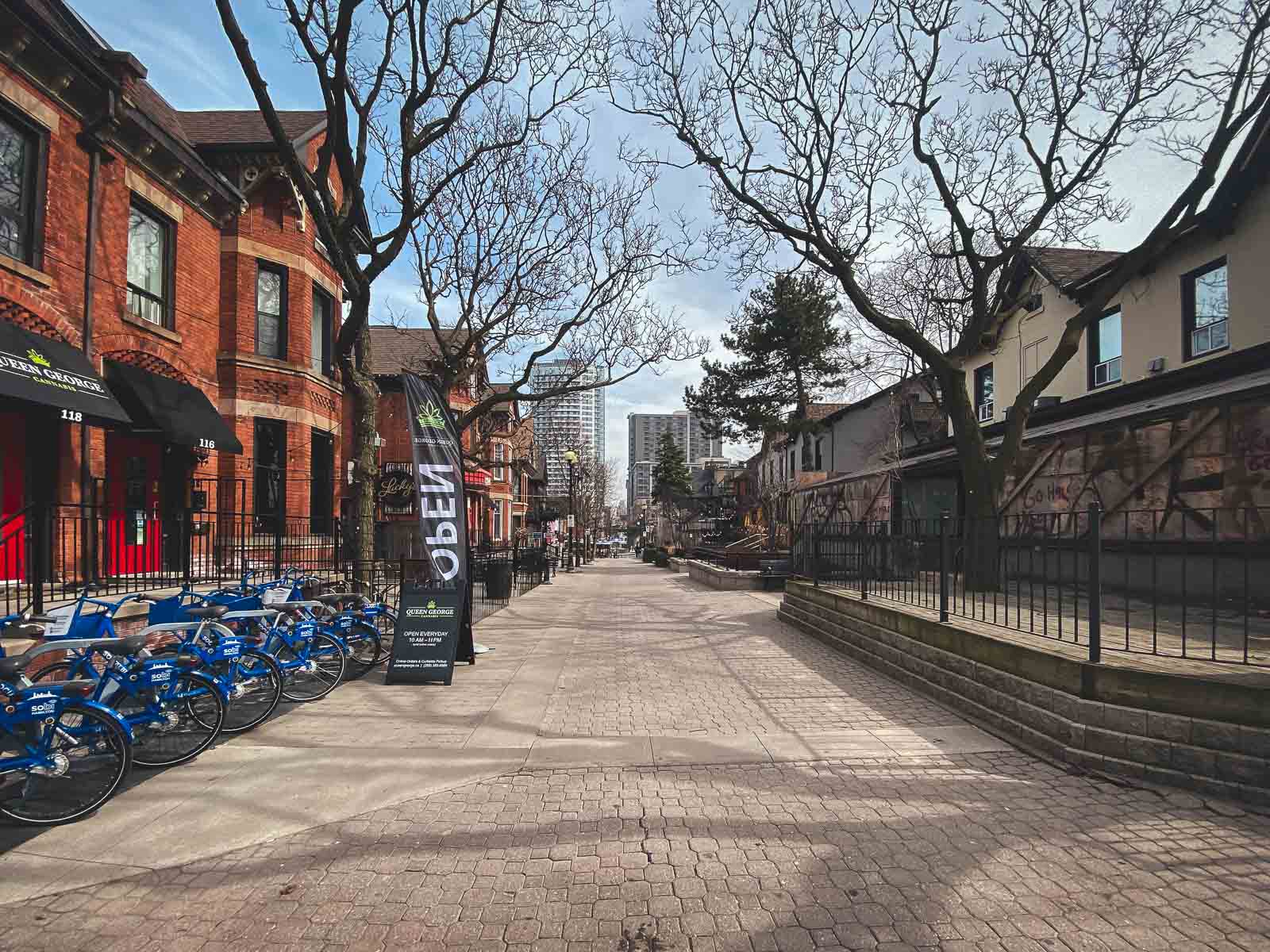
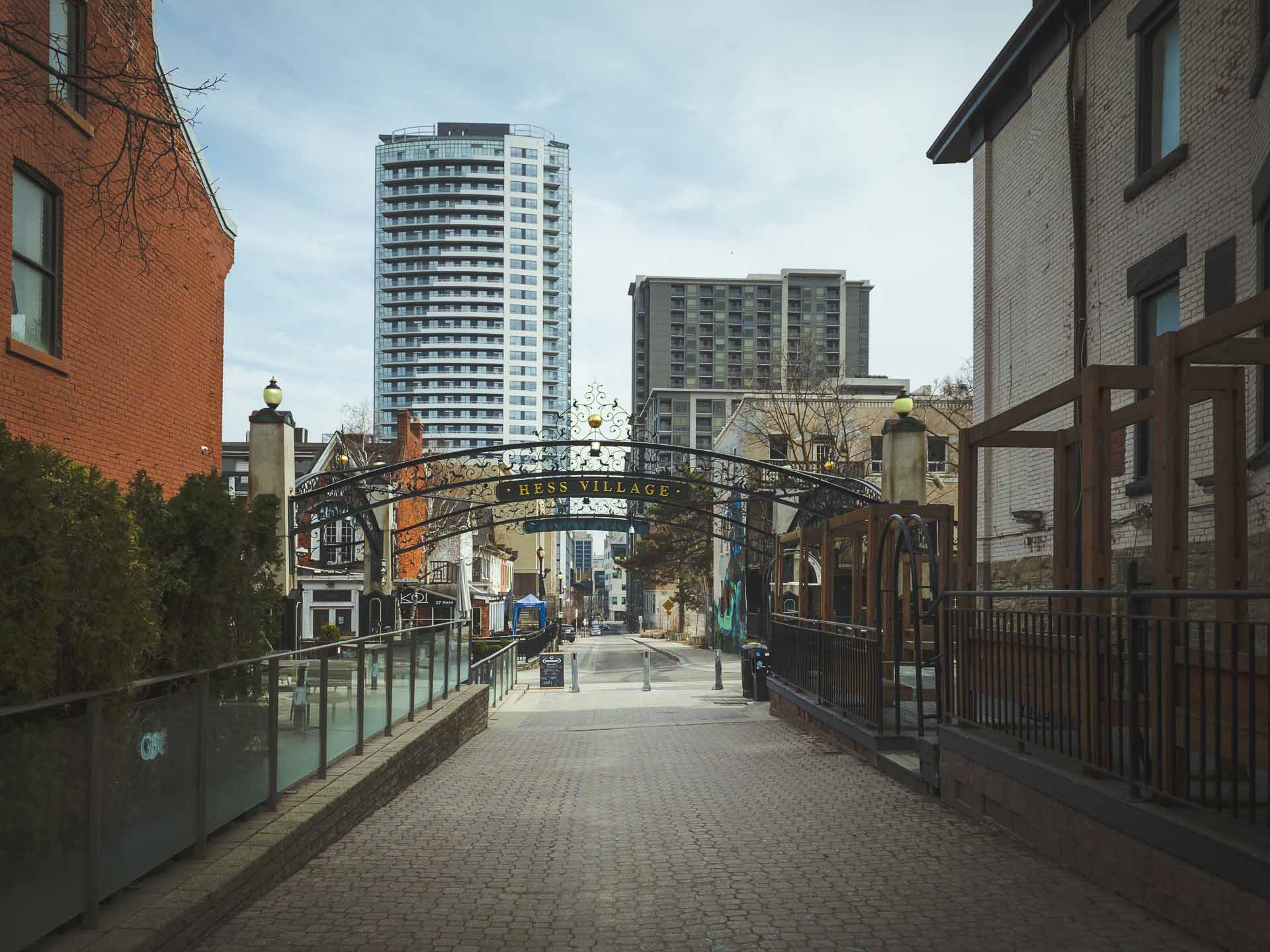
When the sun goes down, Hess Village is the heart of Hamilton’s nightlife. This cobblestone, pedestrian-only area is lined with historic buildings that house a dense concentration of restaurants, bars, and patios with live music. It’s a lively spot, especially on a warm summer evening.
Dave & Deb’s Tip: Hess Village is great for a patio drink, but if you’re looking for a quieter dinner, explore the restaurants on nearby King William Street, which has become the city’s unofficial “Restaurant Row.”
20. Theatre Aquarius
For a night of live theatre, Theatre Aquarius is the city’s premier professional theatre company. Located downtown in the Dofasco Centre for the Arts, it stages high-quality productions, from classic plays to contemporary musicals.
Dave & Deb’s Tip: We’ve seen a few shows here, and the quality of the productions is always impressive. It’s a great way to experience top-level Canadian theatre without the Toronto prices.
Food & Drink
Hamilton’s food scene has exploded in recent years, but some classics never go out of style.
21. Hamilton Farmers’ Market
Established in 1837, the Hamilton Farmers’ Market is a year-round market and one of the oldest landmarks in the city. With more than fifty vendors, you can find everything from fresh local produce and meats to artisan cheeses and handmade goods. It’s located right downtown beside the central library.
Dave & Deb’s Tip: Don’t just browse—plan to have lunch here. There are some fantastic food stalls inside offering everything from tacos and falafel to fresh pasta. It’s a great way to sample the local food scene all in one place.
FAQ: Visiting Hamilton, Ontario
What is Hamilton best known for?
Hamilton is famous for its industrial heritage (it’s called “Steeltown” for a reason), its incredible number of waterfalls (over 100), and a rapidly growing arts and food scene.
Is Hamilton worth a day trip from Toronto?
Absolutely. It’s an easy drive from Toronto, and it offers a completely different vibe. It’s especially worth it for outdoor lovers who want to explore the waterfalls and hiking trails of the Niagara Escarpment.
How do you get around Hamilton?
While the downtown is walkable, a car is the best way to get around, especially for reaching the various conservation areas, waterfalls, and attractions that are spread out across the city.
So, Where Will You Go First?
Hamilton has successfully reinvented itself from a gritty industrial city into a vibrant destination with a surprising amount of natural beauty. From its historic castles and museums to the hundreds of waterfalls waiting to be explored, “The Hammer” offers a perfect blend of urban energy and outdoor adventure. We hope this guide has helped you discover all the amazing things to do in Hamilton.
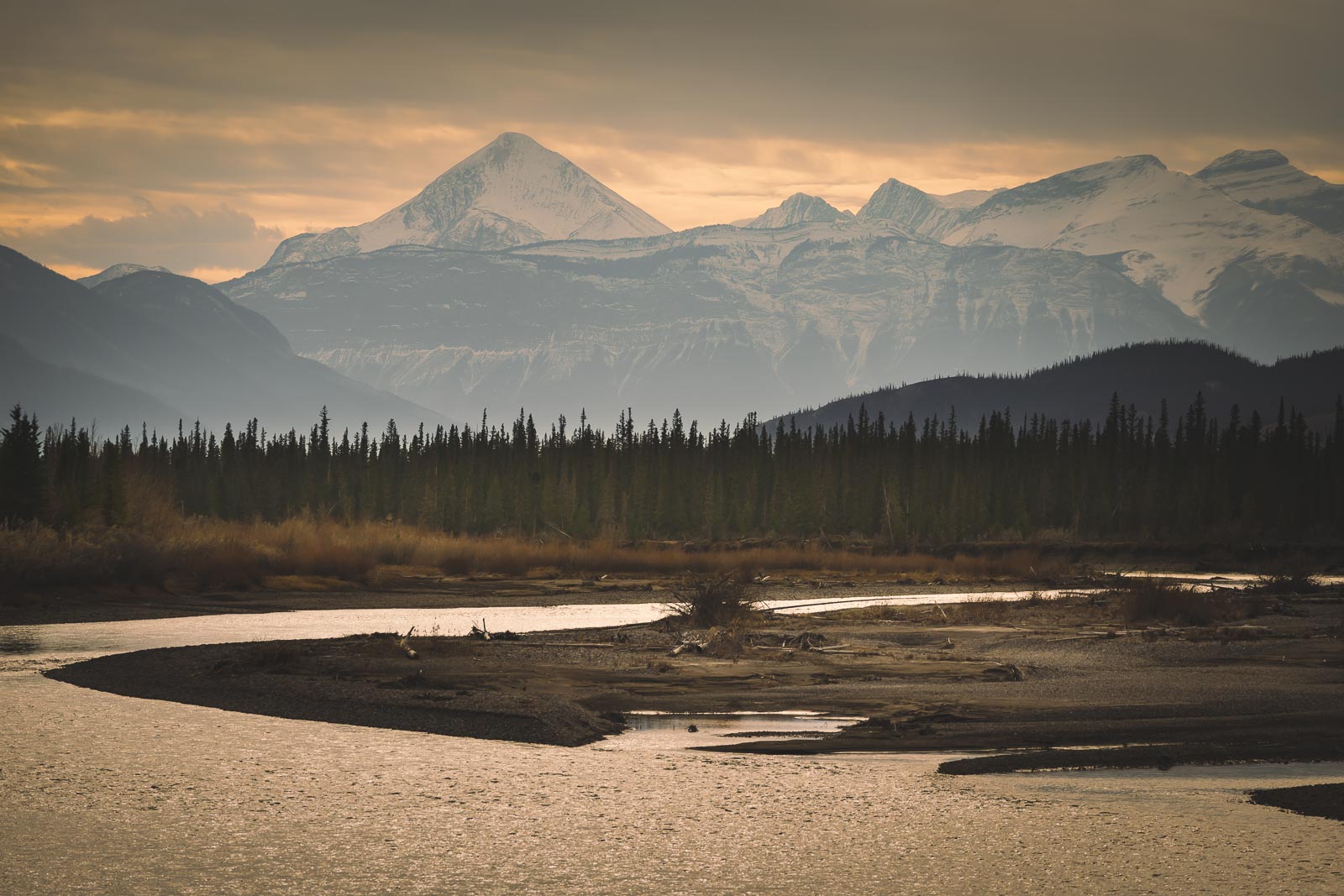
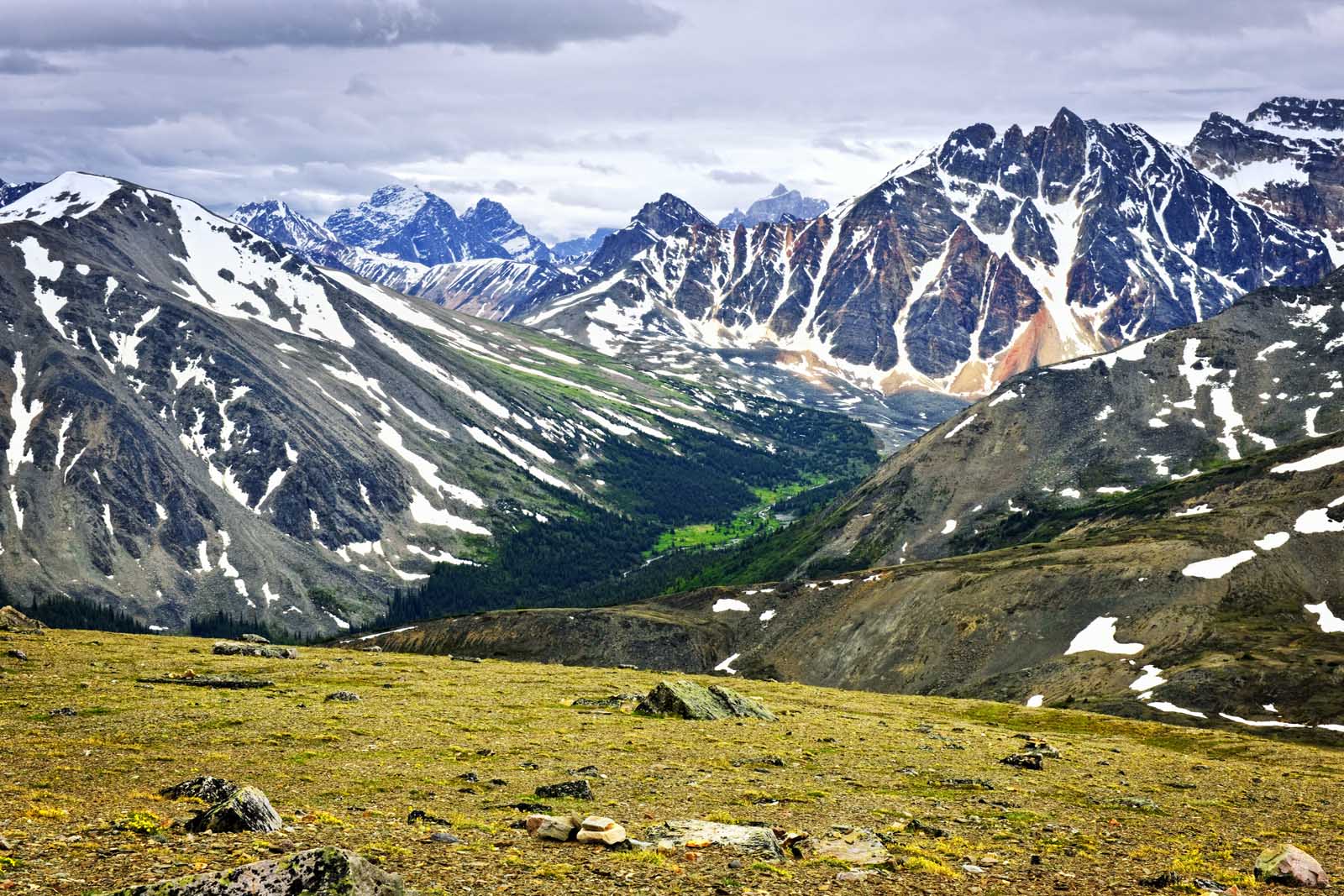
Jasper National Park is the largest national park in the Canadian Rockies, spanning an incredible 11,000 square kilometres (4,200 sq miles). It boasts some of the most awe-inspiring hikes for every skill level. With its shimmering glacial lakes, massive glaciers, and abundant wildlife, Jasper is a hiker’s paradise.
But you don’t have to venture deep into the backcountry to experience it. Many of the best trails and walking routes are just minutes from the town of Jasper, making it perfect for memorable day hikes. After many trips to this part of Alberta, we’ve learned that while Banff gets a lot of the attention, Jasper offers a wilder, more rugged beauty that we keep coming back to.
This guide is designed to help you find the perfect trail for your trip. We’ve broken down our favourite hikes by difficulty and included all the practical details you need to hit the trail with confidence.
Map of the Best Jasper Hikes
Best Jasper Hikes at a Glance (Top 5 Picks)
If you’re short on time, this quick guide will point you to the can’t-miss trails in the park.
HikeDistance (Round Trip)DifficultyBest ForMaligne Canyon3.4 km loopEasyWaterfalls & GorgesValley of the Five Lakes4.7 km loopEasy / ModerateBeautiful Lakes & FamiliesEdith Cavell Meadows8.4 km loopModerateGlacier & Wildflower ViewsSulphur Skyline7.9 km loopModerate360-Degree Views & Hot SpringsBald Hills15 kmDifficultPanoramic Vistas
Planning Your Jasper Hiking Trip
Before you lace up your boots, here are a few essential tips for planning your adventure.
Jasper National Park Pass Info
To enter Jasper National Park, you must have a valid Park Pass. You can buy it at the park gates upon entry or online in advance.
Daily Pass (2025 rates): $10.50 CAD per adult or $21.00 per vehicle/group.
Discovery Pass (Annual): $72.25 CAD per adult or $145.25 for a family/group. This gives you unlimited access to all of Canada’s national parks for 12 months. If you plan to visit for more than a few days or see other parks like Banff, this is the best value.
You can purchase your pass online from the Parks Canada website. Please verify all prices on the official site, as they can change.
Getting to the Trailheads
Jasper is best explored by car. The park is located approximately 4 hours (365 km / 226 miles) from Edmonton and about 3.5 – 4 hours (288 km / 179 miles) from Banff via the incredibly scenic Icefields Parkway.
Check car rental rates here.
Bear Safety & What to Pack
Jasper is home to both grizzly and black bears. It is essential to be bear-aware on all trails.
Carry Bear Spray: Know how to use it and keep it accessible on your hip, not in your pack.
Make Noise: Talk, sing, or call out periodically to avoid surprising a bear.
Pack in Layers: Mountain weather changes quickly. Bring a waterproof jacket, a warm mid-layer, and a hat, even on a sunny day.
Bring Water and Snacks: There are no shops at the trailheads. Pack more than you think you’ll need.
Where to Stay in Jasper
We stayed at the Fairmont Jasper Park Lodge, which makes for a great luxury base. For other options, you can check out vacation rentals and hotels in the town of Jasper. There are also numerous front-country and backcountry campsites managed by Parks Canada, which should be booked well in advance.
Easy & Accessible Jasper Hikes
These trails are perfect for families, casual walkers, or for a day when you want maximum scenic reward with minimal effort. They showcase some of Jasper’s most iconic features without requiring a strenuous, all-day commitment.
1. Maligne Canyon
Length: 3.4 km (2.1 miles) loop
Elevation Gain: 118 m (387 ft)
Difficulty: Easy
Approx. Time: 1.5 – 2 hours
Trailhead: Maligne Canyon Trailhead
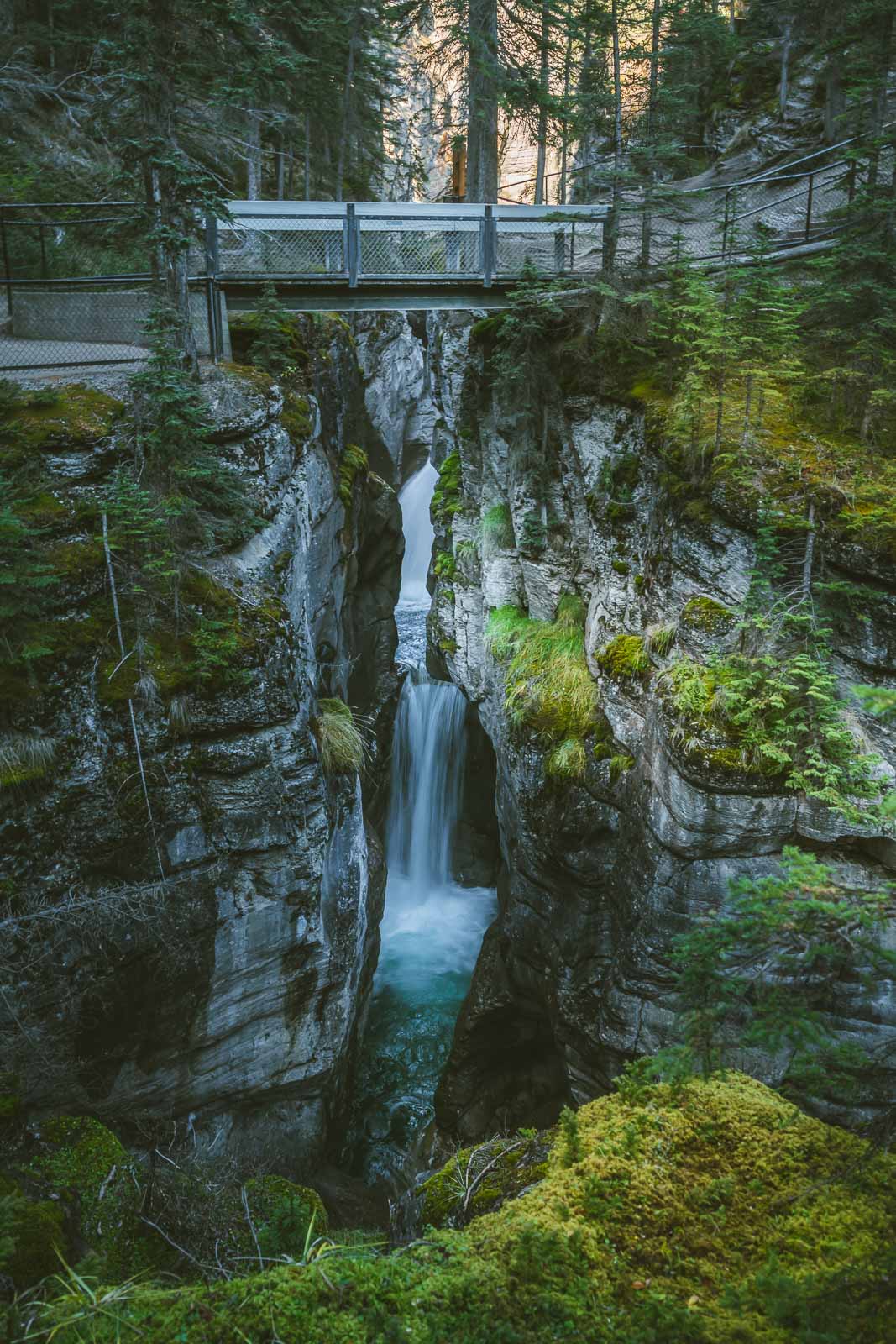
Maligne Canyon is one of the most spectacular hikes in Jasper National Park. Located just 10 minutes from town, the trail is easily accessible. The well-maintained path crosses several bridges, offering incredible views down into the deep, narrow gorge carved by the Maligne River. You’ll see waterfalls and unique rock formations as you wind your way along the canyon rim.
Dave & Deb’s Tip: The canyon is stunning in summer, but it’s a completely different world in winter. If you’re visiting then, a guided ice walk with cleats through the frozen canyon floor is one of the most unique and memorable experiences you can have in the Rockies.
2. Valley of the Five Lakes
Length: 4.7 km (2.9 miles) loop
Elevation Gain: 162 m (531 ft)
Difficulty: Easy to Moderate
Approx. Time: 1.5 – 2 hours
Trailhead: Valley of the Five Lakes Trailhead on the Icefields Parkway.
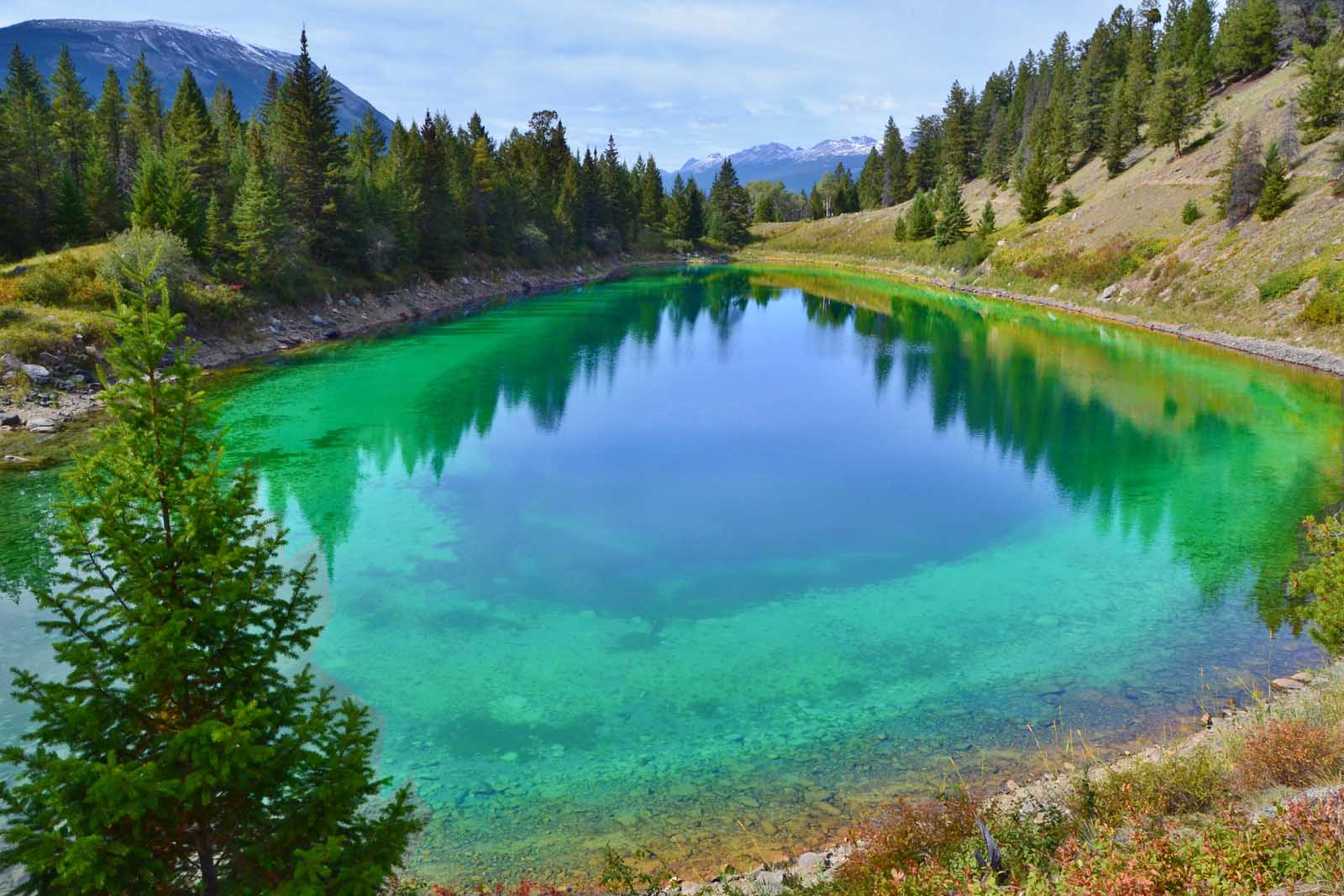
This hike is a local favourite for good reason. The trail takes you through a lush forest before arriving at a series of five pristine lakes, each glowing with its own distinct shade of jade and blue. The trail has some gentle rolling hills but is a rewarding hike for the whole family.
Dave & Deb’s Tip: The colour of the lakes is truly unbelievable on a sunny day. The Third Lake is the most vibrant and the best for photos. It’s also the most popular spot for a very chilly swim if you’re feeling brave!
3. Athabasca Falls
Length: 1.0 km (0.6 miles)
Elevation Gain: 26 m (85 ft)
Difficulty: Easy
Approx. Time: 30 – 45 minutes
Trailhead: Athabasca Falls Parking Lot on the Icefields Parkway.
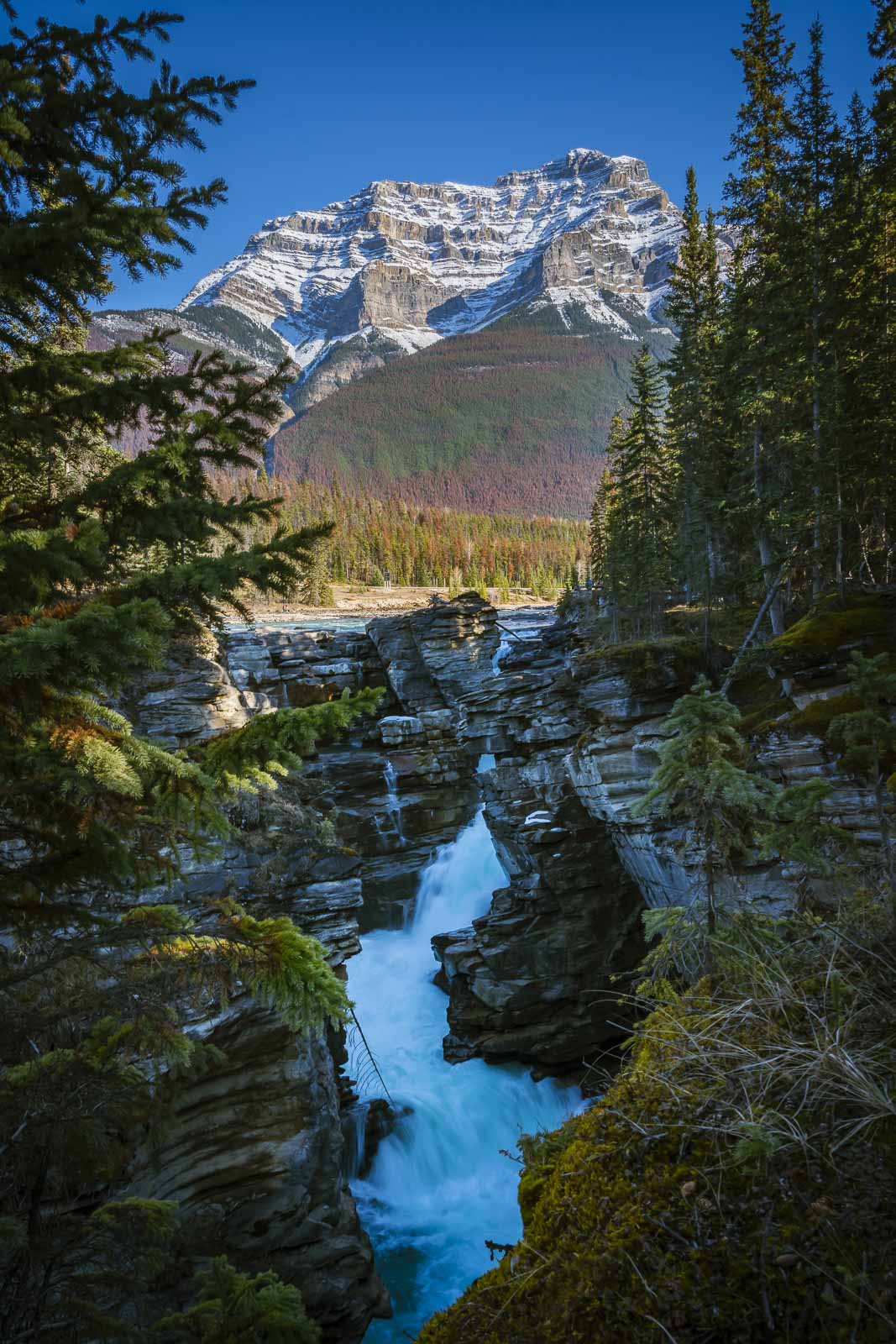
While not a long hike, Athabasca Falls is one of the most powerful and picturesque waterfalls in the Canadian Rockies. The easy, paved pathways lead to various viewpoints overlooking the falls as they roar through a narrow gorge. It’s a busy trail, but well worth the stop for the incredible views of the falls and the Athabasca River.
Dave & Deb’s Tip: The power of the water here is the main event. While the upper viewpoints are great, be sure to take the stairs down to the lower platform. You can feel the mist and hear the roar of the canyon, which really puts the force of the river into perspective.
4. Toe of the Athabasca Glacier
Length: 1.4 km (0.8 miles)
Elevation Gain: 60 m (196 ft)
Difficulty: Easy
Approx. Time: 45 minutes – 1 hour
Trailhead: Toe of the Athabasca Glacier Trailhead at the Columbia Icefield.
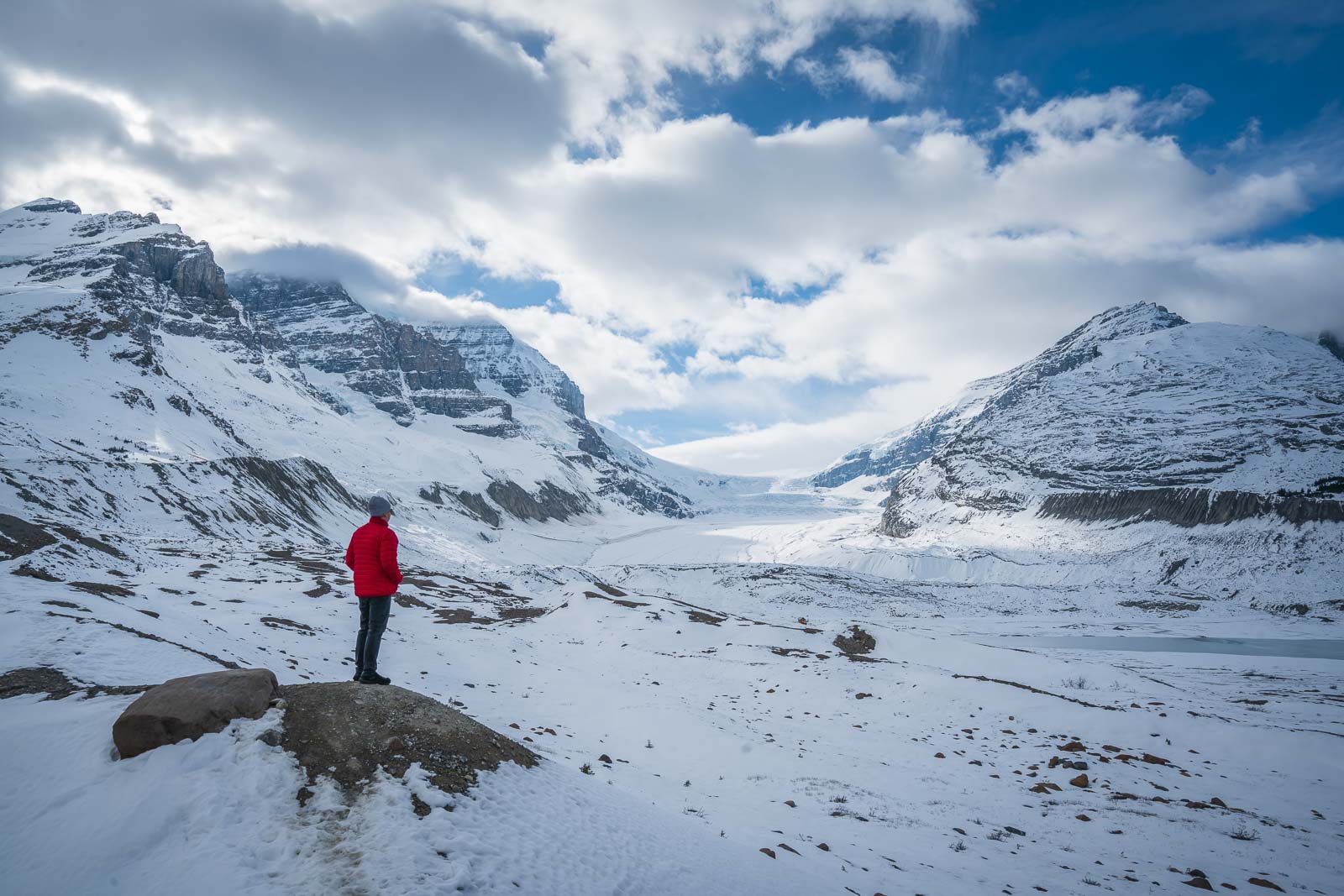
This is a brilliant, family-friendly hike that offers a free alternative to the guided tours on the glacier. The trail leads you over the rocky moraine left behind by the retreating glacier. Along the route, signs mark the glacier’s location in different years, providing a sobering look at how much it has shrunk.
Dave & Deb’s Tip: It is extremely important to stay behind the ropes and on the marked trail. The terrain near the glacier can be unstable and there are unobservable crevasses that are very dangerous. This hike is about witnessing the glacier’s scale from a safe distance.
5. Jasper Discovery Trail
Length: 8.5 km (5.2 miles) loop
Elevation Gain: 264 m (866 ft)
Difficulty: Easy
Approx. Time: 2 – 3 hours
Trailhead: Multiple access points from parking lots in the town of Jasper.
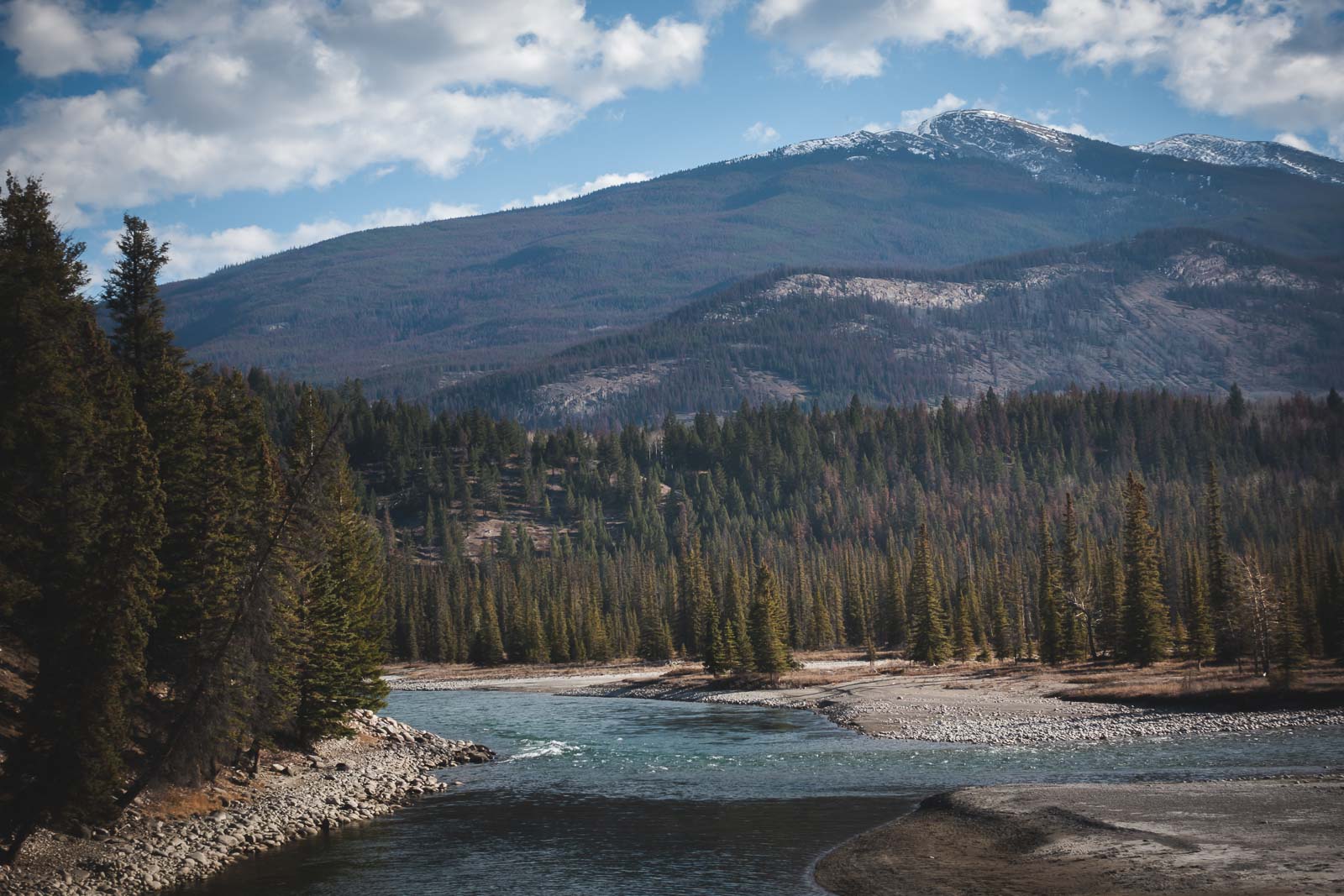
If you want to explore close to town, the Jasper Discovery Trail is a great choice. This easy trail takes you on a stroll around the town’s perimeter, offering lovely views of the surrounding mountains and the Athabasca and Miette rivers. It’s easy to navigate; just follow the bear signs.
Dave & Deb’s Tip: This is the perfect thing to do on your arrival day. It helps you get your bearings, stretch your legs after a long drive, and you can scout out some dinner spots in town along the way.
6. Wapiti Trail
Length: 4.8 km (3 miles) out & back
Elevation Gain: 113 m (370 ft)
Difficulty: Easy
Approx. Time: 1 – 1.5 hours
Trailhead: Wapiti Campground
The Wapiti Trail is a lovely, gentle walk that follows the path between the Icefields Parkway and the Athabasca River. Starting from the Wapiti Campground, it heads northbound towards the town of Jasper. It’s a relatively flat and quiet trail, perfect for a morning stroll or for families looking to enjoy the riverside scenery without a major climb.
Dave & Deb’s Tip: While it’s a great short hike on its own, you can also use this trail to walk all the way from the campground into town for dinner, which is a great way to earn your meal and enjoy the evening light on the mountains.
7. Wabasso Lake Trail
Length: 7.7 km (4.7 miles) out & back
Elevation Gain: 276 m (905 ft)
Difficulty: Easy
Approx. Time: 2 – 2.5 hours
Trailhead: Wabasso Lake Trailhead
The Wabasso Lake Trail is a popular but peaceful hike that takes you through a dense forest to a secluded, marshy lake. The trail has some rolling terrain but isn’t overly strenuous, making it another great option for families. The real reward is reaching the quiet shores of Wabasso Lake and enjoying the solitude and mountain reflections before heading back.
Dave & Deb’s Tip: This trail is known for being muddy in sections, especially after it rains, so waterproof hiking shoes are a good idea. It’s also a great spot for birdwatching if you take your time by the lake.
Moderate Hikes in Jasper (5km – 10km)
Ready for more of a challenge? These moderate trails involve more elevation gain but reward you with spectacular, high-country views that you have to work for.
8. Edith Cavell Meadows
Length: 8.4 km (5.2 miles) loop
Elevation Gain: 582 m (1909 ft)
Difficulty: Moderate
Approx. Time: 3 – 4 hours
Trailhead: End of Cavell Road
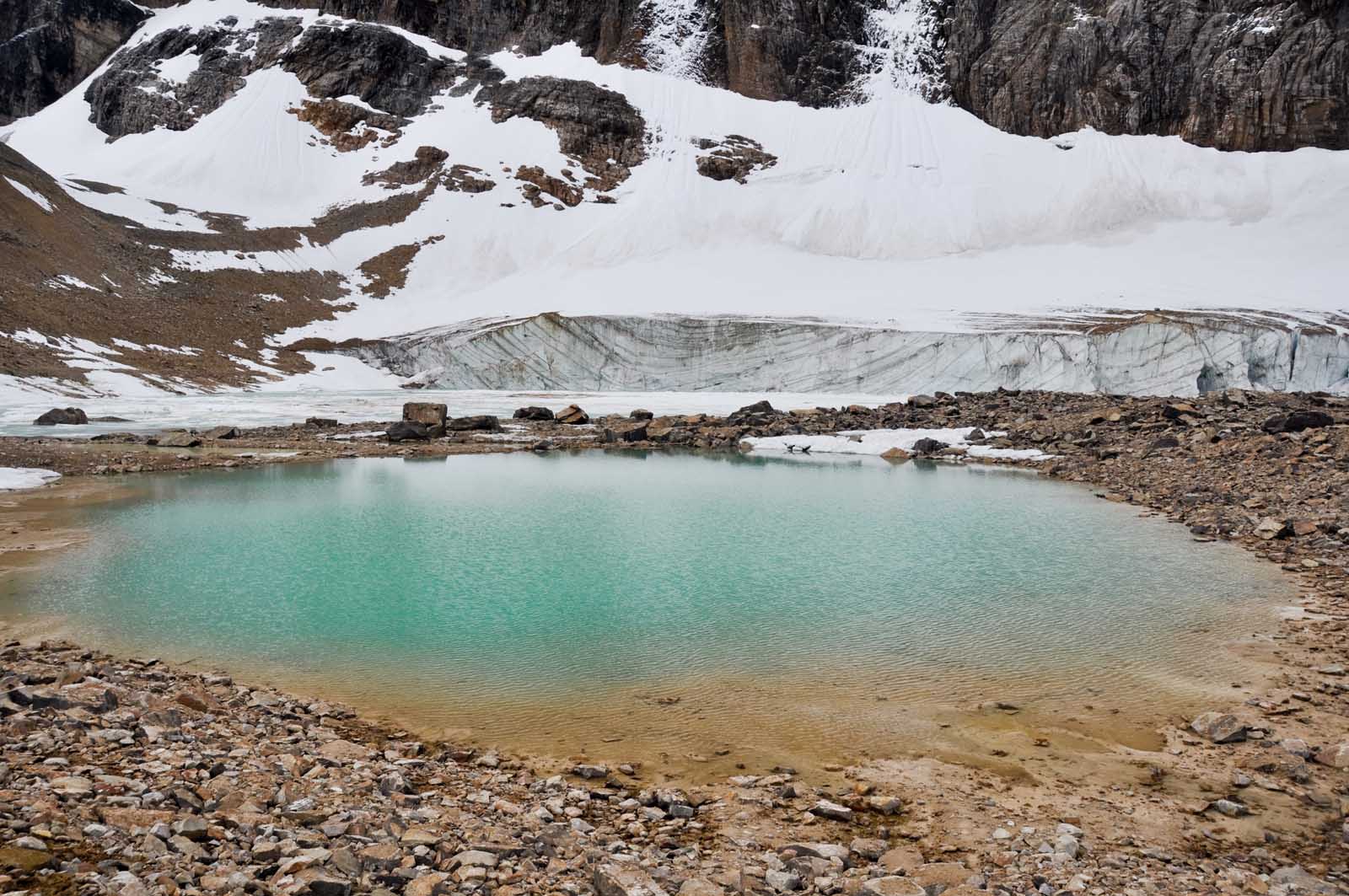
The Edith Cavell Meadows hike is a beautiful and rewarding trail in Jasper National Park. It begins on a paved path along the Glacier Trail, leading to a stunning viewpoint of Angel Glacier and Cavell Pond. The trail then climbs steadily through a rocky moraine and subalpine forest before opening up into a beautiful meadow that is filled with wildflowers in July and August. You are treated to incredible glacier views for the entire journey.
Dave & Deb’s Tip: The drive to the trailhead is an adventure in itself, with tight switchbacks. The real star here is Angel Glacier. You get great views from the lower lookout, but push on to the upper meadows. The sight of the glacier framed by wildflowers is absolutely worth the climb.
9. Sulphur Skyline Trail
Length: 7.9 km (4.8 miles) out & back
Elevation Gain: 653 m (2142 ft)
Difficulty: Moderate
Approx. Time: 3.5 – 5 hours
Trailhead: Miette Hot Springs parking lot
The Sulphur Skyline Trail is one of Jasper’s signature hikes, known for its unrelenting uphill climb that pays off with some of the best panoramic views in the park. The trail starts at a steady incline and just keeps going. Once you break through the treeline, the path continues to a ridge offering a breathtaking 360-degree scene of the surrounding peaks and the Fiddle Valley below.
Dave & Deb’s Tip: Don’t forget your swimsuit! The ultimate reward for this tough hike is a long soak in the Miette Hot Springs, located right at the trailhead. Trust us, your tired muscles will thank you. It’s the perfect end to a challenging day on the trail.
10. Pyramid Lake Loop
Length: 5.6 km (3.4 miles) loop
Difficulty: Moderate
Elevation Gain: 203 m (666 ft)
Trailhead: Multiple access points near Pyramid Lake.
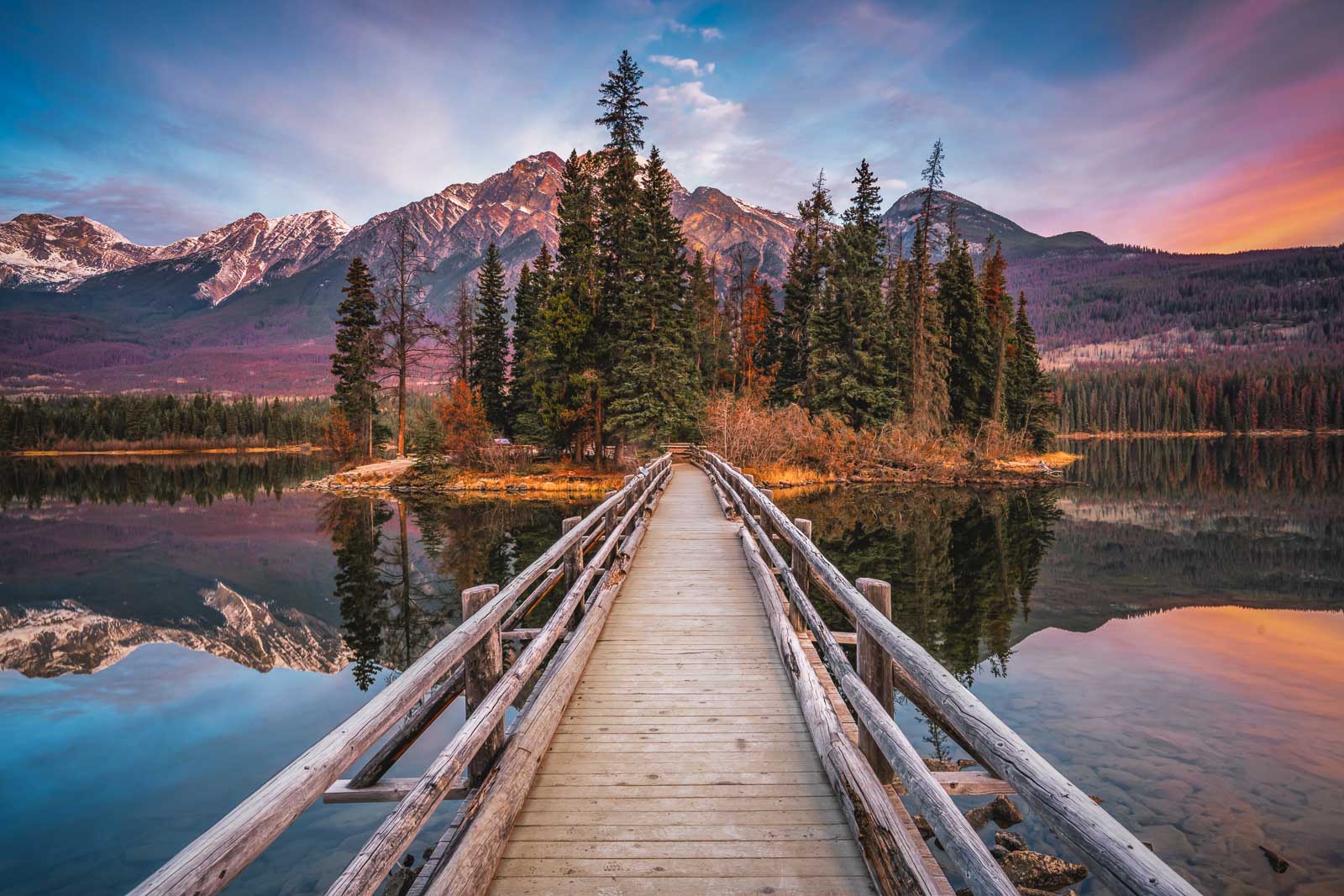
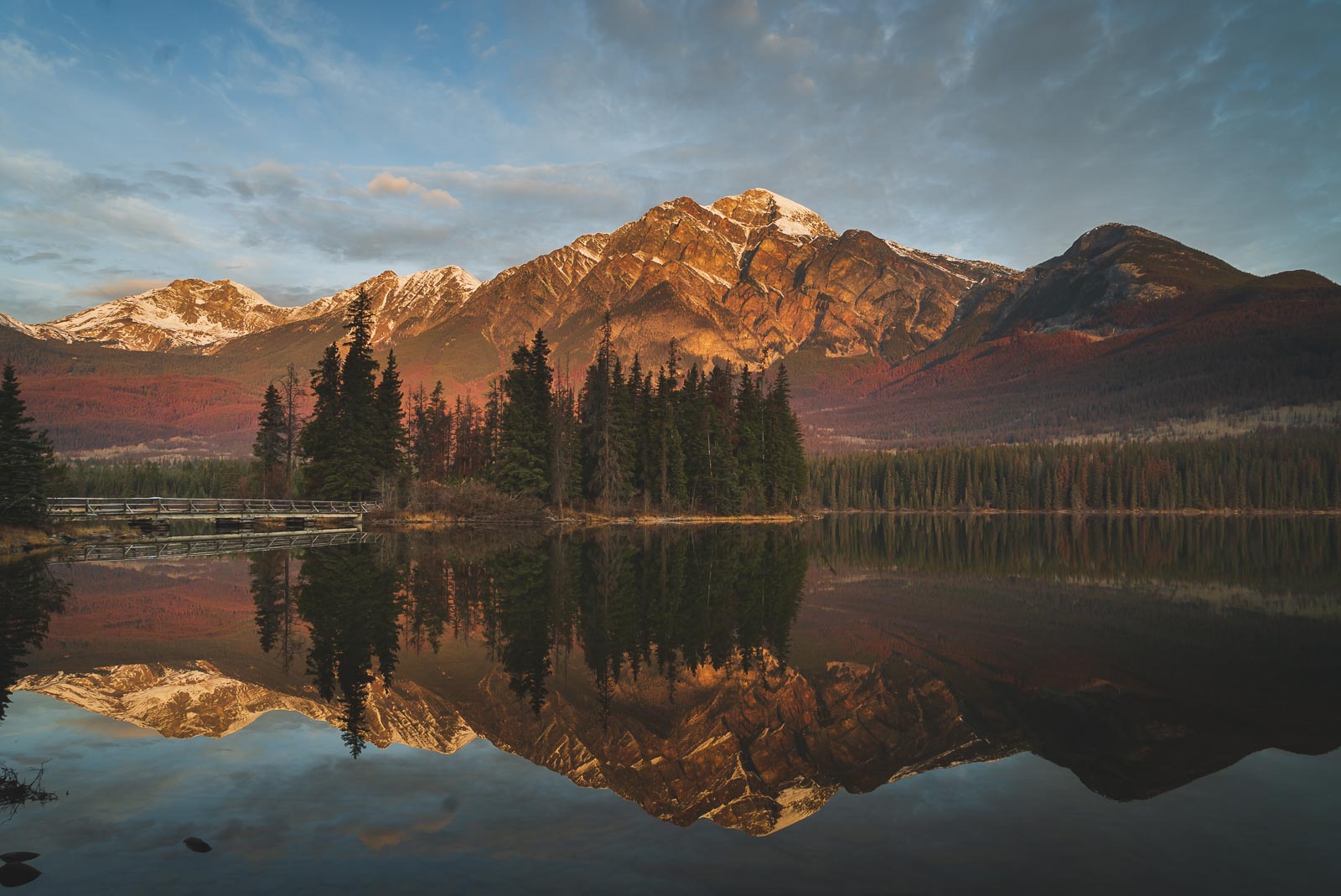
The Pyramid Lake Loop is a great choice for an afternoon hike with beautiful views, located just a few minutes from the town of Jasper. The trail climbs through the forest to viewpoints overlooking the iconic Pyramid Mountain and Pyramid Lake. There are many different intersecting routes in the area, but most lead back to the main trail. It’s also a dog-friendly trail, as long as your canine companion is on a leash.
Dave & Deb’s Tip: For the best photos of Pyramid Mountain reflected in the water, make sure you take the short walk over the bridge to Pyramid Island either before or after your hike. It’s one of the most photographed spots in Jasper for a reason.
Difficult Hikes in Jasper (10km+)
For experienced hikers looking for a serious challenge, these trails offer some of the most expansive and rewarding views in the entire park. Be prepared with sturdy hiking boots, plenty of water, and bear spray.
11. Bald Hills
Length: 15 km (9.3 miles) out & back
Elevation Gain: 780 m (2559 ft)
Difficulty: Difficult
Approx. Time: 5 – 7 hours
Trailhead: Maligne Lake parking area (furthest lot).
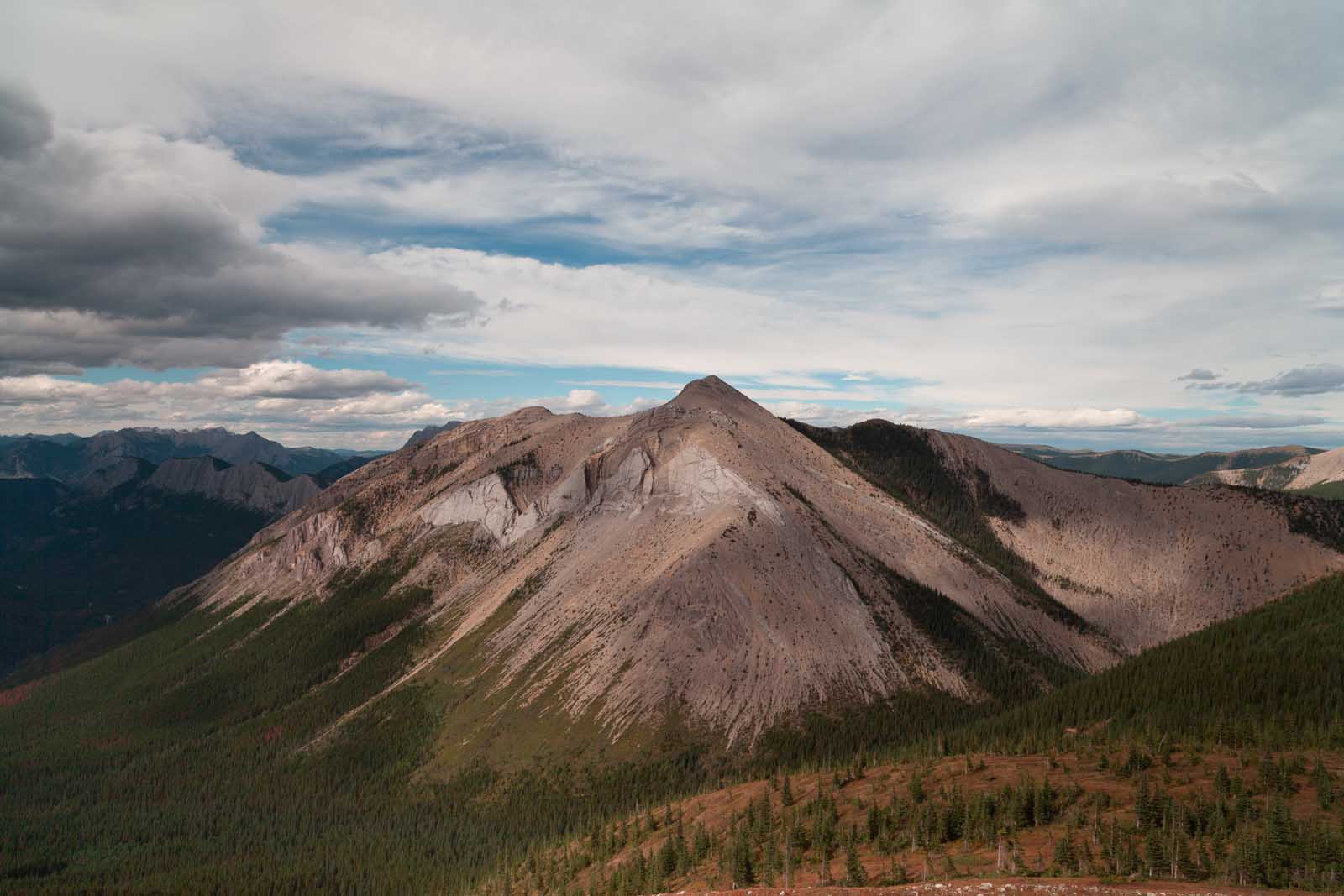
For views high above the treeline, nowhere is better than the summit of the Bald Hills. The trail follows a wide fire road for most of the climb, with a steep shortcut option available for those who want it. As you gain elevation, the trees thin out and the views of Maligne Lake and the surrounding mountain ranges become increasingly spectacular. The final push to the summit ridge opens up to a stunning 360-degree panorama.
Dave & Deb’s Tip: The final push to the true summit beyond the main viewpoint is a bit of a scramble, but it’s where you’ll leave 90% of the other hikers behind. The 360-degree panorama from the very top is one of the best in the Canadian Rockies.
12. Opal Hills Loop
First Grizzly Sighting
Length: 8.0 km (5 miles) loop
Elevation Gain: 517 m (1696 ft)
Difficulty: Difficult
Approx. Time: 3 – 5 hours
Trailhead: Maligne Lake parking area (near the boat house).
Don’t let the shorter distance fool you; the Opal Hills Loop is a steep and strenuous workout that takes you straight up. The trail climbs relentlessly through the forest before opening into a beautiful alpine meadow that is often filled with wildflowers. This hike is a great choice if you’re looking for a challenging climb with rewarding views and fewer crowds than the nearby Bald Hills trail.
Dave & Deb’s Tip: This is a steep one, so hiking poles are your best friend, especially for the descent. The real reward is the alpine meadow at the top, which is a great place to spot marmots and pikas in the summer.
13. Whistlers Mountain Summit
Scenic view from Whistlers Mountain in Jasper National park, Canada
Length: 12.7 km (7.9 miles) out & back
Elevation Gain: 968 m (3175 ft)
Difficulty: Difficult
Approx. Time: 5 – 7 hours
Trailhead: Upper station of the Jasper Skytram.
While the Jasper Skytram whisks you most of the way up the mountain, the hike to the true summit is a challenging adventure at high elevation. From the upper tram station, the trail continues to climb across a rocky, exposed ridge. The path can be slippery with snow even in summer. The reward is an unparalleled view over the town of Jasper, the Athabasca Valley, and countless mountain ranges stretching to the horizon.
Dave & Deb’s Tip: Don’t be fooled by the tram ride; this is a proper mountain hike. Be prepared for wind and cold temperatures at the top, even in August. The view from the summit makes you feel like you’re on top of the world.
FAQ: Jasper National Park Hikes
What is the best hike in Jasper?
One of the best all-around hikes is the Valley of the Five Lakes for its stunning colours and accessibility. For a more challenging day with epic rewards, the Sulphur Skyline Trail is a signature Jasper experience, especially with a soak in the hot springs afterward. The “best” one really depends on your fitness level and what you want to see!
What should I not miss in Jasper National Park?
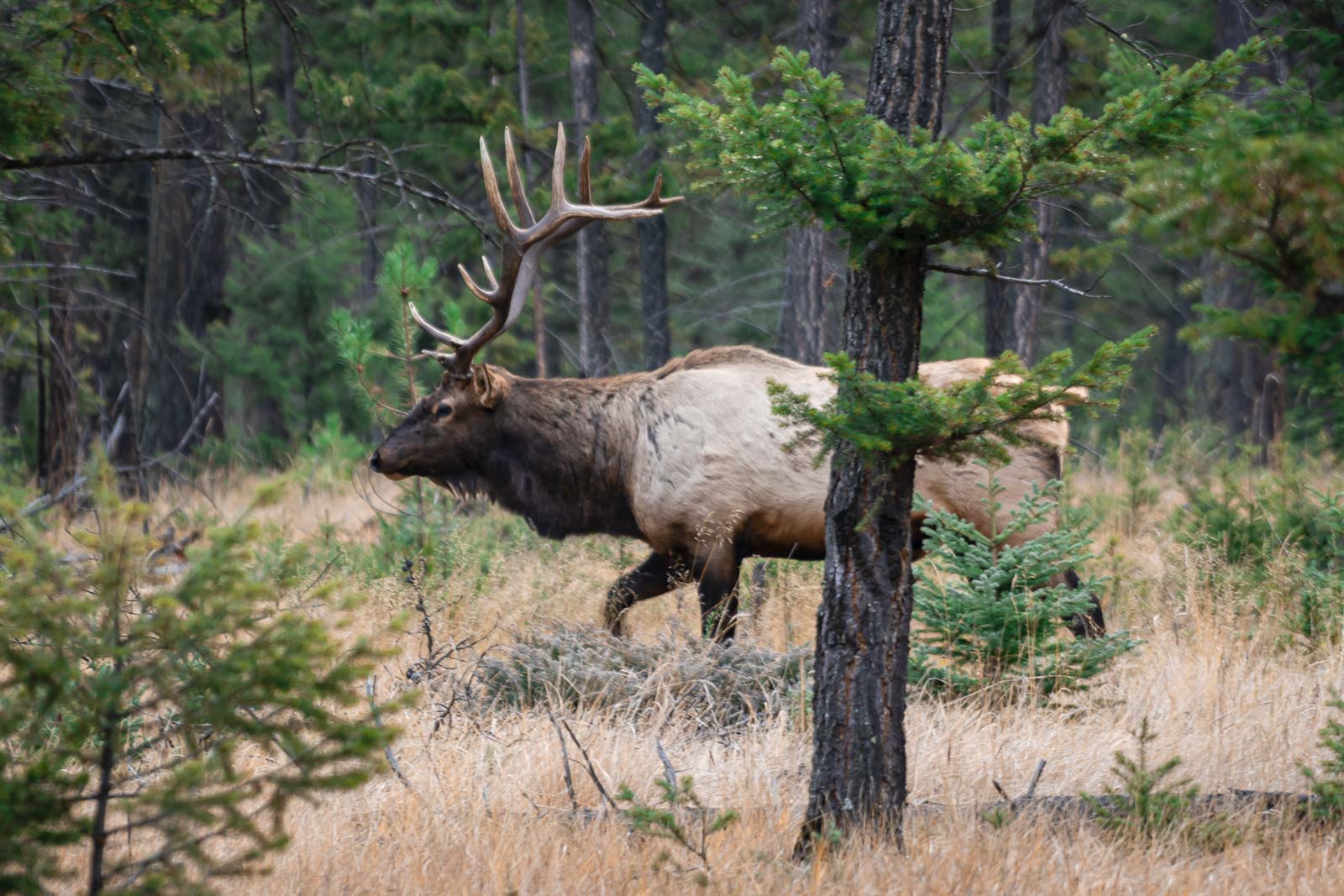
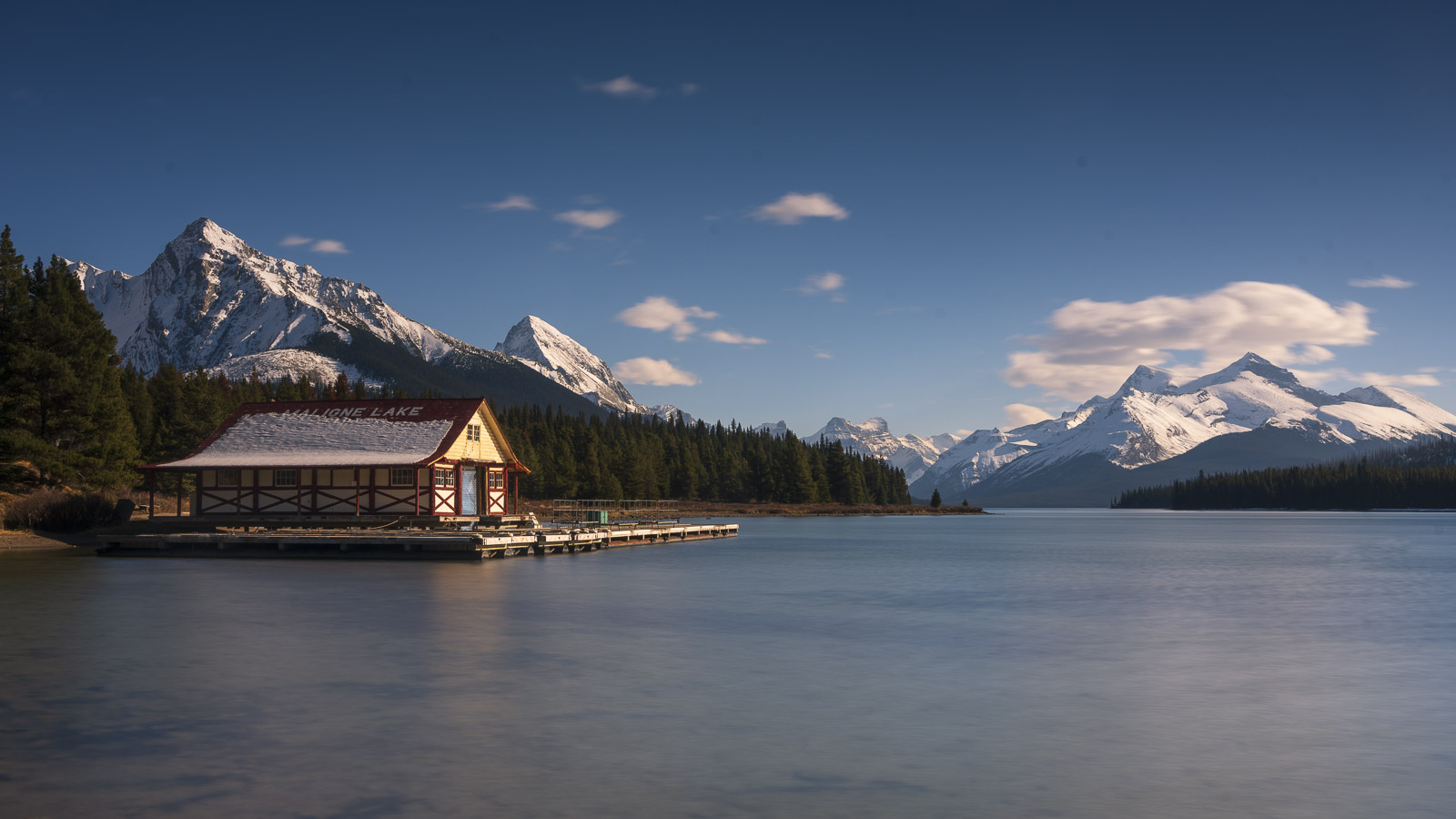
Beyond the hiking trails, you shouldn’t miss a drive on the Icefields Parkway, a boat tour on Maligne Lake to see Spirit Island, and the chance to see wildlife like elk, bears, and moose (from a safe distance, of course). The Jasper Skytram also offers incredible views without the long hike up.
How many hiking trails are there in Jasper?
There are over 1,000 km (600+ miles) of hiking trails in Jasper National Park, ranging from short, easy walks to multi-day backcountry treks. This guide covers 13 of our absolute favourites that offer the best experiences.
So, Which Trail Will You Hike First?
And those are our favourite hikes in Jasper National Park! There are dozens more to explore, but these 13 trails offer an incredible taste of what makes this corner of the Canadian Rockies so special. Whether you’re taking an easy stroll to a waterfall or tackling a challenging summit, the views are guaranteed to be worth it.
Let us know in the comments which hike you’re adding to your list!