Category: Travel Guides

  • The Best Cuban Food: 23 Traditional Dishes You Have to Try

    The Best Cuban Food: 23 Traditional Dishes You Have to Try

    [ad_1]

    We’ve heard the rumours, and maybe you have too: that the food in Cuba is bland and uninspired. For years, travellers who never left their all-inclusive resorts came home with stories of boring buffets. We’re here to tell you that could not be further from the truth.

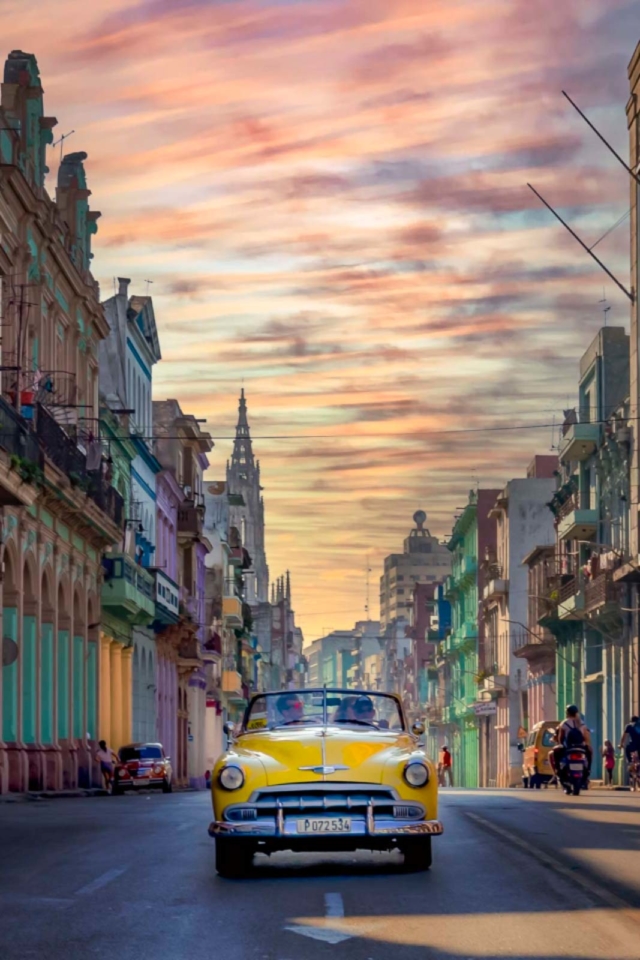
    That all changed for us when we decided to ignore the typical advice and follow our curiosity down a residential street in Havana. We ended up in a paladar—a small, family-run restaurant operating out of someone’s home. The air was filled with the scent of garlic, cumin, and slow-roasted pork. It was there we discovered the real Cuba.

    Cuban food isn’t about fancy techniques; it’s about tradition and flavour born from a vibrant mix of Spanish, African, and Caribbean influences. It’s comfort food that tells the story of the island’s rich history. We’ve spent a lot of time eating our way through Cuba, and we’re here to share the dishes that you absolutely cannot miss, based on our firsthand experience.

    Top 5 Cuban Dishes (Quick List)

    If you only have time for a few meals in Cuba, make sure these are on your list. This is the best of the best when it comes to traditional Cuban food.

    Ropa Vieja: The national dish of Cuba, this flavourful shredded beef is slow-cooked in a rich tomato sauce.

    Lechon Asado: Tender, juicy, slow-roasted pork, often marinated in a garlic and citrus mojo sauce.

    Sandwich Cubano: A classic pressed sandwich with roast pork, ham, Swiss cheese, pickles, and mustard.

    Moros y Cristianos: A simple but essential side dish of black beans and white rice cooked together.

    Plátanos Maduros Fritos: Sweet, caramelized fried plantains that accompany almost every main course.

    Must-Try Cuban Main Dishes

    These are the hearty, flavourful centrepieces of any true Cuban cuisine. From slow-cooked meats to rich rice dishes, these mains offer a true taste of the island’s culinary soul.

    Ropa Vieja (Old Clothes)
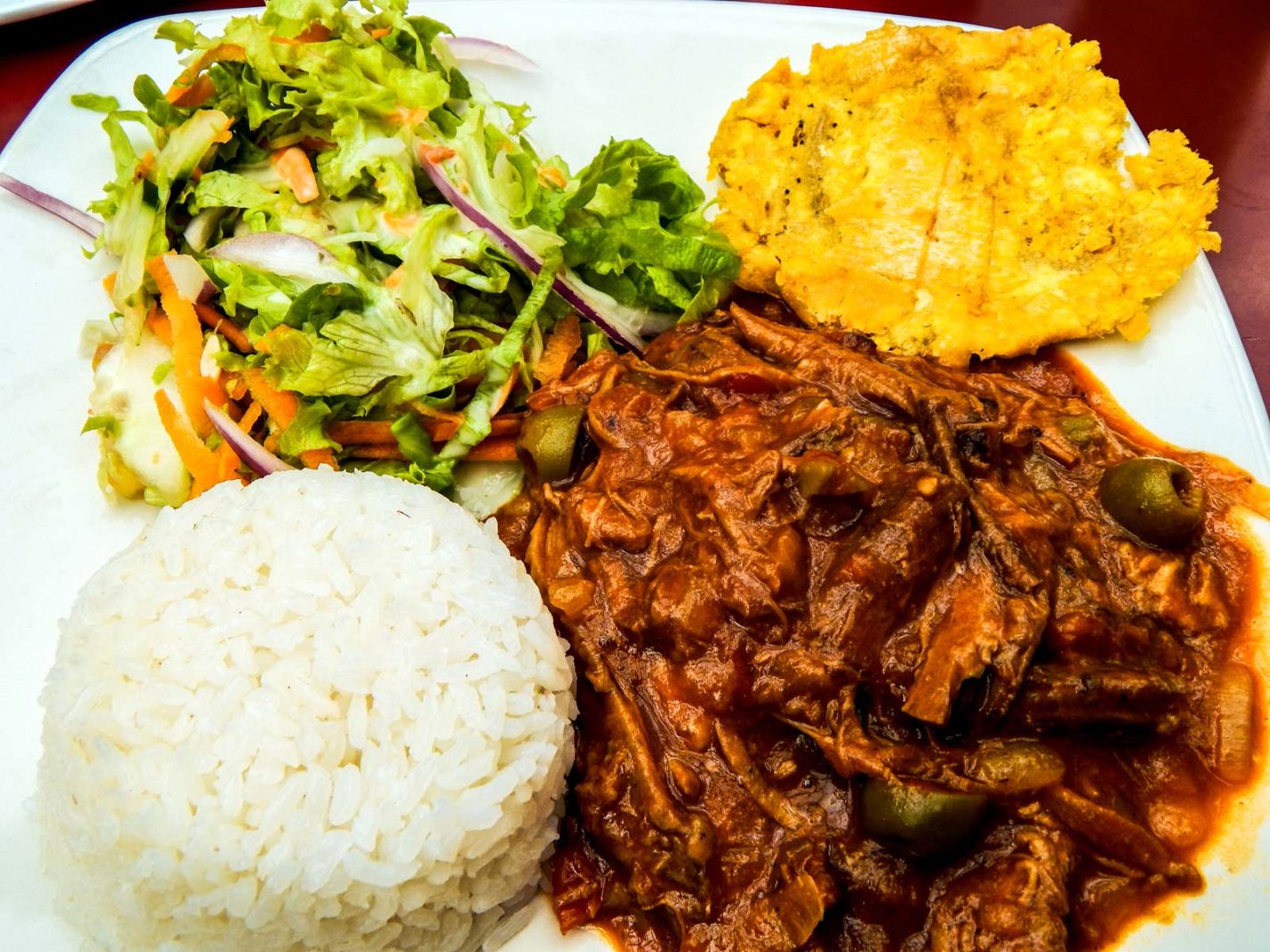
    A white plate of Cuban Ropa Vieja, showing tender shredded beef in a vibrant tomato and pepper sauce, next to a side of white rice.

    What it is: Shredded beef simmered in a rich sauce of tomatoes, bell peppers, onions, garlic, and cumin. It is widely considered Cuba’s national dish.

    Why try it: It’s pure comfort in a bowl. We often order this on cooler evenings in Havana when we want a meal with slow-cooked depth and incredible flavour.

    Cultural note: The name translates to “old clothes,” which is thought to refer to the way the shredded beef resembles colourful, tattered rags.

    Where to find it: You’ll find this in nearly every paladar, but the best versions come from family kitchens that have been simmering the recipe for generations.

    Lechon Asado (Roast Suckling Pig)
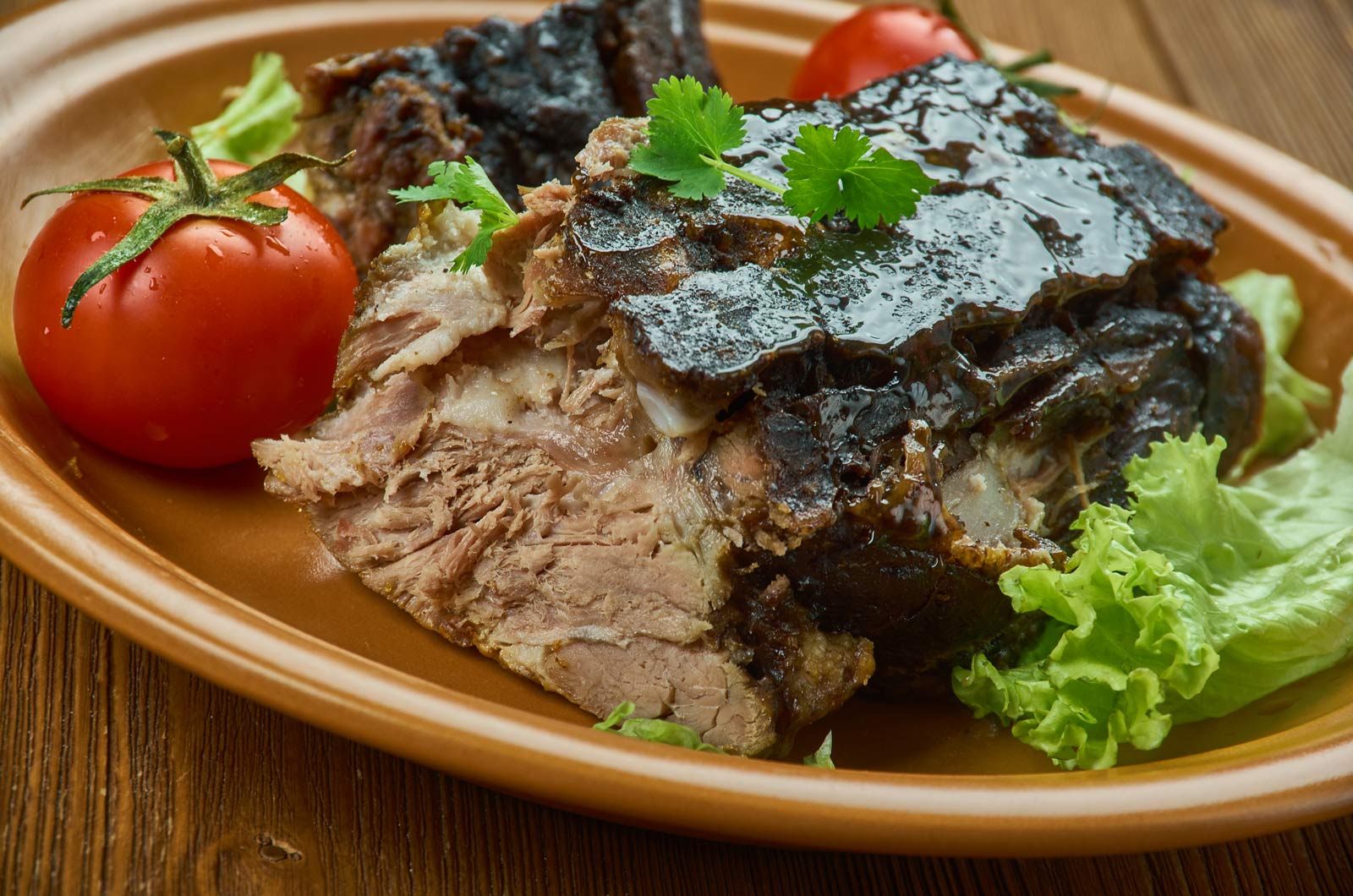
    A platter of Lechon Asado, showcasing crispy-skinned roast pork pieces with a side of mojo sauce and lime wedges.

    What it is: Slow-roasted pork, marinated for hours in mojo criollo—a zesty sauce of garlic, sour orange juice, and oregano—until the meat is succulent and the skin is perfectly crispy.

    Why try it: This is the dish that opened our eyes to what real traditional Cuban dishes could be. The combination of tender pork and the zesty mojo sauce is something we still think about.

    Cultural note: Lechon Asado is the quintessential celebration dish in Cuba, often the centrepiece for holidays like Christmas Eve (Nochebuena) and New Year’s.

    Where to find it: While it’s a staple at celebrations, any reputable paladar will have a fantastic version on its menu, especially in the countryside.

    Vaca Frita (Fried Cow)
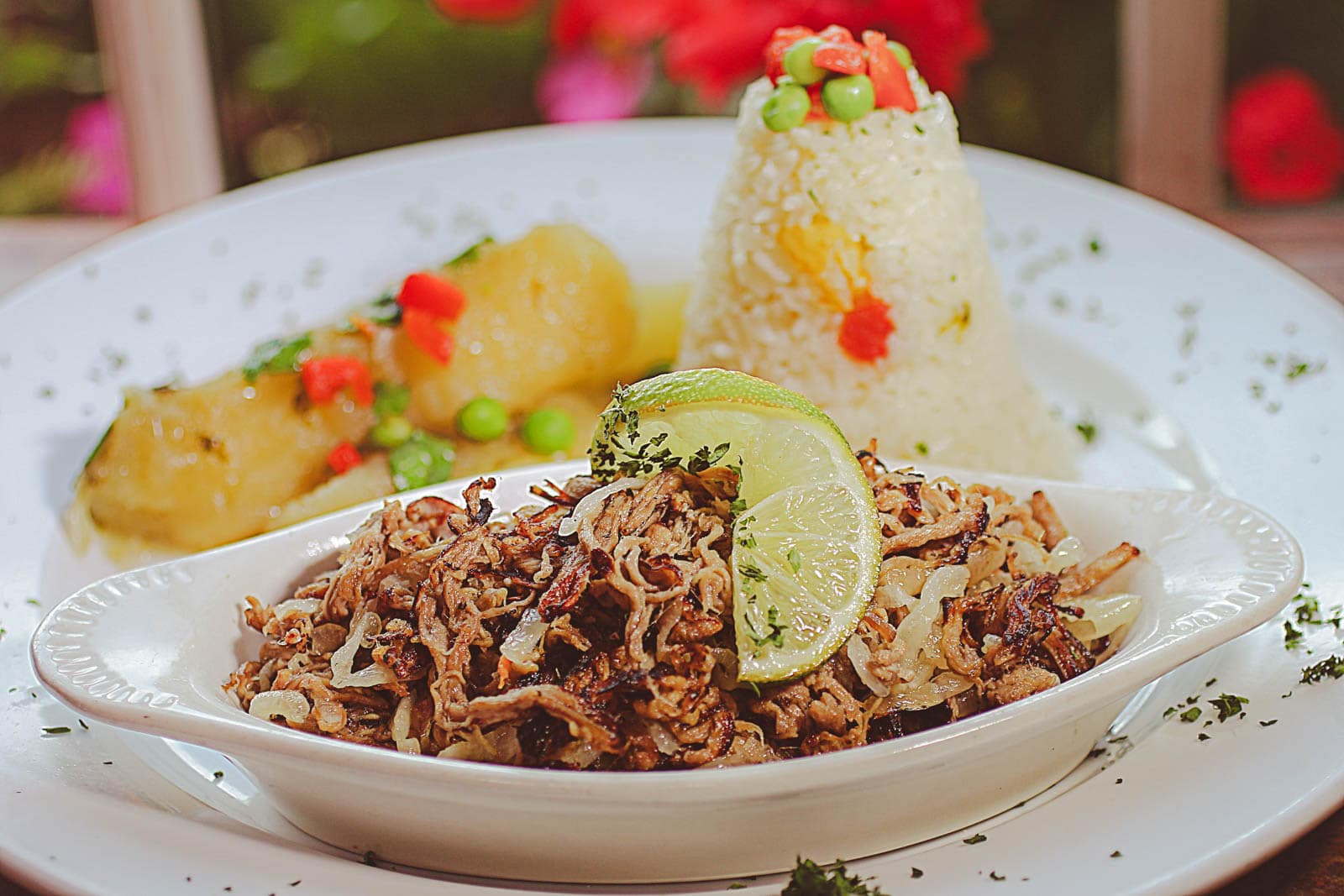
    Close-up of Vaca Frita, highlighting the crispy, pan-fried shredded beef with caramelized onions and a sprig of cilantro.

    What it is: Shredded beef marinated in lime juice, garlic, and salt, then pan-fried until the edges are brown and wonderfully crispy.

    Why try it: If you enjoy texture, this is the dish for you. It’s the savoury, crispy cousin of Ropa Vieja, offering a delightful crunch and a bright, citrus-forward flavour.

    Cultural note: Vaca Frita is a great example of Cuban culinary resourcefulness, taking a similar core ingredient as Ropa Vieja and creating a completely different experience.

    Where to find it: Common in paladares across the country. It’s a true local favourite you won’t always find in the more tourist-focused spots.

    Picadillo a la Habanera

    A bowl of Picadillo a la Habanera, a Cuban ground beef dish with green olives and potatoes in a savoury tomato sauce

    What it is: A savoury hash of ground beef slow-simmered in a tomato sauce with onions, garlic, olives, and sometimes raisins or potatoes for a sweet and salty mix.

    Why try it: This is the ultimate taste of Cuban home cooking. It’s a simple, comforting, and deeply flavourful dish that feels like it was made with care. And it is one of those Cuban recipes you can easily make at home.

    Cultural note: Nearly every Cuban family has its own version of Picadillo, with the recipe often passed down through generations.

    Where to find it: This is a reliable and delicious choice at almost any paladar that serves traditional home-style food.

    Arroz Con Pollo (Chicken with Rice)
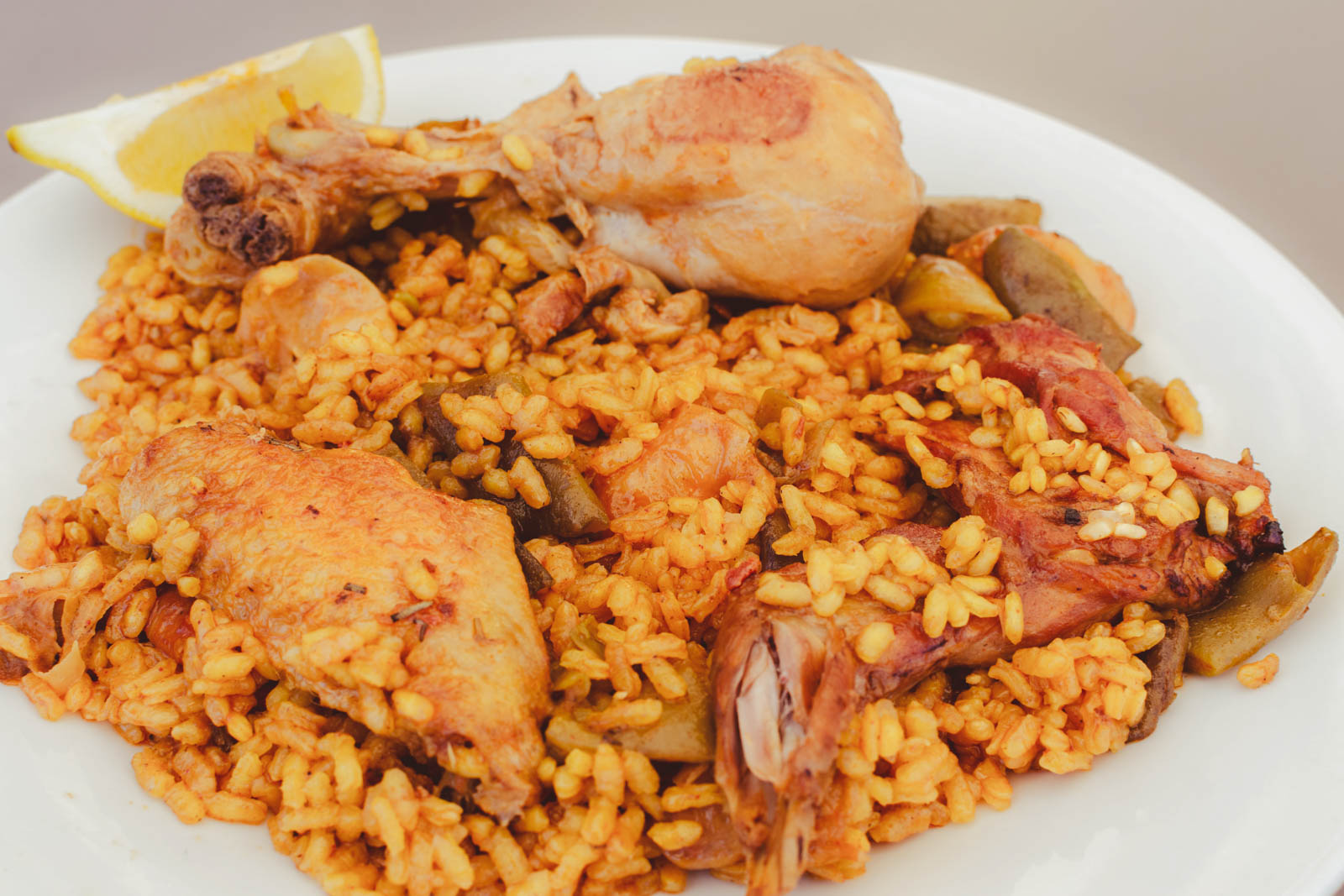
    A scoop of Arroz Con Pollo on a plate, showing yellow rice mixed with tender pieces of chicken and red peppers.

    What it is: A classic one-pot meal where chicken and yellow rice are simmered together with a sofrito base, allowing the rice to absorb all the flavourful stock and spices.

    Why try it: It’s simple, satisfying, and a complete meal in one dish. The Cuban version is exceptionally moist and savoury, making it a perfect choice when you’re not sure what to order.

    Cultural note: While popular across Latin America, the Cuban version is often made with a splash of beer and annatto (or Bijol) for its distinct yellow colour.

    Where to find it: This is a staple dish. You can find it everywhere from busy city restaurants in Havana to quiet roadside cafes.

    Pernil Relleno De Moros Y Cristianos
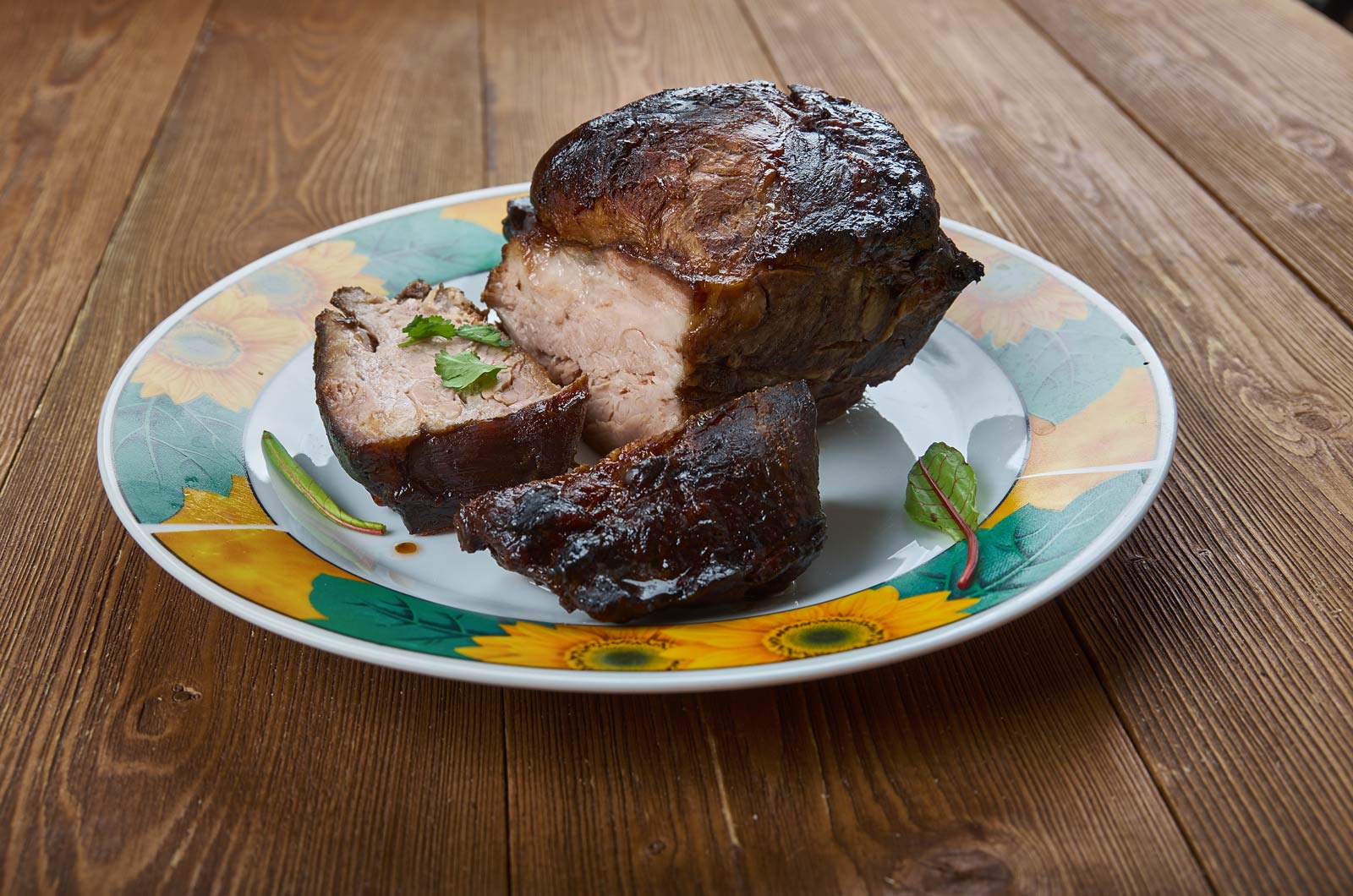
    A cross-section of a roasted Pernil Relleno, revealing a pork shoulder stuffed with Moros y Cristianos (black beans and rice)

    What it is: A showstopper of a dish. It’s a juicy pork shoulder, marinated in mojo, then stuffed with a hearty filling of black beans and rice (Moros y Cristianos).

    Why try it: It’s two of Cuba’s most iconic dishes rolled into one. Order this when you’re feeling extra hungry and want all the classic flavours on one plate.

    Cultural note: This is a more elaborate take on traditional recipes, showcasing the kind of culinary creativity you’ll find in modern paladares.

    Where to find it: Look for this at more ambitious restaurants that enjoy putting a creative spin on the classics.

    Arroz Imperial (Imperial Rice)

    A square slice of Arroz Imperial on a spatula, showing the layers of yellow rice, shredded chicken, and melted cheese on top.

    What it is: A rich, layered casserole of yellow rice and shredded chicken, often bound together with mayonnaise and topped with a layer of melted cheese.

    Why try it: It’s incredibly decadent and unlike anything else in Cuban cuisine. It’s a delicious guilty pleasure that’s perfect for sharing.

    Cultural note: Often called “Imperial Rice” because its richness and layered appearance were seen as a dish fit for an emperor. It’s pure party food.

    Where to find it: This is more common at family gatherings than on restaurant menus, but some paladares specializing in celebratory food will offer it.

    Guava Basted Ribs
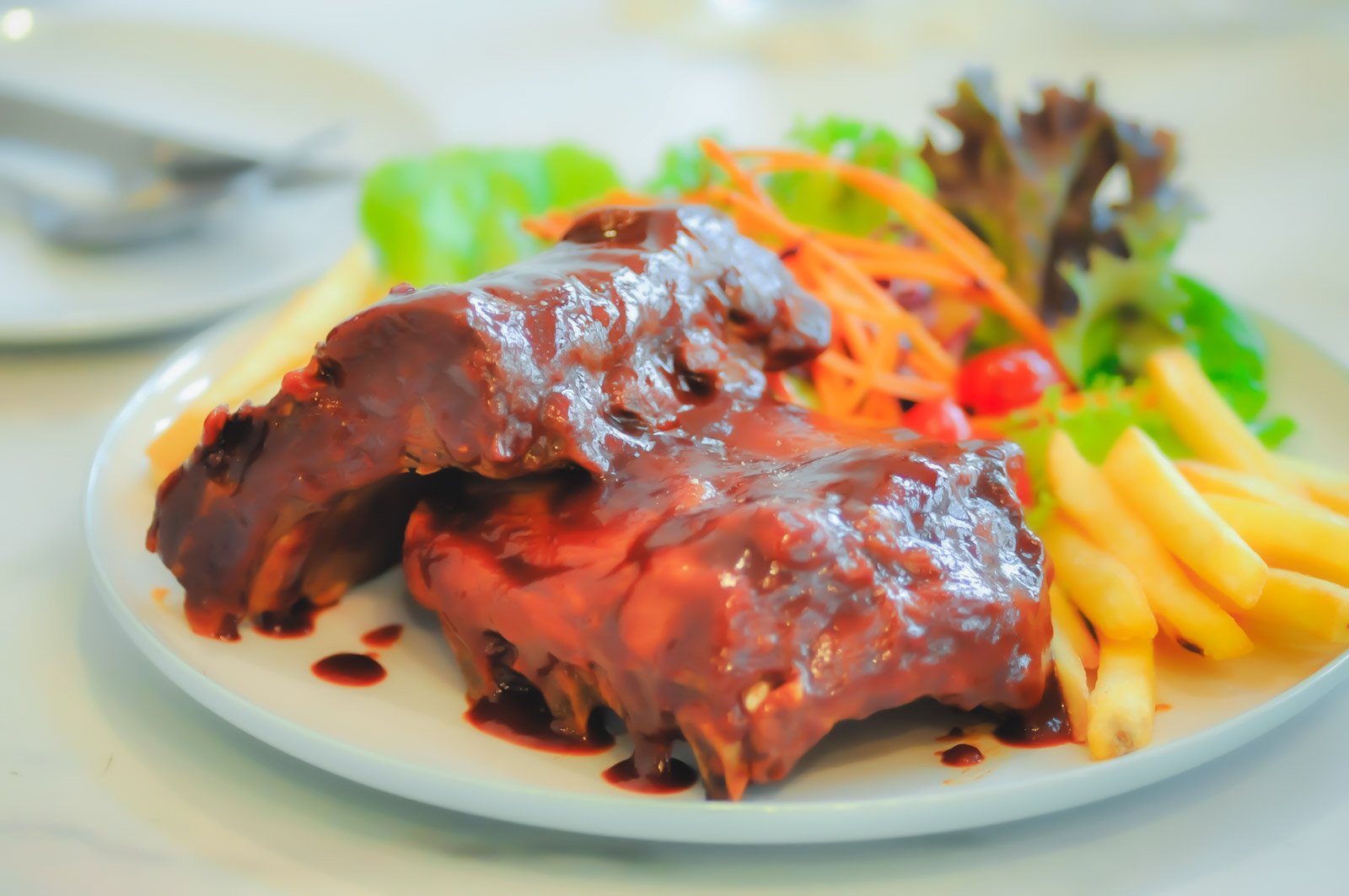
    A stack of sticky, guava-basted pork ribs with a glossy, dark red glaze on a white platter.

    What it is: Slow-cooked pork ribs glazed with a sticky, sweet, and tangy barbecue sauce made from a base of guava paste, a staple Cuban fruit.

    Why try it: It’s the perfect combination of sweet and savoury. This dish highlights one of Cuba’s most important fruits in a completely delicious and unexpected way.

    Cultural note: This recipe showcases the strong Caribbean influence on Cuban cooking, which often incorporates tropical fruits into savoury dishes.

    Where to find it: You’re most likely to find this at paladares with a more contemporary or fusion-style menu.

    Essential Side Dishes in Cuba

    While the mains are the stars, these essential side dishes are the foundation of nearly every Cuban meal. They provide balance, texture, and a whole lot of extra flavour.

    Moros y Cristianos (Moors and Christians)
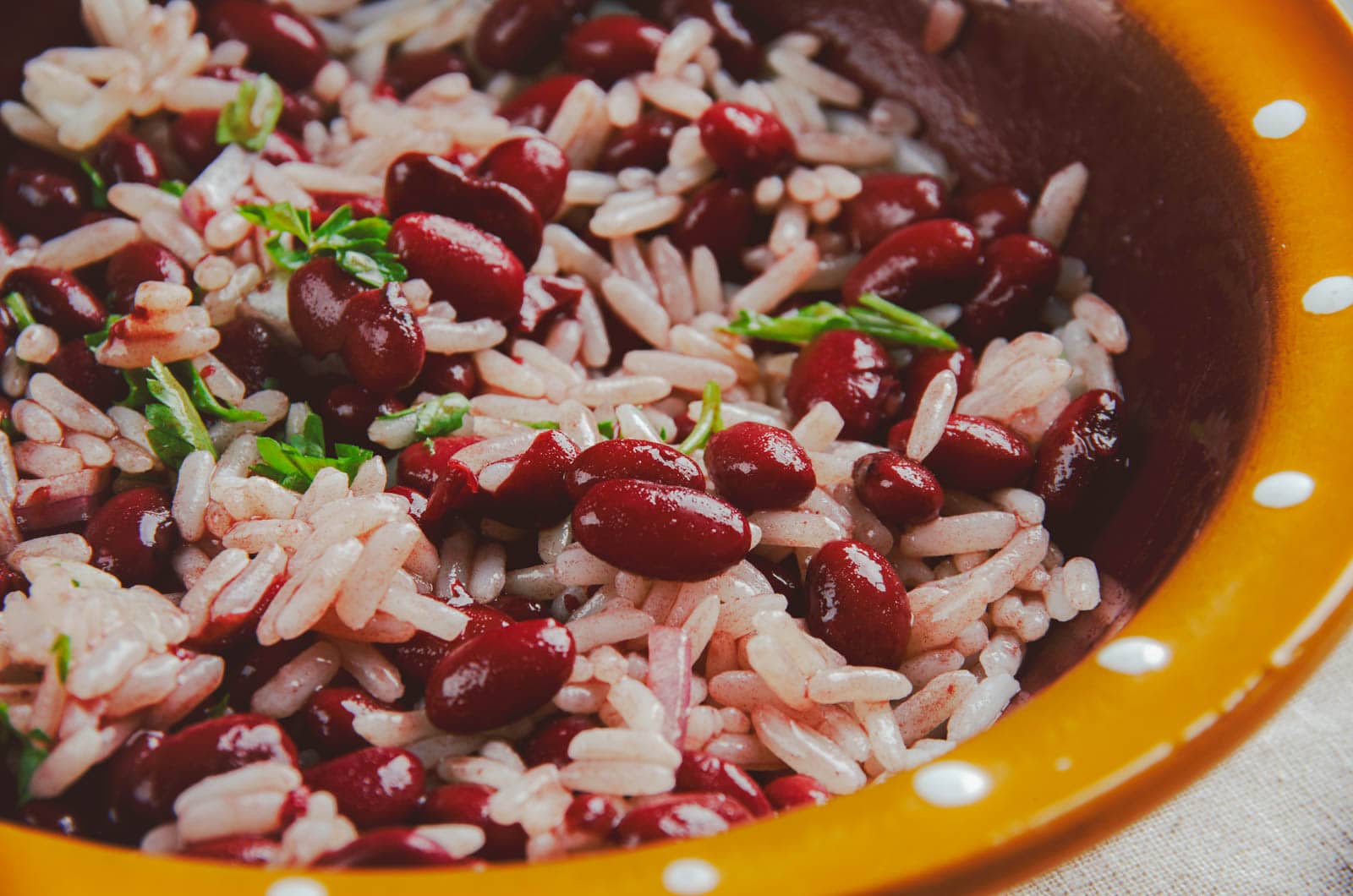
    A bowl of Moros y Cristianos, a traditional Cuban food of black beans and white rice cooked together.

    What it is: The iconic Cuban rice and beans, where white rice and black beans are simmered together in one pot with seasonings like garlic, cumin, and oregano until the rice is infused with flavour.

    Why try it: This is the heart and soul of the Cuban plate. When made well, it’s so much more than just rice and beans. It’s savoury, aromatic, and the perfect companion to rich, meaty main courses.

    Cultural note: The name is a historical reference to the period when the Moors (represented by the black beans) and the Christian Spanish (the white rice) occupied the Iberian Peninsula.

    Where to find it: Absolutely everywhere. It’s the default side dish for most meals served across the island.

    Plátano Maduro Frito (Fried Sweet Plantains)
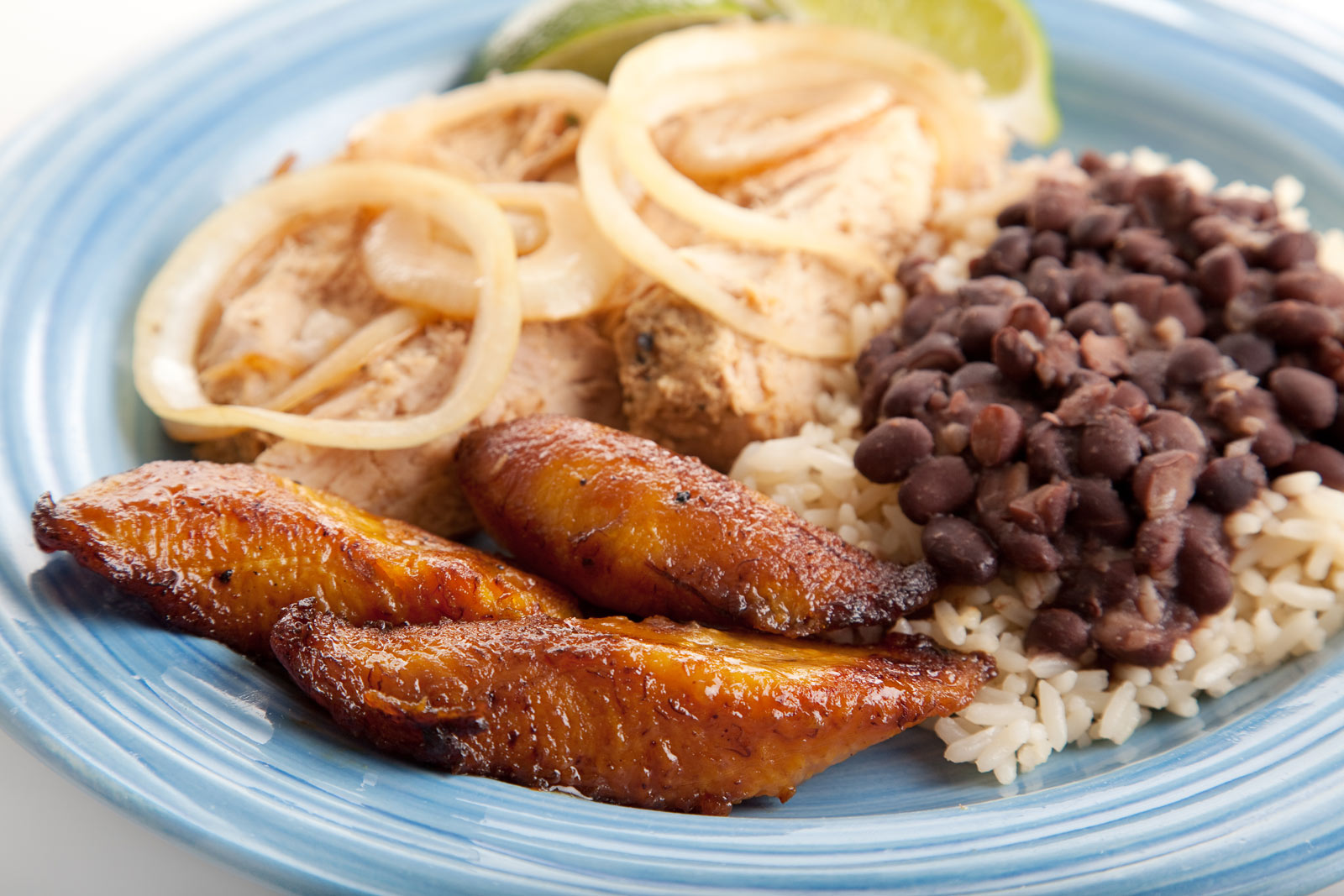
    A side dish of Plátano Maduro Frito, showing caramelized, golden-brown sweet fried plantains.

    What it is: Slices of very ripe, sweet plantain that are pan-fried until they are soft on the inside with a caramelized, slightly crispy exterior.

    Why try it: They provide a wonderful, sweet counterpoint to the salty and savoury flavours of the main dishes. This is one of our favourite side dishes and we order it every single time it’s on the menu.

    Cultural note: The use of plantains is a direct link to the African influences that are deeply woven into Cuban culture and cuisine.

    Where to find it: Served alongside most platos fuertes (main courses) as a standard accompaniment.

    Tostones (Fried Green Plantains)
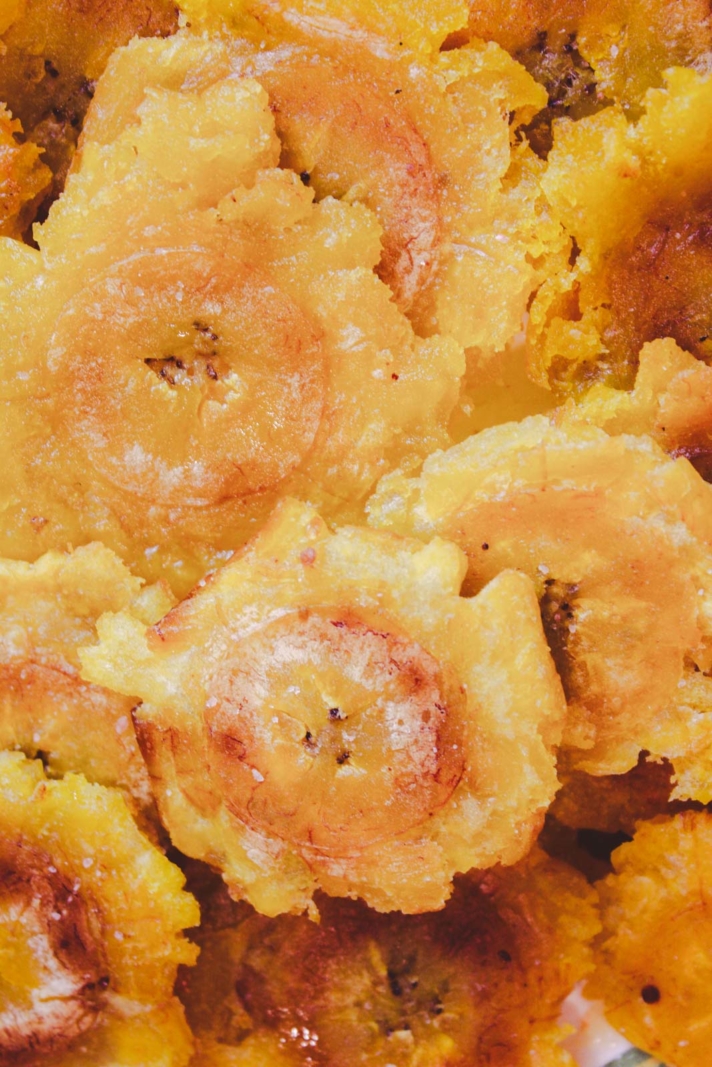
    A pile of golden-brown Tostones, which are double-fried and smashed green plantains, served with a garlic dipping sauce.

    What it is: Slices of unripe, green plantain that are fried once, smashed flat into discs, and then fried a second time until they are golden and crispy.

    Why try it: These are the savoury, starchy cousin to the sweet maduros. They have a texture similar to a thick-cut potato chip or a crispy french fry and are perfect for dipping.

    Cultural note: Also known as ‘chatinos’ in some regions of Cuba. The crucial double-frying technique is what gives them their signature crunch.

    Where to find it: A very popular appetizer (entrante) or side dish. They are often served with a garlicky mojo sauce for dipping.

    Yuca con Mojo (Cassava with Garlic Sauce)
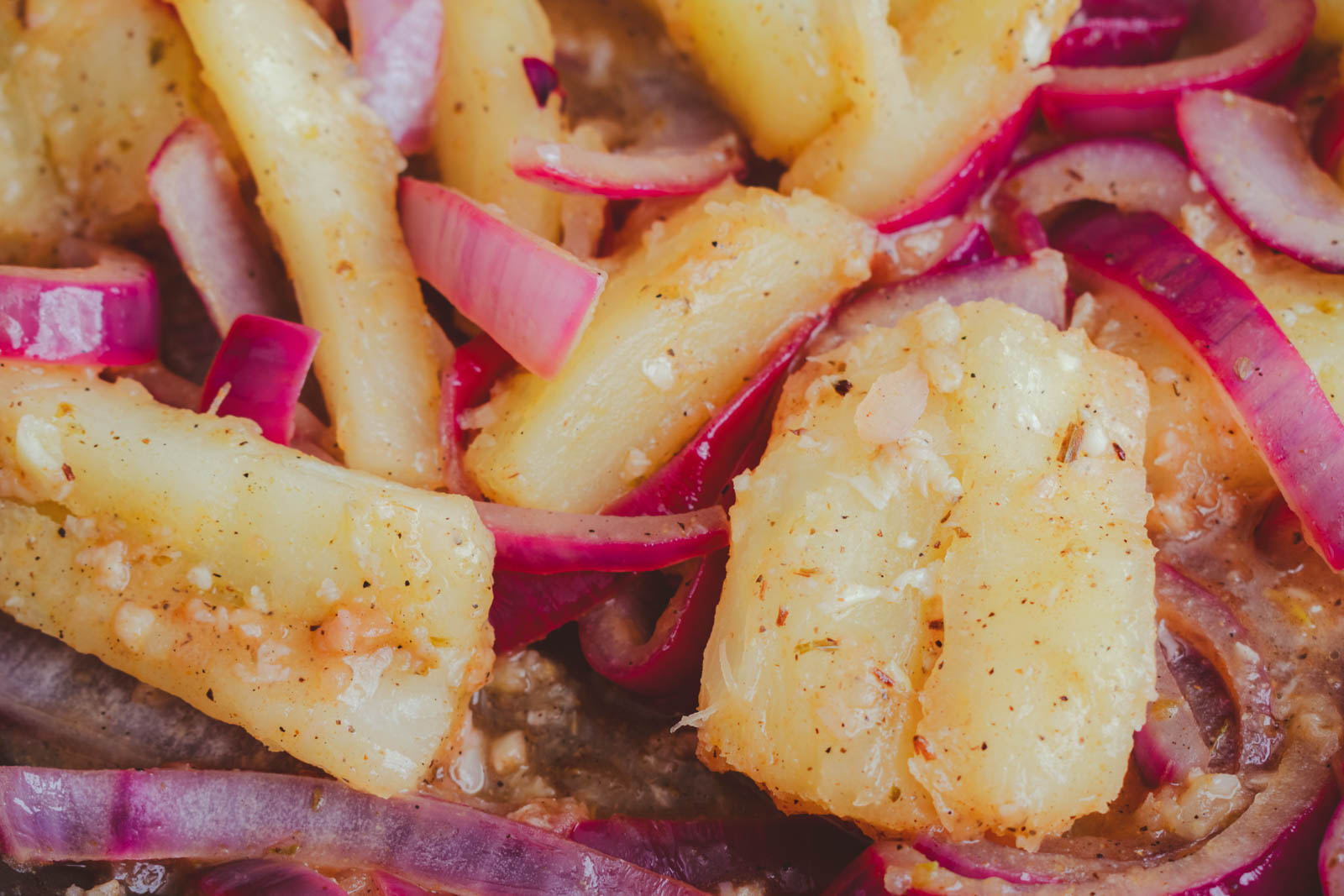
    oiled yuca topped with a generous amount of shiny mojo de ajo, a Cuban garlic and citrus sauce.

    What it is: Yuca, a starchy root vegetable similar to a potato, is boiled until fork-tender and then generously topped with mojo de ajo—a warm sauce made with olive oil, citrus juice, and a lot of garlic.

    Why try it: It’s a classic Cuban comfort food. The soft, mild flavour of the yuca is the perfect canvas for the potent, zesty garlic sauce. It’s simple but incredibly satisfying.

    Cultural note: Yuca was a staple food for the indigenous Taíno people of Cuba, making it one of the most historic ingredients still eaten on the island today.

    Where to find it: This is a very common side dish you’ll find at most paladares, and it’s a fixture at family barbecues and holiday meals.

    Cuban Sandwiches and Street Food

    Beyond the sit-down meals, some of Cuba’s best food is found in its sandwiches and quick street-side eats. They are simple, satisfying, and packed with local flavour.

    Sandwich Cubano (The Traditional Cuban Sandwich)

    A classic Sandwich Cubano pressed until golden, showing layers of roast pork, ham, melted Swiss cheese, and pickles.

    What it is: Layers of sliced roast pork, ham, and Swiss cheese packed into Cuban bread, topped with dill pickles and yellow mustard, then pressed and toasted until the cheese is melted and the bread is crispy.

    Why try it: It’s a world-famous sandwich for a reason. The mix of savoury meats, melted cheese, and the tangy cut of the pickles and mustard is a perfect combination. It’s a delicious, filling, and affordable lunch.

    Cultural note: While it’s the ultimate symbol of Cuban food, the sandwich in its modern form was actually perfected in Cuban immigrant communities in Florida, particularly Key West and Tampa.

    Where to find it: Look for ventanitas (little walk-up windows) and local cafes. You’ll find them all over, but the best ones are made to order at busy lunch counters.

    Medianoche (Midnight Sandwich)

    A Medianoche sandwich on a soft, sweet, golden egg-based bread, showing the classic fillings inside.

    What it is: Nearly identical to the Cuban Sandwich in its fillings, but served on a sweet, soft, egg-based bread similar to challah or brioche. The name translates to “midnight.”

    Why try it: The sweet, soft bread completely changes the experience. It makes the sandwich a little richer and less crusty than the original. We sometimes prefer it when we’re in the mood for something a bit different.

    Cultural note: It earned its name as a popular late-night food, traditionally eaten by patrons leaving Havana’s nightclubs and cabarets in the early hours of the morning.

    Where to find it: You can often find it at the same spots that sell the classic Cubano, especially at places that stay open late in Havana.

    Tamales
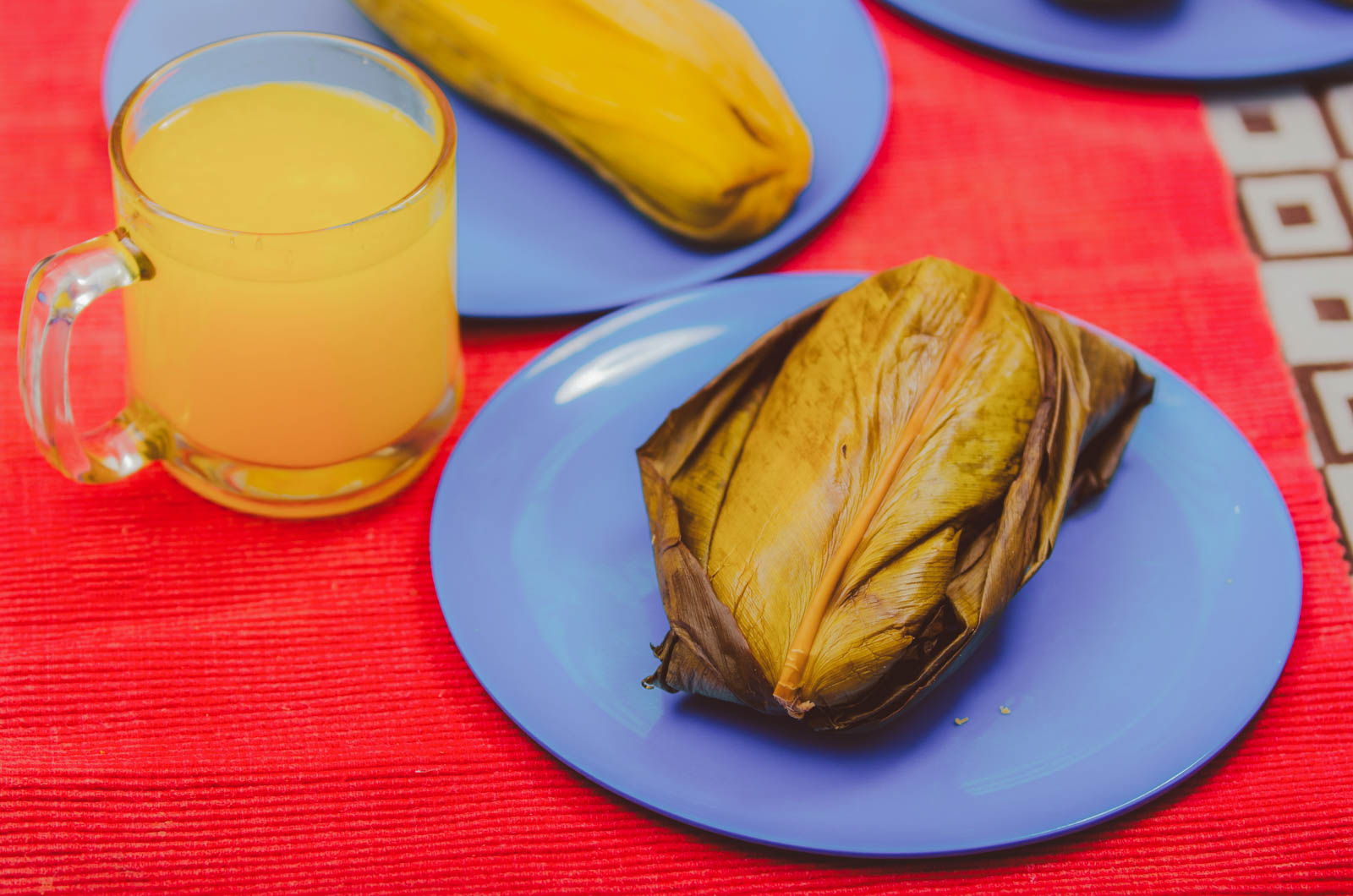
    A Cuban tamal unwrapped from its corn husk, showing the moist corn masa mixed with seasoned pork.

    What it is: A savoury dough made from fresh ground corn (masa), mixed with seasoned ground pork and spices. The mixture is then wrapped in a corn husk and steamed.

    Why try it: Unlike many other Latin American tamales, the meat is mixed directly into the dough instead of being a separate filling. This means every single bite is moist and packed with flavour.

    Cultural note: Making tamales is often a social, communal activity in Cuba, with family and friends gathering to prepare large batches for holidays and special occasions.

    Where to find it: This is classic street food. Keep an eye out for local vendors selling them from carts or at neighbourhood markets, especially in cities outside of Havana.

    Don’t Miss These Cuban Desserts

    You’ll want to save room for dessert in Cuba. The sweets here are often simple, rich, and highlight the island’s tropical fruits and love for all things decadent.

    Cuban Flan
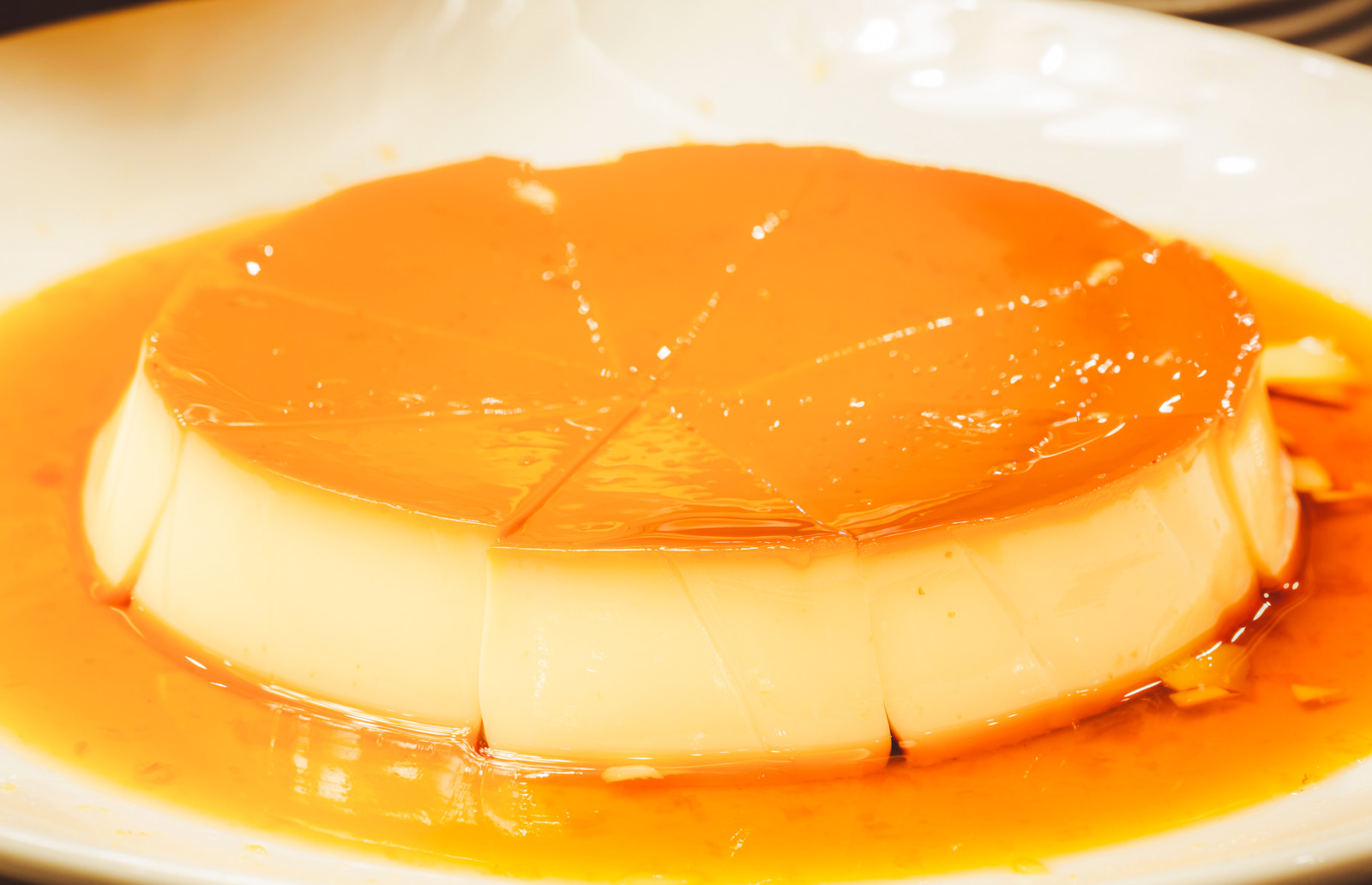
    A perfect Cuban flan on a small plate, with a rich, dark caramel sauce dripping down the sides of the custard.

    What it is: A rich and silky smooth baked custard made from eggs, condensed milk, and sugar, all sitting in a pool of soft, amber-coloured caramel sauce.

    Why try it: It’s the most famous dessert in Cuba for a reason. The texture is flawless, and the slightly bittersweet flavour of the caramel perfectly balances the creamy custard. It’s a simple and elegant classic.

    Cultural note: Flan was brought to Cuba by the Spanish, but the local version, which relies on canned condensed and evaporated milk, became a staple due to the island’s history and dairy availability.

    Where to find it: You will find flan on the dessert menu of nearly every paladar and restaurant across the country.

    Tres Leches Cake (Three Milks Cake)

    A slice of Tres Leches cake on a plate, with the three-milk mixture pooling at the bottom and a topping of whipped cream.

    What it is: A light sponge cake that gets its name from being soaked in a mixture of three milks: evaporated milk, condensed milk, and heavy cream. It’s often topped with a light whipped cream or meringue.

    Why try it: Despite being drenched in milk, this cake is incredibly light and moist, not heavy or soggy. It’s a decadent treat that seems to melt in your mouth. We love how it’s sweet without being overpowering.

    Cultural note: While popular all over Latin America, Tres Leches is a beloved cake for birthdays and celebrations in Cuba.

    Where to find it: You’ll find this at many paladares, especially those with a more extensive dessert offering. It’s also a star attraction in local bakeries (pastelerías).

    Casquitos de Guayaba (Guava Shells)
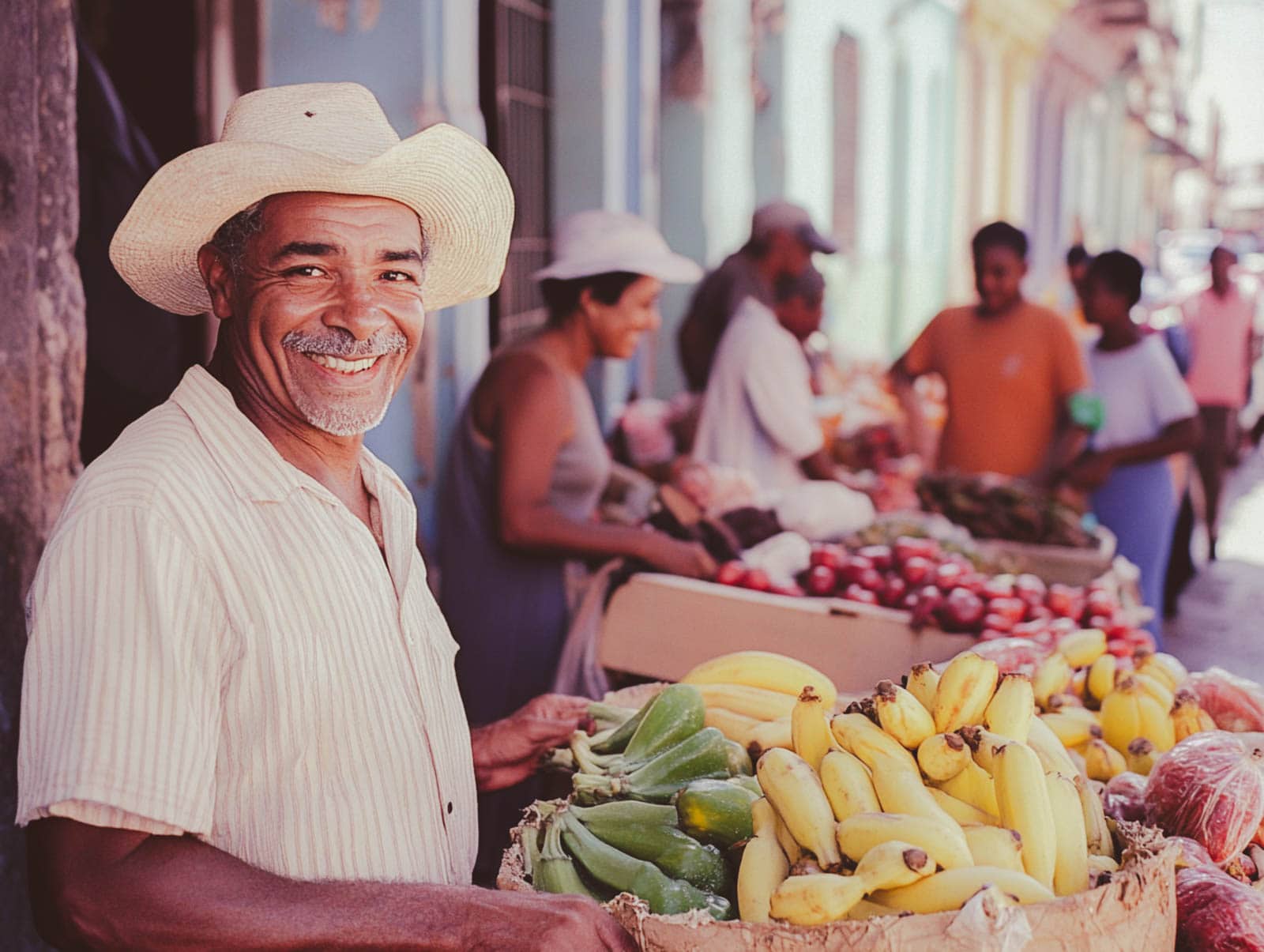
    A man selling guava for casquitos de guayaba in a market in Havana

    What it is: Guava halves, with the seeds removed, slow-cooked in a sweet syrup, often spiced with cinnamon. They are traditionally served with a slice of salty, mild cream cheese.

    Why try it: This is a uniquely Cuban dessert that perfectly balances sweet and savoury. The warm, tender guava combined with the cool, salty cheese is a flavour combination you have to experience.

    Cultural note: This dessert is a perfect example of Cuba’s farm-to-table roots, making a star out of the abundant, locally grown guava.

    Where to find it: Look for this in very traditional, home-style paladares that specialize in authentic comida criolla (Creole food).

    Arroz con Leche (Rice Pudding)

    A white bowl of creamy Arroz con Leche (Cuban rice pudding), garnished with a sprinkle of ground cinnamon

    What it is: A simple and creamy pudding made by slow-cooking rice with milk, sugar, and spices like cinnamon and a hint of lemon zest.

    Why try it: This is pure comfort food. The Cuban version is often thick, creamy, and served cool. It’s a heartwarming and familiar dessert that feels like a hug in a bowl.

    Cultural note: Another legacy from Spain, Arroz con Leche has been adopted as a staple of Cuban home cooking, with every family having its own treasured recipe.

    Where to find it: It’s a common dessert on restaurant menus and a beloved staple in every Cuban home.

    Buñuelos
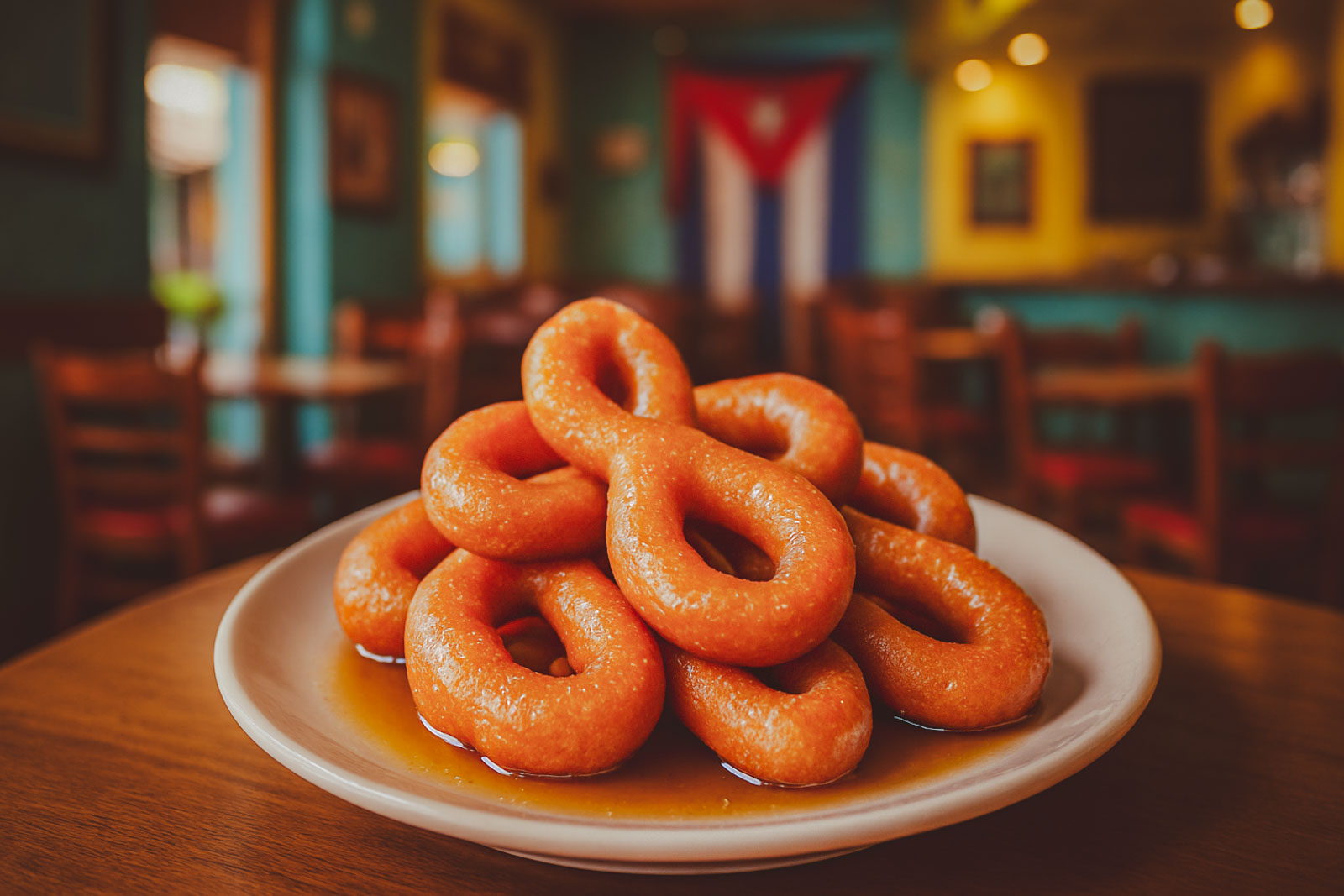
    Golden, figure-8 shaped Buñuelos on a plate, drizzled with a shiny anise-flavoured syrup.

    What it is: A fritter made from a dough of yuca and malanga (a starchy root vegetable), shaped into a figure-8, and fried until golden. It’s then drenched in a sweet syrup flavoured with star anise.

    Why try it: These are not your average donuts. The yuca gives them a unique texture that’s both dense and light, and the anise syrup adds a wonderfully aromatic and slightly licorice-like flavour.

    Cultural note: Buñuelos are a very traditional Christmas-time treat in Cuba, but their popularity means you can sometimes find them at other times of the year.

    Where to find it: Keep an eye out for street vendors selling them, especially around the holiday season. Some traditional restaurants may also offer them seasonally.

    What to Drink in Cuba

    To round out your culinary tour, you have to try the island’s iconic beverages. From potent morning coffee to refreshing evening cocktails, these are the essential drinks of Cuba.

    Café Cubano (Cuban Coffee)

    Cuban coffee in a coffee shop in Havana

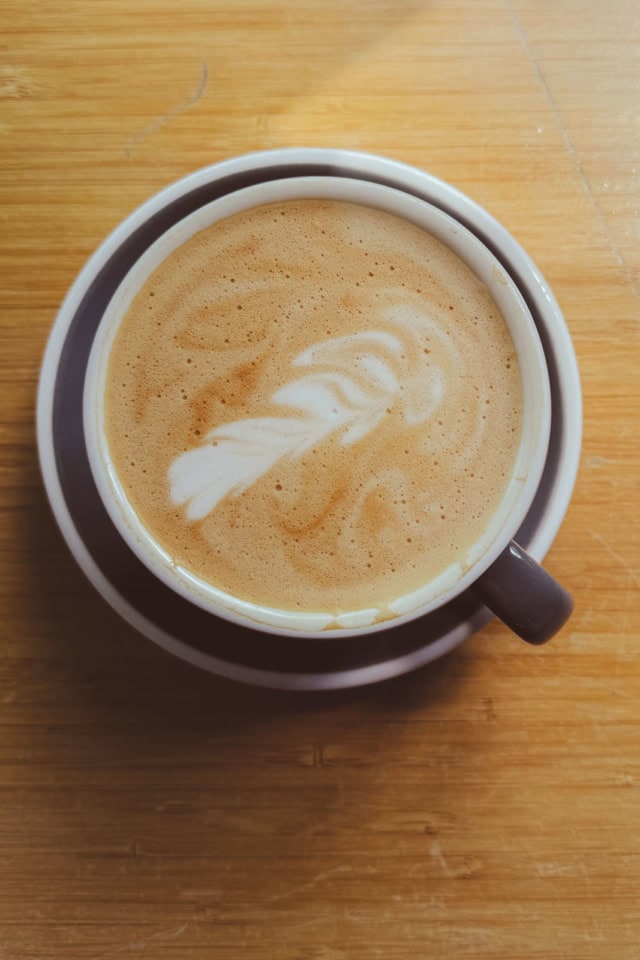
    What it is: A small but powerful shot of espresso, uniquely sweetened by whipping the first few drops of coffee with demerara sugar until it forms a creamy, pale brown foam (espumita).

    Why try it: It’s a shot of pure Cuban energy. The espumita gives it a unique texture and sweetness that is unlike any other coffee you’ve had. It’s the perfect way to start the morning or cap off a big meal.

    Cultural note: Drinking coffee is a central part of the social fabric. Offering a cafecito is a fundamental gesture of hospitality and friendship, and it’s shared at all times of the day.

    Where to find it: Absolutely everywhere. You can grab one from a ventanita (a walk-up window) for just a few pesos, or enjoy one after dinner at any paladar.

    Mojito
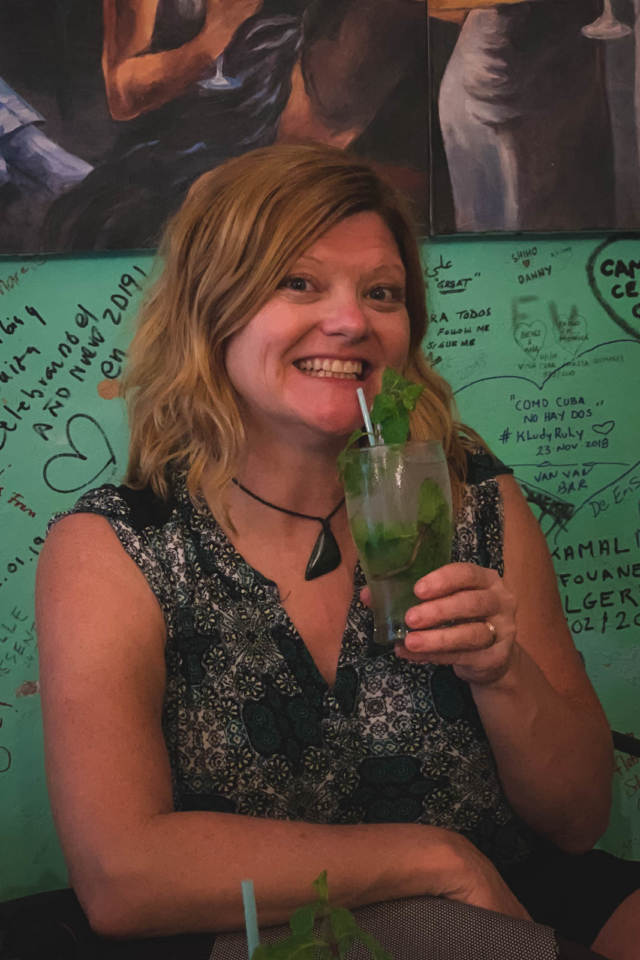
    Enjoying A tall glass of a refreshing Cuban Mojito, filled with ice, fresh mint leaves, lime wedges, and a straw in the streets of Havana

    What it is: The world-famous Cuban cocktail made from white rum, fresh mint leaves, lime juice, sugar, and a splash of soda water, all muddled together to release the mint’s oils.

    Why try it: Having a mojito in its birthplace is a must. When made correctly, it’s incredibly refreshing and balanced—not the overly sweet drink you might have tried elsewhere. It’s the perfect antidote to a hot Havana afternoon.

    Cultural note: The cocktail was made famous by author Ernest Hemingway, who was a regular at the Havana bar La Bodeguita del Medio, which is now a popular spot for tourists seeking the classic mojito experience.

    Where to find it: Every bar, hotel, and restaurant will serve one. For the historical experience, head to La Bodeguita del Medio, but some of our best mojitos have been from smaller, less crowded local bars.

    Insider Tips for Finding the Best Food in Cuba
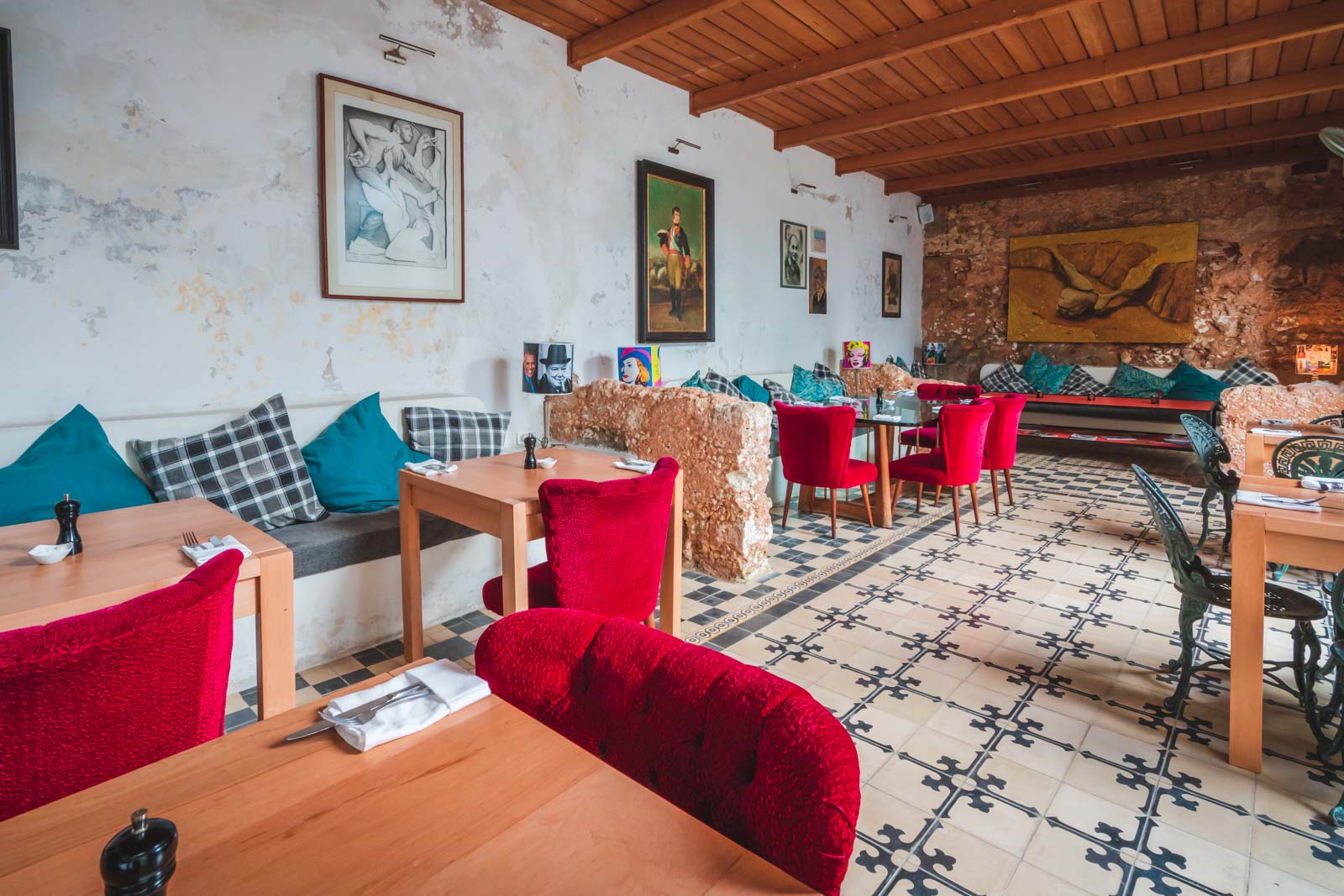
    A cuban Paladar restaurant in Havana

    Knowing what to eat is one thing; knowing where to find it is another. After years of travelling through Cuba, we’ve learned that the best meals are often found off the beaten path. Here’s what you need to know.

    Why You Need to Eat at a ‘Paladar’

    If there is one piece of advice you take away from this article, it’s this: eat at a paladar. Unlike the often uninspired state-run restaurants, paladares are privately-owned, usually family-run establishments. The food is cooked with care, the ingredients are fresher, and the recipes have been passed down for generations. Eating at a paladar not only guarantees you a better meal, but it also directly supports local Cuban families.

    What to Expect for Breakfast

    Breakfast (desayuno) in Cuba is typically a simple affair. The most common breakfast consists of tostada—Cuban bread that is sliced, buttered, and toasted—served with a strong café con leche (coffee with milk). Don’t be afraid to do as the locals do: break off pieces of your toast and dip them straight into your coffee. Fresh fruit and eggs are also commonly available.

    Where to Eat in Havana

    La Guarida, Centro–Old Havana border. Modern Cuban and classics. Reserve.

    Doña Eutimia, Callejón del Chorro 60-C, by the Cathedral. Comida criolla staples.

    San Cristóbal, San Rafael No 469 E. Old-school paladar with classic plates.
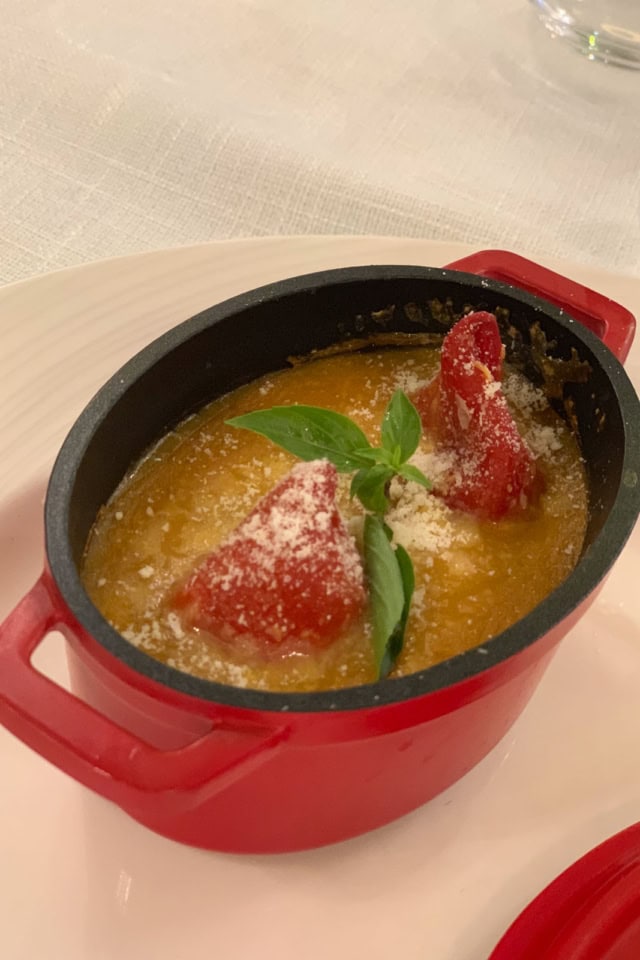
    Vegetarian dessert in Havana

    We’ll be honest: Cuba can be a challenge for vegetarians. The cuisine is very meat-centric. However, it is getting easier. Your best bet is to dine at paladares, where you can often speak directly with the owner or chef to request a meal without meat.

    Your go-to dishes will be rice and beans, fried plantains, omelettes, and root vegetables like yuca. Be sure to clarify that you don’t eat meat, as some places may consider jamonada (ham or spam) to be an acceptable addition.

    Frequently Asked Questions about Cuban Food

    What is the most popular food in Cuba?

    The national dish and arguably most popular food is Ropa Vieja. However, Lechon Asado (roast pork) is the star of any celebration, and the simple combination of rice and beans (Moros y Cristianos) is the most commonly eaten food on a daily basis.

    Is the food in Cuba spicy?

    No, traditional Cuban food is not spicy-hot. It is very flavourful and well-seasoned with spices like cumin, oregano, and bay leaf, along with the foundational flavours of garlic, onion, citrus, and bell peppers, but it does not use hot chili peppers. Hot sauce is generally not available unless you ask for it specifically.

    What is a typical Cuban dinner?

    A typical Cuban dinner plate, or plato fuerte, consists of a main protein like roast pork or shredded beef, served with a generous helping of rice and beans cooked together, and a side of fried sweet plantains (maduros) or a simple salad.

    What is mojo criollo?

    A Cuban garlic-and-citrus marinade and sauce built on sour orange, garlic, oregano, and oil. Lemon and lime can sub for sour orange.

    What is the difference between Moros y Cristianos and Congrí?

    Moros typically uses black beans. Congrí often uses red beans, especially in the east, though usage overlaps.
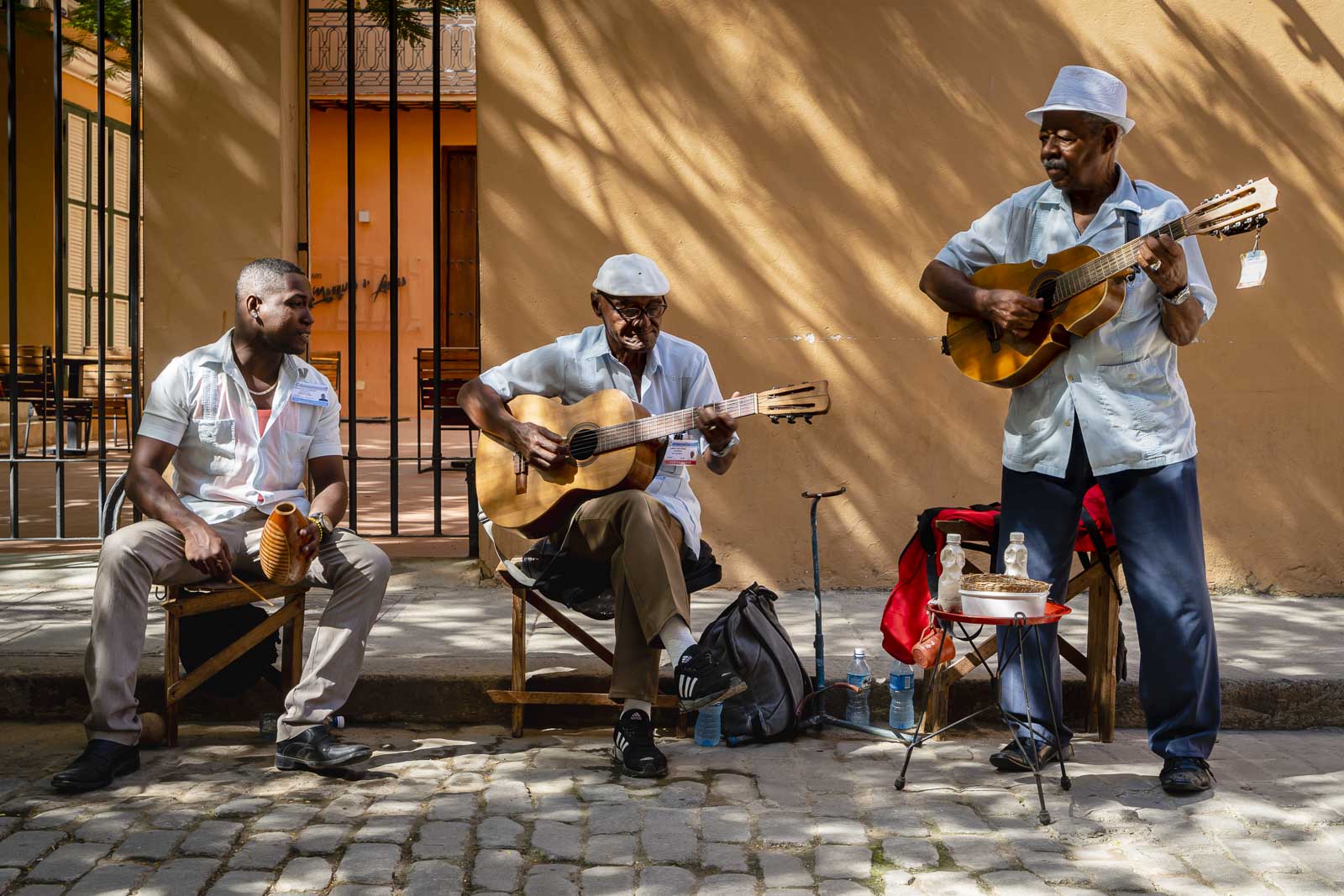
    Band playing outside of a Cuban Restaurant in Havana

    Cuban food is a direct reflection of its vibrant, resilient, and resourceful culture. It’s more than just rice and beans; it’s a rich culinary tradition built on Spanish, African, and Caribbean influences. To truly experience it, you have to step away from the resorts and into the family-run paladares where the real magic happens. By following your curiosity, you’ll discover a flavourful and comforting cuisine that will stick with you long after your trip is over.

    Looking for more information on Cuba?

    [ad_2]

    Source link

  • The Ultimate Guide to French Food: 31+ Must-Try Dishes

    The Ultimate Guide to French Food: 31+ Must-Try Dishes

    [ad_1]

    We have eaten our way across France, from the bustling bistros of Paris to tiny, family-run auberges in the countryside, and we’ve learned one simple truth: French cuisine is more than just food. It’s a language of its own, a way of life woven into the fabric of every village, city, and home. It’s the ritual of a morning croissant, the ceremony of a multi-course dinner, and the simple joy of a perfect baguette.

    This isn’t just a list of traditional French foods. This is our guide to the dishes we dream about, the ones we order the moment we land, and the flavours that define this incredible country.

    We’ll share our personal stories, tips on where to find the best versions, and the know-how to help you navigate the menus with confidence. Prepare to taste the very best of French cooking.

    Best French Foods To Try: A Quick Guide

    For first-time visitors looking for the best food in France, here are the essential dishes to add to your list, broken down by category:

    Top 5 Must-Try Dishes: If you only have time for a few, prioritize these: Boeuf Bourguignon, a classic Croissant from a local boulangerie, Steak Frites in a Parisian bistro, Duck Confit (Confit de Canard), and a simple, perfect Baguette.

    Classic Main Courses:

    Boeuf Bourguignon: Rich, slow-cooked beef stew in red wine.

    Coq au Vin: Chicken braised in red wine with mushrooms and bacon.

    Duck Confit: Crispy, succulent duck leg cooked in its own fat.

    Cassoulet: Hearty white bean and meat casserole from the south.

    From the Sea:

    Bouillabaisse: The iconic saffron fish stew from Marseille.

    Moules Frites: A steaming pot of mussels with a side of fries.

    Huîtres (Oysters): Freshly shucked, especially from the Brittany coast.

    Starters & Bistro Favorites:

    Soupe à l’Oignon (French Onion Soup): Topped with crusty, cheesy bread.

    Escargots de Bourgogne: Snails baked in garlic-parsley butter.

    Quiche Lorraine: Savory tart with bacon, egg, and cream.

    Foie Gras: A rich delicacy of duck or goose liver.

    From the Boulangerie & Pâtisserie (Bakery & Pastry Shop):

    Baguette & Croissant: The essential daily breads and pastries.

    Macarons: Delicate almond meringue cookies with various fillings.

    Crème Brûlée: Creamy custard with a crackly burnt sugar top.

    Tarte Tatin: An upside-down caramelized apple tart.

    Cheese & Alpine Specialties:

    A Cheese Plate (Fromage): Featuring cheeses like Comté, Roquefort, or Brie.

    Raclette & Tartiflette: Molten cheese dishes perfect for winter.

    Before You Eat: Understanding French Dining Culture

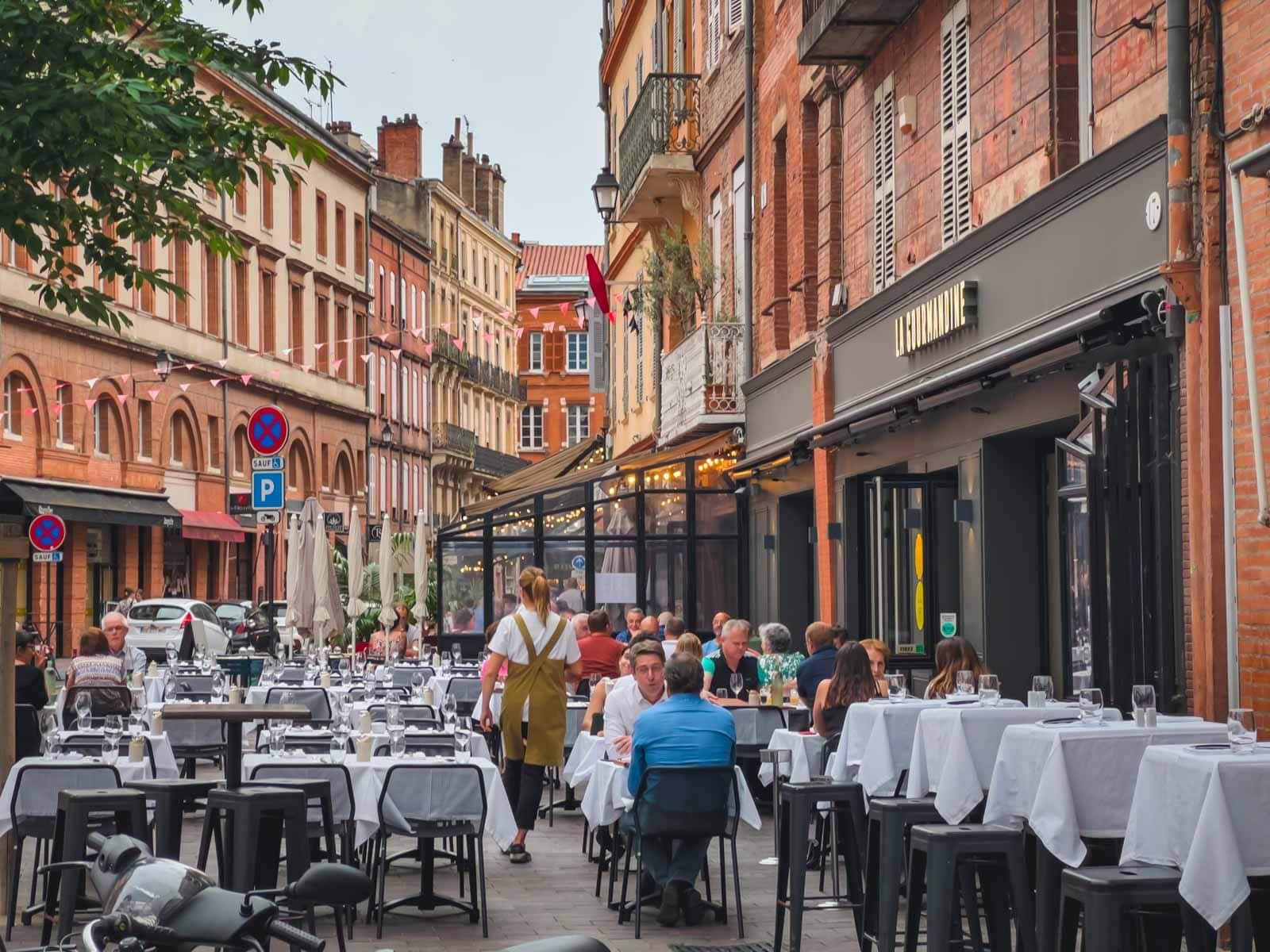
    A quaint Bistro in Toulouse serving French food.

    Navigating a French restaurant for the first time can feel intimidating, but a few key pointers will make you feel like a local.

    How to Read the Menu:

    Entrée: This means starter or appetizer, not the main course.

    Plat: This is the main course.

    Dessert: Dessert.

    Formule or Prix-Fixe: This is a set menu, often for lunch, offering excellent value. It usually includes two or three courses (e.g., entrée + plat or entrée + plat + dessert) for a fixed price.

    Plat du Jour: The dish of the day, usually fresh, seasonal, and a specialty of the chef.

    Essential Dining Phrases:

    “Bonjour/Bonsoir“: Always greet the staff when you enter.

    “Je voudrais…” (zhuh voo-dray): “I would like…”

    “L’addition, s’il vous plaît” (lah-dee-syon, seel voo play): “The bill, please.”

    “C’était délicieux!” (say-tay day-lee-syuh): “It was delicious!”

    Bread, Water, and Tipping:

    Bread: The bread basket is not an appetizer to be eaten with butter before your meal. It’s a utensil—use it to sop up the incredible sauces left on your plate.

    Water: If you ask for water (“une carafe d’eau, s’il vous plaît“), you’ll get free tap water. If you want bottled, you must specify eau plate (still) or eau gazeuse (sparkling).

    Tipping: Service is included by law in the final price (service compris). Tipping is not expected, but it’s common to round up the bill or leave a few extra euros in cash for exceptional service.

    Part 1: The Soul of Paris – The Bistro & Brasserie Experience

    There’s no better introduction to traditional French food than a classic Parisian bistro. These bustling, intimate eateries are the heart of French dining, serving timeless dishes perfected over generations.

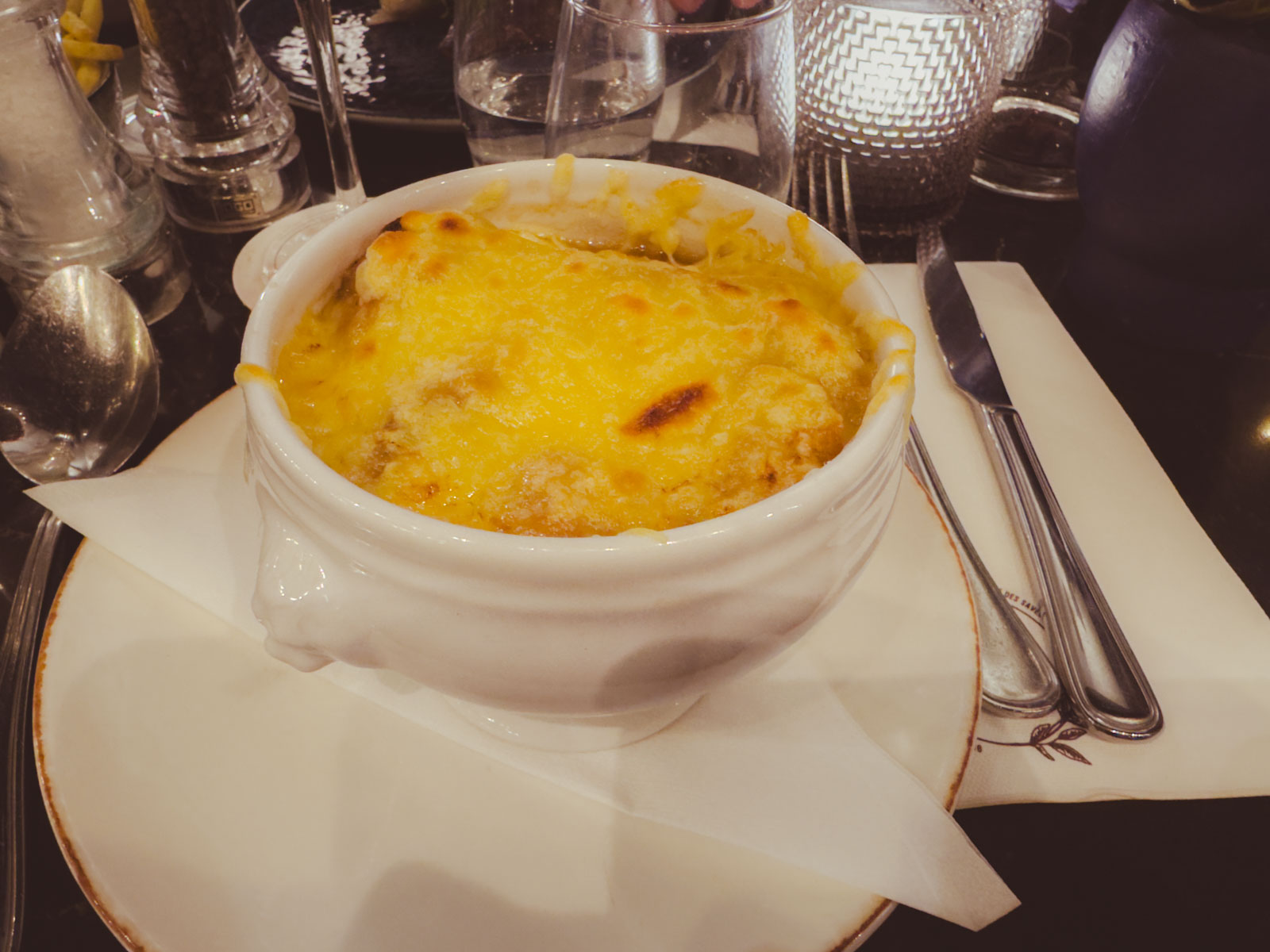
    French Onion Soup (Soupe à l’Oignon)

    The steaming bowl of French onion soup with a thick cheese crust that we ate on a rainy day in a Parisian bistro

    We once ducked into a tiny bistro in Le Marais on a miserably cold, rainy Parisian afternoon. The moment a steaming bowl of soupe à l’oignon was placed in front of us, the day was saved. The aroma of rich beef broth and caramelized onions is pure comfort.

    What It Is: A rich, savory soup made from beef stock and onions slowly caramelized until deeply sweet. It’s served in a ceramic bowl, topped with a thick crouton and a bubbling, golden crust of Gruyère cheese.

    Pro Tip: A great onion soup has a deep, dark broth, which means the onions were cooked low and slow for hours. If the broth is pale, it’s a shortcut version.

    Where to Try: Classic bistros and brasseries throughout Paris, especially in the colder months.

    Steak Frites

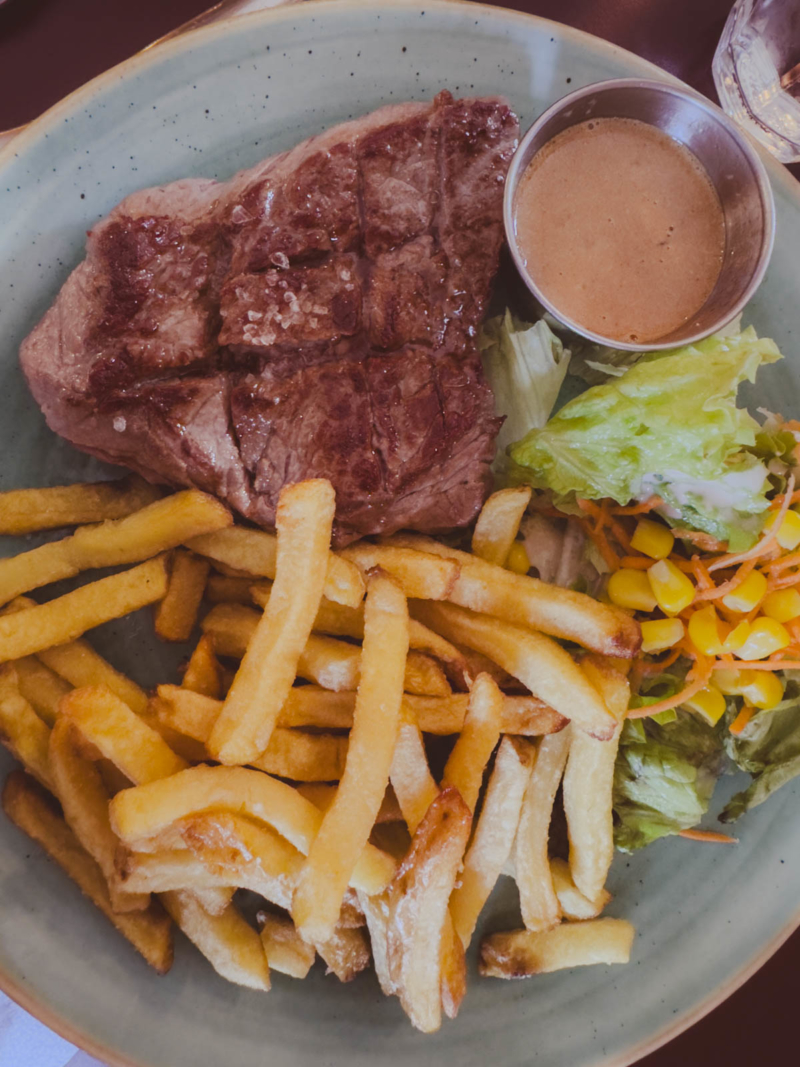
    Our perfectly cooked steak frites served with peppercorn sauce at a sidewalk café in Montmartre

    This is the unofficial national dish of every French brasserie. It’s simple, satisfying, and when done right, utterly sublime. Our favorite memory is of a late-night dinner in Montmartre, sitting at a sidewalk table, watching the world go by with a perfectly cooked steak and a mountain of crispy fries.

    What It Is: A high-quality steak (often an entrecôte or bavette) pan-fried or grilled to your liking, served with a pile of frites (fries). It’s typically accompanied by a sauce, like a creamy peppercorn (au poivre) or a rich béarnaise.

    Know Your Cuisson (Doneness):

    Bleu: Barely seared, raw inside.

    Saignant: Rare.

    À point: Medium-rare (the standard French way).

    Bien cuit: Well-done.

    Where to Try: Almost any brasserie or bistro in France. For a classic experience, try Le Relais de l’Entrecôte in Paris, which serves only steak frites.

    Duck Confit (Confit de Canard)

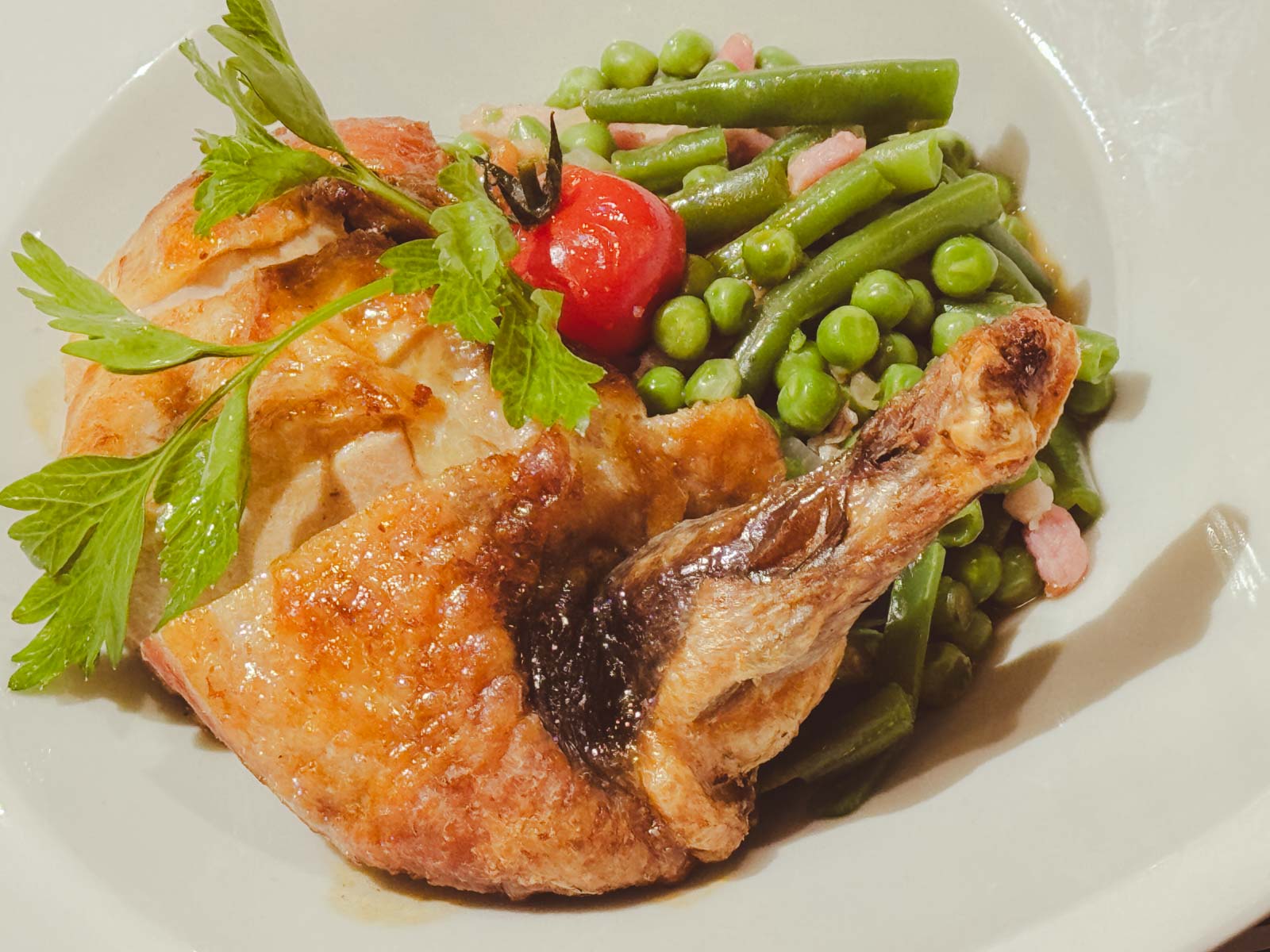
    he incredibly crispy duck confit with sarladaise potatoes we savored in the Dordogne region of France

    The first time you experience a proper duck confit is a culinary revelation. We were in the Dordogne region, the heartland of duck country, and were served a leg of confit where the skin was so crisp it shattered like glass, revealing the most succulent, fall-off-the-bone meat beneath.

    What It Is: A duck leg slow-cooked in its own fat for hours until incredibly tender. It’s then pan-fried or broiled until the skin is golden and crispy.

    Pro Tip: It’s traditionally served with pommes de terre sarladaises, potatoes sautéed in garlic and, you guessed it, more duck fat. Do not miss this pairing.

    Where to Try: The Southwest regions of France like Dordogne and Gascony are the epicenter, but it’s a staple on bistro menus nationwide.

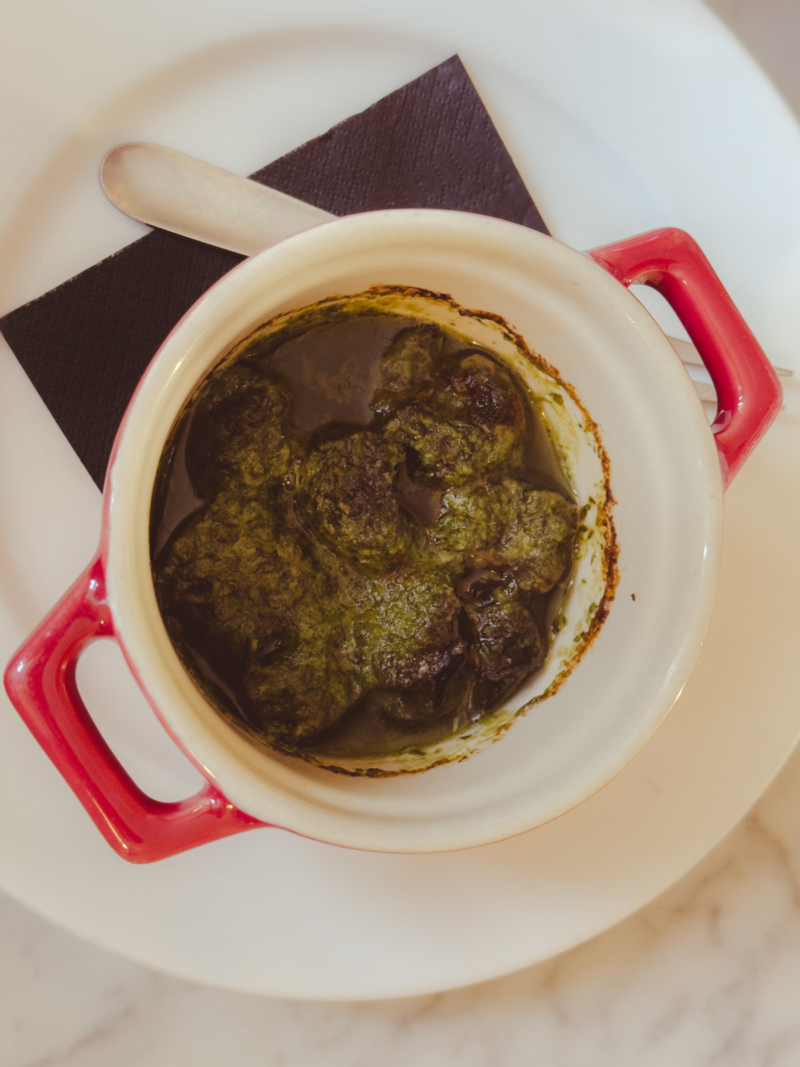
    Escargots de Bourgogne

    The bowl of escargots sizzling in garlic and parsley butter that we tried for the first time in Paris.

    Don’t be shy! For many, eating snails is a rite of passage in France. After all, when you think of classic French food, this comes to the top of your mind.

    We were hesitant on our first trip, but one bite of that garlicky, parsley-infused butter and we were converted. Use the little tongs and fork, and have your bread ready to mop up every last drop of the butter.

    What It Is: Plump Burgundy snails baked in their shells with a generous amount of garlic, parsley, and butter.

    How to Pronounce It: es-kar-goh duh boor-GOHN-yuh

    Perfect Pairing: A crisp white wine like a Chablis or a sparkling Crémant de Bourgogne to cut through the richness of the butter.

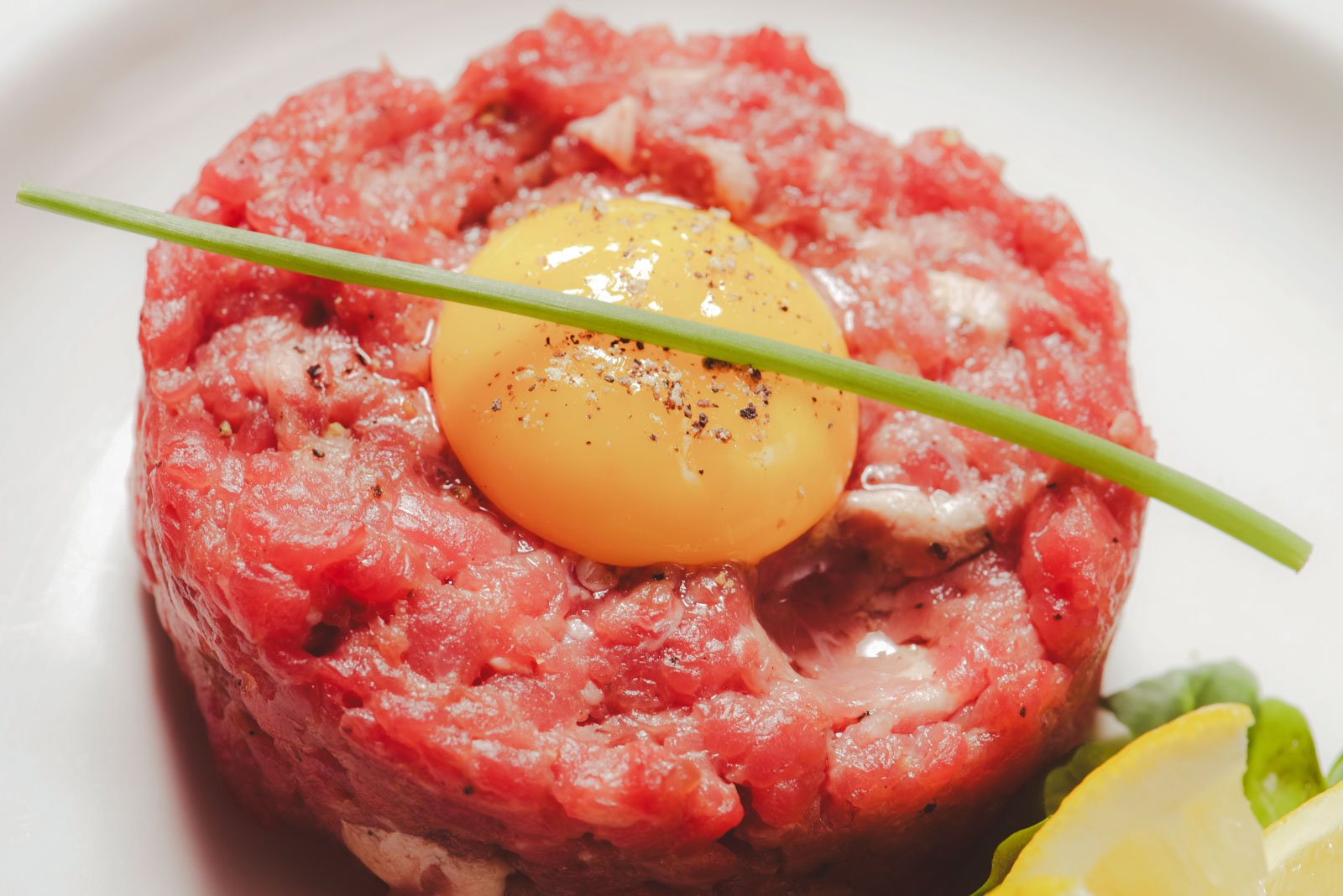
    Steak Tartare

    A dish of freshly prepared steak tartare with a raw egg yolk on top, a delicacy in French cuisine.

    Ordering steak tartare feels like joining a secret club. It’s a dish for purists, and we love watching the tableside preparation at old-school brasseries. If you trust the restaurant, you’re in for a treat.

    What It Is: High-quality raw beef, hand-chopped (never minced), and seasoned with capers, onions, mustard, and a raw egg yolk.

    Pro Tip: This dish is all about the quality of the beef. Only order it at a reputable, busy bistro where you can be assured of its freshness. If you’re unsure, ask if it’s prepared au couteau (cut by knife).

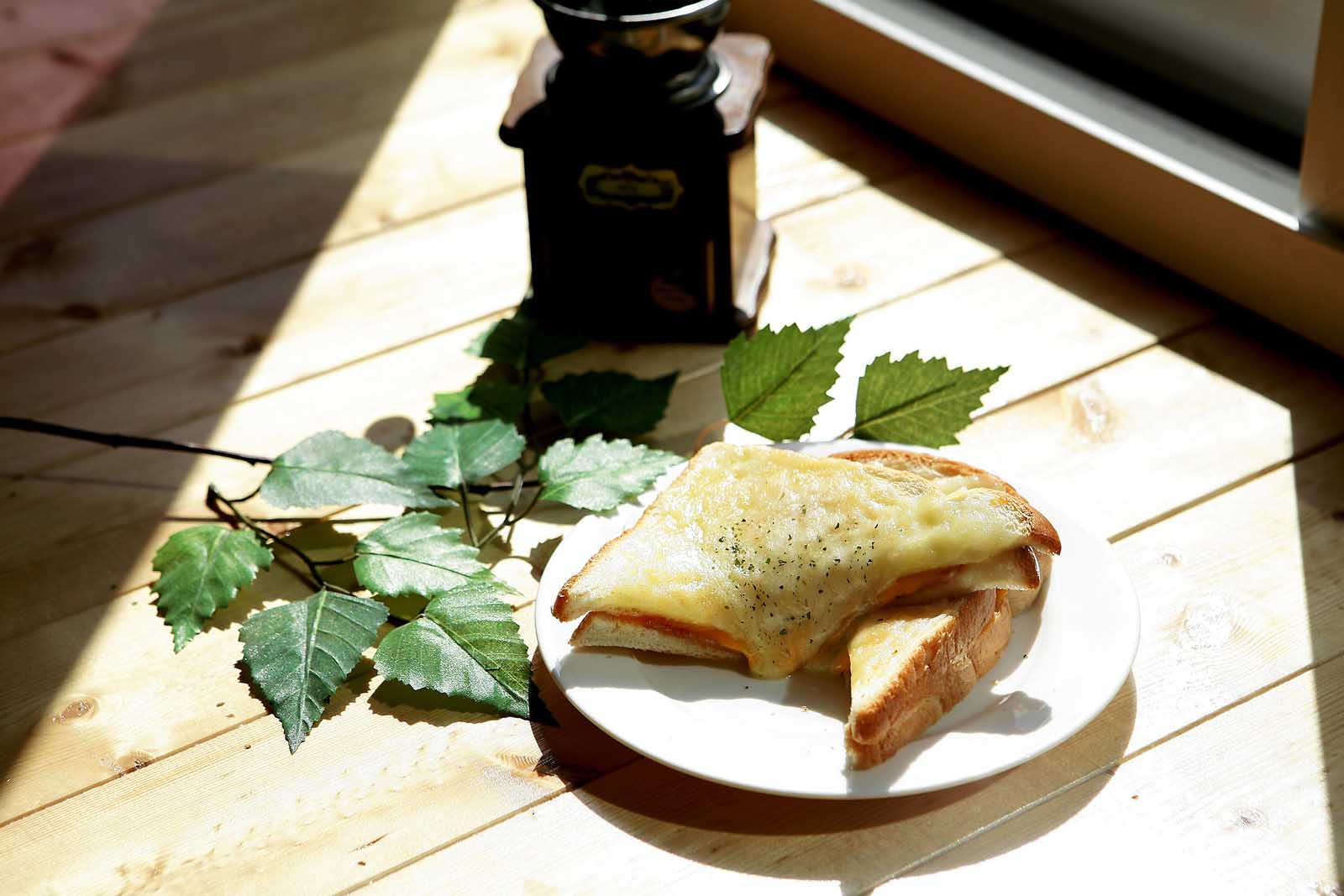
    Croque-Monsieur & Croque-Madame

    The delicious Croque-Madame with a perfect fried egg on top that we had for lunch in a Parisian café.

    This is the ultimate French grilled cheese sandwich. It was our go-to lunch on busy sightseeing days in Paris; quick, affordable, and incredibly delicious.

    What It Is: A hot sandwich made with baked ham and Gruyère cheese on pain de mie (soft white bread), topped with creamy béchamel sauce and more cheese, then broiled until bubbly. A Croque-Madame is the same but with a fried egg on top.

    Where to Try: Any corner café or brasserie at lunchtime. It’s the perfect partner for a simple green salad with a sharp vinaigrette.

    Part 2: Hearty Feasts: Flavours of the French Countryside

    Venture beyond the cities, and you’ll find the rustic, slow-cooked dishes that form the true soul of French cuisine. These are the recipes passed down through generations.

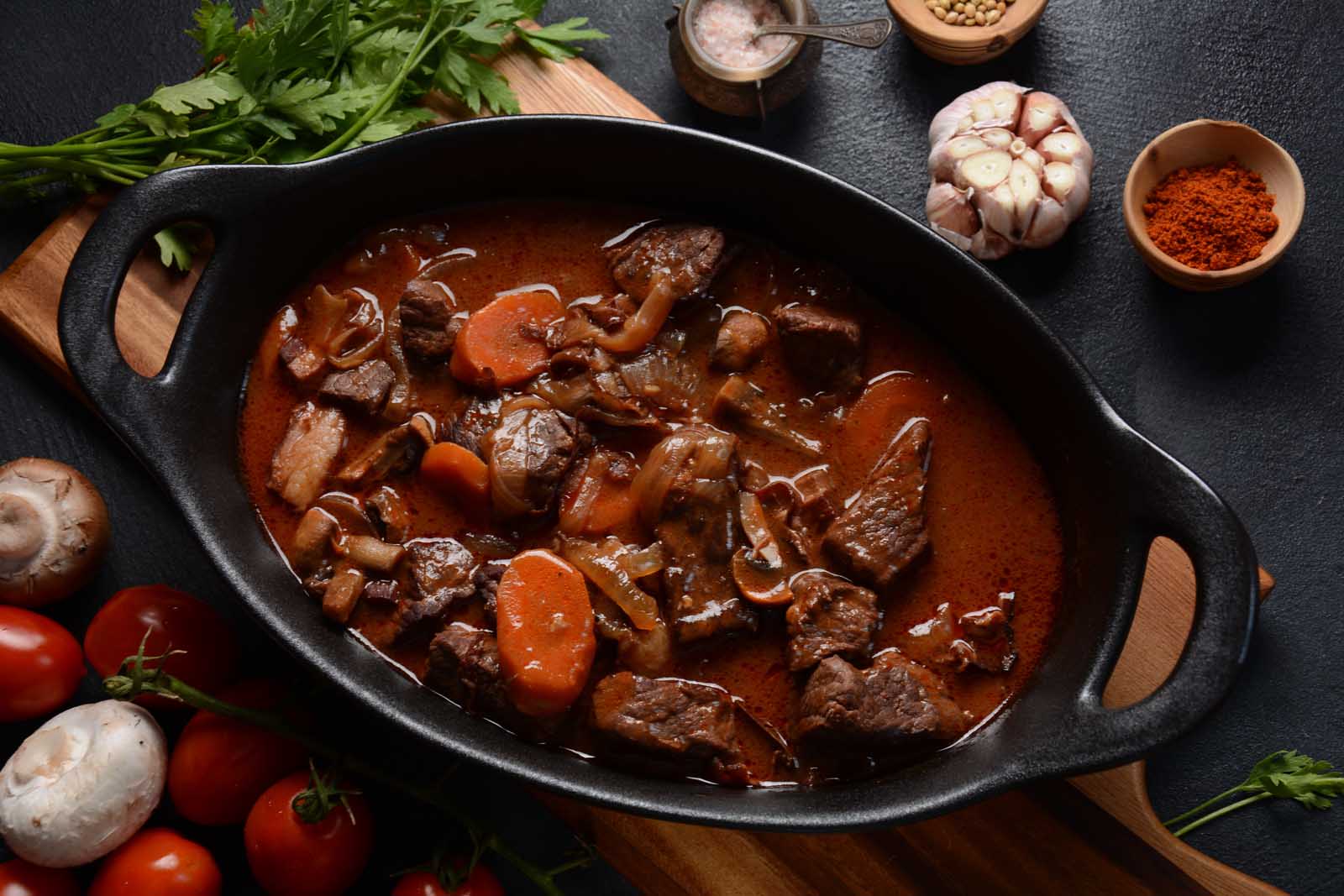
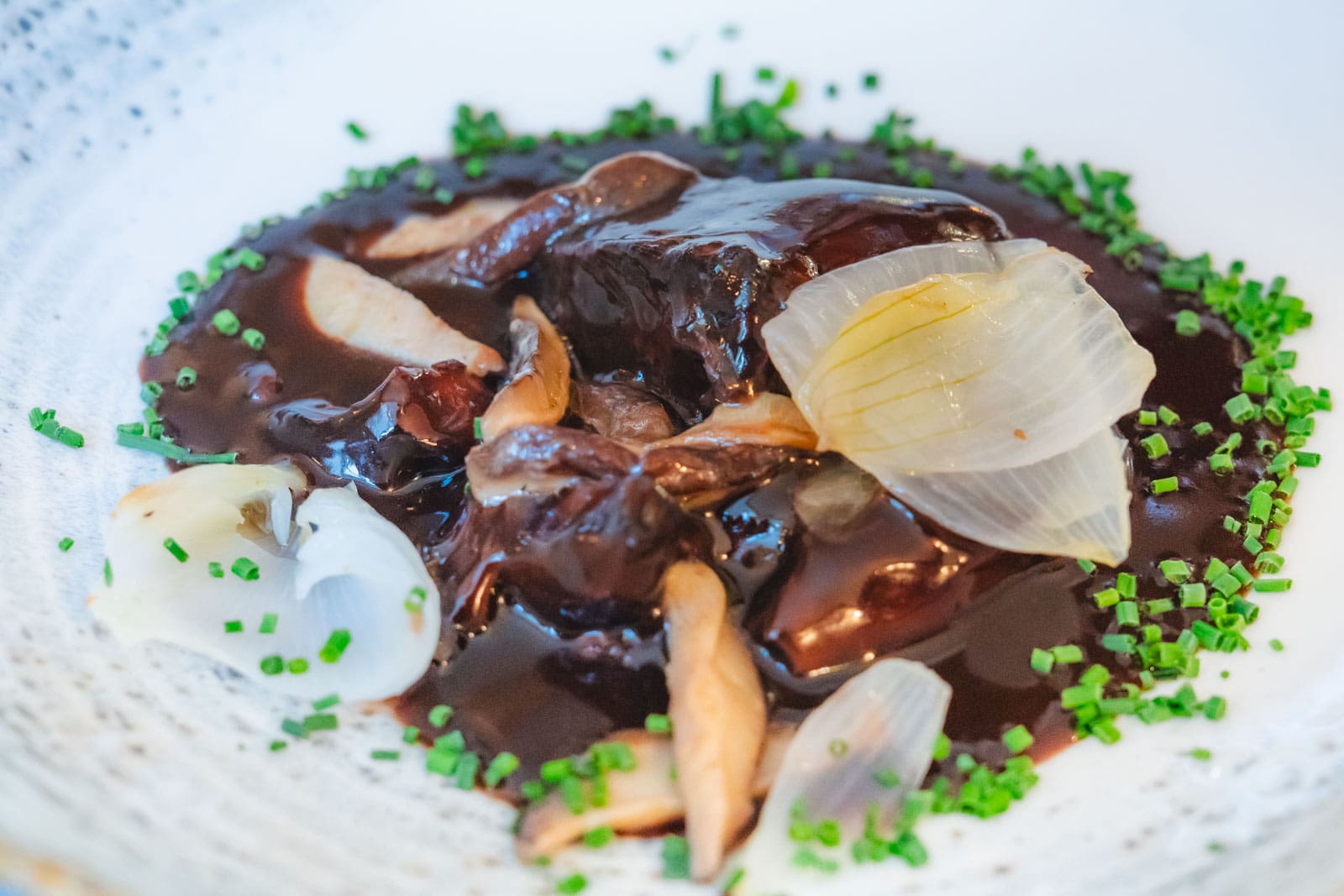
    Boeuf Bourguignon

    A hearty bowl of Boeuf Bourguignon, the traditional beef and red wine stew from the Burgundy region of France.

    I’ll never forget the first time we had a real Boeuf Bourguignon. We were driving through Burgundy in late autumn, the vineyards blazing gold and red, and stumbled into a tiny auberge near Beaune. The air inside was thick with the scent of red wine and slow-cooked meat. It’s not just a beef stew; it’s a hug from the inside out.

    What It Is: A testament to slow cooking and one of those famous French dishes you have heard about. Tougher cuts of Charolais beef are braised for hours in a full-bodied local Burgundy red wine, along with pearl onions, carrots, button mushrooms, and a bouquet garni of herbs. The result is impossibly tender beef in a rich, glossy sauce.

    Where to Try: Its native Burgundy. Look for restaurants that list it as a plat du jour. A key sign of a great version is a sauce that’s deep, dark, and coats the back of a spoon.

    Coq au Vin

    he rich, dark Coq au Vin we were served in a traditional bouchon in Lyon, a classic French dish

    Like its beef-based cousin, Coq au Vin is another iconic French stew. We had an unforgettable version in a traditional bouchon in Lyon, where the sauce was so dark it was almost purple, a sign of a truly authentic, long-simmered recipe.

    What It Is: Chicken (traditionally an older rooster, or coq) braised slowly in red wine with lardons (bacon), mushrooms, and pearl onions. The long cooking time makes the chicken incredibly tender.

    How to Pronounce It: kok-oh-VAN

    Where to Try: Lyon is famous for this dish, but you’ll find it in traditional restaurants across France.

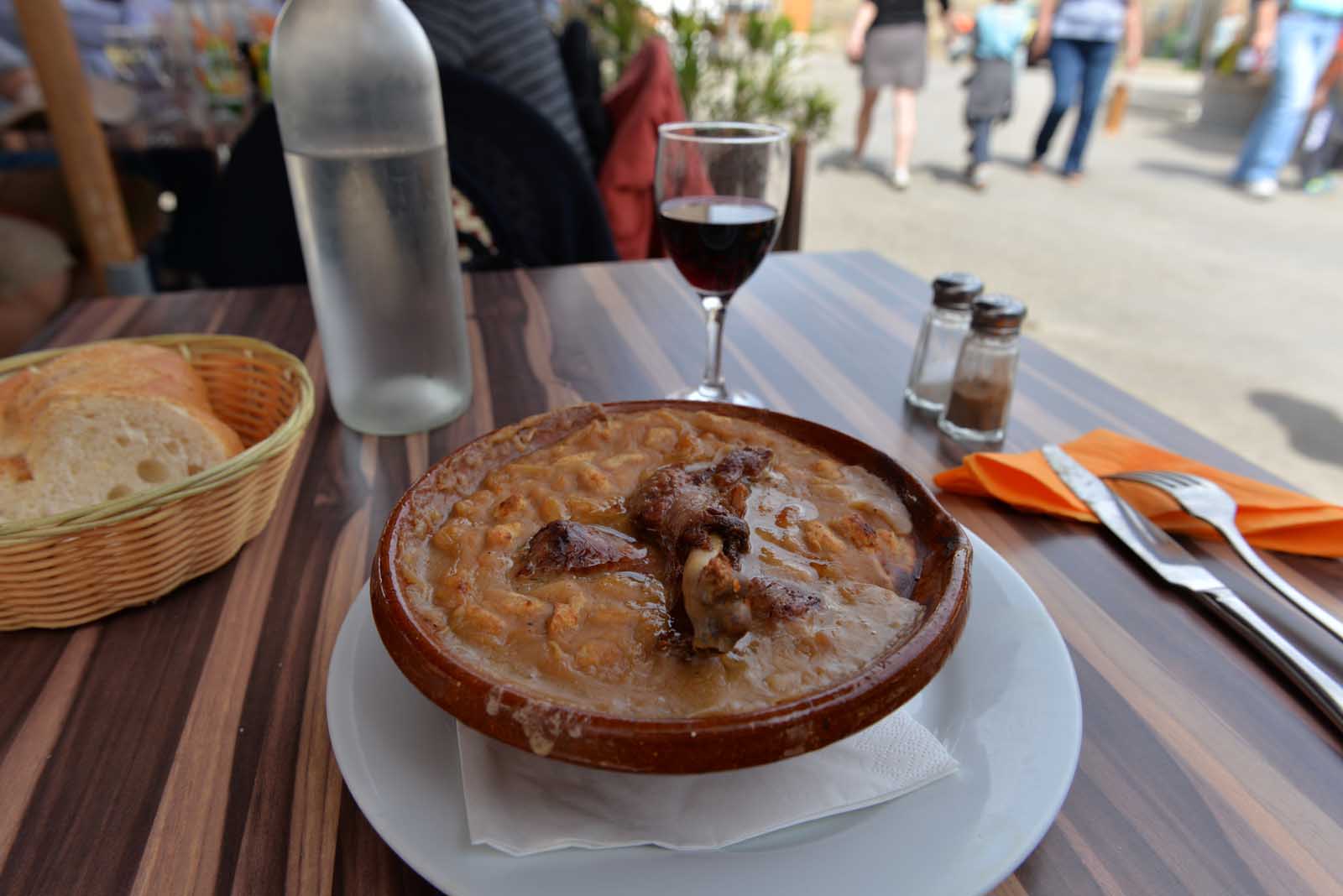
    Cassoulet

    The giant, bubbling cassoulet with duck confit and sausage we shared after exploring Carcassonne

    Be warned: cassoulet is not a light meal. It’s a rich, rib-sticking masterpiece. We shared one in the medieval city of Carcassonne and promptly had to take a long, slow walk along the city walls to recover. It was worth every single bite.

    What It Is: A hearty, slow-baked casserole from the Languedoc region containing white beans, duck confit, pork sausage, and often other meats like pork shoulder. It’s traditionally cooked in a clay pot and has a delicious crispy crust.

    Where to Try: The cities of Toulouse, Carcassonne, and Castelnaudary each claim to have the one true recipe. Trying it anywhere in this region is a must.

    Poulet Basquaise

    A vibrant dish of Poulet Basquaise, a French chicken stew with sweet peppers and Espelette chili.

    This dish is a vibrant taste of the French Basque Country, with its sunny, bold flavours. It’s a beautiful one-pot meal that captures the region’s love for peppers and tomatoes.

    What It Is: Chicken pieces braised in a flavorful sauce of piperade, a mix of onions, green peppers, and tomatoes sautéed with a hint of Espelette pepper for a gentle warmth.

    Where to Try: The French Basque Country in the southwest, near the Spanish border.

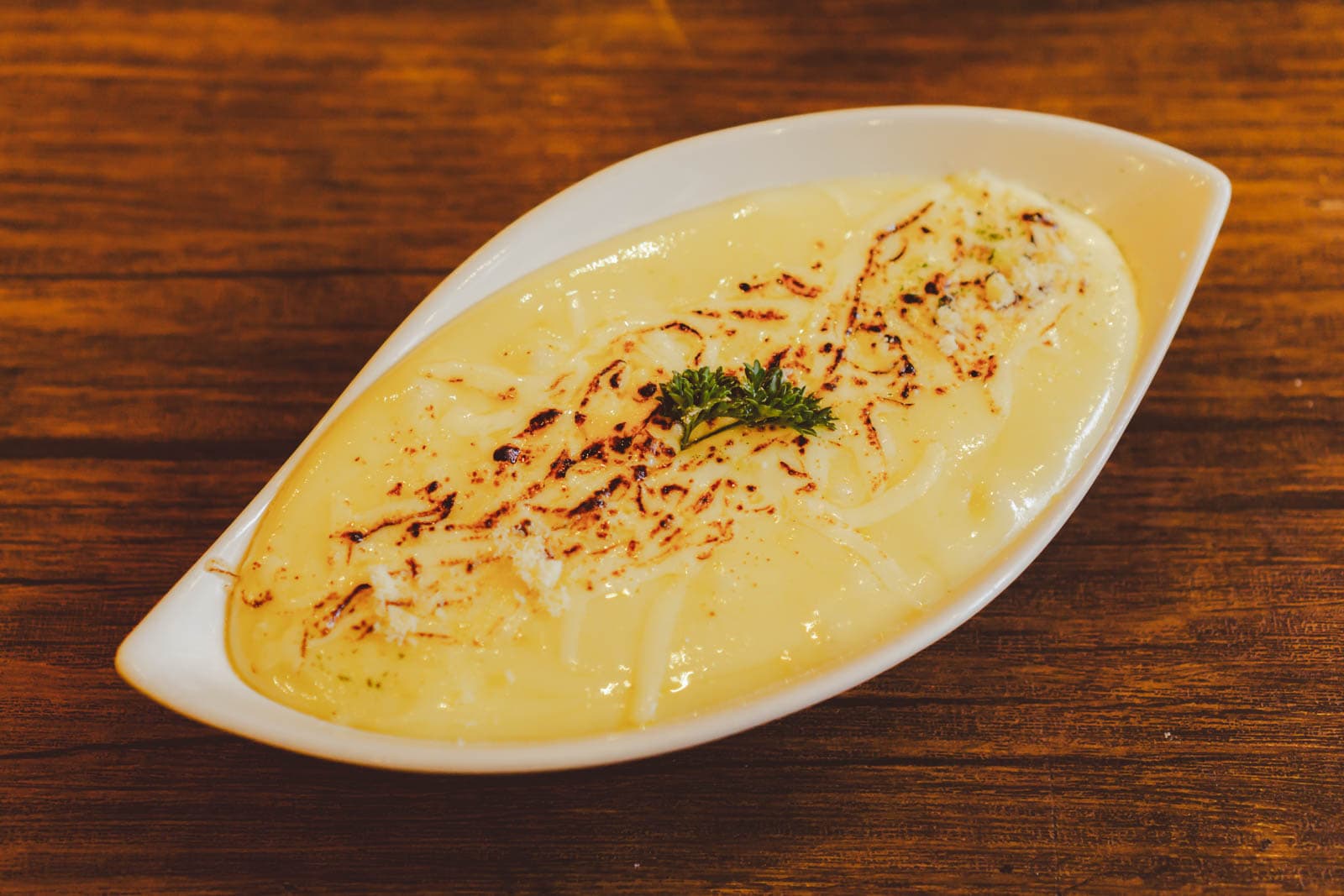
    Aligot

    Aligot, a cheesy mashed potato dish from the Aubrac region of France.

    Watching aligot being served is half the fun. This cheesy, stretchy potato dish is pure theatre. A server will lift a spoonful high into the air, creating a seemingly endless ribbon of molten cheese and potato.

    What It Is: Silky smooth mashed potatoes blended with garlic and Tomme de Laguiole or Cantal cheese, whipped until it develops an incredible, elastic texture.

    How to Pronounce It: ah-lee-GOH

    Where to Try: A specialty of the Aveyron and Auvergne regions in central France. It’s often served with local sausages.

    Part 3: A Taste of the Coast – The Best French Seafood

    From the rugged coast of Brittany to the sun-drenched Mediterranean, France’s coastline offers some of the best seafood in the world.

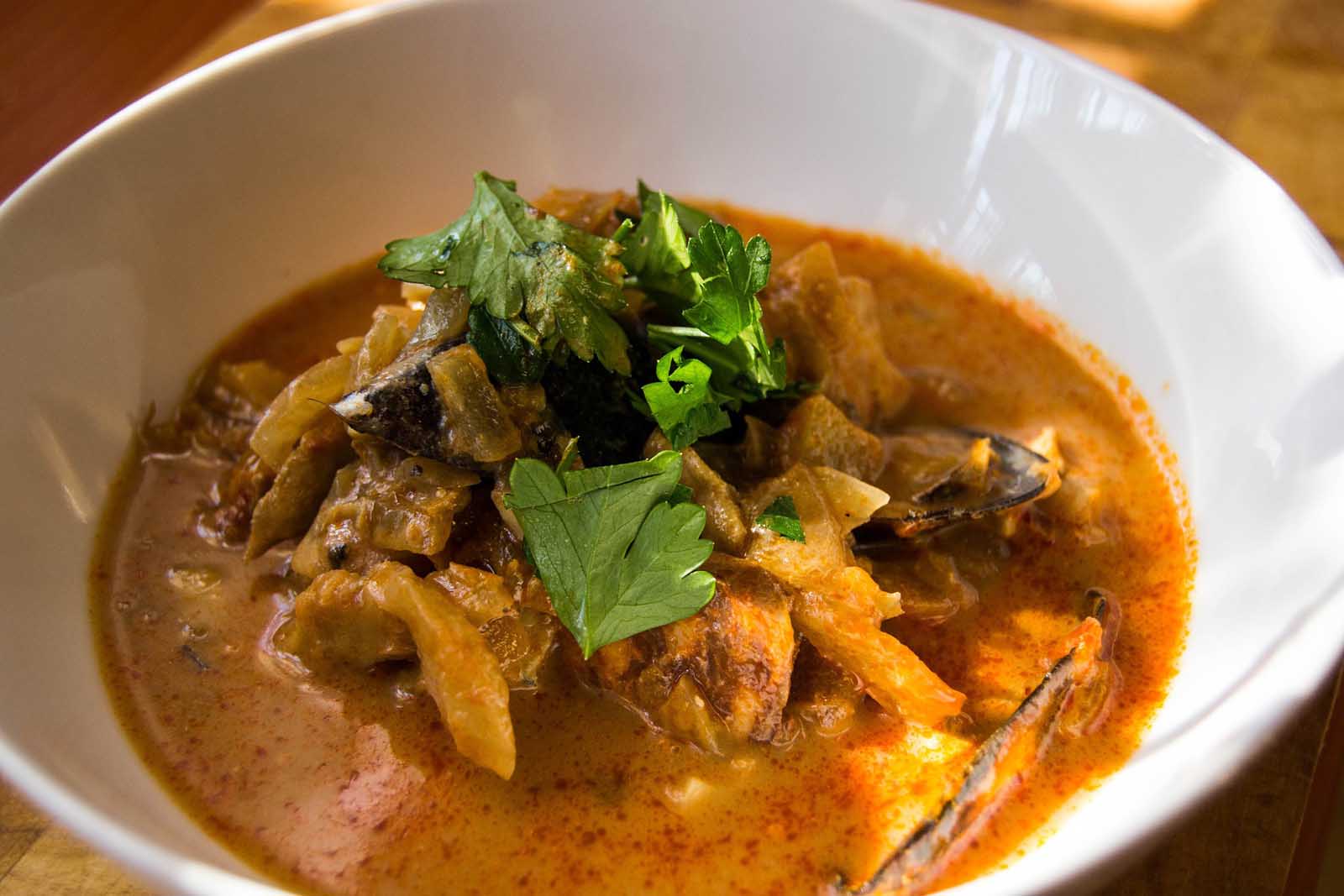
    Bouillabaisse

    A bowl of traditional French Bouillabaisse, a saffron-infused fish stew served with croutons and rouille.

    Eating bouillabaisse in the Vieux-Port (Old Port) of Marseille, with the fishing boats bobbing in the harbour, is a quintessential French food experience. It’s not just a soup; it’s a two-course event.

    What It Is: An iconic fish stew from Marseille. An authentic version must contain at least four types of local rockfish. The fragrant, saffron-infused broth is served first with croutons and rouille (a spicy garlic mayonnaise), followed by the fish fillets themselves.

    Pro Tip: Real bouillabaisse is expensive due to the quality and variety of fish required. Be wary of cheap versions marketed to tourists.

    How to Pronounce It: boo-yah-BESS

    Moules Frites

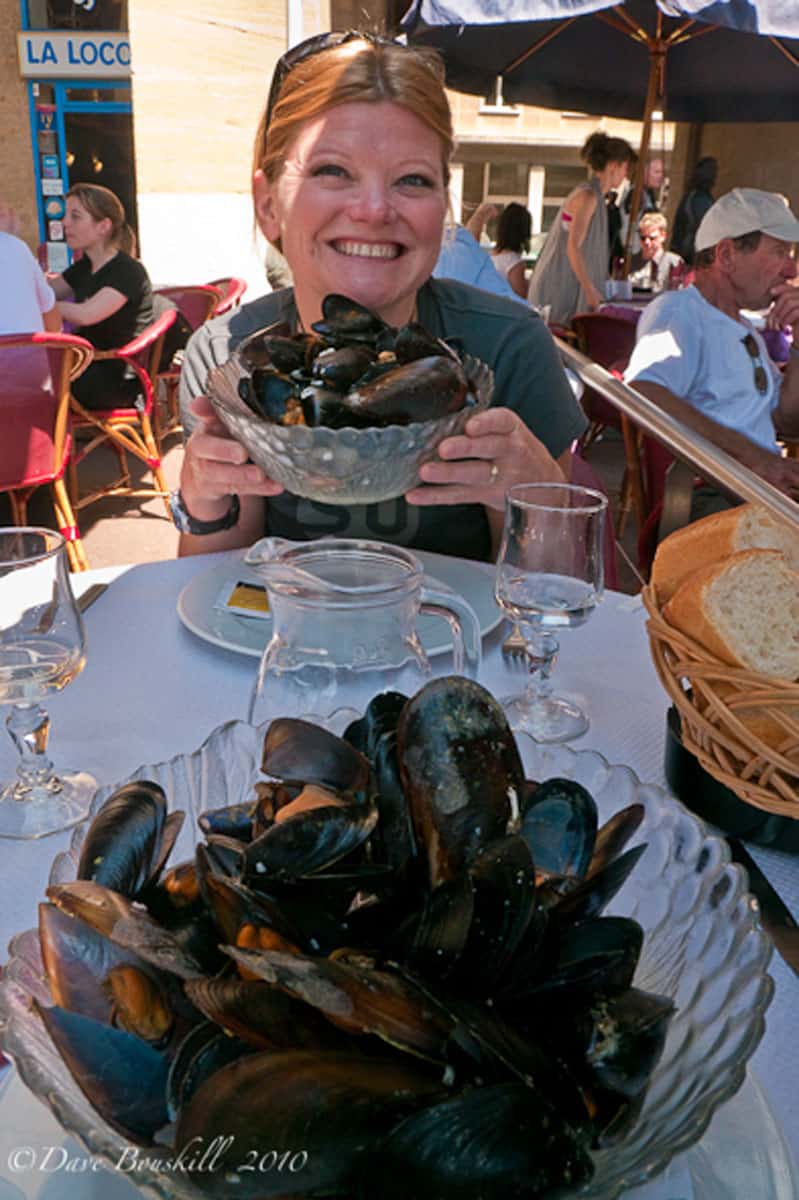
    The steaming pot of Moules Frites we enjoyed at a seaside restaurant in Marseilles France

    This Belgian classic has been wholeheartedly adopted by Northern France. There’s nothing better than sitting at a seaside restaurant in Normandy or Brittany with a huge steaming pot of mussels, a cone of salty fries, and a view of the ocean.

    What It Is: A generous portion of mussels, typically steamed in a broth of white wine, shallots, parsley, and garlic (marinières style). It’s always served with a side of fries.

    How to Eat It: Use an empty mussel shell as a pair of pincers to pluck the meat from the others.

    Oysters (Huîtres)

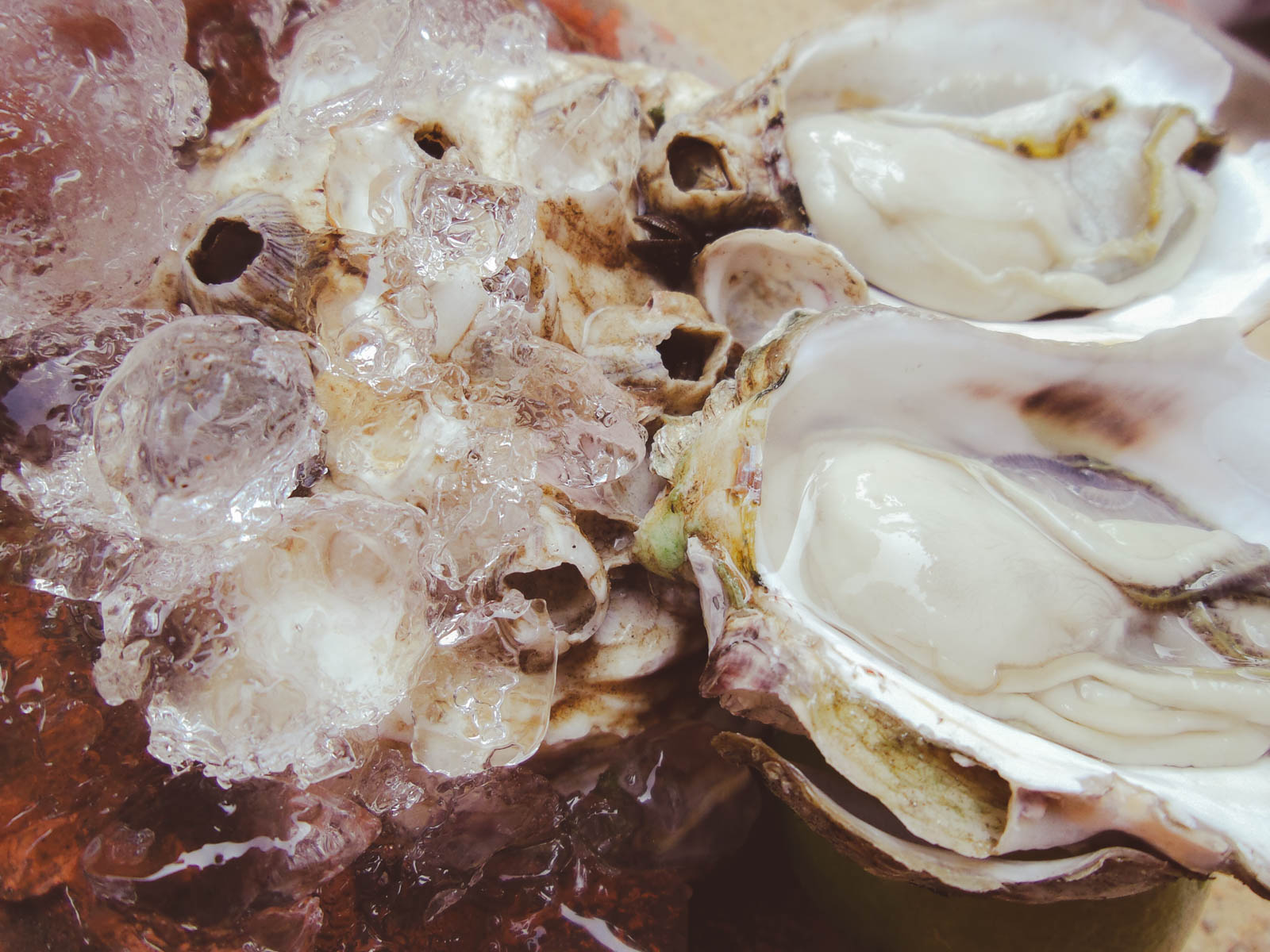
    A platter of freshly shucked oysters served on a bed of ice with lemon wedges, a classic French seafood.

    The French coast, particularly Brittany and Normandy, produces some of the world’s finest oysters. We love visiting the oyster market in Cancale, Brittany, where you can buy a dozen fresh-shucked oysters directly from the producers and eat them standing by the sea with a squeeze of lemon.

    What It Is: Fresh, raw oysters, typically served on a bed of ice with lemon wedges and a mignonette sauce (chopped shallots in red wine vinegar).

    Where to Try: Coastal towns in Brittany and Normandy are best. In Paris, you’ll find them at dedicated seafood brasseries (écaillers), especially during months with an ‘R’ in them.

    Coquilles Saint-Jacques

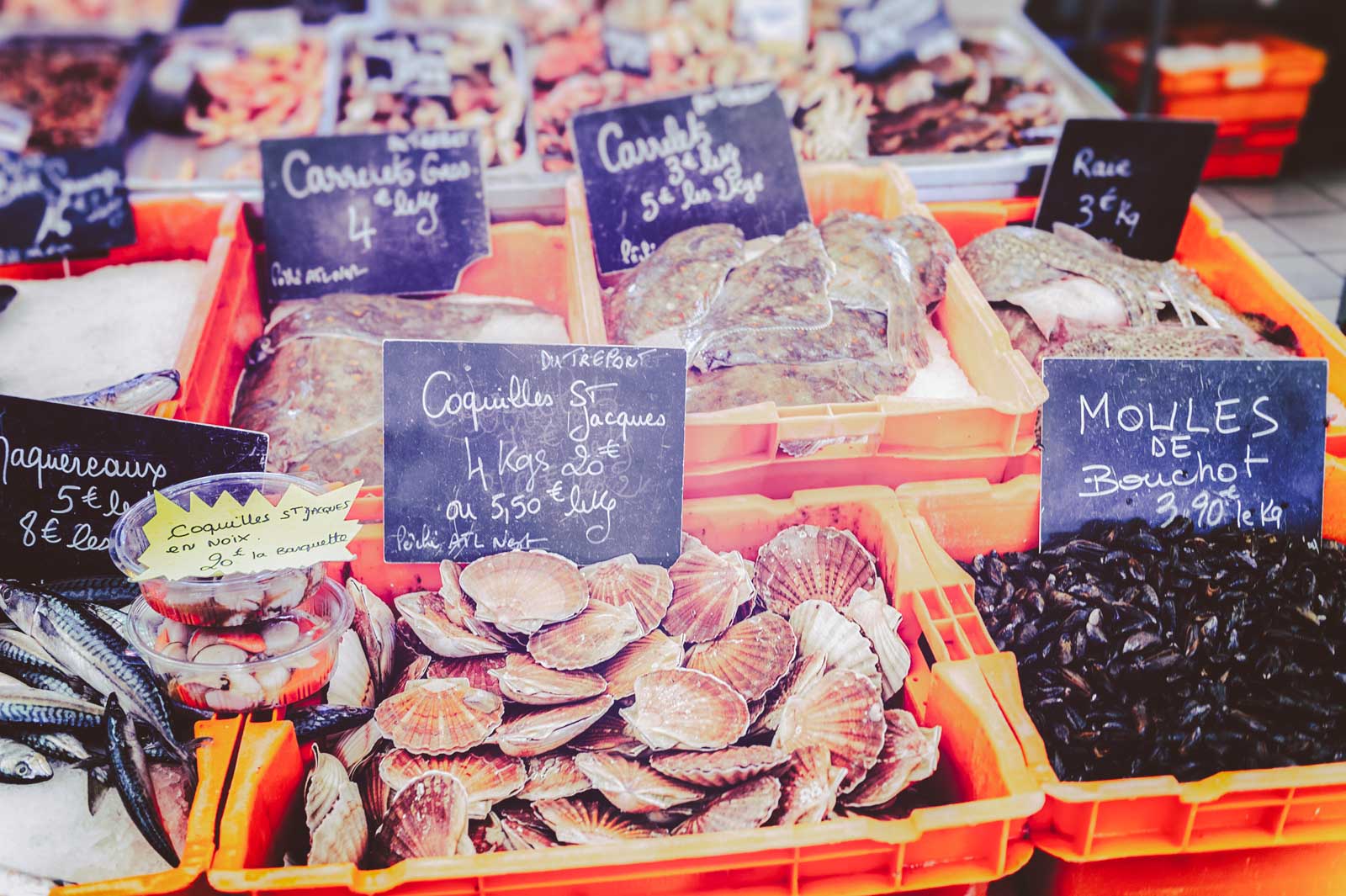
    A classic French dish of Coquilles Saint-Jacques, featuring scallops in a market in Normandy

    This is a rich, elegant dish often served as a starter for a special occasion. The creamy sauce and golden-brown top make it pure indulgence.

    What It Is: Plump sea scallops, often poached in a wine-infused cream sauce with mushrooms, then placed back into a shell, topped with cheese or breadcrumbs, and browned under a grill.

    Where to Try: A classic on menus in Normandy, the heart of France’s scallop fishing industry.

    Sole Meunière

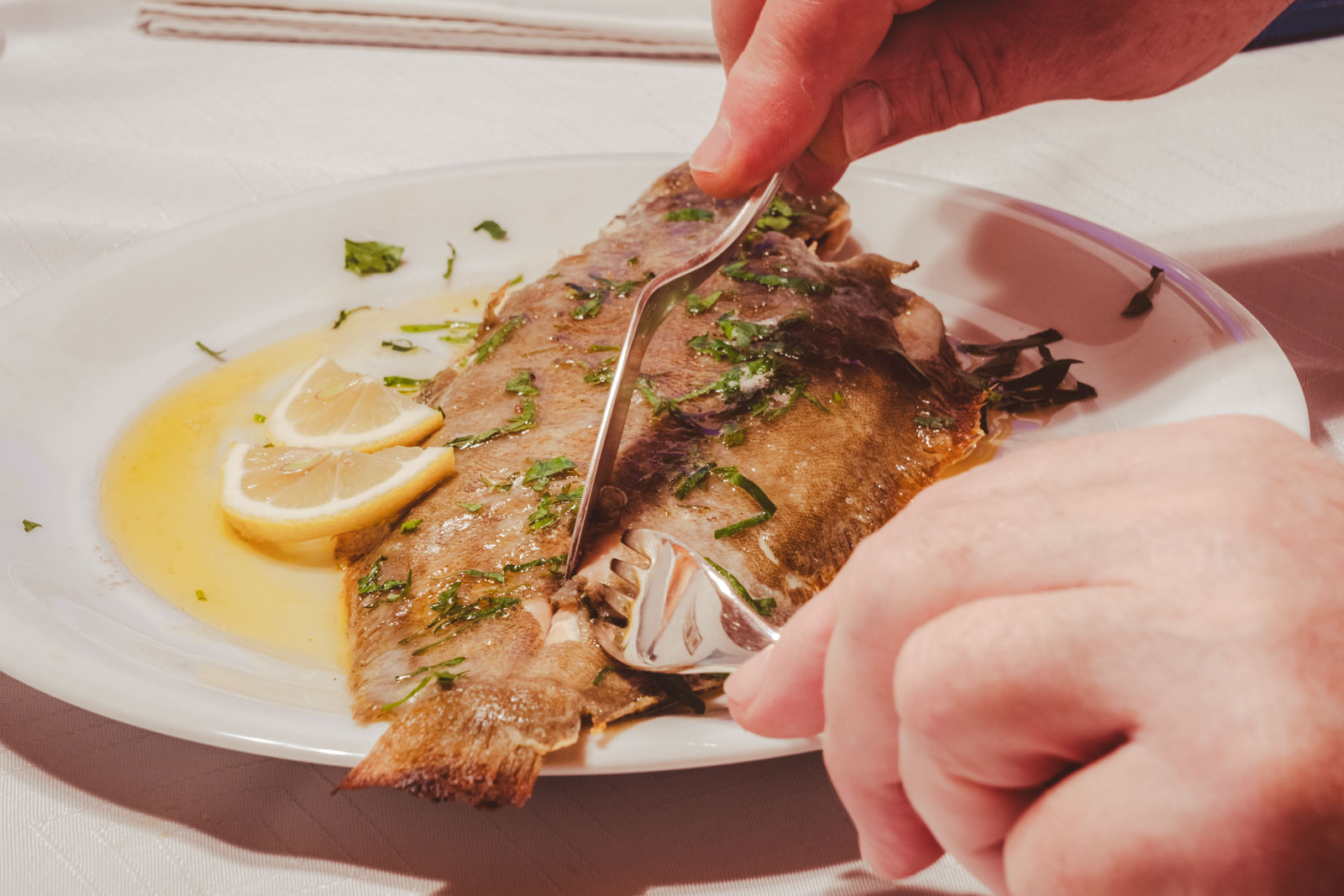
    Digging into an elegant plate of Sole Meunière, a whole Dover sole pan-fried in brown butter with lemon and parsley

    Simple, elegant, and timeless. This dish, famously loved by Julia Child, proves that with perfect ingredients and technique, you don’t need complicated recipes to create something magical.

    What It Is: A whole Dover sole, lightly dusted in flour, pan-fried in butter until golden, and served with a sauce of browned butter (beurre noisette), lemon juice, and fresh parsley.

    Perfect Pairing: A crisp, unoaked Chardonnay like Chablis.

    Part 4: The Art of the Apéro – Cheese Course, Charcuterie & Wine

    The hours before dinner, known as l’apéro, are a cherished French ritual and really part of the French culture.. It’s a time to unwind with a drink and some savoury bites.

    A Beginner’s Guide to French Cheese

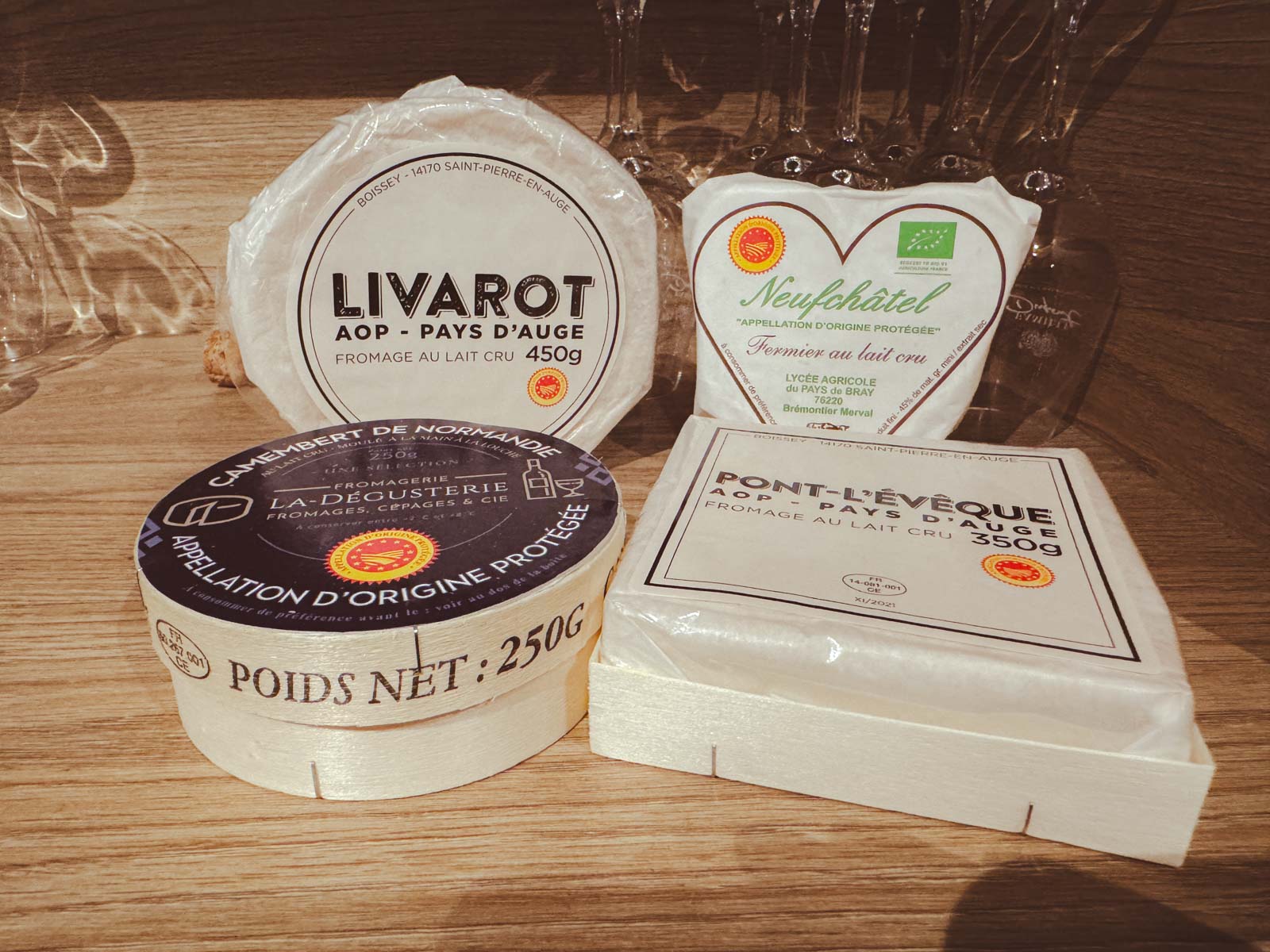
    Display of French cheeses that we tried in Normandy.

    With over 1,000 types of cheese, knowing where to start is daunting. A cheese course is typically served after the main course and before dessert. These are our favourite French cheeses:

    Comté: A hard, nutty cheese from the Jura mountains.

    Roquefort: A powerful, salty blue cheese made from sheep’s milk.

    Chèvre (Goat Cheese): Comes in many forms, from soft and fresh to hard and aged. Look for Crottin de Chavignol from the Loire Valley.

    Camembert: A soft, creamy, and earthy cheese from Normandy. Let it come to room temperature before eating.

    Brie de Meaux: The famous “King of Cheeses,” soft-ripened with a mild, buttery flavour.

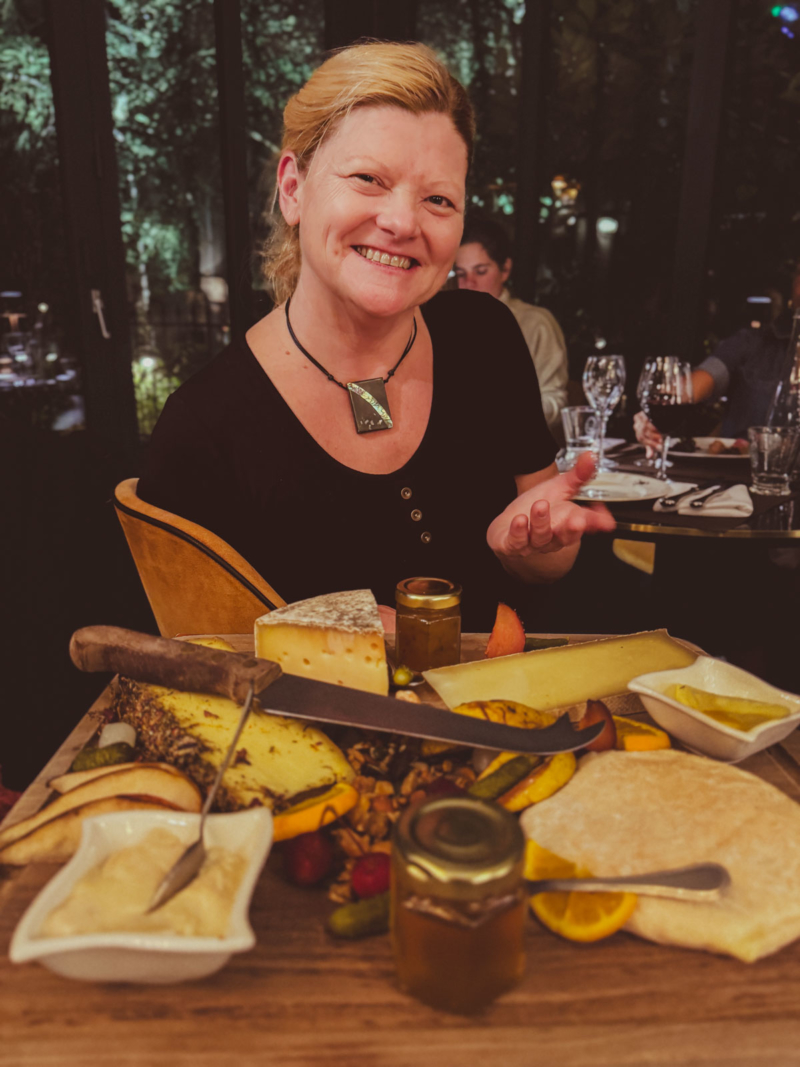
    The beautiful French cheese board that was created for our apéro with cheeses from a local market in Beaujolais

    Cheese Plate (Fromages AOP). Start with Comté (Jura), Camembert de Normandie (Normandy), Sainte-Maure de Touraine (Loire goat’s cheese), and Saint-Nectaire (Auvergne). Ask for cheeses “à point” (ripe). Note: the baguette, now on UNESCO’s Intangible Cultural Heritage list, really is half the joy.

    Charcuterie (Pâté, Terrine, Rillettes)

    Our charcuterie platter with pâté, rillettes, and saucisson that we enjoyed with wine

    A charcuterie board is a celebration of preserved meats.

    What It Is: A platter featuring a variety of cured meats and preparations.

    Pâté & Terrine: A mixture of ground meat (like pork, veal, or duck), fat, and seasonings, cooked in a mold. A terrine is named for the dish it’s cooked in, while a pâté en croûte is baked in a pastry crust.

    Rillettes: Meat (usually pork) slow-cooked in its own fat until it’s shreddable, then cooled to form a rich, savory spread.

    How to Eat It: Spread it on a piece of fresh baguette and serve with cornichons (tiny pickles) and Dijon mustard.

    Foie Gras

    An elegant slice of foie gras terrine served on toasted brioche with a sweet fig jam.

    A controversial but undeniably iconic French delicacy. We first tried it seared hot (poêlé) at a Christmas market in Strasbourg, served simply on gingerbread. It was unbelievably rich and melted in our mouths.

    What It Is: The specially fattened liver of a duck or goose. It can be served as a cold terrine (mi-cuit) with toast and fig jam, or seared hot.

    Perfect Pairing: A sweet dessert wine like a Sauternes from Bordeaux or a Jurançon from the Southwest.

    Part 5: The Morning Ritual – The Boulangerie & Pâtisserie

    No trip to France is complete without daily visits to the local bakery (boulangerie) and pastry shop (pâtisserie).

    Baguette Tradition

    The warm, crusty baguette tradition we bought every morning from our favorite boulangerie in Paris.

    The French baguette is a cultural icon. Our daily ritual in France is to find the best local boulangerie and grab a warm baguette de tradition for the day.

    What It Is: A long, thin loaf of bread with a crisp crust and a soft, airy crumb. A “Tradition” is made with only flour, water, yeast, and salt, protected by French law.

    Pro Tip: Look for bakeries with the “Artisan Boulanger” sign. A good baguette should have an irregular, open crumb and a deeply golden, crackly crust.

    Croissant & Pain au Chocolat

    The flaky, buttery croissant and pain au chocolat from our daily morning ritual in France

    The smell of baking butter is the perfume of a French morning. A proper croissant should be flaky, light as air, and leave a delightful mess of crumbs all over your plate.

    What It Is: A laminated pastry, meaning it’s made with countless paper-thin layers of dough and butter. A pain au chocolat is the same dough wrapped around two sticks of dark chocolate.

    Pro Tip: Avoid pale, doughy-looking croissants. A great one is deep golden-brown and has clearly defined layers.

    Macarons

    The colorful macarons with unique flavors we picked out from a famous Parisian pâtisserie.

    These delicate, jewel-like almond meringue cookies are a world away from the coconut macaroons you might be used to. We love sampling the inventive seasonal flavours at the famous Parisian patisseries.

    What It Is: Two light-as-air almond meringue shells sandwiching a flavorful filling like ganache, buttercream, or jam.

    Where to Try: Pierre Hermé and Ladurée are the most famous in Paris, but many local patisseries have excellent versions.

    Tarte Tatin

    The slice of warm Tarte Tatin with crème fraîche we had for dessert at a countryside restaurant.

    A happy accident. This upside-down caramelized apple tart was created by the Tatin sisters in the 19th century when they supposedly overcooked the apples and tried to salvage the dish by putting the pastry on top.

    What It Is: Apples caramelized in butter and sugar until dark and sticky, then baked under a layer of pastry. It’s inverted before serving.

    How to Eat It: Served warm, often with a dollop of crème fraîche or a scoop of vanilla ice cream.

    Crème Brûlée

    A photo capturing the moment just before we cracked the caramelized sugar topping on our Crème Brûlée.

    The satisfying crack of the caramelized sugar topping is one of the great joys of French desserts. It’s a classic for a reason.

    What It Is: A rich, creamy vanilla custard base with a contrasting layer of hardened, brittle caramelized sugar on top.

    Pro Tip: The top should be thin and shatter easily with a spoon. The custard underneath should be cool and silky smooth.

    Part 6: Casual Bites & Market Fare

    Not every French meal is a formal affair. These dishes are perfect for a quick lunch, a picnic, or a casual market visit.

    Quiche Lorraine

    An authentic Quiche Lorraine showing the savory custard filling with lardons in a flaky pastry crust

    The quintessential French savory tart. It’s perfect for a light lunch or a picnic.

    What It Is: A rich, open-faced tart with a pastry crust filled with a savory custard of eggs, cream, and smoky lardons (bacon).

    Where to Try: Originally from the Lorraine region, but found in every boulangerie and traiteur (deli) across France.

    Crêpes & Galettes

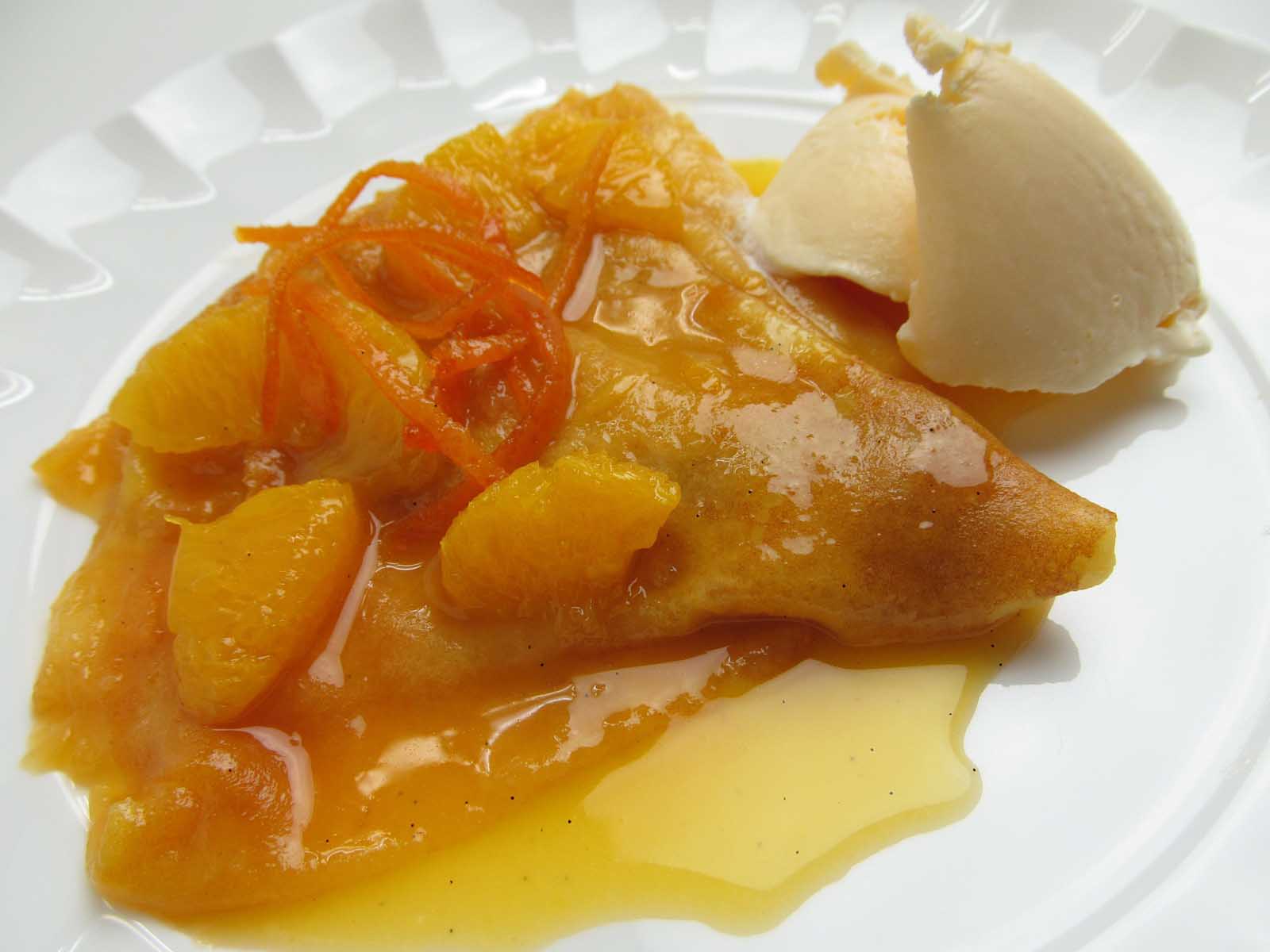
    A savoury Crepes Suzette we sampled in Brittany

    We spent a week in Brittany, the birthplace of the crêpe, and ate them almost every day. They are incredibly versatile and delicious.

    What It Is: Crêpes are thin pancakes made from wheat flour and are typically served with sweet fillings (sugar, Nutella, fruit). Galettes are from the same family but are made with savory buckwheat flour and filled with things like cheese, ham, and eggs (une complète).

    Pro Tip: In Brittany, they are traditionally served with a bowl of local dry cider.

    Salade Niçoise

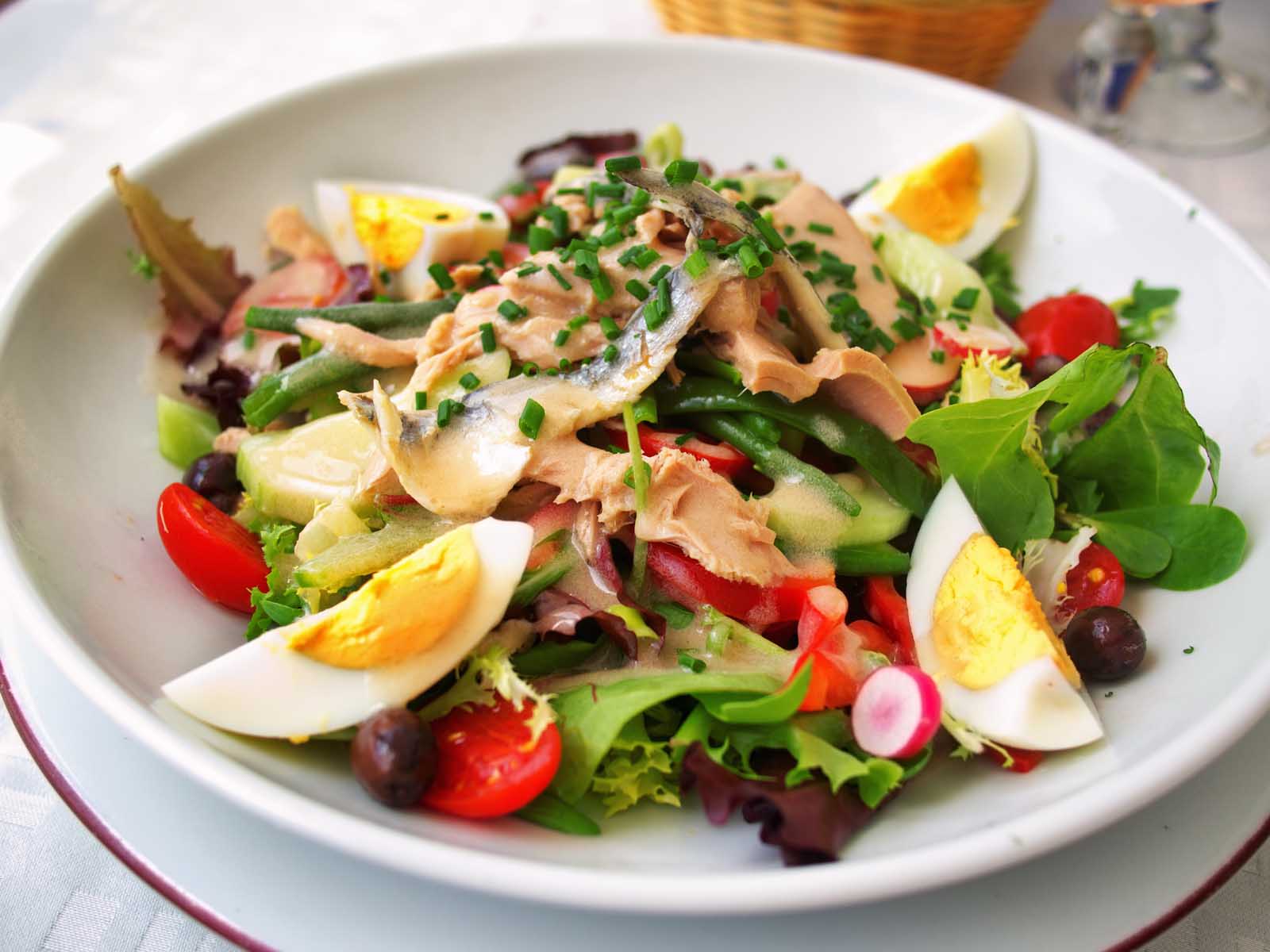
    A composed Salade Niçoise, a classic French dish with tuna, green beans, tomatoes, olives, and egg.

    This is not just a salad; it’s a complete meal in a bowl, full of the fresh flavours of the French Riviera.

    What It Is: A composed salad from Nice featuring tomatoes, green beans, hard-boiled eggs, olives, and anchovies or tuna.

    Good to Know: An authentic Niçoise salad does not contain cooked potatoes or lettuce, but many modern versions include them.

    Ratatouille

    A rustic bowl of ratatouille, the classic French summer vegetable stew from Provence.

    A beautiful summer vegetable stew that tastes of the Provence sun. It’s far more than the simple dish from the movie.

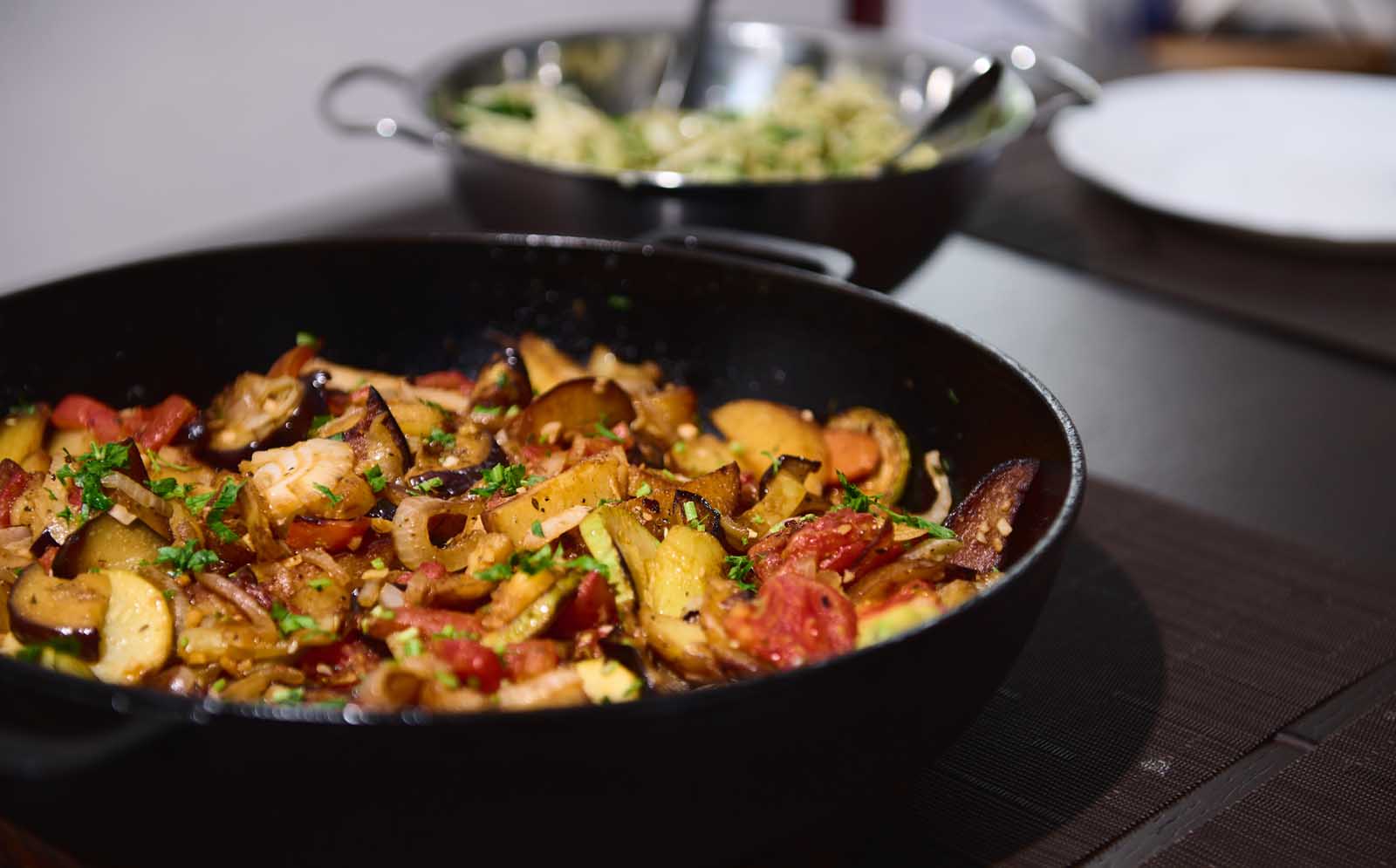
    What It Is: A vibrant stew of eggplant, zucchini, bell peppers, onions, and tomatoes, slow-cooked with garlic and herbs. Each vegetable is often cooked separately to maintain its texture and flavour before being combined.

    Where to Try: Provence, in the summer, when the vegetables are at their peak.

    Raclette & Tartiflette (The Alpine Experience)

    A bubbling, golden-brown tartiflette, a French alpine dish of potatoes, bacon, and Reblochon cheese

    These are the ultimate winter comfort foods, best enjoyed in a cozy chalet after a day of skiing in the French Alps.

    What They Are:

    Raclette: A large wheel of Raclette cheese is melted and scraped onto diners’ plates over boiled potatoes, charcuterie, and pickles.

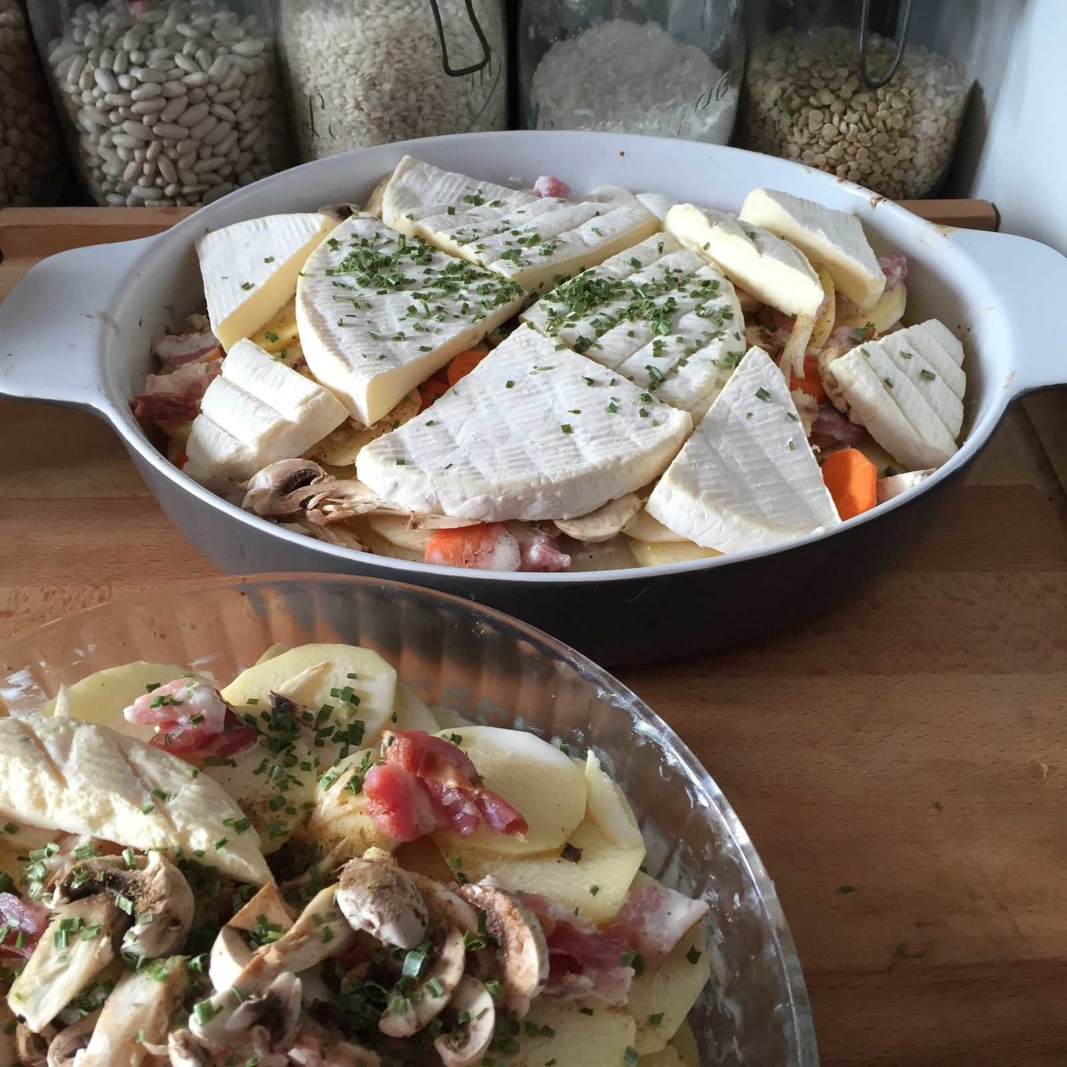
    Tartiflette: A ridiculously good casserole of sliced potatoes, lardons, onions, and a whole wheel of creamy Reblochon cheese baked on top until molten and golden.

    Tips for Gluten-Free Travellers in France

    While France is bread-and-pastry heaven, eating gluten-free is very manageable.

    Focus on naturally gluten-free dishes like grilled meats and fish (grillé), seafood platters, ratatouille, and most salads.

    Buckwheat galettes (galettes de sarrasin) are your best friend—they are naturally gluten-free and delicious.

    Carry a French Celiac dining card (carte de régime coeliaque) to clearly communicate your needs. Simply stating “sans gluten” (without gluten) is also very effective.

    To truly know France, you must eat your way through it. Be adventurous. Try the dish you can’t pronounce. Trust the waiter’s recommendation. Every meal is an opportunity for discovery, a chance to connect with the culture, the land, and the people. Bon appétit!

    Frequently Asked Questions about French Food

    What are the top 5 most famous French foods?

    While it’s hard to narrow down, five of the most iconic and essential French foods are Boeuf Bourguignon for its rustic history, the Croissant for its baking artistry, Steak Frites as the ultimate bistro meal, Bouillabaisse representing the Mediterranean coast, and Crème Brûlée for its universal appeal as a classic dessert.

    What is a typical traditional French meal?

    A traditional multi-course meal follows a specific structure. It often starts with an apéritif (a pre-dinner drink with small bites), followed by an entrée (starter), a plat (main course), then a cheese course (fromage), and finally a dessert. Coffee is usually served after dessert, not with it. This structure is more common for special occasions or weekend meals.

    Is French cuisine vegetarian-friendly?

    It is becoming more so, but it requires some navigation. Classic French cuisine is heavily meat- and fish-based. However, you can find excellent vegetarian options like Ratatouille, vegetable tarts (tartes aux légumes), Aligot, cheese plates, and salads (be sure to order a Salade Niçoise sans thon). Many modern restaurants, especially in larger cities, now have dedicated vegetarian menus. Always be clear when ordering: “Je suis végétarien/végétarienne.”

    What food is Paris most famous for?

    Paris is a melting pot of French cuisine, but it’s particularly famous for its bistro and brasserie culture. The quintessential Parisian foods are Steak Frites, French Onion Soup, Croque-Monsieur, Duck Confit, and street-side crêpes. It’s also the global capital of pâtisserie, so classics like Macarons, Croissants, and Paris-Brest are at their best here.

    Learn More about Amazing Foods from Europe

    [ad_2]

    Source link
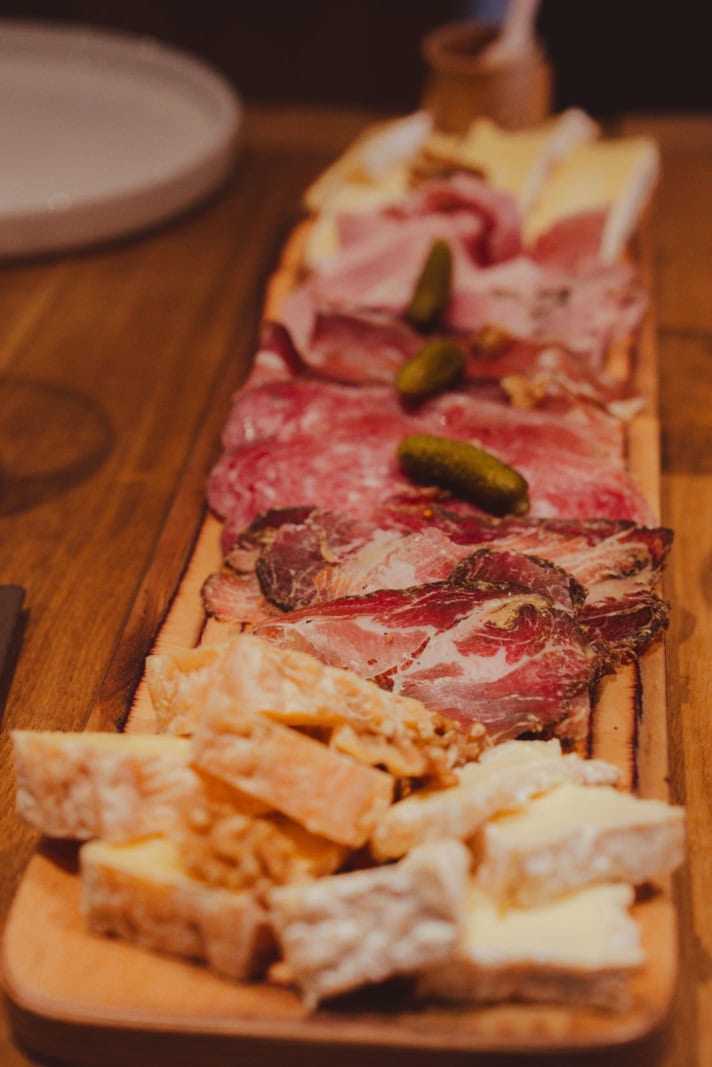
  • Icelandic Food Guide 2025: 18 Traditional Dishes You Must Try in Iceland

    Icelandic Food Guide 2025: 18 Traditional Dishes You Must Try in Iceland

    [ad_1]

    If you’re planning a trip to Iceland, you’ll quickly discover the country’s food scene is as unique as its landscapes. At least that is what we found. From cosy bowls of fish stew after a day in the Westfjords to lobster pizza in a South Coast fishing village, eating here is an adventure in itself. Icelandic cuisine draws on centuries-old traditions shaped by isolation and survival, then adds modern creativity from a new generation of chefs.

    Traditional Icelandic food spread with plokkfiskur, skyr, pylsur, rye bread, and humar in Reykjavík, Iceland.

    On this trip, you might start with plokkfiskur, a creamy fish stew, or hangikjöt, the smoky lamb often served at Christmas. You’ll find pylsur, the famous Icelandic hot dogs, in both city streets and remote gas stations, while rúgbrauð (rye bread) bakes underground in hot springs. Fresh catches like humar (lobster) and Arctic char showcase the island’s pristine waters, and treats like homemade Icelandic ice cream or tangy skyr give a sweet finish to any day.

    Our guide takes you through the most iconic and delicious Icelandic foods to try, from hearty farmhouse favourites to inventive dishes in Reykjavík’s buzzing food scene.

    Top Iceland Foods at a Glance

    Plokkfiskur – Creamy fish stew served with dark rye bread

    Hangikjöt – Smoked lamb, often a Christmas tradition

    Pylsur – Icelandic hot dogs with fried onions and remoulade

    Humar – Sweet lobster tails from the South Coast

    Rúgbrauð – Rye bread baked in hot springs

    Skyr – Thick yogurt eaten at breakfast or in desserts

    Why Iceland’s Food Scene is Unique

    Iceland’s volcanic soil, cold seas, and geothermal resources have shaped its cuisine for over a thousand years. Farming is limited, so lamb, dairy, and seafood became staples. Geothermal greenhouses now grow vegetables like tomatoes and cucumbers year-round, while the surrounding ocean provides cod, haddock, and Arctic char. The result is a blend of traditional recipes, often born out of necessity, and modern dishes inspired by global culinary trends.

    One night you might tuck into lamb soup at a mountain hut; the next, you’re sipping craft beer with langoustine tacos in Reykjavík. For a true Iceland foodie experience, try both ends of the spectrum.

    1. Pylsur – Famous Icelandic Hot Dog

    What it is:Pylsur are Iceland’s famous hot dogs, made from a blend of lamb, pork, and beef. They’re served in a bun with raw onions, crispy fried onions, tangy mustard, sweet ketchup (made with apples), and creamy remoulade.

    Why try it:We stood in the snow outside Bæjarins Beztu Pylsur in Reykjavík, the country’s most famous hot dog stand , and it was worth every minute of the wait. The lamb gives the sausage a subtle sweetness, while the fried onions add a satisfying crunch.

    Pylsur Icelandic hot dog with fried onions, mustard, remoulade, and apple ketchup from Bæjarins Beztu Pylsur.

    Cultural note:Hot dogs became popular in Iceland after WWII, and today they’re considered a national fast food. They’re also one of the most affordable meals you can find in this otherwise expensive country.

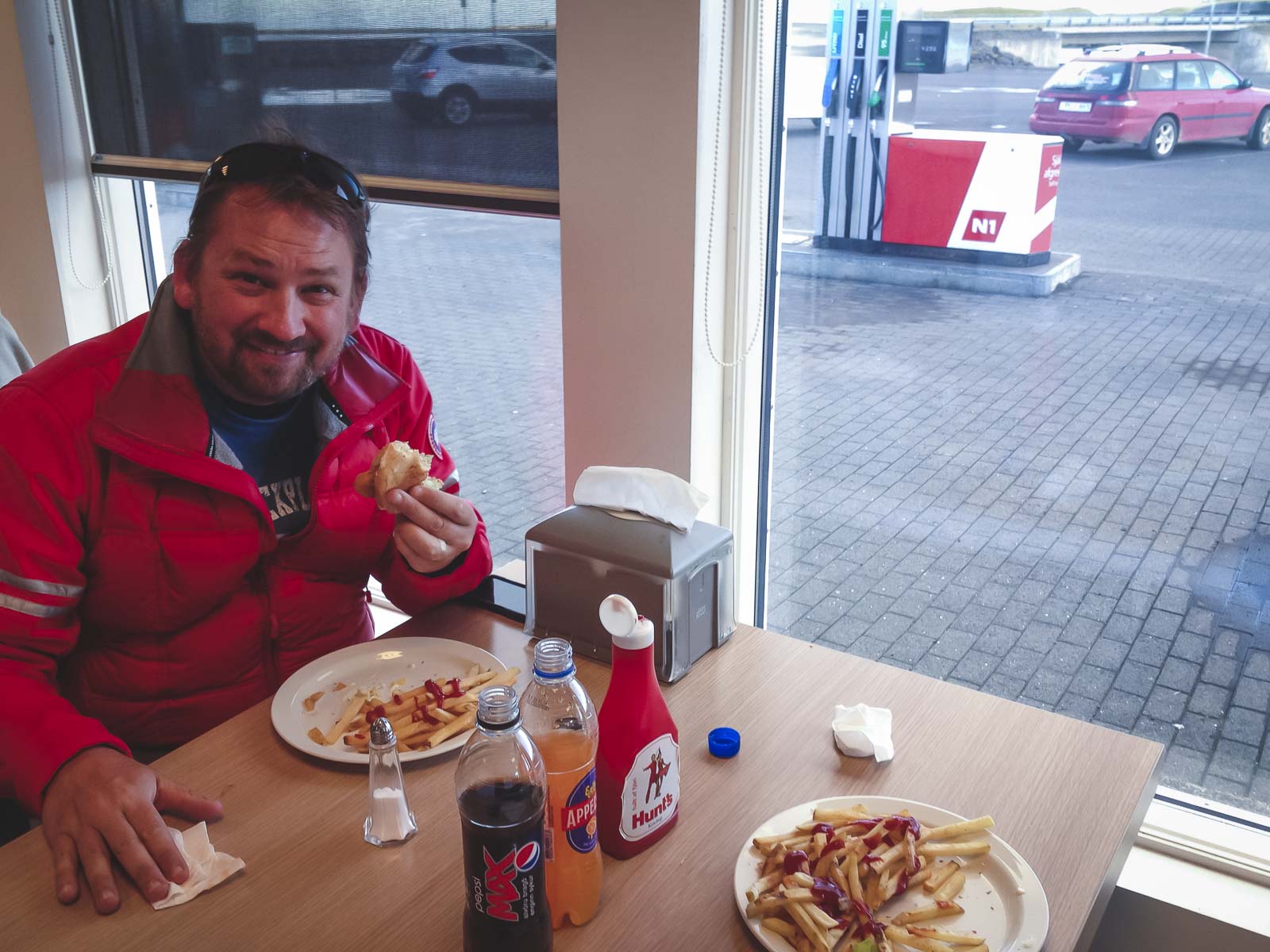
    Where to find it:Bæjarins Beztu Pylsur is the iconic spot, but you’ll find pylsur at gas stations, festivals, and roadside stands nationwide. Order it “ein með öllu” — one with everything.

    2. Skyr – Icelandic Yogurt

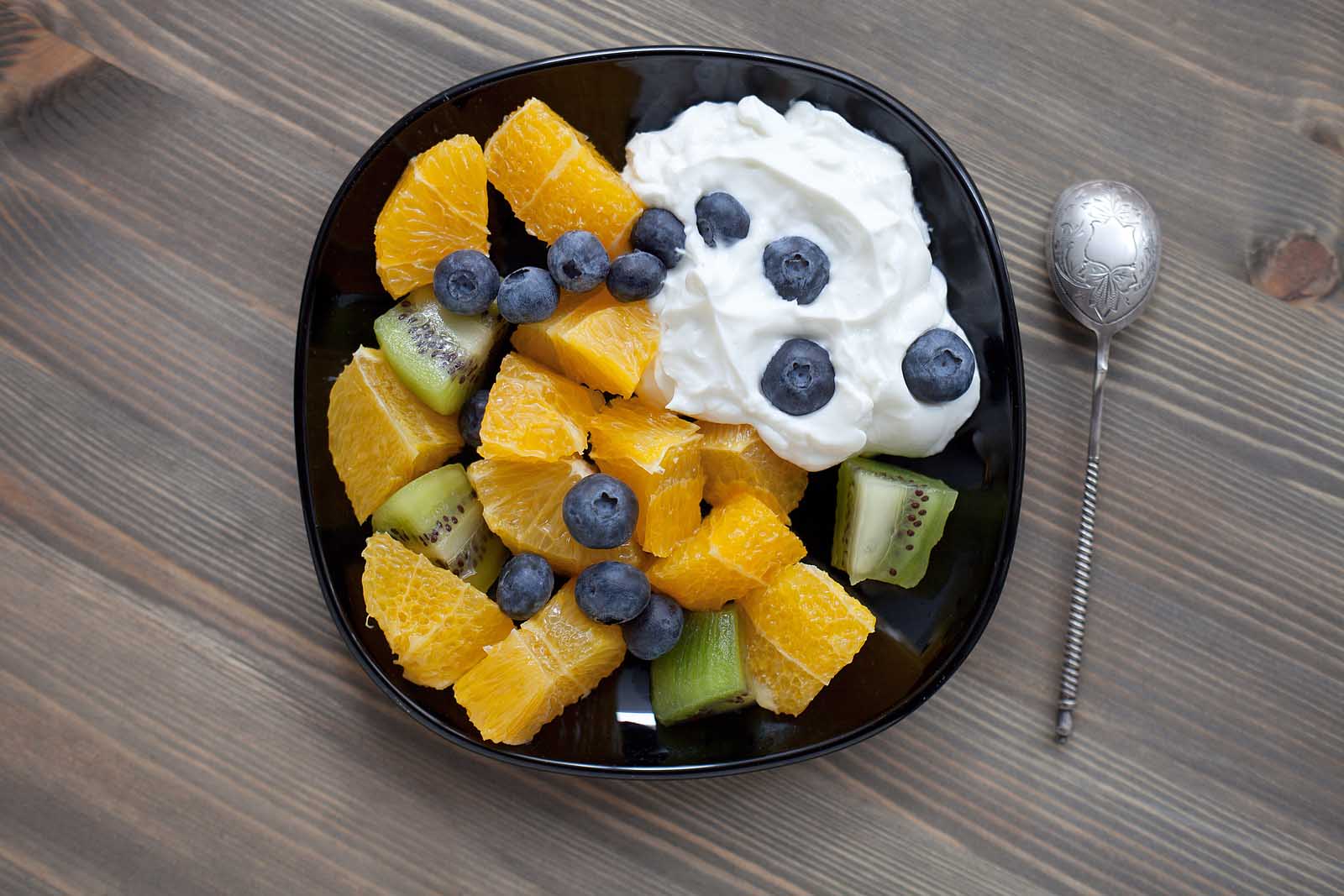
    What it is:Skyr is a thick, protein-rich dairy product that looks and tastes similar to Greek yogurt but is technically classified as a soft cheese. The Icelandic version is made by straining milk to remove the whey, it has a creamy texture and a tangy flavour that pairs perfectly with fruit, honey, or granola.

    Why try it:On our glacier hike day in Vatnajökull National Park, we packed individual pots of skyr for breakfast. It was filling enough to keep us going for hours without weighing us down, and the tangy creaminess was refreshing after the long drive. It’s not just a healthy snack — it’s a true food from Iceland that locals enjoy daily, whether at home or on the go.

    Bowl of skyr Icelandic yogurt topped with fresh berries and honey.

    Cultural note:Skyr has been part of Icelandic diets for over a thousand years, dating back to Viking settlements. Once made exclusively in homes and farms, it’s now produced commercially but still uses traditional cultures to maintain its distinct flavour.

    Where to find it:Every supermarket, café, and convenience store sells skyr in plain and flavoured varieties. For a special treat, try skyr-based desserts like skyrkaka (cheesecake) in restaurants.

    3. Plokkfiskur – Icelandic Fish Stew

    What it is:Plokkfiskur is a creamy stew of flaked white fish (usually cod or haddock), mashed potatoes, onions, and a buttery white sauce. The name literally means “plucked fish,” describing the way the fish is broken into small pieces before mixing.

    Why try it:We first had plokkfiskur in a harbour café in Ísafjörður on a snowy winter night. The windows steamed up as locals came in from the cold, and the smell of fish stew filled the air. It’s hearty without being heavy, and the sweet, fresh fish balances perfectly with the buttery sauce.

    Plokkfiskur – Icelandic Fish Stew

    Cultural note:This dish started as a way to use leftover fish, stretching it with potatoes to feed the whole family. Today, it’s comfort food — the kind you’ll find at home kitchens, roadside cafés, and upscale restaurants alike.

    Where to find it:In Reykjavík, Café Loki serves a traditional plokkfiskur with dark rye bread. Coastal towns like Siglufjörður and Húsavík have excellent versions in their harbourside restaurants. You can even buy it pre-made in grocery stores if you’re self-catering.

    4. Kjötsúpa – Lamb Stew

    What it is:A hearty soup made with lamb shank, root vegetables like carrots and rutabagas, potatoes, and fresh herbs.

    Why try it:On a cold, windy day along the Golden Circle, we stopped at a small café and ordered steaming bowls of kjötsúpa. The lamb was so tender it fell off the bone, and the broth was rich without being heavy.

    Steaming bowl of kjötsúpa lamb stew with root vegetables in an Icelandic café.

    Cultural note:Kjötsúpa is one of the most Icelandic typical food dishes, valued for its ability to warm and nourish through long winters.

    Where to find it:Restaurants, countryside guesthouses, and even gas station cafés.

    5. Hangikjöt – Smoked Lamb

    What it is:Hangikjöt translates to “hung meat,” referring to the way the lamb is smoked while hanging over a birchwood or dried sheep dung fire. This traditional preservation method infuses the meat with a deep, smoky flavour.

    Why try it:We first tried hangikjöt during the Christmas season in Reykjavík, served with boiled potatoes, green peas, red cabbage, and Icelandic leaf bread. The smoky aroma hit before the plate reached the table, and the meat was so tender it practically melted.

    Slices of hangikjöt smoked lamb served with potatoes, peas, and Icelandic leaf bread.

    Cultural note:Sheep farming has been central to Iceland’s economy for centuries. Smoking lamb wasn’t just about taste, it was about survival through the long winters. Even today, hangikjöt is a festive centrepiece, especially in December.

    Where to find it:Available in grocery stores during the holidays and in traditional restaurants year-round. Farm stays sometimes serve their own smoked lamb, which is about as authentic as it gets.

    6. Humar – Icelandic Lobster

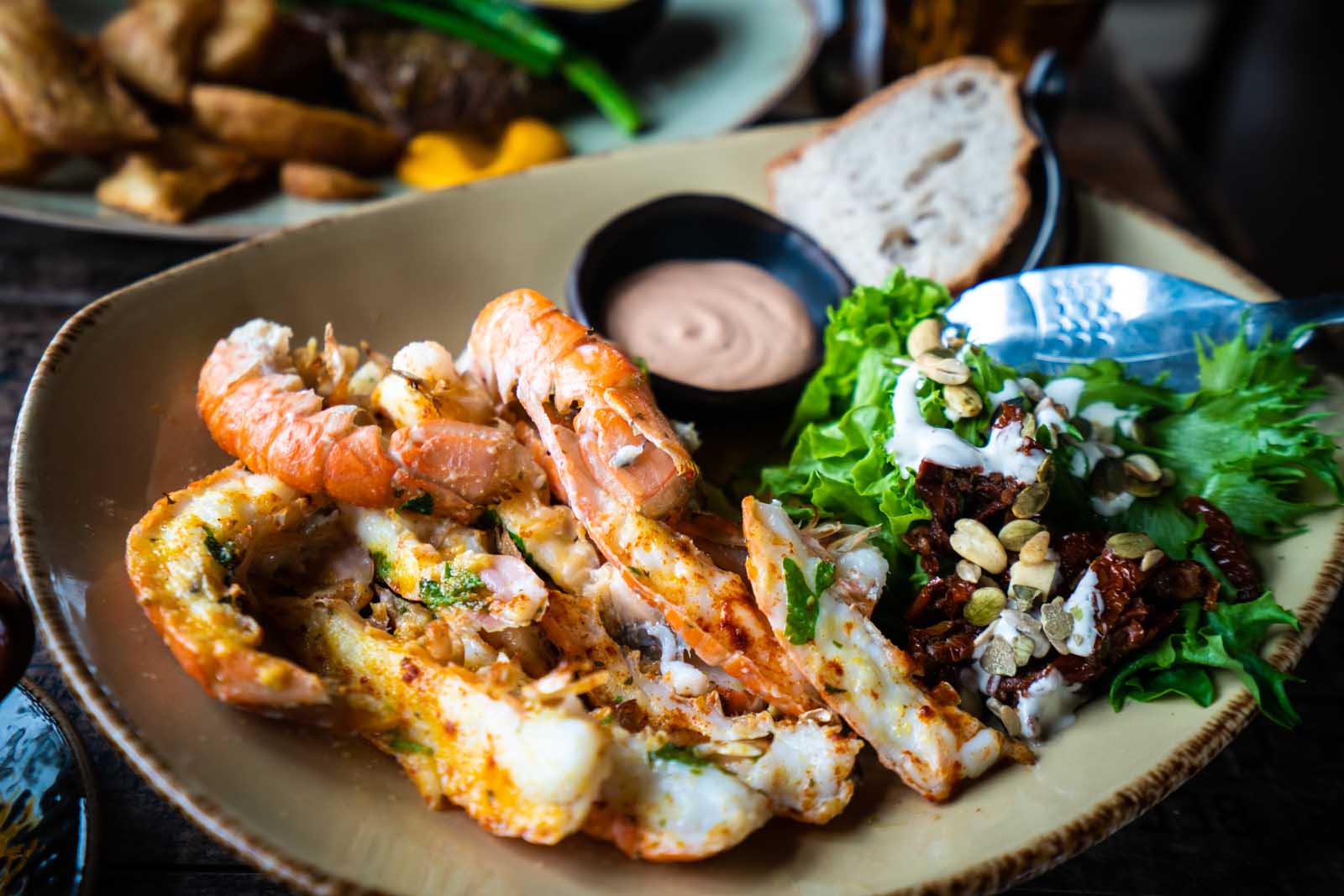
    What it is:Humar is Iceland’s small, sweet lobster, actually closer to langoustine, prized for its tender tail meat. It’s served grilled, baked, fried in garlic butter, or in creamy lobster soup called humarsúpa.

    Why try it:On our South Coast road trip, we stopped in Höfn, Iceland’s lobster capital, for humar pizza. The sweet lobster meat with melted cheese and herbs was an unforgettable combination.

    Humar lobste topped with herbs in Höfn, Iceland’s lobster capital.

    Cultural note:Humar is mostly caught along Iceland’s southeast coast, and fishing for it is strictly regulated to ensure sustainability.

    Where to find it:Seafood restaurants in Höfn and Reykjavík serve humar in various forms, from gourmet entrées to casual lobster rolls.

    7. Rúgbrauð – Hot Spring Rye Bread

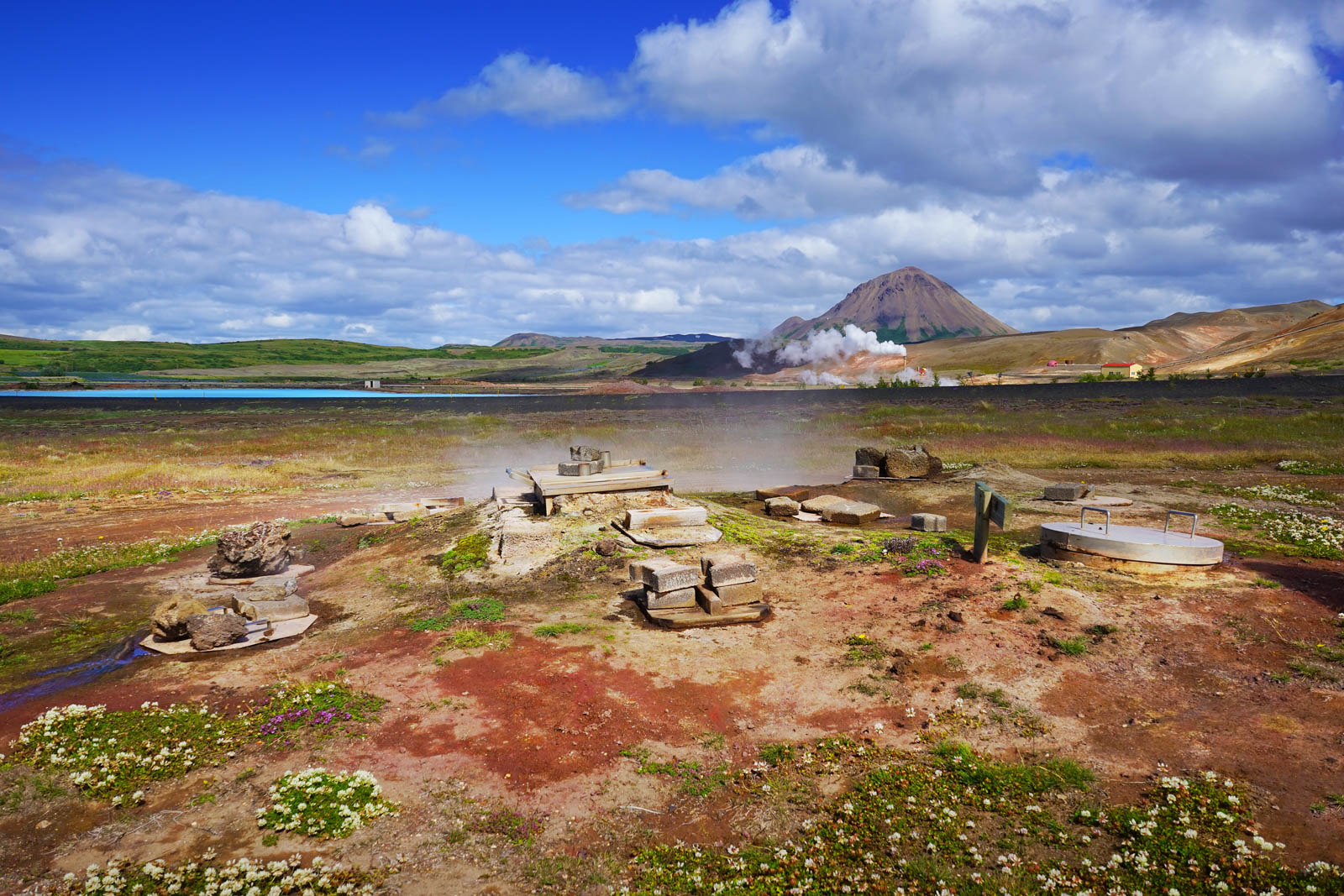
    What it is:Rúgbrauð is a dense, dark rye bread with a slightly sweet flavour, traditionally baked in the ground using geothermal heat from Iceland’s hot springs. The dough is placed in a pot or wooden cask, buried near a hot spring, and left to cook slowly for about 24 hours using geothermal heat.

    Why try it:We first tasted Icelandic rye bread fresh from the earth at Laugarvatn Fontana, where staff dug up steaming pots right in front of us. The bread was moist, rich, and subtly sweet, so good it barely needed butter. Pairing it with smoked lamb or pickled herring is a classic Icelandic combination.

    Freshly dug rúgbrauð rye bread steaming from geothermal baking at Laugarvatn Fontana.

    Cultural note:Before ovens were common, Icelanders relied on the earth’s natural geothermal heat to cook. Rúgbrauð (aka Hot Spring Bread) was a staple because it could be made year-round without scarce fuel resources.

    Where to find it:Bakeries and cafés across the country sell rúgbrauð, but for the authentic experience, visit Laugarvatn Fontana or other hot spring towns where you can watch it being baked underground.

    8. Harðfiskur – Dried Fish

    What it is:Harðfiskur is dried fish, typically cod, haddock, or wolffish, cured in the salty North Atlantic air until it’s chewy and packed with flavour.

    Why try it:On a road trip through the Westfjords, we grabbed a bag in Bolungarvík, thinking it would be a light snack. Within minutes, we were hooked, especially after locals told us to spread it with salted butter. It’s protein-rich, portable, and one of the most traditional foods from Iceland.

    Dried fish in Iceland Harofiskur

    Cultural note:Drying fish dates back over 1,000 years and is similar in principle to aging cheese. In many fishing villages, you’ll still see wooden racks lined with fish drying in the open air.

    Where to find it:Sold in grocery stores, gas stations, and harbour markets. For the freshest, buy it directly from fishermen in coastal towns.

    9. Arctic Char

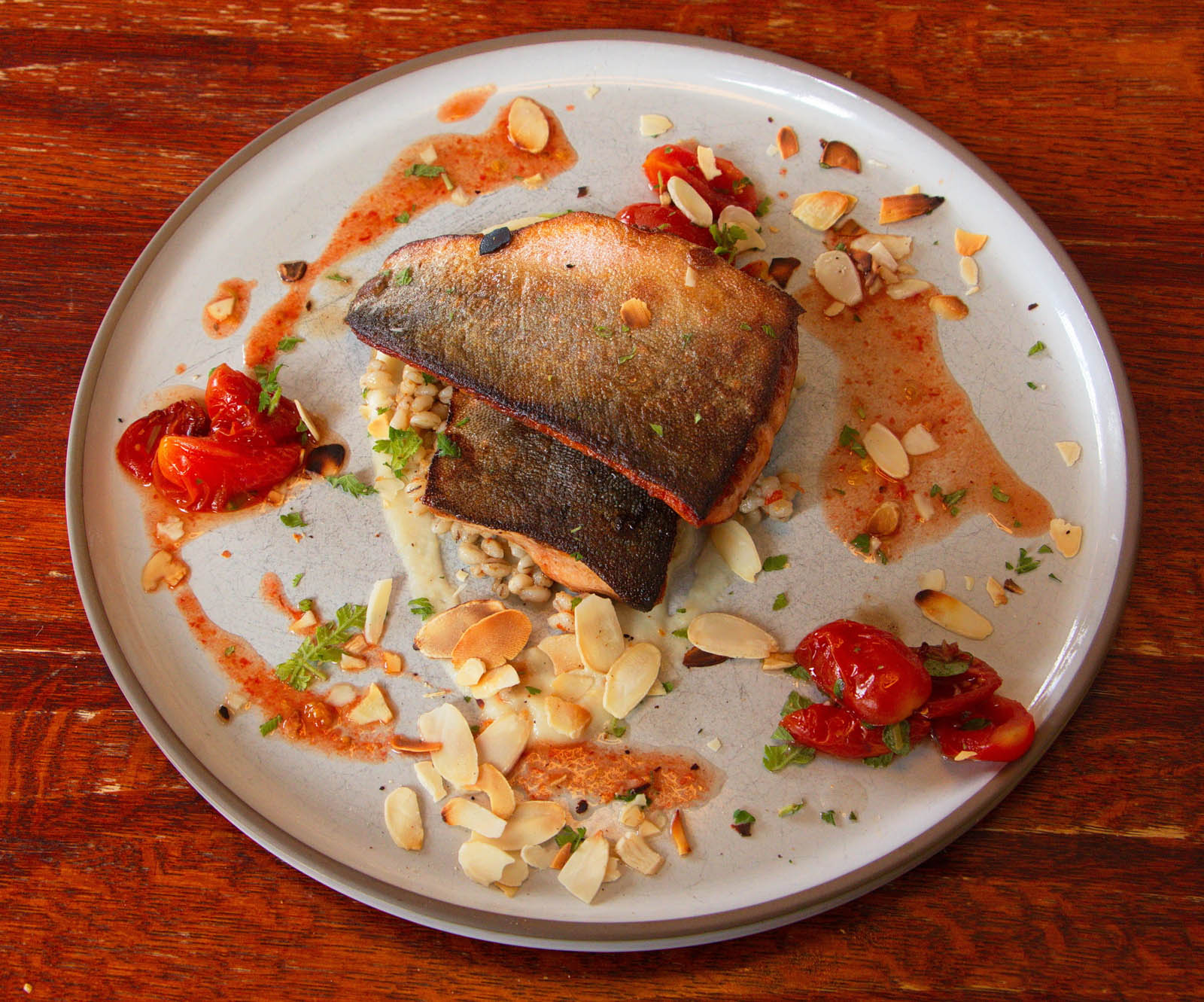
    What it is:A cold-water fish native to Iceland, Arctic char is somewhere between salmon and trout in flavour and texture. It can be grilled, smoked, or pan-seared.

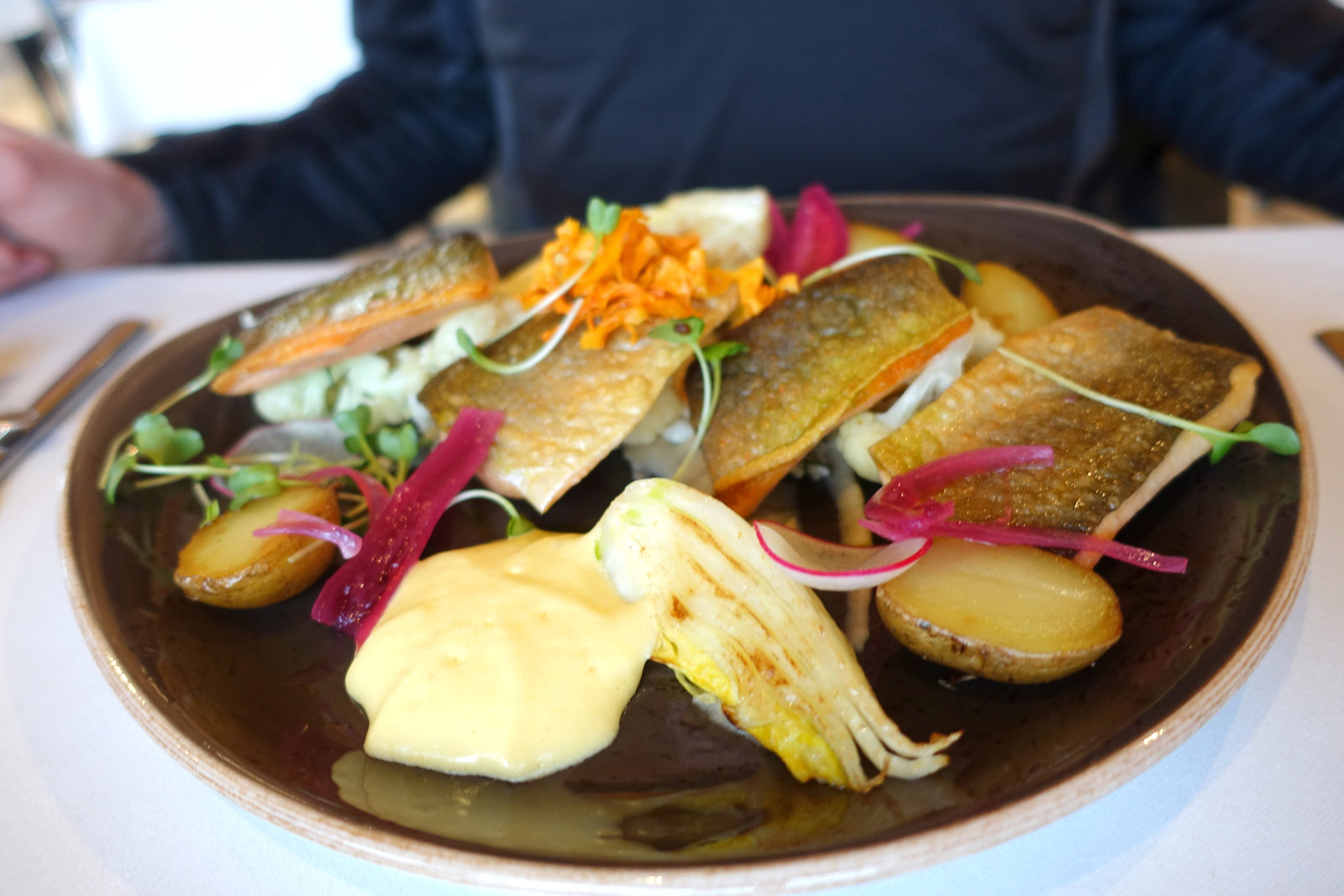
    Why try it:We had Arctic char in Seyðisfjörður, butter fried with tomatoes and sliced almonds. The fish was buttery and delicate, with a clean, fresh taste that spoke to its pristine environment.

    Grilled Arctic char fillet with tomatoes and almonds served in Seyðisfjörður, Iceland.

    Cultural note:Arctic char thrives in Iceland’s cold, clean rivers and lakes, making it a reliable food source for centuries.

    Where to find it:Served at restaurants across Iceland, especially in the Eastfjords and other fishing regions.

    10. Fish and Chips – Iceland Style

    What it is:Fresh cod or haddock coated in a light batter, fried until crisp, and served with chunky fries and homemade sauces.

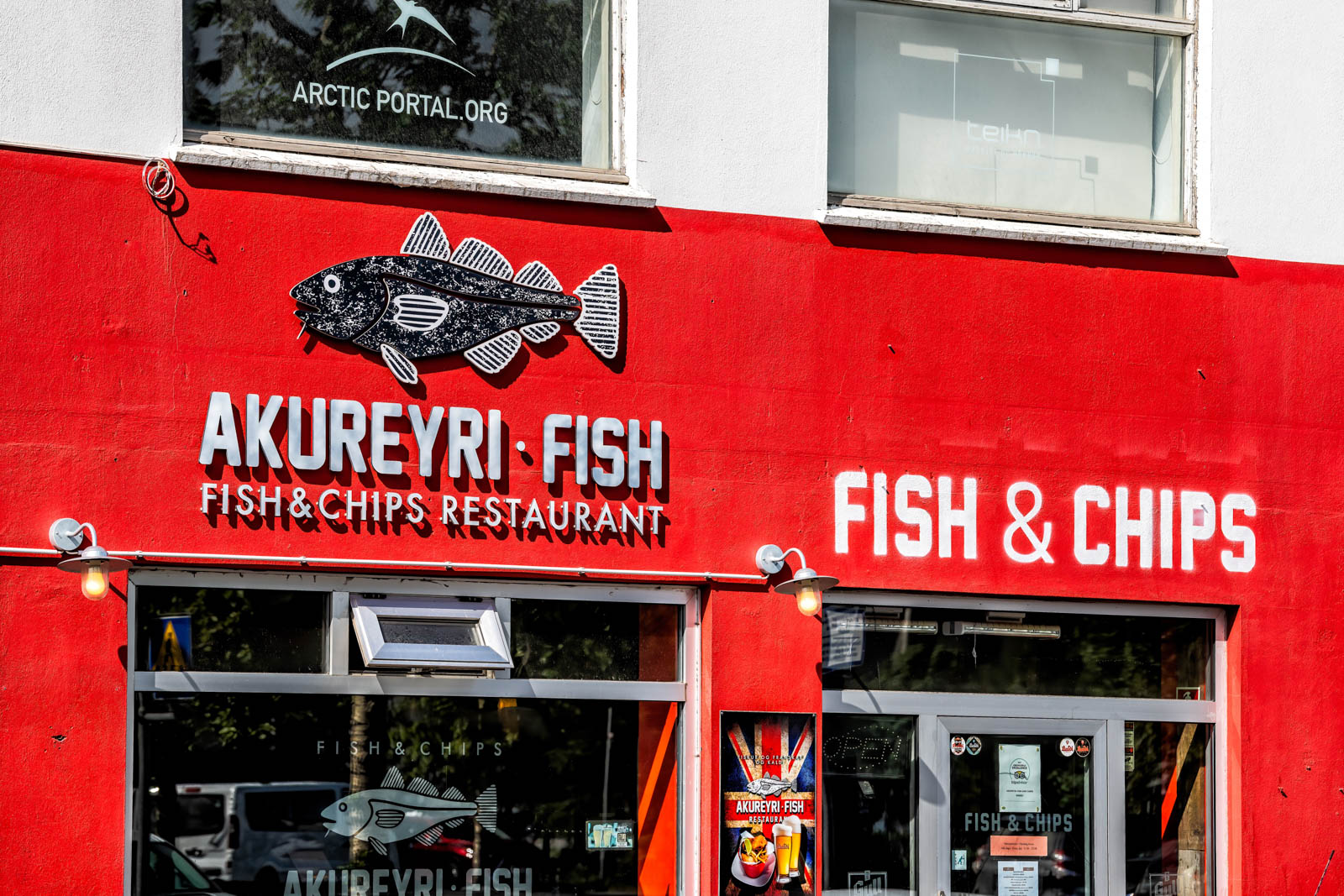
    Why try it:In Akureyri, we tucked into fish and chips where the cod had been caught just hours earlier. The fish flaked apart with the lightest touch of a fork, and the tartar sauce was bright with fresh herbs.

    Icelandic fish and chips with fresh cod, chunky fries, and tartar sauce in Akureyri.

    Cultural note:While fish and chips isn’t native to Iceland, the quality of the fish here makes it exceptional. Icelandic waters produce some of the best cod in the world.

    Where to find it:Harbour cafés, Reykjavík’s Icelandic Fish & Chips restaurant, and coastal food trucks.

    11. Flatkaka með Hangikjöti – Flatbread with Smoked Lamb

    What it is:Flatkaka is a thin, round flatbread made from rye flour and water, cooked quickly on a hot griddle. It’s often topped with hangikjöt (smoked lamb), cream cheese, or lamb liver pâté.

    Why try it:We tried flatkaka at a family-run café on the Snæfellsnes Peninsula, where it was served warm with thick slices of smoky lamb. It’s simple but full of flavour, and it’s one of those Iceland foods to try that you can easily recreate at home.

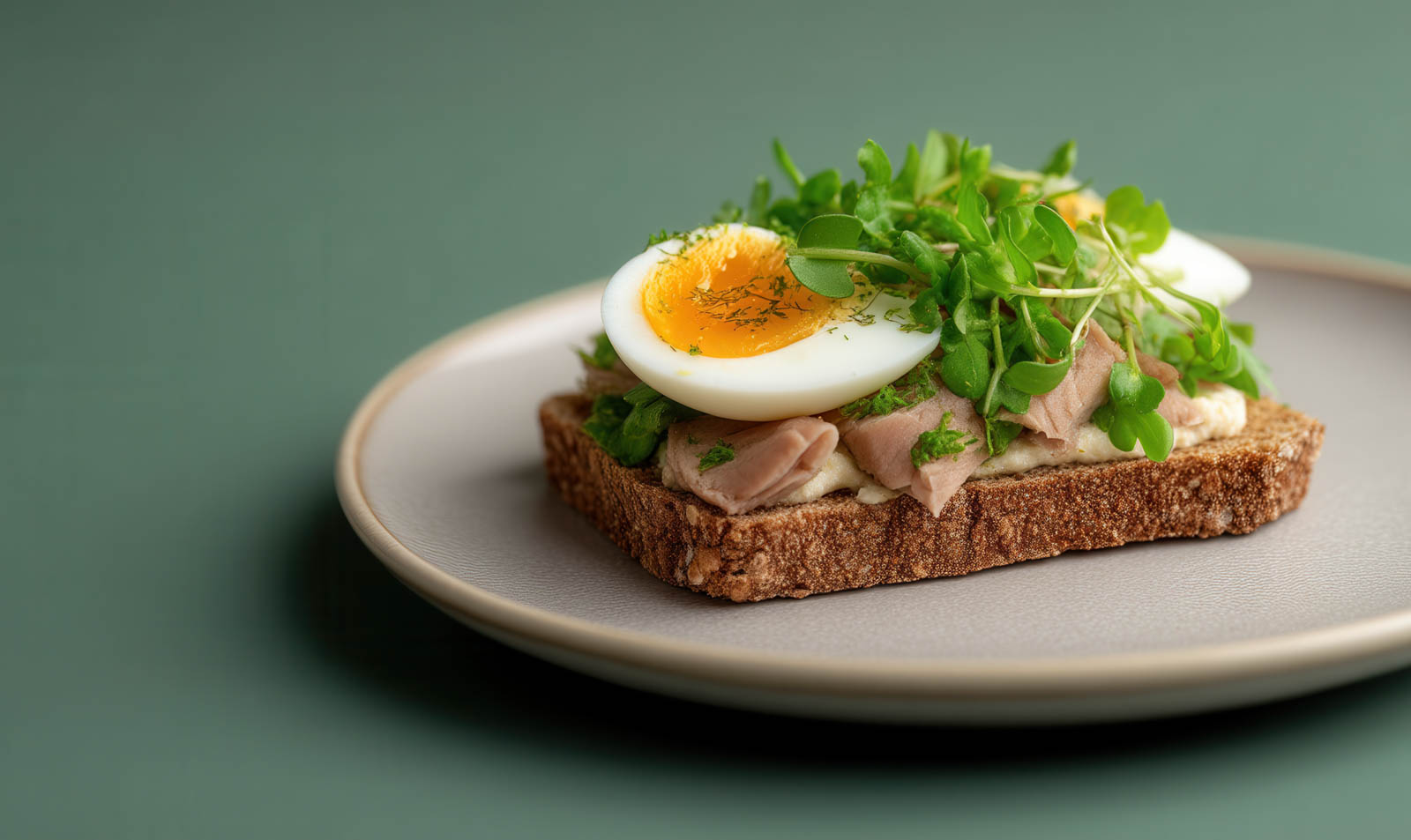
    Flatbread with smoked lamb and egg for breakfast in Iceland

    Cultural note:Flatbreads have been part of Icelandic diets for centuries, offering a quick, filling base that could be paired with whatever was available, from lamb to fish to foraged herbs.

    Where to find it:Available in most bakeries and supermarkets. Many guesthouses serve it as part of a traditional breakfast spread.

    12. Icelandic Mussels

    What it is:Fresh mussels harvested from Iceland’s clean coastal waters, often steamed with garlic, herbs, and white wine.

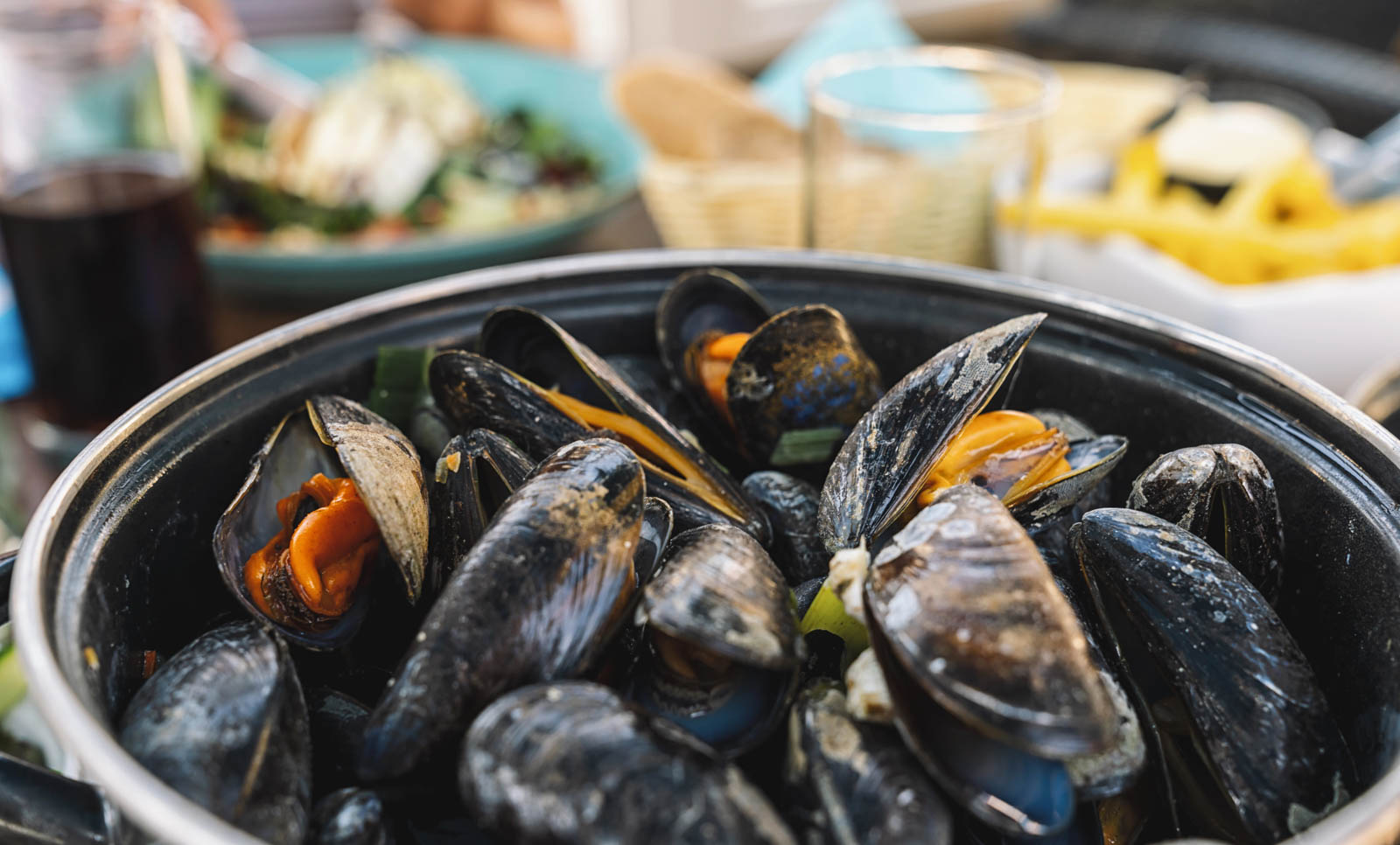
    Why try it:In Stykkishólmur, we had a steaming pot of mussels caught that morning in Breiðafjörður Bay, sweet, briny, and absolutely fresh.

    Steaming pot of Icelandic mussels in Stykkishólmur

    Cultural note:Iceland’s cold waters slow the mussels’ growth, resulting in a more concentrated flavour.

    Where to find it:Coastal seafood restaurants, especially in the Westfjords and Snæfellsnes Peninsula.

    13. Pickled Herring

    What it is:Marinated herring fillets preserved in vinegar, sugar, and spices, often served with warm rye bread, boiled potatoes, and sometimes hard-boiled eggs.

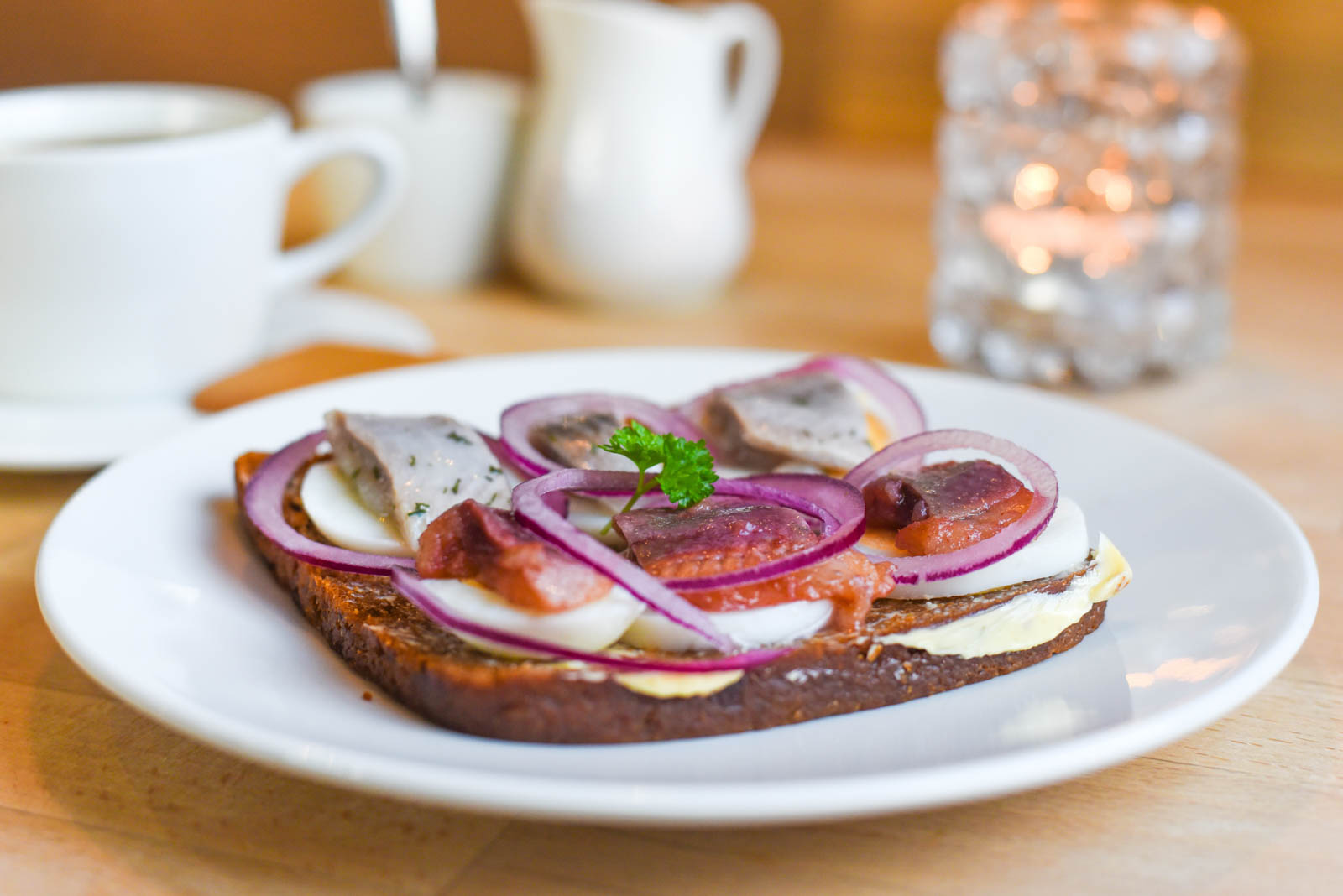
    Why try it:We had pickled herring for breakfast at a harbour café in Ísafjörður, and the combination of sweet-sour fish with warm, earthy rúgbrauð was unforgettable. It’s simple, satisfying, and deeply rooted in Iceland’s coastal traditions.

    pickled herring for breakfast at a harbour café in Ísafjörður

    Cultural note:Herring fishing was once a major part of Iceland’s economy, and preserving it through pickling meant it could be enjoyed year-round.

    Where to find it:Breakfast buffets, fish markets, and traditional restaurants.

    14. Icelandic Ice Cream

    What it is:Icelanders have a surprising obsession with ice cream — and they eat it year-round, even in snowstorms. It ranges from soft-serve ice cream (known as “ís”) dipped in chocolate to artisanal scoops in inventive flavours like rhubarb, licorice, and even beer.

    Why try it:We once stood in line for Icelandic ice cream in Reykjavík while the wind chill was well below freezing, and we weren’t the only ones. The creamy texture, rich flavour, and generous toppings made every shiver worth it. It’s one of those Iceland foods to try that tells you as much about the culture as it does about the cuisine.

    Icelandic Ice cream in a restaurant in Reyjavik

    Cultural note:Ice cream parlours are a social hub in Iceland. Families, friends, and couples often make a night of going out for ice cream, no matter the weather.

    Where to find it:Popular spots include Valdís in Reykjavík for creative flavours and Ísbúð Vesturbæjar for classic soft-serve with mix-ins.

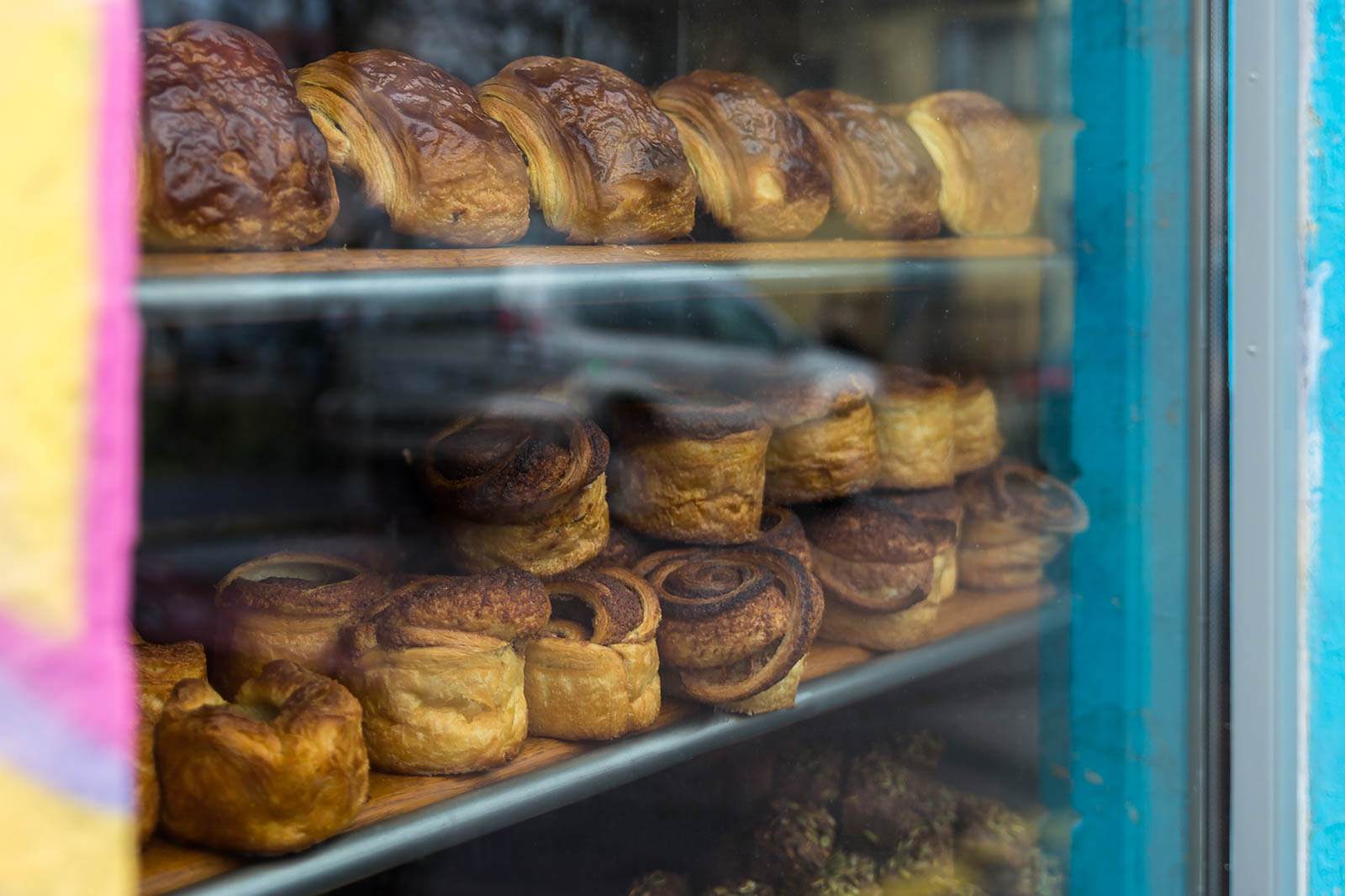
    15. Icelandic Cinnamon Roll (Kanilsnúðar)

    What it is:Kanilsnúðar are Iceland’s take on the cinnamon roll, soft, buttery dough spiralled with cinnamon sugar and often topped with a drizzle of icing or a dusting of coarse sugar.

    Why try it:We followed the scent of fresh-baked cinnamon rolls to Brauð & Co. in Reykjavík, and within minutes we were unravelling the warm, sticky spiral. The combination of pillowy dough, fragrant cinnamon, and just the right amount of sweetness makes it one of the best good food in Iceland moments for anyone with a sweet tooth.

    Freshly baked kanilsnúðar Icelandic cinnamon rolls from Brauð & Co. in Reykjavík.

    Cultural note:While inspired by Scandinavian baking traditions, Icelanders have made kanilsnúðar their own. They’re as popular for breakfast as they are for an afternoon treat.

    Where to find it:Bakeries across Iceland, especially Brauð & Co. and Sandholt in Reykjavík, serve freshly baked cinnamon rolls daily.

    16. Icelandic Cheese & Dairy

    What it is:While skyr gets most of the international attention, Iceland’s dairy scene offers a variety of unique cheeses. These include tangy skyr-based spreads, soft white cheeses, and brunost (Norwegian-style brown cheese) made from caramelized whey, which has a sweet, nutty flavour.

    Why try it:We stumbled upon a cheese counter at Reykjavik’s Kolaportið flea market and couldn’t resist sampling everything. The brunost was unlike any cheese we’d tasted before, almost dessert-like, while the soft cheeses were rich and creamy, perfect with rye bread or crackers.

    Cultural note:Dairy farming has been a cornerstone of Icelandic agriculture for over a millennium. Even in the harshest conditions, sheep and cows provided milk that could be turned into cheese, butter, and skyr to last through the winter.

    Where to find it:Specialty food shops, markets, and cheese plates in Reykjavík wine bars. Many rural guesthouses serve their own farm-made cheese.

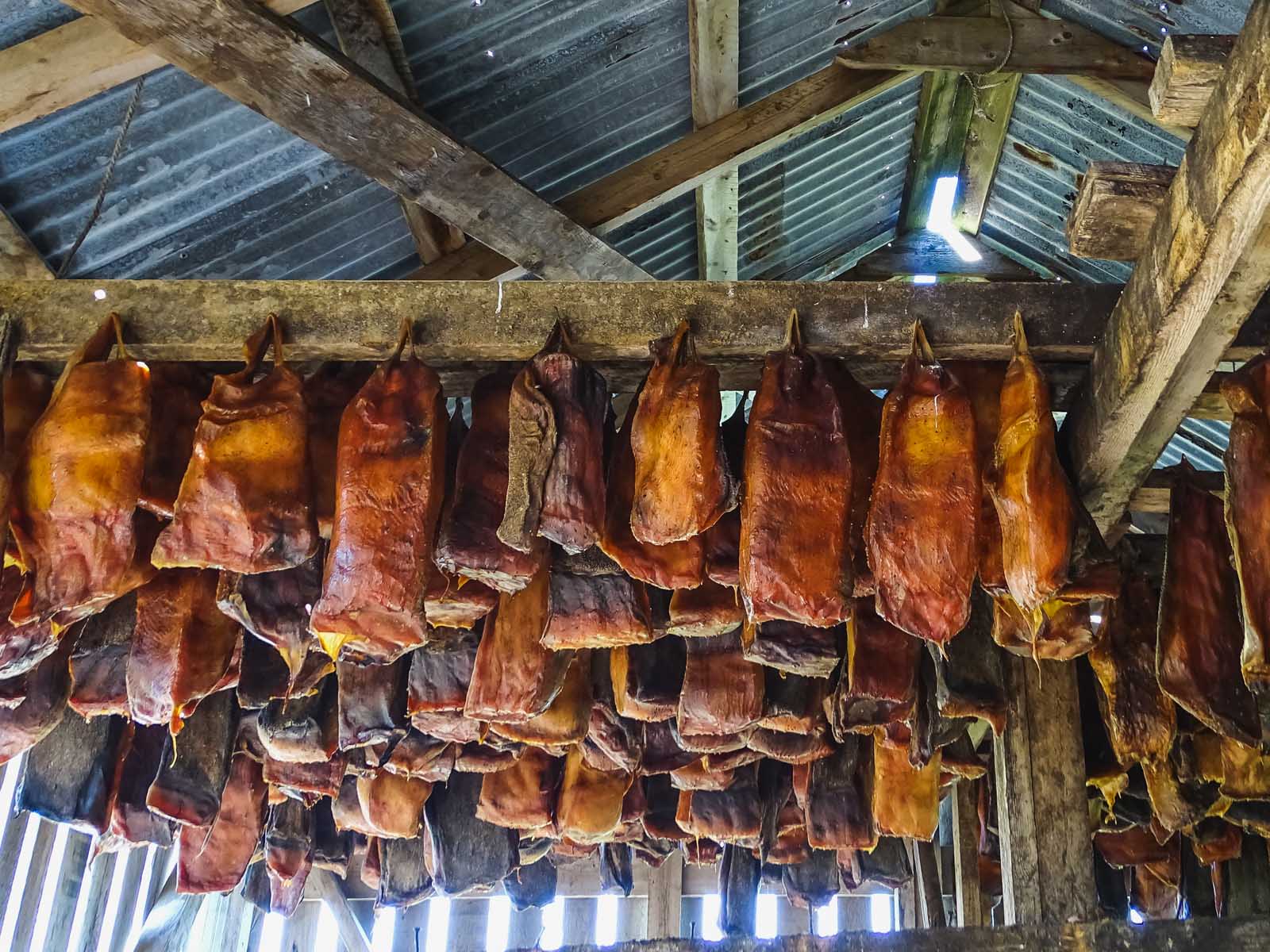
    17. Hákarl – Fermented Shark

    What it is:Greenland fermented shark meat is fermented for several months and then dried, resulting in a strong aroma and intense flavour.

    Why try it:We sampled hákarl at a fishing village museum in Húsavík. The smell was eye-watering, but chasing it with Brennivín (Iceland’s schnapps) made the experience more fun than frightening. Let’s just say some local foods are fun to try once.

    Fermented shark Iceland hakarl

    Cultural note:Fermented shark was developed as a survival food; Greenland shark is toxic when fresh, so fermentation was necessary to make it safe.

    Where to find it:Specialty shops, Þorrablót feasts, and traditional restaurants.

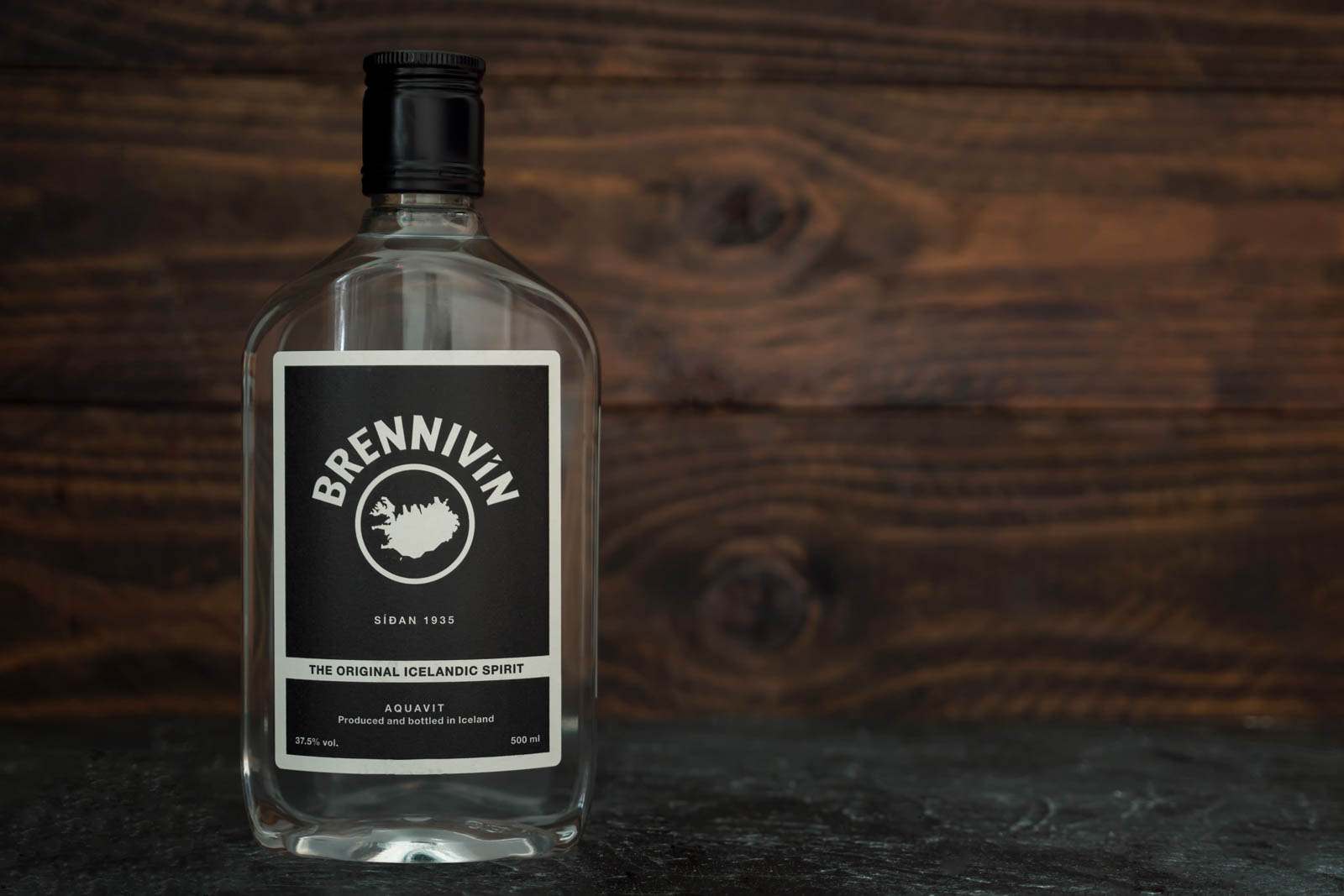
    18. Icelandic Craft Beer & Brennivín

    What it is:Iceland’s craft beer scene offers a surprising variety, from crisp Arctic lagers brewed with glacial water to rich stouts flavoured with local herbs. Brennivín, on the other hand, is a clear schnapps infused with caraway seeds. Its nickname, “Black Death,” comes from the black label used when it was first produced, and its strong, distinctive taste.

    Why try it:We had our first taste of Brennivín as part of the classic “hákarl challenge” in Reykjavík — the schnapps’ bold, spicy flavour cut right through the fermented shark’s intense aroma. Pairing a cold craft beer with fresh humar or lamb stew is equally rewarding, adding a local touch to any meal.

    Brennivin schanpps in Iceland

    Cultural note:Beer was banned in Iceland from 1915 until March 1, 1989; a date still celebrated as “Beer Day.” Since then, breweries have flourished, creating beers that reflect Iceland’s unique ingredients and pure water sources. Brennivín remains tied to tradition, often served at Þorrablót feasts and other cultural gatherings.

    Where to find it:Sample craft beer at Reykjavík brewpubs like Skúli or MicroBar, or visit local breweries in towns like Akureyri and Egilsstaðir. Brennivín is sold at Vínbúðin liquor stores and served in most traditional restaurants and bars.

    Reykjavík food and drink tour.

    Exploring the Icelandic food scene is like taking a bite out of the country’s history, landscape, and culture all at once. Every dish, whether it’s a simple slice of rye bread fresh from a hot spring or a plate of humar in a seaside café, tells a story of resourcefulness, tradition, and pride in local ingredients.

    From hearty staples like lamb soup and fish stew to sweet comforts like skyr and cinnamon rolls, there’s something for every palate. And with modern Icelandic chefs reimagining these classics, there’s never been a better time to be an Iceland foodie.

    So, as you plan your trip, make room in your itinerary (and your stomach) for these iconic flavours. Whether you’re sipping Brennivín with locals at a midwinter festival or grabbing a hot dog at a Reykjavik food stand, you’ll leave with more than just great photos, you’ll take home the taste of Iceland.

    FAQ – Icelandic Food

    What is the most famous food in Iceland?

    Pylsur, Iceland’s hot dogs, are often called the national dish. They are made with lamb, pork, and beef and topped with raw onions, crispy onions, mustard, apple ketchup, and remoulade. Try the original stand in Reykjavík at Bæjarins Beztu Pylsur.

    What traditional Icelandic foods should I try first?

    Start with plokkfiskur fish stew, kjötsúpa lamb soup, hangikjöt smoked lamb, rúgbrauð hot spring rye bread, harðfiskur dried fish, skyr, and humar langoustine. These classics reflect Iceland’s preservation traditions and local ingredients.

    Is food in Iceland expensive and how can I save?

    Eating out can be pricey. For value, grab hot dogs, bakery items, or supermarket picnic supplies and mix in a few sit?down meals. Government?run liquor stores have limited hours, so plan ahead if you want local beer or Brennivín.

    Where can I try rye bread baked in hot springs?

    Visit Laugarvatn Fontana to see bread buried in geothermal sand and baked for about 24 hours, with daily tastings and demos.

    When did beer become legal again in Iceland?

    On March 1, 1989. The date is still celebrated nationwide as Beer Day.

    Where can I taste fermented shark in Reykjavík?

    Look for specialty shops and museums that offer samples, and seasonal Þorrablót events. It is commonly served with a shot of Brennivín.

    Plan Your Trip to Iceland With These Resources

    [ad_2]

    Source link
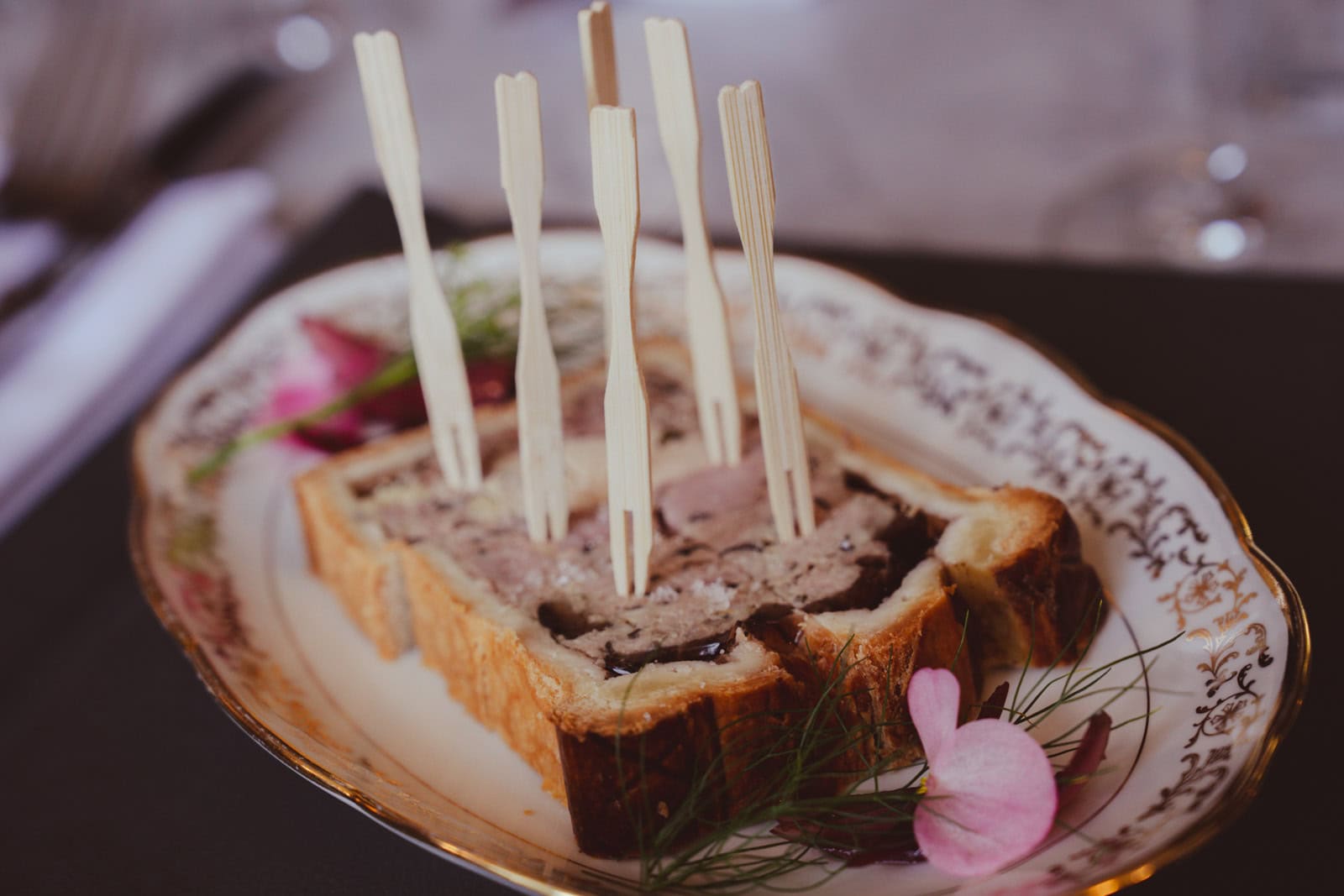
  • 25 Things to Do in Sudbury in 2025 (Local Guide)

    25 Things to Do in Sudbury in 2025 (Local Guide)

    [ad_1]

    Looking for the best things to do in Sudbury? This Northern Ontario gem is packed with surprises, think 330 sparkling lakes, a massive regreening transformation, Canada’s most iconic coin, and world-class science attractions that kids and adults will both love. Whether you’re after family-friendly fun, nature escapes, or hands-on experiences you won’t find anywhere else, Sudbury delivers.

    We’ve explored Sudbury in every season, from skating under the stars at Kivi Park to sending postcards 60 metres underground at Dynamic Earth. Our latest visit surprised us. Sudbury is in the middle of an incredible transformation, balancing its mining roots and a growing food and arts scene. This guide covers everything worth doing, seeing, and experiencing in Sudbury in 2025, including local tips, where to stay, what to eat, and the can’t-miss highlights that make this one of Canada’s most underrated destinations.

    Top things to do in Sudbury include:

    Exploring Science North’s four floors of interactive exhibits

    Hiking, biking or paddling at Kivi Park and Lake Laurentian

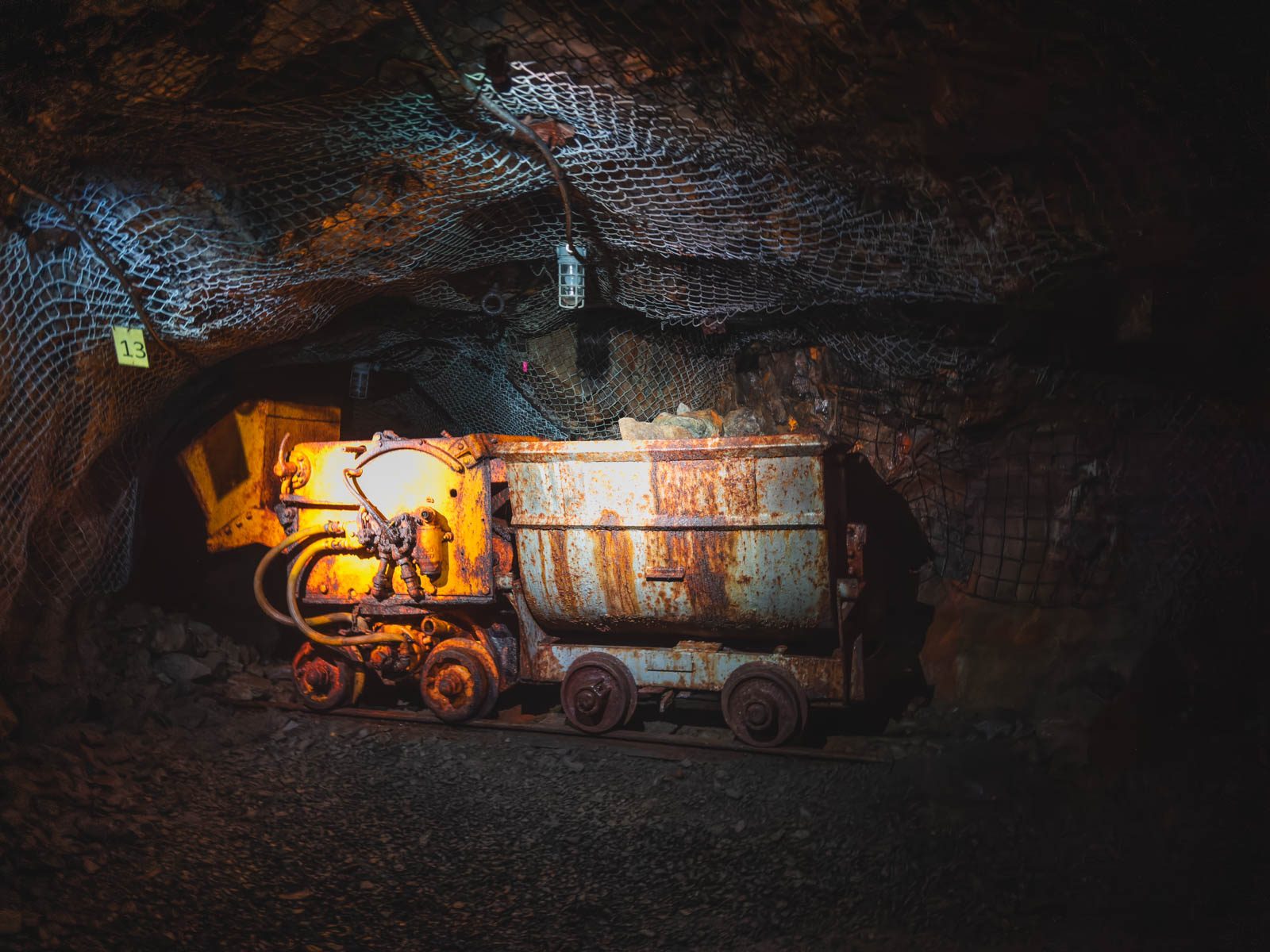
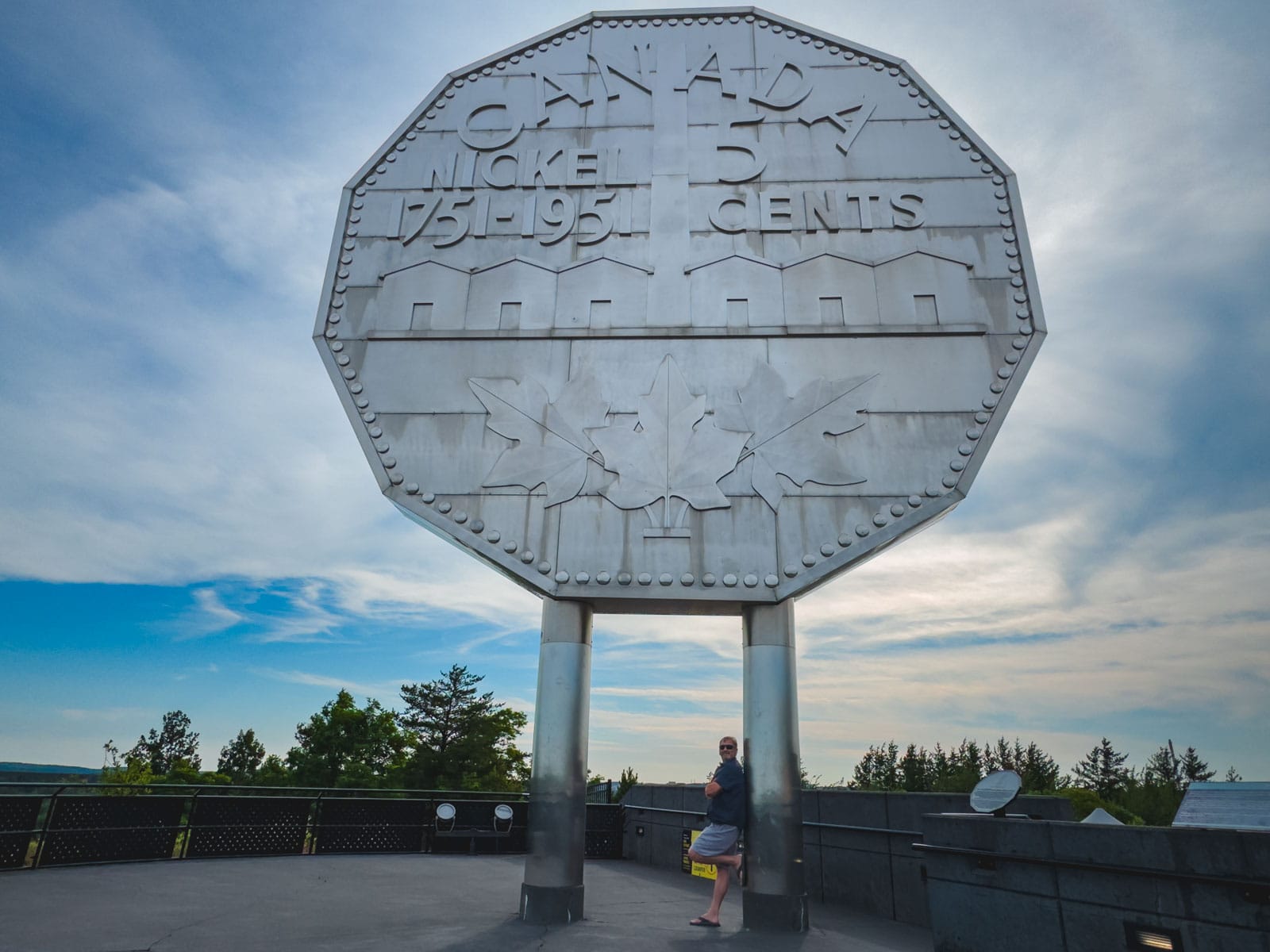
    Visiting the Big Nickel and going underground at Dynamic Earth

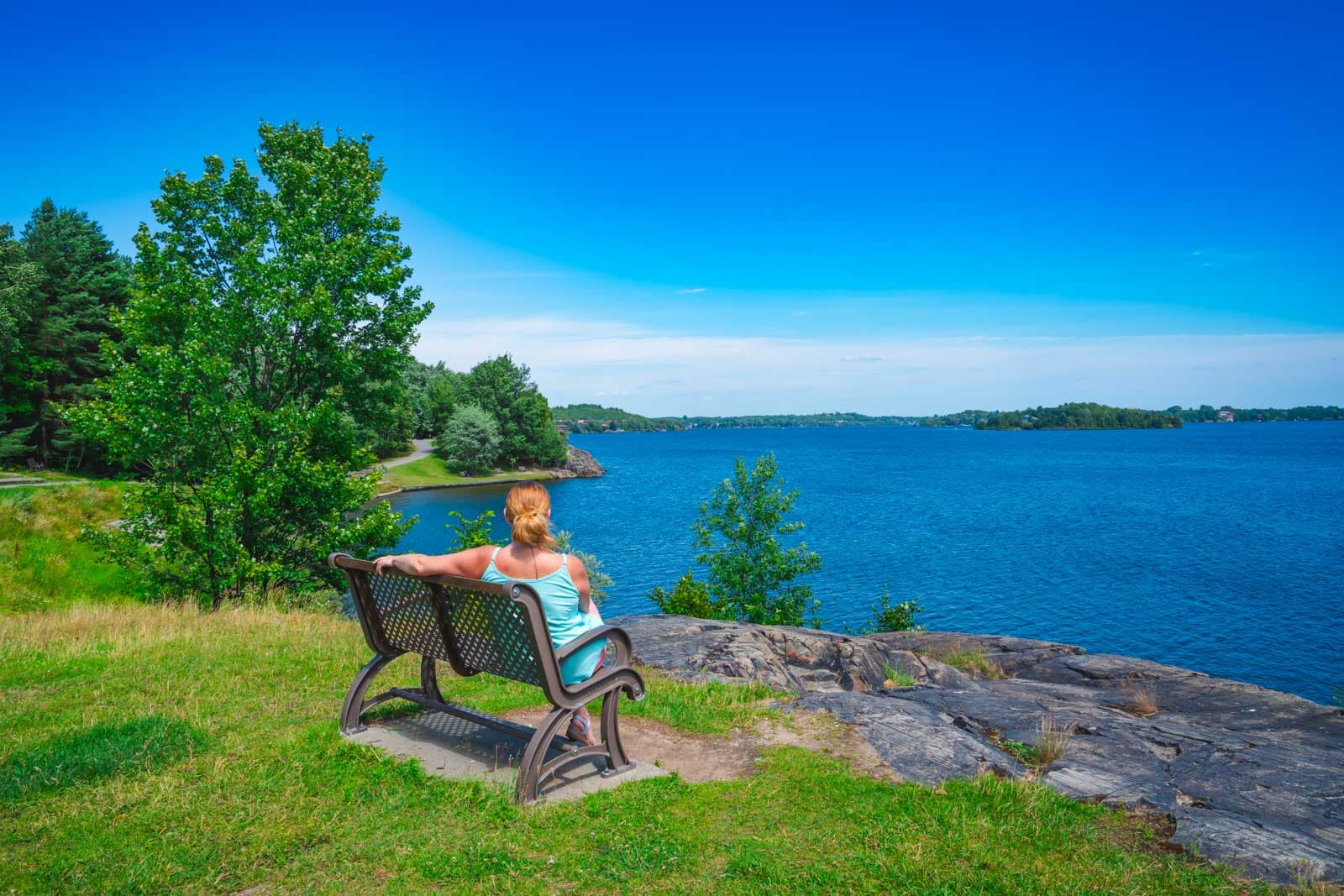
    Chilling at Bell Park on Ramsey Lake (the world’s 2nd largest city-contained lake)

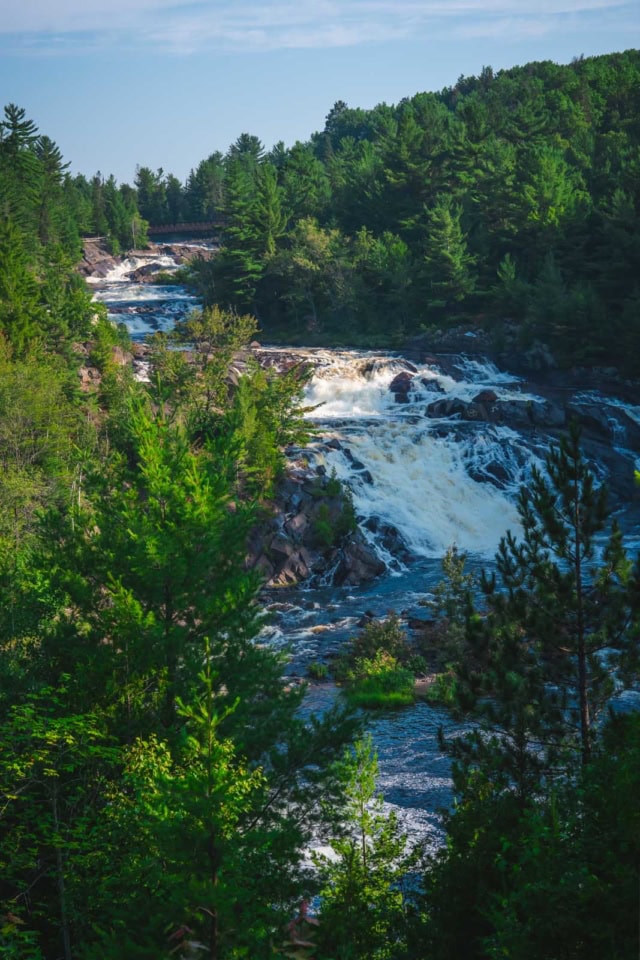
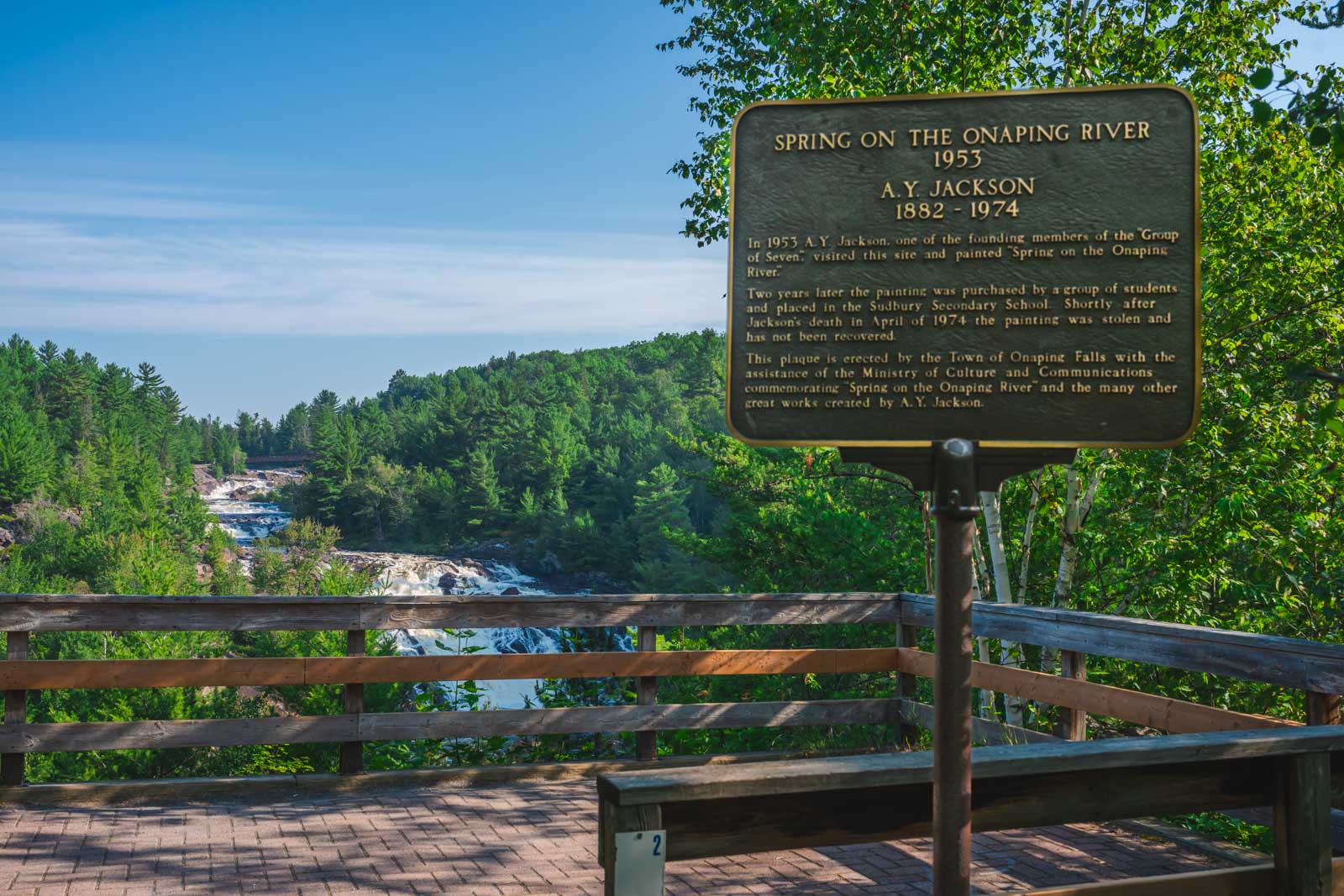
    Taking in Onaping Falls from the A.Y. Jackson Lookout

    Discovering downtown murals, local dining, and family-friendly events year-round

    Why Visit Sudbury in 2025?

    Because this former mining town has pulled off one of the greatest environmental comebacks in Canada, planting over 10 million trees and reinventing itself as a green, family-friendly destination filled with lakes, science, waterfalls, and murals. And it’s just a four-hour drive from Toronto.

    Things to Do in Sudbury for Outdoor Lovers

    Exploring the outdoors in Sudbury, Ontario

    Sudbury has pulled off one of the most dramatic makeovers in Canadian history. Once known for its blackened rock and moonscape terrain, it’s now a full-blown outdoor paradise, thanks to over 10 million trees, 330 lakes, and one of the world’s most successful regreening projects. And the best part? You don’t need to go far to experience it. Just minutes from downtown, you’ll find forest trails, glacier-sculpted lookouts, and yes, bike trails for every level that transform to a skating trail that lights up at night.

    We spent a long weekend exploring it all on foot, on bikes, and with our jaws on the ground more than once. Here’s what you shouldn’t miss.

    Kivi Park: Biking, Skating, and a View Worth the Climb

    Mountain Biking on the trails at Kivi Park in Greater Sudbury

    We started our day at Kivi Park, a 480-acre natural playground in Sudbury’s south end. This place is a dream for active travelers. We rented mountain bikes and hit the trails, which range from mellow forest paths to fast, flowy single-track loaded with ramps and jumps. If you’re into adrenaline, this is where Sudbury gets serious.

    Don’t miss the climb to the lookout. Trust us, it’s worth every pedal stroke. The panoramic view from the top stretches out over lakes and forest, showing off just how green and wild Sudbury has become.

    Navigating the trail system at Kivi Park in Sudbury Ontario

    In winter, Kivi Park transforms again, with fat biking, snowshoeing, and one of Ontario’s most scenic skating trails that glows at night under strings of lights. Rentals are available on-site, so you can jump in no matter the season or skill level.

    Lake Laurentian Conservation Area: From Space Science to Beaver Ponds

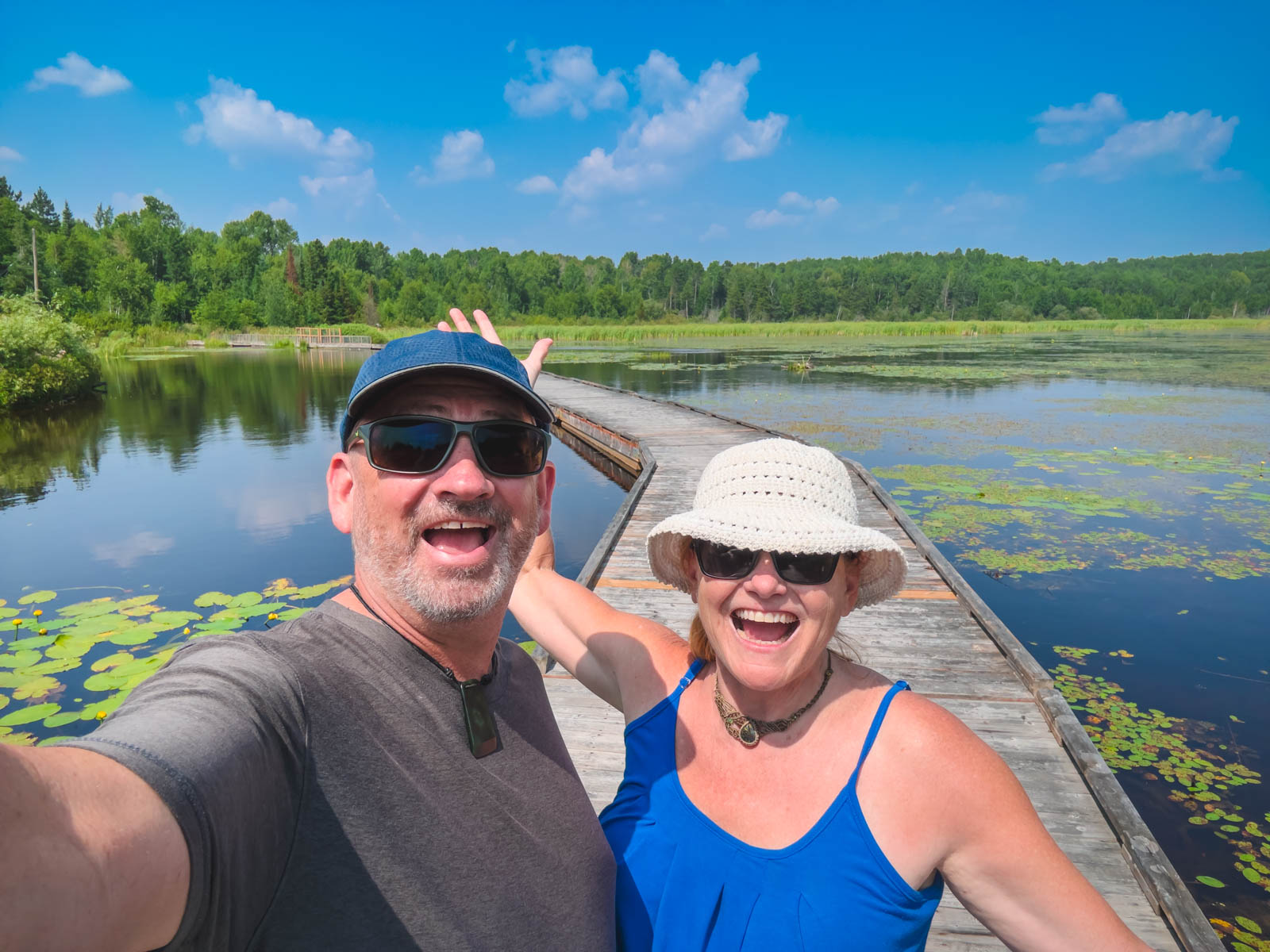
    Later that afternoon, we made our way to Lake Laurentian Conservation Area, and it ended up being one of our favourite spots in the city. With over 60 kilometers of trails, you can go as big or small as you want. We stuck with three short hikes, and each one delivered serious wow factor.

    Panoramic lookout view at Lake Laurentian Conservation Area Sudbury

    Our first was the NASA Trail, a 15-minute walk that passes the site of a former satellite observatory. It’s a quiet path with a big presence, a reminder that Sudbury isn’t just about mining and regrowth. It’s also a place where science has literally reached for the stars.

    Beaver Pond Loop trail at Lake Laurentian Conservation Area in Northern Ontario

    We continued to the Duck Trail and the Beaver Pond Loop, and this is where Sudbury’s transformation really hits you. The rocky moonscape we’d seen in old photos is gone. In its place? Lush forest, rich wetlands, and peaceful trails that wind through some of the most resilient nature we’ve ever walked. It’s hard to believe this was once written off as wasteland. Today, it’s a global success story in restoration.

    Bell Park and Ramsey Lake: Easy Beauty in the Heart of the City

    Boardwalk along Ramsey Lake at Bell Park in Sudbury Ontario

    One of the best things about Sudbury is how close nature is to everyday life. You don’t have to leave town to find it. We took a sunrise, midday, and sunset stroll along the Bell Park Boardwalk, a 2-kilometre path that hugs the shoreline of Ramsey Lake, the second-largest lake in the world entirely within city limits.

    We passed joggers, families, students, and even a friendly local who handed us peanuts to feed the squirrels. It was one of those small moments that said a lot about the city. Sudbury has put its prosperity back into the community, and places like Bell Park are proof.

    Looking out at Ramsey Lake along the Bell Park Boardwalk

    This is where you’ll also find boat launches, picnic areas, a supervised beach, and a commemorative plaque marking the 10 millionth tree planted during the regreening campaign. It’s a beautiful spot to relax after a day of hiking or to kick off a full day of sightseeing.

    Onaping Falls: Where Art Meets Apollo

    Onaping Falls in Sudbury

    Before we left town, we made the scenic 40-minute drive northwest to Onaping Falls. It’s not just a beautiful place, it’s one of the most fascinating mashups of Canadian art history and space science we’ve ever come across.

    The A.Y. Jackson Lookout offers sweeping views of the falls, which plunge 55 metres into the ancient Sudbury Basin, formed by a meteorite impact 1.85 billion years ago. Jackson painted this scene in 1953, and when you’re standing at the lookout, it’s easy to see why. You feel the same artistic energy, raw and real, that the Group of Seven captured on canvas.

    A.Y. Jackson Lookout at Onaping Falls in Sudbury, formed by meteorite impact crater

    But here’s what blew our minds: This same geological site drew the attention of NASA. In 1971, Apollo astronauts came to Sudbury to study the shattercones and breccia rocks at Onaping Falls. They wanted to understand what they’d be walking on up there, and Sudbury was their test site.

    And it worked. When Apollo 16 touched down, astronaut John Young looked around the lunar landscape and said:“It looks like a Sudbury breccia.”That’s right, Sudbury is the only Canadian city ever mentioned from the surface of the moon.

    Best Family-Friendly Attractions in Sudbury

    Family Friendly adventures at Science North

    Sudbury isn’t just for nature lovers; it’s one of Canada’s best places to combine education, entertainment, and hands-on fun. The city’s two flagship attractions, Science North and Dynamic Earth, go way beyond the average museum. They’re immersive, interactive, and packed with the kind of experiences that make both kids and adults say “wow.”

    We spent an entire day exploring both, and honestly, we could’ve stayed longer.

    Science North: Interactive Learning on the Canadian Shield

    Science North building on Ramsey Lake with interactive exhibits and four floors of discovery

    We kicked things off at Science North, which is set right on Ramsey Lake and built directly into the ancient rock of the Canadian Shield. Before we even walked in, the location itself made a statement: this place is grounded in science, literally.

    Inside, Science North lives up to its reputation as one of Canada’s top science centres. There are four levels of interactive exhibits covering everything from space and geology to climate, animals, and health innovation. It’s not just for kids either. We were just as fascinated by the shattercone displays (from Sudbury’s meteorite impact site) as we were by the butterfly room, the live animal exhibits, and the space exploration gallery.

    Colourful entrance to exhibits in Science North

    One thing we noticed right away is how accessible the facility is, with wide ramps, elevators, and exhibit layouts that are thoughtful for visitors of all ages and abilities.

    If you’re visiting with family, prepare to spend at least half a day here, especially if you catch a film at the IMAX with Laser Theatre, Northern Ontario’s only true giant-screen cinema. We recommend pairing your visit with a walk along the Bell Park boardwalk, especially if you didn’t get to it earlier. Sunset on Ramsey Lake is pure magic.

    Dynamic Earth: Go Deep into Mining History

    Entrance to Dynamic Earth at the Big Nickel in Sudbury

    Next up: Dynamic Earth, home of Sudbury’s most iconic attraction, the Big Nickel. But this isn’t your average photo stop. It’s the gateway to one of the most immersive science experiences in the country.

    We grabbed our hard hats and headed straight underground. That’s right, you descend seven storeys down into a real mine tunnel and walk through the history of mining in Canada. From the grueling, hand-drilled methods of the early 1900s to today’s state-of-the-art, remote-controlled operations, the tour walks you through the real deal.

    Mining displays on the Mining Tour at Dynamic Earth in Sudbury, Ontario

    It’s the kind of experience that gives you a whole new appreciation for Canadian industry and innovation. And the guides? Fantastic. They shared stories that made us laugh, reflect, and genuinely respect the tough, smart work that built this city.

    Iconic Big Nickel monument outside Dynamic Earth in Sudbury Ontario

    Outside, you’ll find more interactive exhibits, a mining lab, and one of our favorite photo ops, the 9-metre-tall Big Nickel, a massive replica of the 1951 Canadian coin. It’s kitschy in the best way, and it proudly reminds you that Sudbury’s mining legacy still runs deep.

    Festivals, Food, and Sudbury Vibes

    Food recommendations in Sudbury

    Sudbury knows how to throw a party, and it knows how to feed you while you’re at it. Whether you’re visiting in the heat of summer or bundled up in winter, the city’s festivals, patios, and local haunts serve up something special.

    Summer Festivals and Live Events

    Live music and crowds at Northern Lights Festival Boréal in downtown Sudbury

    We would love to visit during festival season. There is the Northern Lights Festival Boréal, Canada’s longest-running music festival, which draws incredible talent from across the country and beyond. Families, friends, and musicians fill the parks and stages.

    The Up Here Festival Mural in Sudbury, Ontario

    Another local favourite is the Up Here Festival, which blends music, art, and massive murals in a way that completely transforms downtown. You’ll stumble on bold new street art and hear everything from indie rock to throat singing. It’s modern, inclusive, and uniquely Sudburian. We especially loved the mural of Alex Trebek. A Sudbury native.

    And don’t skip the Indigenous cultural celebrations and pow wows. These are some of the most meaningful and beautiful events, filled with drumming, dancing, and connection to the land. If you get the chance, go.

    Where to Eat, Drink, and Celebrate the North

    Best places to eat in Sudbury Made in Caanda

    Sudbury’s food scene is as down-to-earth and proud as the city itself. You won’t find a lot of pretension here, but you will find seriously good eats, craft cocktails, and some of the coolest hidden spots in Northern Ontario. We came hungry. We left impressed.

    Locally roasted coffee served at Salute Coffee Roasters in Sudbury Ontario

    We started our mornings at Salute Coffee Roasters and Beni Rise & Shine and Anna Laura Patisserie, where the espresso is next-level and the vibe is relaxed and welcoming. If you’re a coffee snob (or just need fuel for the trail), this is your go-to.

    Classic retro diner sign at Deluxe Hamburgers, a Sudbury food institution

    For lunch, you can’t miss Deluxe Hamburgers, a true Sudbury institution. Locals jokingly call this a “one-arch town” because Deluxe has been holding its ground for decades despite the Golden Arches opening up right across from it. The chicken on a bun and fresh-cut fries are legendary, and it’s easily the best deal in town.

    Prime rib dinner at Mr. Prime Rib steakhouse in Sudbury Ontario

    Dinner was a whole adventure in itself. One night, we went full retro at Mr. Prime Rib, a classic steakhouse where the beef is king and the service is old-school impeccable. It’s the kind of place where your cutlery is polished, your prime rib is perfect, and the horseradish bites back.

    Made in Canada Eatery Bloody Ceasar

    Another night, we stepped into full Canadiana mode at Made In Canada Eatery. It’s quirky, cozy, and totally fun, with walls covered in photos of Canadian icons, and a Caesar with Canadian whisky that deserves its own spot in the Hall of Fame. If you’re visiting for the first time, this place sets the tone for what Northern hospitality is all about.

    Wood Fired Pizza at Ripe Restaurant in Sudbury

    Looking for wood-fired pizzas or a casual upscale vibe? Ripe Restaurant serves delicious, crisp pies straight from the oven, while The Daventry Kitchen & Bar offers a solid pub menu with craft beer and cozy vibes. We also loved Gloria’s Restaurant, a Sudbury classic since 1952, and Eddie’s Restaurant, which locals love for its family-style dining room and separate sports bar. Bonus trivia: “Shorsey” was filmed here, yes, that Shorsey.

    But the night doesn’t have to end with dinner.

    1920s-inspired speakeasy bar interior at The Night Owl in downtown Sudbury

    After eating our way through Sudbury, we capped things off at The Night Owl, a secret speakeasy you absolutely have to experience. Picture this: you head down an alley, find an old-school payphone, and give the password. The hostess greets you and leads you through a hidden door behind a wall of books. Inside, it’s a full-on 1920s-style cocktail lounge, with red velvet, jazz vibes, and the best Manhattans and Old Fashioneds this side of Toronto. It’s one of the coolest spots in town, but make sure to book in advance; it’s exclusive for a reason.

    Statue of Stompin’ Tom Connors in Sudbury park beside the Townhouse Tavern

    And if you’re up for one more round? Head to The Laughing Buddha for craft cocktails and globally inspired dishes on one of the city’s best patios. Then walk next door to the Townhouse Tavern, a dive bar with heart where Stompin’ Tom Connors found the inspiration for his famous anthem, Sudbury Saturday Night. You can even snap a photo with his statue in the park nearby.

    Sushi and Korean BBQ at Sapporo Ichibang restaurant in Sudbury Ontario

    For our farewell dinner, we had an incredible meal at Sapporo Ichibang, where authentic Japanese and Korean dishes warmed us up from the inside out. Everything was fresh, flavourful, and comforting.

    Sudbury may surprise you, but it won’t leave you hungry or thirsty.

    A Relaxing Finish at Ezentials Nordic Lounge

    Cedar sauna and steam room at Ezentials Nordic Lounge wellness spa in Sudbury

    After a few days of hiking, biking, and sightseeing, we wrapped up our Sudbury trip with something a little more indulgent, an afternoon at the Nordic Lounge at Ezentials. This indoor wellness spa was pure bliss. Think cedar sauna, eucalyptus steam room, cold-mist showers, and dimmed lights with chill music in the background.

    We grabbed a couple of robes, sipped a glass of wine in the lounge, and just let it all go. We even tried the Starlight Suite, where we experienced vibrational sound therapy in a dark, star-lit room designed for deep relaxation. It was like floating through space while our brains hit the reset button.

    Ezentials was the perfect way to unwind before hitting the road, and a reminder that Sudbury isn’t just about grit and adventure. It’s also about knowing when to slow down and savour the moment.

    Where to Stay in Sudbury and How Much It Costs

    Hampton Inn but Hilton Hotel Room in Sudbury

    One of the best things about visiting Sudbury? It’s easy on the wallet and big on value. Whether you’re road-tripping through Northern Ontario or flying in for a long weekend, you’ll find a great mix of hotels, affordable eats, and world-class attractions, many of which are totally free.

    Where We Stayed: Hampton Inn By Hilton Convenience with a Northern Vibe

    Exterior of Hampton Inn by Hilton Sudbury with free breakfast and indoor pool

    We stayed at the Hampton Inn by Hilton, and it hit all the marks, breakfast included, a solid gym, a pool to unwind, and a super convenient location. It’s the kind of place where you see business travelers, especially from the mining sector, rubbing shoulders with families and road trippers. It felt like the heartbeat of the city passed right through the lobby.

    Rates for a stay like ours run around $800 to $1,000 for four nights, depending on the season. But with breakfast included (and very good at that), it covers a lot of mornings, offering more flexibility to splurge at dinner.

    How Much Things Cost in Sudbury (with Real Numbers)

    Traveling in Northern Ontario doesn’t have to break the bank. Here’s what we actually spent:

    Mountain bike rentals at Kivi Park: $69 for two bikes

    Combo pass for Science North & Dynamic Earth: $47 per person

    Nordic Lounge experience at Ezentials: $60 per person

    Theatre tickets: $39 each for a fantastic night out

    And some of the best things in Sudbury are completely free:

    Hiking at Onaping Falls

    Trails at Lake Laurentian Conservation Area

    Bell Park boardwalk and Ramsey Lake views

    Snapping photos at the Big Nickel

    Exploring Sudbury’s massive outdoor mural scene

    When it comes to meals, budget about $125 to $150 per day for two people, covering everything from casual lunch stops to nice sit-down dinners. Sudbury’s mix of retro diners, local gems, and upscale surprises made that easy to stretch.

    Getting to Sudbury: Road Trip or Quick Flight

    Driving along scenic Northern Ontario highway to reach Sudbury from Toronto

    If you’re coming from Southern Ontario, Sudbury is a classic Canadian road trip destination. The four-hour drive from Toronto gives you a front-row seat as the landscape shifts from farmland to forested shield country. It’s scenic, it’s easy, and there are great stops along the way.

    If you’re short on time, flying is a breeze. Porter Airlines and Air Canada both offer direct flights from Toronto to the Greater Sudbury Airport, getting you here in about an hour. And for those coming from out west, we’ve heard new direct flights from Calgary are making it even easier to explore the North.

    Getting Around Sudbury

    Compact rental car parked near hiking trails in Greater Sudbury

    Once you’re here, you’re going to want a car. Attractions like Kivi Park, Onaping Falls, and even the Lake Laurentian trails are spread across the city and its surrounding wilderness. Expect to pay around $70 to $90 per day for a compact rental car, with larger SUVs costing a bit more, but totally worth it if you’re hauling outdoor gear or traveling as a family.

    Plan Your Sudbury Getaway

     discovering the natural beauty of Sudbury on a weekend getaway in Ontario

    Look, a vacation can just be a vacation, or it can be something more.

    Our trip to Greater Sudbury felt important. We weren’t just checking off a list of attractions. We were connecting with a part of Northern Ontario that’s literally rebuilding itself from the ground up. From biking through reforested trails at Kivi Park to sending postcards from deep inside a mine at Dynamic Earth, we saw a city that’s not just proud of its past, it’s investing in its future.

    Choosing to travel here feels like an investment in our own backyard.

    You’re supporting a family-friendly Ontario city that’s leading the way in environmental restoration, hands-on education, and creative community building. Whether you’re here to explore world-class science at Science North, take in the history of the Big Nickel, or walk the trails that surround the four floors of interactive exhibits at the city’s top family-friendly attractions, there’s something here for everyone.

    Sudbury is vibrant. It’s surprising. It’s affordable. And it’s packed with reasons to come back in every season.

    You’ll eat well. You’ll drink well. You’ll paddle, hike, soak, skate, and discover new sides of Ontario you didn’t expect. And you’ll leave with a deeper appreciation for the kind of magic that happens when nature, science, and community come together.

    So whether you’re planning your next long weekend, chasing fall colours, or looking for a winter adventure with heart, Greater Sudbury should be at the top of your list.

    FAQ: Planning Your Trip to Sudbury, Ontario

    What are the top attractions in Greater Sudbury?

    Some of the top things to do in Greater Sudbury include visiting Science North with its four floors of hands-on exhibits, touring the underground mine at Dynamic Earth, snapping a photo at the Big Nickel, hiking Onaping Falls, and relaxing at Bell Park on Ramsey Lake. These family-friendly attractions make Sudbury one of the best destinations in Northern Ontario.

    Is Sudbury a good destination for families?

    Absolutely. Sudbury is packed with family attractions, from the immersive experiences at Science North to outdoor adventures at Kivi Park and the Lake Laurentian Conservation Area. Many museums and parks are fully accessible, and kids love exploring the underground tunnels at Dynamic Earth and meeting real animals at the science centre.

    How much does it cost to visit Science North and Dynamic Earth?

    A combo pass for Science North and Dynamic Earth is around $47 per person. It’s a great value considering the number of exhibits, live demonstrations, and the size of the facilities, four floors at Science North alone. Booking the combo ticket in advance helps maximize your visit.

    What is the Big Nickel in Sudbury?

    The Big Nickel is a 9-meter replica of a 1951 Canadian coin and one of Canada’s most iconic roadside attractions. It sits right outside Dynamic Earth and is a must-stop photo opportunity when visiting Greater Sudbury.

    How do I get to Sudbury from Toronto?

    You can drive from Toronto to Sudbury in about four hours, making it an easy Northern Ontario road trip. If you’re short on time, both Porter Airlines and Air Canada offer direct flights from Toronto to Greater Sudbury Airport, taking about an hour.

    Is Sudbury worth visiting in winter?

    Yes! Winter in Sudbury offers incredible snow-based experiences like illuminated skating trails at Kivi Park, fat biking, and even heated yurt glamping. Plus, many indoor attractions like Science North and the Nordic Lounge at Ezentials offer cozy ways to unwind.

    Are there free things to do in Sudbury?

    Yes. Many of the best experiences in Sudbury, Ontario, are completely free. You can explore the murals downtown, discover hiking trails at Onaping Falls and the Lake Laurentian Conservation Area, enjoy Bell Park’s lakeside boardwalk, and visit the Big Nickel without spending a dime.

    [ad_2]

    Source link
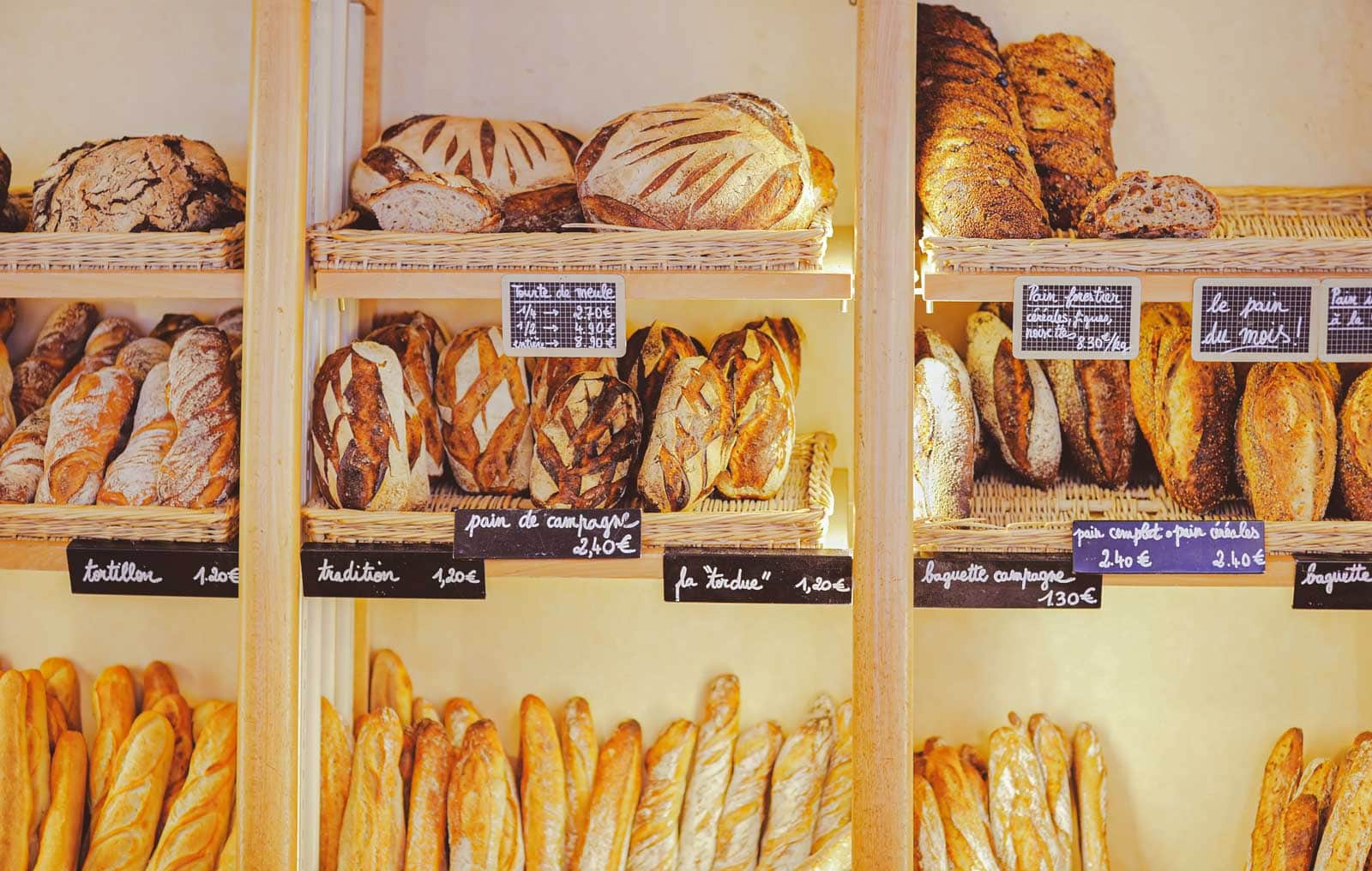
  • 17 Best Things to Do in the Upper Peninsula, Michigan (2025 Guide)

    17 Best Things to Do in the Upper Peninsula, Michigan (2025 Guide)

    [ad_1]

    Looking for the best things to do in the Upper Peninsula of Michigan? We’ve road-tripped the UP multiple times and can tell you this: it’s one of America’s last great wild frontiers. This rugged, remote region, home to some of the best places to visit in Michigan, is packed with towering waterfalls, dramatic cliffs, pristine hiking trails, and scenic shorelines along three Great Lakes – Superior, Michigan, and Huron.

    Whether you’re kayaking the turquoise waters of Pictured Rocks, taking a heart-pounding leap from the cliffs in Marquette, or feeling the rumble of giant freighters at the Soo Locks, the UP delivers pure adventure. This guide breaks down the 17 must-see places and experiences that make Michigan’s Upper Peninsula unforgettable. Let’s hit the road.

    Editor’s Note for 2025: This guide to the Upper Peninsula was originally contributed by Veggies Abroad. We have since completely revamped and updated it with our own personal stories, photos, and insider tips from our many road trips through the UP to ensure it’s the most comprehensive and accurate resource for your travels.*

    Quick Hits: The Very Best of the UP

    Pressed for time? Here are the top things to do in Michigan’s Upper Peninsula that you absolutely cannot miss:

    Pictured Rocks National Lakeshore: Kayak or cruise beneath the iconic, mineral-stained cliffs.

    Tahquamenon Falls State Park: Witness the power of the massive, amber-colored Upper Falls.

    Porcupine Mountains Wilderness State Park: Hike to the breathtaking Lake of the Clouds Overlook.

    Presque Isle Park: Cliff jump from the famous Black Rocks into Lake Superior.

    Kitch-iti-kipi: Glide across Michigan’s largest and most stunning natural spring.

    Mackinac Island: Step back in time on a car-free island known for bikes and fudge.

    Keweenaw Peninsula: Drive to the northernmost point for epic stargazing and solitude.

    Dave and Deb about to go scuba diving one of the best things to do in the Upper Peninsula, Michigan
    Dave & Deb here! We’ve lost count of our road trips through the Upper Peninsula. This was us getting ready to go Kayaking.

    1. Tahquamenon Falls State Park

    The powerful, amber-colored Upper Tahquamenon Falls surrounded by autumn foliage in Michigan's Upper Peninsula.

    Why Visit: Home to one of the largest waterfalls east of the Mississippi, Tahquamenon Falls is an absolute powerhouse. The tannin-rich waters of the Tahquamenon River give the falls a distinct amber color, earning it the nickname “Root Beer Falls.” We visited in October as golden leaves drifted downstream through the mist, and it felt like walking into a fairytale. The sheer force of the Upper Falls, especially during the spring melt, is something you have to feel to believe.

    Things to Do:

    Walk the accessible half-mile paved trail to the main Upper Falls overlook.

    Hike the four-mile trail connecting the Upper and Lower Falls.

    Rent a rowboat at the Lower Falls to paddle out to the island for a unique perspective.

    Insider Tip: While the Upper Falls gets all the glory, don’t skip the Lower Falls. It’s a series of smaller, cascading falls that are just as beautiful and far more interactive.

    How to Get There: Located off M-123 near the town of Paradise.

    Where to Stay or Eat: Camp in the park or stay at nearby lodges in Paradise.

    2. Pictured Rocks National Lakeshore

    the turquoise water of Lake Superior below the stunning cliffs of Pictured Rocks National Lakeshore.

    Why Visit: This is the crown jewel of the Upper Peninsula. A stunning 42-mile stretch of Lake Superior shoreline featuring mineral-stained sandstone cliffs, sea caves, and dramatic arches. These rock walls aren’t just beautiful—they’re ancient canvases brushed by time and water. Kayaking past Chapel Rock and through Lovers Leap Arch felt like paddling through a cathedral carved by the earth itself.

    Things to Do:

    Take a guided kayak tour to see the cliffs up close (the best way to experience it).

    Hike the 10-mile Chapel Loop Trail for incredible clifftop views.

    Visit Miners Castle overlook and walk the short trail to Miners Falls.

    Relax on the beach at Sand Point.

    Insider Tip: Book your Pictured Rocks boat or kayak tour months in advance, especially for summer. They sell out fast. If you’re kayaking, go with a guide. Lake Superior’s weather is notoriously unpredictable.

    Where to Stay: Munising is the main hub for tours and lodging.

    3. Presque Isle Park

    A dramatic view of the ancient Black Rocks at Presque Isle Park in Marquette, a famous spot for cliff jumping into Lake Superior

    Why Visit: Just minutes from downtown Marquette, this forested peninsula is a local favorite and an adventurer’s playground. The main draw? The “Black Rocks,” a formation of ancient volcanic rock perfect for cliff jumping. We took the leap into the shockingly cold, emerald water of Lake Superior under a blazing summer sun. The adrenaline rush followed by a warm-up on the sun-baked rocks is a core UP memory.

    Things to Do:

    Cliff jump from the Black Rocks (at your own risk!).

    Bike or drive the scenic Peter White Drive loop around the peninsula.

    Watch the sunset over Lake Superior—it’s one of the best spots in the UP.

    Insider Tip: The parking lot at the northern tip fills up fast on hot days. Go early in the morning or later in the afternoon to avoid the biggest crowds.

    Where to Stay or Eat: Stay in Marquette for its restaurants and lakeside hotels.

    4. Marquette

    historic downtown marquette theatre against a blue sky, a must-see sight in this charming Upper Peninsula city

    Why Visit: Marquette is the largest city in the UP and the perfect home base for adventure. It effortlessly blends rugged outdoor access with small-city culture, great breweries, and fantastic restaurants. We loved being able to hike a mountain in the morning, grab an incredible meal in the evening, and end the night with a craft beer. It’s the perfect mix of wild and civilized.

    Things to Do:

    Hike to the summit of Sugarloaf Mountain (more on that below).

    Visit the iconic red Marquette Harbor Lighthouse.

    Explore the downtown shops and grab a coffee at a lakeside cafe.

    Dine at local favorites like The Vierling, The Bodega, or Lagniappe Cajun Creole Eatery.

    Insider Tip: Use Marquette as your hub for exploring Presque Isle, Sugarloaf Mountain, and the Dead River Falls.

    5. Sugarloaf Mountain

    The breathtaking 360-degree panoramic view from the summit of Sugarloaf Mountain, overlooking Lake Superior and the forests of the UP

    Why Visit: This short hike delivers one of the biggest rewards in the entire Upper Peninsula. The climb isn’t long, but the 360-degree panoramic view from the summit is breathtaking. From the viewing platforms, we could see for miles—the dense forests, the rugged shoreline, the iconic ore dock, and the endless expanse of Lake Superior. It’s a sunrise spot we’ll never forget.

    Things to Do:

    Hike the half-mile trail to the summit viewing platforms.

    Photograph the views of Lake Superior, Little Presque Isle, and Hogsback Mountain.

    A must-do for sunrise or to capture peak fall foliage.

    Insider Tip: There are two routes up: “easy” and “difficult.” The “easy” trail is less steep and has stairs, making it quicker for most people.

    6. Kayaking Lake Superior

    A first-person view from a kayak on the clear, calm waters of Lake Superior, showcasing one of the best things to do in the Upper Peninsula

    Why Visit: Paddling on the “Big Lake” is an unforgettable way to experience the raw scale and beauty of the UP’s coastline. Lake Superior demands respect, and it’s a core part of the epic Lake Superior Circle Tour, but when she’s calm, paddling on her waters is pure magic. Gliding beneath 200-foot cliffs in turquoise water with eagles soaring overhead is a humbling experience. Lake Superior demands respect, but when she’s calm, paddling on her waters is pure magic.

    Things to Do:

    Join a guided kayak tour at Pictured Rocks (the most popular option).

    Explore the quieter sea caves and coves around Munising Bay and Grand Island.

    Launch from the beaches in Marquette for a paddle around Presque Isle.

    Insider Tip: Lake Superior’s conditions can change in minutes. Always check small craft advisories, tell someone your plan, and if you’re not an experienced paddler, stick with a guided tour.

    7. Whitefish Point & The Shipwreck Museum

    lighthouse of whitefish point in the Upper Peninsula of Michigan

    Why Visit: This windswept point on Lake Superior is beautiful, moody, and steeped in maritime lore. Known as the “Graveyard of the Great Lakes,” the treacherous waters off this point have claimed hundreds of ships. It’s a place that feels sacred. We walked the beach at dusk, and watching the sky fade over the vast, silent lake was a powerful moment.

    Things to Do:

    Visit the Great Lakes Shipwreck Museum, home of the bell from the legendary S.S. Edmund Fitzgerald. In 2025, the museum is open daily 9?am–5?pm from May?1 through October?31. Admission includes access to the shipwreck exhibits, keeper’s quarters, and lookout tower.

    Climb the tower at Whitefish Point Light Station, the oldest operating lighthouse on Lake Superior.

    Walk the desolate, beautiful beach and look for agate rocks.

    Insider Tip: Whitefish Point is in an official Dark Sky Park. On a clear night, the stargazing is phenomenal, with a real chance of seeing the Northern Lights.

    How to Get There: Located 11 miles north of Paradise on Whitefish Point Road.

    8. Porcupine Mountains State Park

    The famous, breathtaking vista of Lake of the Clouds from the escarpment overlook in Porcupine Mountains Wilderness State Park during fal

    Why Visit: Affectionately known as “the Porkies,” this is one of the last great wilderness areas in the Midwest. It’s raw, remote, and massive. Hiking to the Lake of the Clouds Overlook was like walking into a painting. We stood on the escarpment, soaking in the silence, the vibrant fall colors, and the sense of something ancient and untouched.

    Things to Do:

    Drive to the easily accessible Lake of the Clouds Overlook for the iconic view.

    Hike a section of the Escarpment Trail for more stunning vistas.

    Chase waterfalls at Bond Falls and Agate Falls.

    Insider Tip: Visit on a weekday to avoid the crowds that flock to the main overlook on weekends, especially during fall color season.

    How to Get There: West of Ontonagon near the Wisconsin border.

    Where to Stay or Eat: Cabins and backcountry sites are available in the park.

    9. Kitch-iti-kipi (The Big Spring)

    Looking down into the crystal-clear, emerald waters of Kitch-iti-kipi, Michigan's Big Spring

    Why Visit: Prepare to be mesmerized. Located in Palms Book State Park, Kitch-iti-kipi, or “The Big Spring,” is a stunning emerald pool so clear you can see straight to the bottom 40 feet below. You pull yourself across the spring on a self-powered observation raft, watching ancient, mineral-encrusted trees and swirling sands below. The water is an otherworldly shade of blue-green—it almost doesn’t feel real.

    Things to Do:

    Ride the observation raft across the crystal-clear spring.

    Look for the massive trout that call the spring home.

    Insider Tip: This is one of the UP’s most popular stops. Go early in the morning or later in the afternoon to avoid long lines for the raft, especially in summer.

    How to Get There: Located 12 miles west of Manistique off M-149.

    10. Mackinac Island

    Mackinac Island with the historic Grand Hotel in the background, showcasing the island's car-free lifestyle

    Why Visit: A charming, car-free island suspended in time between Michigan’s two peninsulas. The moment you step off the ferry, the rhythm changes. The roar of engines is replaced by the clip-clop of horses and the ringing of bicycle bells. Fudge is basically a food group here. We rented bikes and rode the 8.2-mile loop around the island’s shoreline, grinning the whole way.

    Things to Do:

    Bike the 8.2-mile M-185 loop around the island.

    Tour the historic Fort Mackinac.

    Sample world-famous fudge from one of the many downtown shops.

    Hike to the iconic Arch Rock.

    Insider Tip: Book your ferry tickets online in advance. While not technically in the UP, it’s an essential stop, and ferries leave from St. Ignace on the UP side.

    If you’re spending time on the south side of the bridge, there are many fun things to do in Northern Michigan, from exploring the unique Mushroom Houses of Charlevoix to enjoying what feels like Caribbean water adventures on Torch Lake.”

    How to Get There: Take a ferry from St. Ignace or Mackinaw City.

    11. Keweenaw Peninsula

    A vibrant aurora borealis, or Northern Lights, dancing in the dark sky over Lake Superior on the remote Keweenaw Peninsula

    Why Visit: This is the remote, northernmost tip of the UP, a place for true solitude, dark skies, and fascinating copper mining history. This is where we saw the Northern Lights for the first time, a faint green glow dancing over the silent expanse of Lake Superior. Add in wild beaches, ghost towns, and a serious lack of crowds, and you have a recipe for magic.

    Things to Do:

    Take the breathtaking Brockway Mountain Drive for panoramic views.

    Explore the charming harbor town of Copper Harbor.

    Hike among old-growth trees at Estivant Pines Nature Sanctuary.

    Hunt for the aurora borealis from a remote Lake Superior beach.

    Insider Tip: Cell service is spotty to non-existent in much of the Keweenaw. Download offline maps before you go and pack extra water and snacks.

    How to Get There: Highway 41 leads to the tip of the peninsula from Houghton.

    12. Sault Ste. Marie & Soo Locks

    Sunset over the engineering marvel of the Soo Locks in Sault Ste. Marie, Michigan

    Why Visit: It’s one thing to see a massive 1,000-foot freighter on the lake; it’s another to watch it get lifted 21 feet between Lake Superior and Lake Huron. The Soo Locks are an engineering marvel and the lifeblood of Great Lakes shipping. Watching these giants squeeze through the locks is surprisingly captivating. Plus, the town of Sault Ste. Marie itself is Michigan’s oldest city and is full of friendly locals.

    Things to Do:

    Watch the massive freighters from the viewing platform.

    Take a boat tour that goes right through the locks alongside the freighters.

    Visit the Tower of History for a panoramic view of the area.

    Insider Tip: Time your visit! Check the freighter schedule online (MarineTraffic or similar apps) or at the visitor center to ensure you’ll see a ship pass through. For the best experience, book a tour with Famous Soo Locks Boat Tours or Original Soo Locks Boat Tours.

    How to Get There: Accessible via I-75 at the eastern tip of the UP.

    13. Isle Royale National Park

    the wilderness of Isle Royale National Park, a remote and wild thing to do in the Upper Peninsula.

    Why Visit: This is for the serious adventurer. Accessible only by ferry or seaplane, Isle Royale is a remote, rugged island in the middle of Lake Superior, renowned for its moose and wolf populations. Reaching it feels like entering another world. We spent days hiking here without seeing another soul. It’s the ultimate off-grid experience—no roads, no cell service, just you and the wild.

    Things to Do:

    Take the ferry to either Windigo or Rock Harbor.

    Hike a portion of the famous Greenstone Ridge Trail.

    Go backpacking and camp beside pristine inland lakes.

    Insider Tip: The park is closed from November 1 to April 15. Ferry schedules are limited and must be booked far in advance. There is no cell service. You must be fully self-sufficient.

    How to Get There: Seasonal ferry or seaplane access from Houghton or Copper Harbor.

    14. Cut River Bridge

    Why Visit: Located on US-2 along the Lake Michigan shoreline, this isn’t just a bridge—it’s a scenic stop with a hidden network of trails. We parked and took the stairs down into the river valley, finding a quiet, beautiful spot where the Cut River meets Lake Michigan. It’s the perfect place to stretch your legs on the drive across the UP.

    Things to Do:

    Walk across the bridge’s pedestrian path for a view from 147 feet up.

    Take the stairs down to the trails below.

    Walk the path to the Lake Michigan shoreline.

    Insider Tip: This stop is especially gorgeous in the fall when the valley is ablaze with color.

    15. Manistique & Fayette Historic State Park

    The well-preserved 19th-century buildings of the Fayette Historic State Park ghost town, a unique place to visit in the Upper Peninsula

    Why Visit: A two-for-one stop on the southern coast of the UP. Manistique offers a lovely lakeside boardwalk, while a short drive away lies Fayette, a perfectly preserved 19th-century iron-smelting ghost town. Walking through the empty hotel and company store at Fayette feels like stepping onto a movie set.

    Things to Do:

    Stroll the Manistique Boardwalk and visit the lighthouse.

    Explore the ghost town at Fayette Historic State Park.

    Insider Tip: Fayette has a beautiful harbor on Snail Shell Harbor, a great spot for a picnic after exploring the historic townsite.

    16. The Drive on US-2

    Deb on a motorcycle driving down the scenic US-2 highway in Lake Michigan in the Upper Peninsula.

    Why Visit: Sometimes the journey is the destination. The stretch of US-2 highway that hugs the northern shore of Lake Michigan is one of the most scenic drives in the Midwest. With endless beaches, charming small towns, and classic roadside pasty shops, it’s a quintessential part of the UP road trip experience.

    We were lucky enough to motorcycle around the entire Lake Superior Circle Route through Michigan, Wisconsin and Ontario. It was one of the best road trips we’ve ever taken!

    Things to Do:

    Pull over at the numerous roadside parks and beaches.

    Stop for a traditional Cornish pasty (a UP staple!).

    Enjoy the laid-back, scenic drive.

    Insider Tip: Give yourself more time than you think you need for this drive. You’ll want to stop frequently.

    17. Grand Island Ice Caves (Winter)

    Stunning blue ice caves and giant icicles formed along the sandstone cliffs of Grand Island in winter, a magical Upper Peninsula experience.

    Why Visit: A magical winter wonderland formed by frozen waterfalls along sandstone cliffs. We snowshoed across frozen Lake Superior into a frozen dreamscape of blue ice and crystal arches. It’s cold, wild, and worth every chilly step.

    Things to Do:

    Snowshoe or ski across the ice to the caves

    Photograph giant icicles and blue chambers

    Explore with a guided tour for safety

    Insider Tip: Always check local ice conditions before crossing. Bring poles and spikes. Or better yet, hire a guide to be safe.

    How to Get There: Access from Sand Point Road near Munising.

    Your Adventure Awaits in the UP

    De Stand Up Paddle Boarding on Lake Superior wearing a wet suit

    From the thundering power of Tahquamenon Falls to the silent, starry nights over Lake Superior in the Keweenaw, Michigan’s Upper Peninsula is more than just a destination—it’s an experience that stays with you. We’ve shared our list of the most unforgettable things to do in Upper Peninsula Michigan, but in truth, it only scratches the surface of this wild and beautiful frontier.

    The real magic is found in the unplanned detours, the quiet overlooks you discover by chance, and the conversations you have with friendly locals over a roadside pasty. Whether you start your journey after exploring the best things to do in Detroit or drive straight north, this is one of America’s last great road trips, a place that rewards the curious and the adventurous. So grab your map, pack your hiking boots, and get ready to find your own slice of the wild north. The Upper Peninsula is waiting.

    Frequently Asked Questions about Michigan’s Upper Peninsula

    When is the best time to visit the Upper Peninsula? Late spring through early fall (June to October) offers the best weather for hiking, kayaking, and camping. Fall colors, typically peaking in late September or early October, are spectacular. Winter is incredible for snowmobiling, snowshoeing, and seeing ice caves, but be prepared for extreme cold and road closures.

    Can you see the Northern Lights in the UP? Yes! The Upper Peninsula has some of the darkest skies in the country. Your best chance is on the Keweenaw Peninsula or along the shore of Lake Superior away from city lights. A clear, dark night in the fall or spring gives you the highest probability.

    Is Mackinac Island part of the UP? Technically, Mackinac Island is located in the Straits of Mackinac between the two peninsulas. However, it’s most commonly accessed from and included in UP travel itineraries, with ferries departing from St. Ignace in the UP.

    Is the Upper Peninsula good for road trips? Absolutely. The UP is one of the premier road trip destinations in the United States. Distances between major sights can be long, so plan your route accordingly. Be prepared for limited cell service in remote areas—downloading offline maps is essential.

    What is a Pasty and where can I get one? A pasty (pass-tee) is a baked pastry filled with meat and vegetables, brought to the UP by Cornish miners in the 1800s. It’s the unofficial food of the UP, and you’ll find pasty shops all over. Trying one is a required part of the experience!

    Read more about Michigan travel

    [ad_2]

    Source link

  • Dear America: Your BBQ is Cancelled. So is Your Hypocrisy. |The Planet D: Adventure Travel Blog

    Dear America: Your BBQ is Cancelled. So is Your Hypocrisy. |The Planet D: Adventure Travel Blog

    [ad_1]

    An Open Letter to the United States of America

    When California was on fire, Canada sent water bombers to help. When our country is burning… You sent us a complaint letter. America, we need to talk.

    Dear United States Congress,

    Thank you so much for your deeply concerned letter about our wildfires “ruining your summer.” Truly touching.

    We apologize that our forests, after decades of record heat, drought, and corporate deforestation (some of it by your own timber giants), had the audacity to catch fire and interrupt your BBQs and lake weekends.

    But since you’re so concerned, let’s review the scoreboard:

    When California was engulfed in flames, Canada sent water bombers. No letter. No whining. Just help. Because that’s what friends do.

    We routinely send highly trained Canadian firefighters to California, Oregon, and Washington when your forests are burning down faster than a rant from your president. We don’t send a letter complaining about the smog drifting north, we send help.

    When your hospitals were overwhelmed and out of PPE during the pandemic, we shipped masks and gloves south. At the same time, Trump threatened to cut us off. No letter. Just help.

    When 9/11 happened, we took in 33,000 stranded passengers and fed them in Gander, Newfoundland. We didn’t send a letter complaining about our tourism season. We opened our doors. You might try it sometime instead of burning the planet for campaign cash.

    Meanwhile, you send us… a letter.

    You write with concern about your “ability to go outside and safely breathe.” We’re concerned about that too. We’ve been concerned for decades as your corporations have belched more carbon into our shared atmosphere than almost any other country on Earth. You lecture us about “active forest management” while simultaneously gutting your own environmental protections and subsidizing the very fossil fuel industry that’s setting our planet on fire.

    All the while, we’re actually investing in green energy to prevent these fires before they start. You might try it sometime instead of burning the planet for campaign cash.

    You want to talk about what’s “ruining the summer”? Let’s talk about the raw sewage and industrial waste you’ve been dumping into the Great Lakes for a century. Let’s talk about the invasive species that hitch a ride in your ships and decimate our ecosystems. Let’s talk about the acid rain from your factories that has poisoned our lakes and forests for generations.

    Oh, and let’s talk about that “outdoor recreation” you’re so worried about. You know, the same outdoors you’ve been paving over with pipelines, fracking, and oil rigs. The same air you’ve been happily polluting for decades, accelerating the climate crisis that makes these wildfires worse.

    Your letter mentions arson, but conveniently ignores the primary accelerant for these fires: climate change. A crisis you have actively lobbied to ignore.

    So please, spare us the lecture. Don’t you dare complain about the smoke in your sky when you have helped build the fire.

    You accuse us of “a lack of forest management”? Please. Our forests are twice the size of the state of Texas. And guess what? We didn’t spend decades denying climate change while burning coal like it was going out of style.

    We Canadians love our summers, too. We also love being able to breathe. But most of all, we value friendship and reciprocity. Things that are clearly in short supply south of the border these days. Real friends show up with buckets, not complaint letters.

    If you’re so desperate for fresh air, maybe stop voting for politicians who think the only green policy worth supporting is the color of their campaign donations.

    Instead of sending snarky letters, how about sending fire crews? Or maybe instead of funneling your giant defense budget into more tanks, border walls, and that Big Beautiful Bill budget that props up ICE and billionaires, you could help fight actual global threats. Like climate change?

    Next time there’s a crisis, maybe look in the mirror before you look north.

    With all the polite Canadian sincerity we can muster,

    Canada and The Planet D

    Want to sign this letter too?

    Leave a comment below with:“Signed, [Your Name]” (and feel free to add where you’re from!)

    Let’s show that real friends show up with buckets, not complaint letters.

    [ad_2]

    Source link

  • 40 Best Things to Do in Vancouver (2025 Guide for Canada & U.S. Travelers)

    40 Best Things to Do in Vancouver (2025 Guide for Canada & U.S. Travelers)

    [ad_1]

    Looking for the best things to do in Vancouver? Whether you’re here for a weekend or planning a full West Coast itinerary, this city blends oceanfront adventure, mountain beauty, and cultural depth like nowhere else in Canada. As former Vancouver residents, we’ve explored every corner of this coastal gem, from biking around Stanley Park to catching sunsets at English Bay, and we’re sharing our top picks so you can experience the very best of it.

    This updated 2025 Vancouver travel guide features the top attractions, local favorites, family activities, day trips, and hidden gems. Whether you’re traveling solo, as a couple, or with kids, we’ve got insider tips, maps, and must-sees to make your trip unforgettable.

    Ready to dive in? Here’s what to do in Vancouver, Canada.

    Top Things to Do in Vancouver, At a Glance

    Category
    Top Attractions

    Nature & Parks

    Stanley Park, Queen Elizabeth Park, VanDusen Botanical Garden, Grouse Mountain, Lynn Canyon Park

    Cultural Attractions & Museums

    Museum of Anthropology, Vancouver Art Gallery, Museum of Vancouver, Science World, Christ Church Cathedral

    Neighborhoods & Local Vibes

    Gastown, Yaletown, Chinatown, Olympic Village, False Creek

    Waterfront & Views

    Vancouver Lookout, Capilano Suspension Bridge, Sea to Sky Gondola, Sunset Dinner Cruise, English Bay & Kitsilano Beach

    Family-Friendly Activities

    Vancouver Aquarium, Science World, Whale Watching Tours, Suspension Bridges, False Creek Ferries

    Best Day Trips

    Whistler, Squamish, Sea to Sky Highway, Victoria & Butchart Gardens, Britannia Mine Museum

    Top 10 Things to Do in Vancouver

    Best Things to do in Vancouver Canada

    Short on time? These are the best things to do in Vancouver, BC, that showcase the city’s natural beauty, cultural hotspots, and must-see landmarks.

    1. Walk or Cycle the Stanley Park Seawall

    Things to do in Vancouver Canada Stanley Park

    Start your Vancouver adventure with a bike ride or stroll along the Stanley Park Seawall. This iconic 9-kilometre path wraps around the city’s beloved green space, offering unbeatable views of the skyline, mountains, and ocean. Rent a bike or join a cycling tour to explore the park’s top attractions, including the totem poles and the Vancouver Aquarium.

    2. Visit Granville Island Public Market

    Things to do in Vancouver Canada Granville Island

    A must for food lovers, Granville Island Public Market is packed with fresh seafood, baked goods, and artisan cheeses. Browse local crafts, snack on the go, and catch a view of False Creek from the dock.

    3. Ride the Grouse Mountain Skyride in North Vancouver

    Grouse mountain gondola.

    Hop on the Skyride gondola to reach Grouse Mountain’s summit. In summer, you can hike the Grouse Grind. In winter, the mountain transforms into a snowy playground with skiing, snowshoeing, and twinkling lights, just 15 minutes from downtown Vancouver.

    4. Explore Gastown’s Historic Charm

    Cobblestone streets, Victorian buildings, and the famous Steam Clock give Gastown its old-world feel. Shop for souvenirs, sip cocktails in heritage bars, and take a guided walking tour to learn the neighborhood’s wild backstory.

    5. Snap Photos at Capilano Suspension Bridge

    A woman is standing on the Capilano suspension Bridge

    The 137-metre Capilano Suspension Bridge lets you walk high above the river valley. Arrive early to beat the crowds, then explore the Cliffwalk and treetop trails

    6. Cruise Around False Creek

    Board a False Creek Ferry from downtown Vancouver or rent a kayak to explore this scenic inlet. You’ll pass Science World, Olympic Village, and some of the best views of the Vancouver skyline.

    7. Watch a Vancouver Canucks Game

    Even if you’re not a hockey fan, the energy at Rogers Arena is infectious. Grab a ticket during NHL season and cheer on the Canucks with the locals.

    8. Discover Chinatown

    Things to see in Vancouver Canada Chinatown

    Vancouver’s Chinatown is one of North America’s oldest and largest. After dim sum, wander through herbal shops and visit the peaceful Dr. Sun Yat-Sen Classical Chinese Garden—an urban oasis inspired by the Ming Dynasty.

    9. Sunset at English Bay Beach

    This city beach is the perfect spot for a late-day stroll, beach volleyball, or a picnic with mountain views. If you’re visiting in summer, catch the Celebration of Light fireworks show here.

    10. Take a Whale-Watching Tour

    From March to October, hop on a boat tour to see orcas, humpbacks, and gray whales off the coast of British Columbia. Tours leave right from downtown and offer a spectacular look at the wild side of Vancouver.

    Explore Vancouver’s Neighborhoods & Local Attractions

    Things to do in Vancouver Canada Yaletown

    One of the best things about Vancouver is how easily you can hop from mountain trails to craft breweries to waterfront art scenes—all in one afternoon. These neighborhoods showcase the diversity and personality that make Vancouver so memorable.

    False Creek

    This scenic inlet cuts through downtown Vancouver and is home to some of the city’s most fun activities. Stroll or cycle along the Seawall, take a False Creek Ferry between Granville Island and Science World, or enjoy a 90-minute boat tour to see resident seals, sandy beaches, and Lions Gate Bridge.

    Olympic Village

    Overlooking the Vancouver Olympic Village

    Once home to athletes during the 2010 Winter Olympics, this sustainable neighborhood is now a local favorite. You’ll find top-rated restaurants like The Flying Pig and breweries like Brassneck and Main Street Brewing. Don’t miss the public art installations and gorgeous city views along the water.

    Yaletown

    Trendy and upscale, Yaletown is packed with boutique shops, patios, and a buzzing nightlife. It’s also a great base for exploring downtown Vancouver. Join a guided bike tour through Yaletown, Chinatown, and the serene Dr. Sun Yat-Sen Garden—an easy way to hit multiple Vancouver attractions in one ride.

    Granville Island (Yes, Again!)

    Granville Island Market in Vancouver

    This vibrant arts district deserves another mention, because there’s more than just the market. Catch a show at one of the local theatres, browse the artisan galleries, or grab a pint at Granville Island Brewing. It’s one of the best things to do today in Vancouver if you’re short on time but want a true local vibe.

    Where to Stay in These Neighborhoods

    Yaletown: Opus Vancouver – A stylish boutique hotel with walkable access to shops, restaurants, and the waterfront.

    Near Granville Island: Granville Island Hotel – Tucked right on the water with views of False Creek.

    Downtown Core: Fairmont Pacific Rim – High-tech luxury with rooftop views steps from Canada Place.

    Family-Friendly & Cultural Things to Do in Vancouver

    Science World in Vancouver BC

    Whether you’re traveling with kids or just want to explore the city’s museums and interactive attractions, Vancouver has plenty of hands-on experiences and culture-forward gems.

    Science World at Telus World of Science

    You can’t miss the giant geodesic dome on False Creek—it’s home to one of the most fun things to do in Vancouver with kids. Inside, Science World features over a dozen interactive exhibits on motion, biology, water, and innovation. Cap it off with a film at the five-story OMNIMAX Theatre—the largest of its kind in the world.

    Right in downtown Vancouver, this major Canadian art institution blends Indigenous and contemporary exhibitions with immersive events. Take a guided tour to dive deeper into the stories behind the work, or just soak it all in before relaxing at the bistro patio next to Robson Square.

    Vancouver Maritime Museum

    Vancouver MAritime Museum on English Bay

    Overlooking English Bay, this museum shares tales of seafaring life, Arctic exploration, and West Coast maritime history. A standout is the St. Roch, the first vessel to circumnavigate North America. Hop aboard and imagine navigating the Northwest Passage under sail.

    Museum of Vancouver

    Dedicated to the city’s evolving story, the Museum of Vancouver covers everything from Coast Salish traditions to 1960s counterculture. Located in Vanier Park, it’s perfect to pair with a stop at Kitsilano Beach or a walk along the seawall.

    Dr. Sun Yat-Sen Classical Chinese Garden

    Dr. Sun Yat-Sen Classical Chinese Garden in Vancouver

    A peaceful retreat in the heart of Chinatown, this authentic Ming Dynasty-style garden features ponds, pathways, and sculpted rock. It’s one of the most unique cultural activities in Vancouver—and a photographer’s dream.

    Christ Church Cathedral

    Even if you’re not religious, this downtown landmark is worth a visit. Built in 1889, it’s a mix of Gothic Revival and Romanesque architecture, with soaring bell towers and brilliant stained-glass windows. Quiet and beautiful, it’s a quick detour into Vancouver’s historic roots.

    Nature & Parks: Vancouver’s Great Outdoors

    Totem Poles in Stanley Park, Vancouver BC

    Outdoor lovers, this is your playground. One of the top reasons to visit Vancouver is its natural setting, where ocean, forest, and mountain meet. From peaceful city gardens to heart-pumping hikes, these are the best outdoor things to do in Vancouver.

    Stanley Park

    This 1,000-acre urban forest is more than just a park—it’s the green heart of the city. Walk or bike the Stanley Park Seawall, visit the totem poles, or pop into the Vancouver Aquarium. In summer, hit the outdoor pool. In spring, stroll beneath the cherry blossoms. Stanley Park is one of the best free things to do in Vancouver BC, and it’s just minutes from downtown.

    Don’t Miss: Totem Poles Viewpoint, the Rose Garden, Beaver Lake Trail, and a bike rental to circle the entire seawall.

    Queen Elizabeth Park

    Overlooking Queen Elizabeth Park in Vancouver BC

    Vancouver’s highest point delivers panoramic views of the city and North Shore Mountains. This 130-acre park is known for its lush Quarry Garden, arboretum, and the tropical Bloedel Conservatory, home to exotic birds and tropical plants beneath a glowing geodesic dome. Bonus: it’s one of the top sunset spots in the city.

    VanDusen Botanical Garden

    For something more tranquil, VanDusen is a 55-acre oasis in the middle of Vancouver. With over 7,000 plant species, peaceful walking paths, and seasonal festivals like the winter Festival of Lights, it’s a favorite for nature lovers and photographers alike.

    Grouse Mountain

    Fun Things to do in Vancouver Canada Zipline Grouse Mountain

    Just 15 minutes from downtown, Grouse Mountain is your go-to for year-round adventure. In warmer months, challenge yourself on the Grouse Grind or take the Skyride gondola for scenic views. In winter, there’s skiing, snowboarding, snowshoeing, and visits with rescued grizzly bears. It’s one of the top things to do near Vancouver, BC.

    Capilano Suspension Bridge Park

    vancouver to whistler road trip capilano suspension bridge

    Vancouver’s most famous bridge isn’t just a bucket list photo; it’s an entire rainforest experience. The Capilano Suspension Bridge stretches 137 meters (450 feet) across and hovers 70 meters (230 feet) above the Capilano River.

    But there’s more: explore the Cliffwalk, a series of narrow bridges clinging to the canyon wall, and the Treetops Adventure, a network of platforms high in the canopy. Open year-round with free shuttles from downtown, this iconic attraction delivers the perfect mix of thrill and tranquility.

    Travel Tip: Arrive early or late in the day to avoid the peak crowds and catch the best light for photos.

    Lynn Canyon Park

    Want a quieter alternative to Capilano? Head to Lynn Canyon for a free suspension bridge, forest trails, waterfalls, and swimming holes. It’s a local favorite, perfect for a half-day escape into Vancouver’s wild side.

    Nightlife & Seasonal Things to Do in Vancouver

    Things to do at night in Vancouver BC

    From concerts to cruises, Vancouver knows how to show off after dark—and in every season. Whether you’re chasing summer sunsets or winter ski runs, here are some of the most fun things to do in Vancouver today (or tonight).

    Catch a Concert at the Commodore Ballroom

    A staple on Granville Street, the Commodore Ballroom has hosted everyone from David Bowie to Nirvana. The venue is intimate, historic, and alive with energy. If you’re wondering what to do in Vancouver at night, this is it. Check the lineup, you never know who might be playing.

    Richmond Night Market

    Just 20 minutes south of downtown, this summer and fall market is a sensory overload in the best way. Think neon lights, over 200 food vendors, carnival games, and cultural performances. Come hungry and bring cash, this is where you’ll find the best street eats in the region.

    Take a Sunset Dinner Cruise

    If you’re looking for a relaxing evening activity in Vancouver, hop aboard a sunset cruise. As you sail past the skyline, West Vancouver mansions, and the North Shore Mountains, enjoy a buffet dinner with live music. Golden hour views don’t get better than this.

    Book it: This sunset cruise offers a full dinner, music, and panoramic views from the water.

    English Bay Polar Bear Swim

    Mark your calendar: January 1, 2025, will be the 105th annual Polar Bear Swim at English Bay, and yes, it’s still absolutely bonkers.

    The main plunge happens at 2:30 PM, with thousands of swimmers and tens of thousands of cheering spectators. The free event runs from 12 PM to 4 PM, with live music, costume contests, and hot chocolate for brave souls. It’s easily one of the most unique and fun things to do in Vancouver in winter, even if you stay dry.

    ? Local Tip: Register online to get your official swim tag and bragging rights. Or just show up and cheer from the seawall.

    Indoor Attractions, Museums & City Views

    Things to do in Vancouver Canada Lookout

    When the skies open up (as they often do in Vancouver), head inside to discover the city’s vibrant history, art, and architecture, from 360° viewpoints to Indigenous culture and classic museums.

    Vancouver Lookout

    Want to see all of Vancouver in one view? Head to the Vancouver Lookout at Harbour Centre. This 360-degree observation deck stands 168 meters (553 feet) tall and is accessible via a sleek glass elevator.

    From here, you’ll spot Stanley Park, English Bay, the North Shore Mountains, and beyond. It’s a great orientation stop at the start of your trip, or a sunset destination to wrap up your Vancouver adventure in style.

    Accessibility: Fully wheelchair-friendly, with wide doorways and accessible washrooms on site.

    Museum of Anthropology (UBC)

    The Museum of Anthropology (MOA) reopened in June 2024 after an extensive seismic upgrade, and it’s even more impressive than before. Located at UBC, this cultural landmark remains one of the most meaningful things to do in Vancouver for those seeking insight into Indigenous art and heritage.

    Step into the dramatically redesigned Great Hall to view towering totem poles, carvings, and ceremonial objects from the Northwest Coast First Nations. The surrounding grounds and rose gardens still offer panoramic views of the Pacific Ocean and coastal mountains, making this a top pick rain or shine.

    Tip: Pair your visit with a walk through UBC’s botanical gardens or down to Wreck Beach for a full day on campus.

    Museum of Vancouver

    Located in Vanier Park near Kitsilano, this museum takes you from the city’s Indigenous roots through its countercultural past and into modern-day Vancouver. The exhibits are quirky, immersive, and uniquely local. Great combo with the Vancouver Maritime Museum and H.R. MacMillan Space Centre nearby.

    Vancouver Beaches & Waterfront Escapes

    Kitsilano Beach Vancouver sunset

    Vancouver’s urban beaches are as iconic as its mountains. Whether you’re sunbathing, biking the seawall, or catching sunset over the Pacific, these waterfront spots offer some of the best things to do in Vancouver today, especially when the sun’s out.

    English Bay Beach

    Right at the edge of downtown and the West End, English Bay is Vancouver’s most accessible beach. Locals come here to rollerblade, picnic, or just relax under giant trees with a view of the mountains. In July, it’s the main stage for the Celebration of Light fireworks festival. Brave enough? Or take our advice from above and join the Polar Bear Swim here every New Year’s Day.

    Personal note: We used to live nearby and called it “First Beach.” This was our go-to sunset spot.

    Kitsilano Beach

    Kitsilano Beach in Downtown Vancouver

    Just across the water from downtown, Kits Beach is laid-back and full of energy. You’ll find volleyball courts, a massive outdoor pool (heated and right on the water), and nearby cafés for a beachy brunch. It’s a top pick for fun things to do in Vancouver BC during summer.

    Spanish Banks

    Further west along the waterfront, Spanish Banks is quieter and more spread out. Great for beachcombing at low tide, flying a kite, or walking your dog in the off-leash areas. On clear days, you’ll see all the way across to Vancouver Island.

    Wreck Beach

    This famously clothing-optional beach near UBC is not for the shy, but it’s got serious chill vibes. With steep stairs leading down and zero commercialization, it’s one of the most natural stretches of coastline near Vancouver. Expect drum circles, body positivity, and jaw-dropping sunsets.

    ? Fun fact: Wreck Beach often hosts art shows, beach cleanups, and even live music. It’s a whole scene.

    Best Day Trips from Vancouver

    Day trips from Vancouver

    One of the best parts about visiting Vancouver? You’re just a short drive or ferry away from mountain adventures, ocean escapes, and some of British Columbia’s most iconic scenery. These day trips from Vancouver are easy, unforgettable, and well worth the extra time.

    Sea to Sky Highway

    Best Day Trips From Vancouver Sea to Sky Gondola

    If you’re wondering what to do near Vancouver that will completely blow your mind, this is it. The Sea to Sky Highway (Highway 99) runs from Vancouver to Whistler and is one of the most beautiful road trips in Canada. Stop at waterfalls, lookouts, and Indigenous heritage sites along the way.

    Must-see stops:

    Shannon Falls

    Britannia Mine Museum

    Sea to Sky Gondola

    Squamish (hello, rock climbers!)

    ? Tip: Try to spend a night in Squamish. It’s become a true adventure town.

    Whistler

    Snowboarding at Whistler Mountain in BC

    A world-class ski resort in winter and a hiking, biking, and patio paradise in summer, Whistler is just two hours from downtown Vancouver. Ride the Peak 2 Peak Gondola, zipline through the trees, or check out the Olympic Village.

    Quick trip? Yes, it’s doable in a day—but if you can, stay overnight.

    Vancouver Island & Victoria

    Hop on a ferry or seaplane and escape to Vancouver Island. You can visit in a day, but it’s best explored over a weekend. Highlights include:

    Victoria: Charming capital city with English-style gardens and high tea

    Butchart Gardens: One of the most stunning floral displays in Canada

    Tofino (if you stay longer): Surf, storm watch, and soak in the wild Pacific Coast

    Tour option: This Victoria and Butchart Gardens day tour includes a scenic ferry ride and guided stops.

    Squamish

    Overlooking Squamish BC

    Often overshadowed by Whistler, Squamish is a gem in its own right. Hike the Stawamus Chief, try whitewater rafting, or take the Sea to Sky Gondola to the Sky Pilot Suspension Bridge. There’s even a brewery scene for post-hike pints.

    Britannia Mine Museum

    This one surprised us. What we expected to be a quick stop turned into a highlight. Ride a train into the historic copper mine, pan for gold, and check out the BOOM! Multimedia show—it’s way more exciting than it sounds.

    sandman hotel davie street in Vancouver

    Whether you’re here for a weekend or a full West Coast adventure, navigating Vancouver is easy—and so is finding a place to stay that fits your style.

    Getting to Downtown Vancouver

    Most visitors arrive at Vancouver International Airport (YVR), just 9 miles from the city center.

    SkyTrain (Canada Line): 25 minutes to downtown, departs every 7 minutes. Cost: $9 CAD one-way (or $5 with a transit pass).

    Taxi/Uber: Around 30 minutes, $25–$30 CAD.

    We usually rent a car, especially for day trips to Whistler or Vancouver Island. Compare rates on RentalCars.com to get the best deal from the airport.

    Getting Around the City

    Vancouver is a very walkable city, but you can also use:

    Seabus: Great for scenic rides across Burrard Inlet to North Vancouver.

    False Creek Ferries: Hop between Granville Island, Science World, and Yaletown.

    Public Transit: Clean, efficient, and affordable.

    Bike rentals: A top pick for exploring the seawall and downtown parks.

    Things to do in Vancouver Canada False Creek

    Where to Stay in Vancouver

    To get the most out of your trip, we recommend staying in Downtown Vancouver. You’ll be close to major attractions like Stanley Park, Gastown, and English Bay.

    Luxury

    Mid-Range

    Budget

    Samesun Vancouver: Best location for the price—walk to Robson Street, Stanley Park, and the city’s best eats.

    Tip: We have a full breakdown on where to stay in Vancouver if you want more options by neighborhood.

    Things To Know Before You Visit Vancouver, BC

    1. What are the best things to do in Vancouver for first-time visitors?

    Start with biking the Stanley Park Seawall, exploring Granville Island Market, visiting Gastown’s Steam Clock, and walking across the Capilano Suspension Bridge. These spots show off Vancouver’s natural beauty, local culture, and iconic views—all within easy reach of downtown.

    2. Is Vancouver walkable for tourists?

    Yes! Vancouver is one of the most walkable cities in North America. You can explore neighborhoods like Yaletown, Gastown, and the West End entirely on foot. The Seawall path also connects major attractions like English Bay, Stanley Park, and Granville Island.

    3. What is Vancouver best known for?

    Vancouver is known for its dramatic setting between mountains and ocean, its access to outdoor adventure, and its multicultural energy. Visitors love the mix of nature and city life—from whale watching and mountain hikes to sushi spots, markets, and art galleries.

    4. What are some free things to do in Vancouver?

    Walk or bike the Stanley Park Seawall, visit Lynn Canyon’s suspension bridge and forest trails, hang out at Kits Beach or Spanish Banks, or explore the public art in Olympic Village and English Bay. Many of Vancouver’s top experiences are completely free.

    5. What’s the best time to visit Vancouver?

    Summer (June to September) is ideal for hiking, biking, beaches, and festivals—with long sunny days and minimal rain. Spring and fall are great for fewer crowds and cherry blossoms or fall colors. Winter is perfect if you want to ski Grouse, Cypress, or nearby Whistler.

    6. Are there good day trips from Vancouver?

    Absolutely. The Sea to Sky Highway to Whistler, ferry trips to Victoria and Vancouver Island, or a scenic drive to Squamish and the Sea to Sky Gondola are all top day trip options. Each offers a different slice of British Columbia’s wild beauty.

    7. What are the best things to do in Vancouver with kids?

    Science World, the Vancouver Aquarium, Capilano Suspension Bridge, and Stanley Park’s playgrounds and miniature train are all family favorites. Kids also love the False Creek Ferries and beach time at English Bay or Kitsilano.

    View of English Bay in Vancouver Bc

    Whether you’re planning a city break, coastal road trip, or extended West Coast adventure, Vancouver always delivers. With mountain trails, neighborhood markets, art galleries, and sunset beaches all within easy reach, this is a place that evolves with you.

    We spent years living in Vancouver, and we return often. It’s not just a scenic stop on the map; it’s a city that invites you back. So whether you’re whale watching off the coast or grabbing a craft beer in Yaletown, we hope this guide helps you plan the perfect trip.

    Let us know your favorite things to do in Vancouver in the comments; we’re always looking for new reasons to go back.

    [ad_2]

    Source link
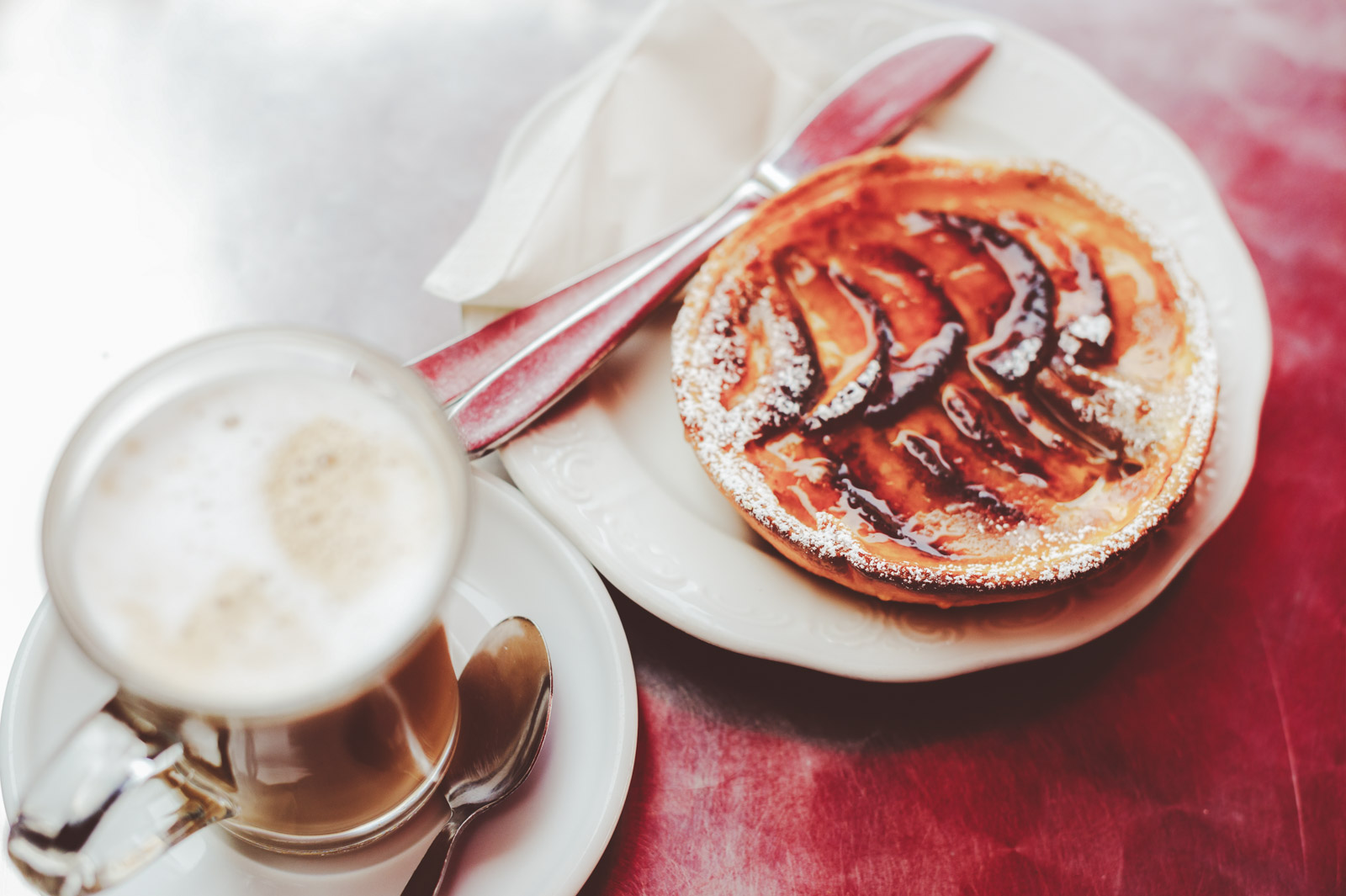
  • Most Beautiful Caribbean Islands to Visit in 2025 (Ranked & Explained)

    Most Beautiful Caribbean Islands to Visit in 2025 (Ranked & Explained)

    [ad_1]

    The Caribbean is one of the most beautiful regions in the world. Over the years, Dave and I have explored dozens of Caribbean islands—from famous hotspots to quieter, off-the-beaten-path gems. Whether you’re planning your first island vacation or looking for your next escape, this guide shares our top picks for the most beautiful Caribbean islands to visit in 2025.

    From romantic hideaways and powdery beaches to world-class diving and rich culture, we’ve grouped the best Caribbean islands by what they do best, so you can find the perfect match for your travel style.

    Best Caribbean Islands for Couples

    Looking to turn up the romance? These Caribbean islands are tailor-made for couples, with private beaches, scenic views, and boutique resorts perfect for reconnecting.

    1. St. Lucia – A Caribbean Island Crowned by the Pitons

    beautiful caribbean islands st lucia

    St. Lucia might just be the Caribbean’s most romantic island. With its towering Pitons (a UNESCO World Heritage Site), Gros Piton and Petit Piton—framing white sand beaches, it’s a dream setting for honeymoons and anniversary getaways. Luxury resorts like Calabash Cove and Stonefield Villas, where we stayed, offer secluded stays with jungle views, private plunge pools, and serious spa vibes.

    Take a mud bath at the Sulphur Springs, go for a sunset sail around the coast, or hike to viewpoints above Sugar Beach, which offer amazing views of the Caribbean Sea. St. Lucia offers both relaxation and adventure, making it the ultimate couple’s escape.

    2. Barbados – British Roots and Beachfront Vibes

    best Islands in the Caribbean barbados

    Barbados blends Caribbean charm with British flair. Couples will love beach hopping along the calm west coast or surfing the lively east. Beyond the sand, there’s horseback riding, botanical gardens, and romantic dinners in historic plantation houses.

    Don’t miss the Oistins Fish Fry for a fun Friday night out with locals, or a rum tour at Mount Gay. Whether you’re sipping cocktails on the sand or strolling through pastel-colored Bridgetown, Barbados brings warmth and personality to every romantic moment.

    3. Aruba – Windswept and Wonderful

    A man sitting on a rock overlooking the island of Aruba

    With near-constant sunshine and minimal rainfall, Aruba is a couple’s dream if you hate planning around weather. Stay in Palm Beach for upscale resorts and nightlife, or head to Eagle Beach for quiet walks on powdery sand.

    Explore Arikok National Park by ATV, relax under a Divi Divi tree, or take a catamaran cruise into the sunset. Aruba balances luxury with freedom, and you’ll never run out of spots to watch the waves roll in.

    4. Vieques, Puerto Rico – Horses and Bioluminescence

    Things to do in Puerto Rico Vieques Island

    Vieques is made for off-the-grid romance. Wild horses roam its beaches, and most nights end with a magical paddle through Mosquito Bay, the brightest bioluminescent bay on Earth.

    Rent a jeep and spend your days beach-hopping through the Vieques National Wildlife Refuge, stopping at deserted coves like Playa Caracas and Playa La Chiva. With just a few boutique hotels and no big resorts, Vieques feels like your own private island.

    Best Caribbean Islands for Snorkeling & Diving

    Whether you’re getting scuba certified or chasing colorful reefs, these islands deliver world-class underwater experiences.

    5. Cozumel, Mexico – Coral Reefs and Clear Waters

    Sitting on the beach in Cozumel bests caribbean islands
    The diving is great in Cozumel.

    Cozumel is one of the best diving destinations in the Caribbean. Located just off Mexico’s Yucatán Peninsula, it gives you direct access to the Mesoamerican Barrier Reef—the second-largest reef in the world.

    Palancar Reef, Columbia Reef, and the Santa Rosa Wall offer stunning visibility and marine life. When you’re not underwater, explore ancient ruins, enjoy fresh seafood by the sea, or hop over to nearby Isla Holbox.

    6. Grand Cayman, Cayman Islands – Wall Diving Heaven

    Strolling along Seven mile beach

    Home to some of the most impressive wall dives on Earth, Grand Cayman is a diver’s paradise, and it is a British Overseas Territory. Head to the North Wall or the famous Bloody Bay Wall for sheer drop-offs and crystal-clear visibility.

    Not certified? Try Stingray City, a shallow sandbar where you can safely interact with southern stingrays. Grand Cayman is clean, modern, and offers luxury resorts right on the beach.

    7. Curaçao: Culture, Coves, and Coral Gardens

    best caribbean islands for vacations Curacao Sign in the Caribbean

    Curaçao’s reef system is one of the most accessible in the Caribbean, you can literally walk into the water and snorkel just offshore. Popular spots include Tugboat Beach and Playa Kalki, and there are dive shops everywhere.

    This island paradise also has a vibrant local culture, colorful Dutch architecture, and a buzzing art scene. It’s one of the best destinations for mixing underwater exploration with dry-land discovery.

    8. Utila, Honduras – Budget Diving Hotspot

    Budget diving on Utila in Honduras

    Utila is a backpacker favorite and one of the cheapest places in the world to get scuba certified. We actually took our Divemaster course there years ago. Whale sharks frequent these waters, and dozens of local dive shops compete for your business, keeping prices low and instruction high-quality.

    The town has a relaxed, social vibe with beach bars, hostels, and reef access just minutes from shore. If you want affordable diving in a no-frills Caribbean setting, Utila is the place.

    9. Exuma Cays, Bahamas – Shallow Reefs and Sea Life Encounters

    beautiful places in the world exumas

    The Exuma Cays are a chain of 365 islands in the Bahamas known for gin-clear water and unique marine experiences. You can snorkel Thunderball Grotto (made famous by James Bond), swim with sharks, or spot starfish on sandbars.

    With calm, shallow waters, it’s ideal for beginner snorkelers or anyone looking to blend adventure with unbelievable scenery.

    Best Caribbean Islands for Beaches

    Dreaming of silky white sand, turquoise water, and swaying palm trees? These islands offer some of the most iconic beaches in the Caribbean.

    10. Turks and Caicos – Perfect Sand, Perfect Sea

    An aerial view of the ocean and sand in the Turks and Caicos Islands

    Turks and Caicos is consistently rated one of the best beach destinations in the world, and Grace Bay is the crown jewel. Its soft, powder-white sand and translucent water create the classic Caribbean fantasy.

    Whether you’re swimming, paddleboarding, or simply lounging with a drink in hand, the beaches here are unmatched. Middle Caicos offers a quieter, more rugged vibe, and island-hopping is a breeze by boat.

    11. Jamaica – Music, Culture, and Beach Life

    Top Beaches in Jamaica

    Jamaica blends natural beauty with cultural richness, and nowhere is that more apparent than on its beaches. Negril’s Seven Mile Beach stretches along calm, shallow waters, perfect for swimming and sunset strolls.

    Pair that with Blue Mountain coffee tours, reggae beats, and excursions to waterfalls like Dunn’s River, and Jamaica becomes an unbeatable beach escape with personality.

    12. British Virgin Islands: Island-Hopping and Hidden Bays

    The beautiful beaches of the British virgin islands

    The BVIs are beach heaven for sailors and solitude seekers. With more than 60 islands, each beach feels like your own. The Baths on Virgin Gorda are a must-see, with giant granite boulders creating hidden pools and caves.

    Sail to uninhabited coves, snorkel along pristine reefs, or relax on the deck of a chartered catamaran—this is barefoot luxury at its best.

    13. Caye Caulker, Belize – The Laid-Back Beach Vibe

    Best things to do in Caye Caulker Belize Great Blue Hole

    Caye Caulker is tiny, chill, and full of charm. Its motto is “Go Slow,” and the island lives by it. With no cars, sandy streets, and easy access to the Belize Barrier Reef, it’s a beach lover’s dream with a side of Caribbean cool.

    The Split is the island’s most popular hangout spot, a channel of clear, swimmable water lined with beach bars and hammocks. It’s the perfect spot to unplug and unwind.

    Most Unique or Underrated Caribbean Islands

    These hidden gems may not top every list, but they offer unforgettable experiences for travelers looking to explore something different, without the crowds.

    14. Saba – The Unspoiled Queen of the Caribbean

    Looking over the mall airstrip on Saba Island in the Caribbean

    Saba is like nowhere else in the Caribbean. A five-square-mile volcanic island rising steeply from the sea, it’s rugged, raw, and breathtaking. Known as “The Unspoiled Queen,” Saba is a paradise for hikers and divers who want nature without the noise.

    Mount Scenery, the highest point in the Kingdom of the Netherlands, offers rainforest trails with ocean views. Underwater, Saba Marine Park is one of the best-kept dive secrets in the region. With no big resorts, it’s all about boutique charm, local hospitality, and wild beauty.

    15. Guadeloupe – French Flavor with Natural Wonders

    Sunny day on the beaches of Guadeloupe

    Guadeloupe is a butterfly-shaped island group in the French Caribbean that surprises with its variety. One wing (Basse-Terre) is mountainous and covered in rainforest, while the other (Grande-Terre) is dotted with beach towns and coral reefs.

    You can hike a volcano in the morning, relax on the black sandy beach by lunch, and enjoy a plate of spicy Creole food at sunset. Guadeloupe isn’t overrun with tourists, but it’s incredibly rewarding for those who make the trip.

    16. St. Kitts and Nevis – Twin Islands, One Relaxing Escape

    beset caribbean islands to vacation st kitts

    These two islands are a package deal. St. Kitts is lush and lively, known for its scenic railway and dramatic views from Brimstone Hill Fortress. Nevis, on the other hand, is all about peace and quiet.

    With charming plantation inns, golden beaches, and volcanic hiking trails, the islands are ideal for slow travel. Add in monkeys in the forest, warm waters, and a chilled-out vibe, and you’ve got two underrated gems worth exploring.

    Best Caribbean Islands for Culture

    If you’re looking for more than just beach time, these islands offer deep history, dynamic food scenes, and a rhythm all their own.

    17. Cuba – Classic Cars and Caribbean Soul

    Cuba is bursting with culture, visually, musically, and politically. In Havana, you’ll find Spanish colonial buildings, vintage cars cruising the Malecón, and music pouring out of every café.

    Explore the cobbled streets of Trinidad, tour tobacco farms in Viñales, and connect with locals through homestays known as casas particulares. Cuba is a cultural journey that stays with you.

    18. Dominican Republic – Layers of History and Energy

    Dominican Republic best Caribbean islands to visit right now

    Beyond the all-inclusive resorts, the Dominican Republic has a rich cultural identity. Visit Santo Domingo, the oldest colonial city in the Americas, where history lines every street.

    Inland, discover Afro-Caribbean traditions, lively merengue rhythms, and mountain villages where local hospitality shines. It’s a great blend of beach time and meaningful travel.

    19. Puerto Rico – Heritage Meets Adventure

    Top Things to do in Puerto Rico

    Puerto Rico combines natural beauty with deep cultural roots. San Juan’s colorful Old Town is full of Spanish forts, while the rest of the island pulses with Taino, African, and Spanish influence.

    Take a salsa class, explore art galleries, or sample mofongo and lechón at local eateries. As a U.S. territory, it’s easy to get to, but it offers a totally unique experience. And don’t forget to visit its beaches, like our favourite Flamenco Beach.

    20. Grenada – The Spice Island with a Story

    A city on the coast of Grenada with a harbor and mountains in the background

    Grenada, known as the “Spice Island,” is more than just nutmeg and cinnamon. St. George’s is one of the most beautiful harbor towns in the Caribbean, with a rich colonial past and vibrant present.

    Explore chocolate factories, waterfalls, and the island’s famous underwater sculpture park. Grenada’s blend of nature and history makes it one of the Caribbean’s most underrated cultural gems and a tropical paradise.

    21. Trinidad and Tobago – Festivals, Food, and Folklore

    A man riding a horse pulling a cart down a cobblestone street in Trinidad

    From Carnival to calypso, Trinidad is one of the most vibrant cultural hubs in the Caribbean. Visit steelpan workshops, sample doubles and roti from street vendors, or head to the countryside to discover folk tales and cocoa estates.

    Tobago adds balance with beaches and eco-tourism, but Trinidad is the place for rhythm, resistance, and soul.

    22. U.S. Virgin Islands – Caribbean Paradise Without a Passport

    The beautiful beaches of the US virgin islands

    Made up of St. Thomas, St. John, and St. Croix, the U.S. Virgin Islands are as postcard-perfect as any other Caribbean destination—but with the bonus of easy entry for Americans.

    St. Thomas is lively and great for shopping and nightlife, while St. John is more laid-back and ideal for nature lovers—it’s nearly two-thirds national park. St. Croix delivers a mix of culture and history, with colonial architecture, secluded beaches and a relaxed vibe.

    With direct flights from major U.S. cities, no currency exchange, and no passport hassles, the USVI is the ultimate low-stress beach escape

    What is the most beautiful Caribbean island?

    That depends on your travel style. For dramatic views, head to St. Lucia. For iconic white sand, visit Turks and Caicos. For culture, try Cuba or Puerto Rico.

    Which Caribbean island is best for first-timers?

    Barbados and Puerto Rico are great picks for first-timers. They offer easy navigation, great infrastructure, and a mix of beach, culture, and activities.

    What are the best Caribbean islands for snorkeling and diving?

    Cozumel, Grand Cayman, Curaçao, Utila, and the Exuma Cays in the Bahamas all deliver unforgettable underwater experiences.

    Are there Caribbean islands you can visit without a passport?

    Yes. U.S. citizens can visit Puerto Rico and the U.S. Virgin Islands without a passport, since both are U.S. territories.

    When is the best time to visit the Caribbean?

    The dry season runs from December to April and offers the best weather. However, off-season travel in May or November can mean fewer crowds and better deals.

    There are so many more Caribbean Islands to visit. It’s impossible to round them all up in one post. While we haven’t been to all of them yet, we look forward to exploring more and adding them to our list as we check off more great Caribbean Islands to visit.

    Part of the fun of travel is getting to go places you haven’t been to yet. What Caribbean Island should we visit next?

    Plan Your Tropical and Caribbean Vacation Now

    [ad_2]

    Source link
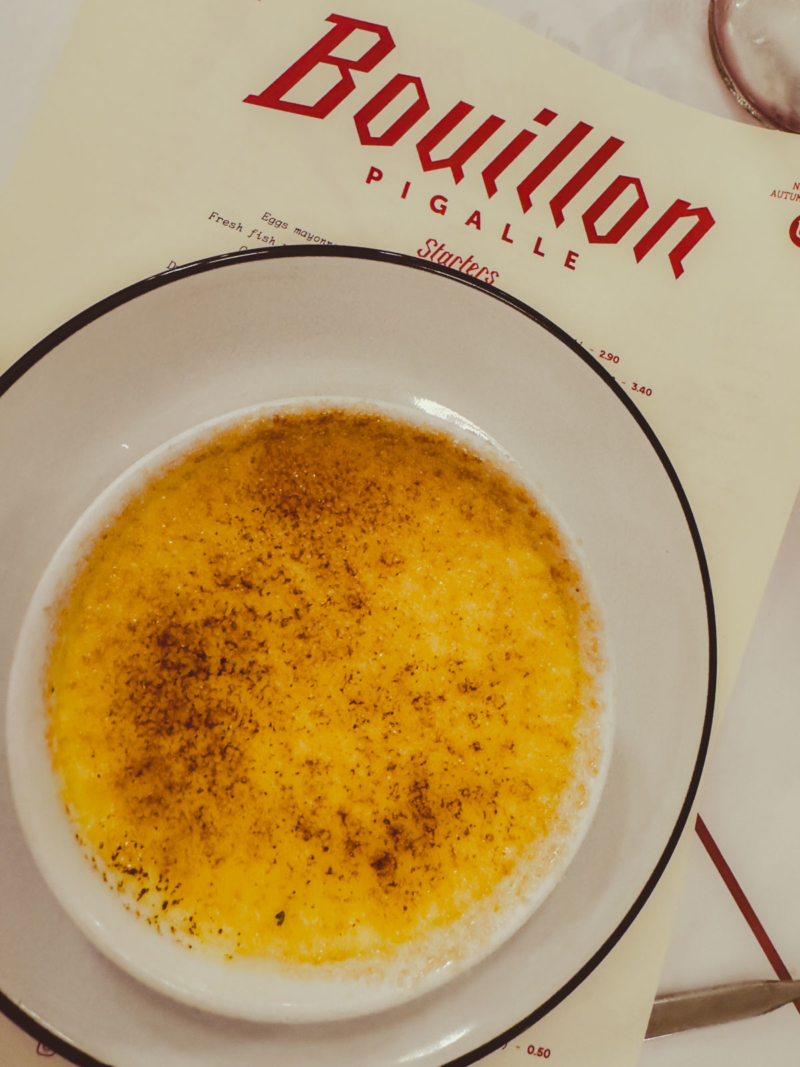
  • Ultimate Guide to the Wonders of the World: Ancient, Natural, and New

    Ultimate Guide to the Wonders of the World: Ancient, Natural, and New

    [ad_1]

    While browsing a few popular world lists, we realized something wild: we’ve been to every one of the New Seven Wonders, and most of the natural and ancient ones too. As full-time travelers, we’ve made it a mission to experience places with deep cultural significance and ancient roots.

    In this post, we’ll take you through personal stories from the world’s most extraordinary places, ancient cities, engineering feats, and natural wonders that belong on every travel bucket list.

    Our Journey Through the World’s Wonders

    new seven wonders of the world

    We’ve spent the past two decades traveling across continents and chasing not just beauty, but meaning. Some of these wonders have moved us to tears, while others have sparked our curiosity to dig deeper into the civilizations that built them.

    Whether it’s walking through ancient temples, standing atop windswept cliffs, or drifting down jungle rivers, these moments define why we travel.

    They’re not just about seeing something spectacular—they’re about understanding humanity’s shared history, marveling at our place on Earth, and reminding ourselves that wonder is all around us. So grab your bucket list, open your map, and get ready to add a few more pins.

    What Are the 7 Wonders of the World?

    The term “Wonders of the World” refers to lists of the most remarkable manmade and natural landmarks on Earth. While the original Seven Wonders of the Ancient World were chronicled by Greek historians, most of them no longer exist, except for the Great Pyramid of Giza.

    To update the concept for the modern world, the New7Wonders Foundation in Switzerland, held a global vote in 2007, selecting seven new wonders based on cultural significance, architectural achievement, and universal appeal. These include iconic places like Petra, Machu Picchu, and the Great Wall of China. Today, there are also recognized lists of Natural Wonders and Modern Engineering Wonders—each celebrating humanity’s most significant accomplishments and nature’s most breathtaking creations.

    New Seven Wonders of The World

    Al Khazneh Treasury at Petra, Jordan carved into rose-red cliffs
    The Treasury of Petra, Jordan

    Petra, Jordan

    Petra’s Treasury is one of the most cinematic sights we’ve ever seen, and yes, it made us feel like Indiana Jones in The Last Crusade. Carved from rose-red cliffs over 2,000 years ago, the ancient Nabatean capital was lost for centuries until a Swiss explorer Hiram Bingham arrived in 1812.

    This archaeological site tucked into the mountains of southern Jordan is like walking into history. The ancient city of Petra, with its carved facades like Al Khazneh, has earned its place on the New Seven Wonders list. When we stood before the Treasury, we felt like we were on a Hollywood set, except it was real.

    Believed to have been founded in ancient times, Petra is thought to have been a thriving trade hub as early as 400 B.C. The complex includes temples, tombs, and hidden pathways through semiprecious stone canyons.

    Want to explore Petra in depth? Start here:

    Aerial view of the Great Wall of China winding through mountains

    Great Wall of China

    Spanning over 13,000 miles, the Great Wall of China is an ancient fortification that winds its way across northern China and through history. We visited both the Badaling and Mutianyu sections and can confidently say: the aerial view from a drone or cable car is unforgettable. Originally constructed during the 7th century and expanded in the Ming Dynasty, it’s an engineering feat worth hiking.

    The Great Wall of China is one of the most incredible feats of human strength in human history. We explored both the Badaling and Mutianyu sections of the Great Wall and took in breathtaking aerial views.

    Construction of the Great Wall began in the 7th century BCE and continued through the Ming Dynasty, reinforcing the idea that world wonders can span centuries of effort. This UNESCO World Heritage Site is a top destination in China and deserves its place all travel bucket lists.

    Get inspired to hike the Great Wall:

    Christ the Redeemer statue overlooking Rio de Janeiro from Corcovado

    Christ the Redeemer, Brazil

    Rising above Rio de Janeiro, the Redeemer statue looks out over one of the most stunning coastlines on Earth. Construction began in 1926 and took nine years to complete. The white soapstone statue is not only an architectural achievement but also a symbol of hope and unity.

    We saw it from both the top of the mountaintop and the sky overlooking Mount Corcovado. Over 2 million people visit Christ the Redeemer annually. no matter which one you choose, you’ll be in awe of one of the world’s greatest tourist attractions.

    Exterior view of the Roman Colosseum in Rome, Italy

    Roman Colosseum, Italy

    Few structures from the ancient world draw crowds like this one. The Colosseum is the most visited monument in Italy. Over six million people visit each year! Built with reinforced concrete and travertine, it was a hub for gladiators, combat, public spectacles, and imperial entertainment.

    Standing inside this complex, you can almost hear the roar of the crowd. It’s a reminder of Rome’s power and its long-standing cultural legacy. It is thought that half a million people and nearly one million animals died within its walls during the gladiator fights.

    View of Machu Picchu ruins surrounded by Andean peaks

    Machu Picchu, Peru

    High above the clouds in the Andes, Machu Picchu is an ancient city of the Incas shrouded in mist and mystery. Built by the Inca Empire it was used as a retreat in the 15th century It showcases agricultural terraces and perfectly cut stone walls that defy modern engineering logic. Machu Picchu truly is one of the most beautiful places in the world.

    Declared a UNESCO World Heritage Site in 1983, it is also one of the most iconic New Seven Wonders of the World. The sense of serenity and connection to the earth is unparalleled.

    Start planning your Peru adventure:

    El Castillo pyramid at Chichen Itza on the Yucatan Peninsula

    Chichen Itza, Mexico

    Set in the Yucatán Peninsula, Chichén Itzá’s El Castillo stands as a blend of science, spirituality, and spectacle. This ancient Mayan city aligns with astronomical events and showcases brilliant urban planning.

    It’s one of Mexico’s most visited archaeological sites and a New World Wonder steeped in history, astronomy, and artistry.

    Discover more about the Yucatán and Chichén Itzá:

    Taj Mahal with reflecting pool at sunrise in Agra, India

    Taj Mahal, India

    Agra’s crown jewel, the Taj Mahal, is famed for its white marble symmetry and romantic origin. Built as a royal retreat and tomb by the Mughal Emperor Shah Jahan for his beloved wife, who died giving childbirth in the 1600s, it is both a place of mourning and marvel.

    Standing at the reflecting pool as the sun hits the marble, it becomes clear why the Taj Mahal is among the most treasured UNESCO World Heritage Sites.

    But be warned, the Taj Mahal is one of the most popular places to visit in India. More than 8 million people visit the Taj Mahal each year, so arrive early and make sure to be one of the first in the complex at dawn.

    The Natural Wonders That Took Our Breath Away

    The Seven Natural Wonders of the World are often overlooked in favor of human-made icons, but their grandeur rivals anything built by man.

    Mount Everest peak towering above clouds and Himalayan landscape

    Mount Everest, Nepal

    At 8,848 meters above sea level, Everest’s summit touches the edge of outer space. Our trek to Base Camp passed through villages steeped in Himalayan culture. The cultural and spiritual depth of this region, combined with its altitude, makes it one of Earth’s most humbling experiences.

    Prepare for your trek in Nepal:

    Great Barrier Reef, Australia

    Floating above coral gardens and swimming with vibrant marine life was surreal. The Great Barrier Reef is a UNESCO World Heritage Site and the most extensive coral reef system on the planet. Its life, color, and scale are unmatched.

    From helicopter tours to diving platforms, this marine ecosystem in Queensland stretches over 344,000 km². Composed of nearly 3,000 individual reefs, it’s teeming with color, life, and fragility.

    Plan your reef adventure:

    Victoria Falls waterfall with rainbow over Zambezi Gorge

    Victoria Falls, Zambia

    Compared to Niagara Falls, Victoria Falls is sheer thunder. Known as Mosi-oa-Tunya, The Smoke That Thunders) It’s the largest waterfall by volume in the world. The mist, roar, and scale are impossible to capture in photos. Millions of people visit each year for the whole sensory experience.

    Explore More of Victoria Falls

    Rio De Janeiro’s Harbor

    Framed by Sugarloaf and Corcovado, this coastal view blends urban vibrance with natural drama. It’s rare to find a place where nature and city collide so beautifully.

    Northern lights glowing over snowy forest in Canada

    Aurora Borealis

    The Northern Lights in Canada, Iceland, and Greenland never fail to mesmerize. We’ve seen them dance in Alberta and Michigan, painting the sky in electric waves. Best viewed in dark sky preserves far from city lights.

    Watching the Aurora Borealis ripple across a clear night sky in Canada is unforgettable. Popular belief may say Iceland is best, but don’t skip Jasper, Alberta, especially during the Dark Sky Festival.

    Read more about the Aurora Borealis

    Vast layers and cliffs of the Grand Canyon at sunset

    Grand Canyon

    The first time we stood at the South Rim, we were silent. The Grand Canyon stretches over 440 kilometers, with rock layers that record two billion years of Earth’s history. It’s one of the most accessible natural wonders in the U.S., and a testament to nature’s power.

    Standing at the edge of this massive Arizona chasm feels like gazing into outer space. It’s 1.8 km deep and 446 km long—carved by time and the Colorado River.

    Plan your Grand Canyon visit:

    Paricutin Volcano

    Formed in 1943 and growing over 19 years, this volcano is one of the only ones whose birth was witnessed and recorded by humans. Located in Michoacán, it’s a rare opportunity to hike into geological history.

    New Seven Natural Wonders

    iguazu falls brazil one of the natural seven wonders of the world

    Puerto Princesa Underground River, Philippines – A surreal subterranean waterway surrounded by jungle.

    Table Mountain, South Africa – Towering over Cape Town, it’s a flat-topped marvel visible from all angles, including Robben Island.

    Iguazu Falls, Brazil/Argentina – A thunderous collection of 275 waterfalls. We explored it at sunrise and sunset with no crowds.

    Ha Long Bay, Vietnam – A seascape of limestone karsts and emerald water, best seen on an overnight junk boat.

    Amazon Rainforest – The lungs of the Earth, teeming with life and vital to our planet’s health.

    Jeju Island, South Korea – A volcanic island with lava tubes and basalt cliffs, earning it UNESCO World Heritage status.

    Komodo Island, Indonesia – Home to the legendary Komodo dragon. We regret missing this while in Bali.

    Need Help Planning Trip to a Natural Wonder?

    Seven Wonders of the Ancient World

    The Pyramids of Giza the only original of the seven wonders of the world still standing

    Great Pyramid of Giza

    Out of the three pyramids that make up the Pyramids of Giza, the Great Pyramid is the only one of the Ancient Wonders still standing. These Ancient Wonders of the World were chronicled in the Middle Ages, and most now live on in history books.

    We’ve visited the remaining wonder of the ancient world, twice, and every time it leaves us speechless. This massive tomb near Cairo is an enduring mystery.

    Explore more from ancient Egypt:

    Other lost wonders include:

    Statue of Zeus at Olympia, Greece – A 12-meter sculpture of gold and ivory.

    Temple of Artemis at Ephesus, Turkey – Once the largest temple of the ancient world.

    Mausoleum at Halicarnassus, Turkey – A royal retreat topped with chariots and horses.

    Hanging Gardens of Babylon, Iraq – Possibly mythical, often debated.

    Lighthouse of Alexandria, Egypt – Guided ships into one of history’s busiest harbors.

    Colossus of Rhodes, Greece – Towered over the harbor entrance, like a guardian.

    Seven Wonders of the Modern World of Civil Engineering

    However, there is another list of wonders of the world, less well-known but equally remarkable: the Seven Wonders of the Modern World of Civil Engineering, compiled by the American Society of Civil Engineers (ASCE). These represent groundbreaking projects that pushed the limits of what humans could build in the 20th century. Here are the engineering wonders:

    Channel Tunnel (England/France) – A 50-kilometer rail tunnel beneath the English Channel that connects the UK to mainland Europe.

    CN Tower (Canada) – Once the world’s tallest free-standing structure, this telecommunications tower dominates Toronto’s skyline.

    Empire State Building (USA) – A defining symbol of New York City and one of the earliest skyscrapers to reach over 100 stories.

    Golden Gate Bridge (USA) – A stunning suspension bridge in San Francisco known for its Art Deco design and iconic color.

    Itaipú Dam (Brazil/Paraguay) – One of the world’s largest hydroelectric dams, generating power for millions.

    Delta Works (Netherlands) – An innovative system of dams and barriers designed to prevent flooding from the North Sea.

    Panama Canal (Panama) – A 77-kilometer waterway that revolutionized global shipping by connecting the Atlantic and Pacific Oceans.

    While these engineering wonders aren’t ancient or carved into cliff faces, their impact on the modern world is undeniable. Each one is a testament to human innovation, engineering genius, and the desire to overcome nature’s challenges for the betterment of global society.

    What are the official 7 Wonders of the World today?

    The most widely accepted wonders of the modern world list includes Petra, Christ the Redeemer, Chichén Itzá, the Roman Colosseum, the Taj Mahal, Machu Picchu, and the Great Wall of China.

    How many wonders of the world are there in total?

    There are multiple lists, including the New Seven Wonders, the Seven Wonders of Nature, and the Seven Wonders of the Ancient World, making at least 21 widely recognized sites.

    Is the Great Pyramid still standing?

    Yes, the Great Pyramid of Giza in Egypt is the only original standing of the original Seven Wonders of the Ancient World. The original list of the wonders of the world was compiled in the Middle Ages.

    What makes a site a world wonder?

    Sites are typically recognized for their historical, cultural, or natural significance. Many are UNESCO World Heritage Sites due to their outstanding value to humanity.

    Which wonders can you visit today?

    You can visit all of the New Seven Wonders, and many wonders of nature like the Grand Canyon.

    What are the original 7 wonders of the world?

    Statue of Zeus at Olympia, Temple of Artemis at Ephesus, Mausoleum at Halicarnassus, Hanging Gardens of Babylon, Lighthouse of Alexandria, Colossus of Rhodes, Ancient Pyramid of Giza

    These are the world wonders that inspired us, and why they might inspire you too.

    More Epic Travel Ideas

    [ad_2]

    Source link

  • Best Day Trips from Toronto for 2025: Top 24 Escapes

    Best Day Trips from Toronto for 2025: Top 24 Escapes

    [ad_1]

    Looking for the best day trips from Toronto? Whether you’re craving waterfalls, wineries, beaches, or small towns, Ontario is packed with incredible places to explore just a short drive from the city. The best day trips from Toronto include Niagara Falls, Elora, Blue Mountain, and Prince Edward County, all within 2 to 3 hours from the city.

    We’ve lived in Toronto and traveled all around the province—and trust us, you don’t need to go far to find adventure. From hiking trails along the Niagara Escarpment to paddling the Grand River or sipping wine in Prince Edward County, there’s a day trip here for everyone.

    Best Toronto Day Trips

    Most of these destinations are within a 2-hour drive from Toronto, so you can head out in the morning and be back home in time for dinner. If you’re short on time but big on wanderlust, these are the top 25 Toronto day trips to add to your weekend plans.

    1. Milton – Perfect Day Trip for Nature Lovers

    View of scenic lookout trail at Kelso Conservation Area in Milton

    Milton is one of our favorite easy day trips from Toronto, and it’s only about 40 minutes away. It’s the kind of place where you can go from city traffic to forest trails in under an hour. When we need a quick escape into nature, this is where we go.

    The Kelso Conservation Area is a year-round spot for outdoor fun. In the winter, we’ve snowboarded and snowshoed here, and in the summer, it’s all about hiking and mountain biking. There’s a fantastic scenic lookout point at the top with sweeping views of the surrounding rolling hills.

    Milton sits right on the Bruce Trail, so the hiking is fantastic. One of our go-to routes is the Lime Kiln Trail. It’s quiet, peaceful, and off-limits to mountain bikes, which makes for a relaxed walk in the woods.

    Nearby, you’ve got Rattlesnake Point and Mount Nemo. These spots are a dream for rock climbers and hikers. If you want a challenging hike, you can tackle the Devil’s Punchbowl.

    2. Hamilton Waterfalls

    Webster Falls in Hamilton surrounded by fall foliage

    Hamilton is not the first place that comes to mind when you think of waterfalls, but once we discovered it, we were hooked. With more than 100 waterfalls scattered around the city, it’s earned its nickname as the Waterfall Capital of the World—and it’s only about an hour from Toronto.
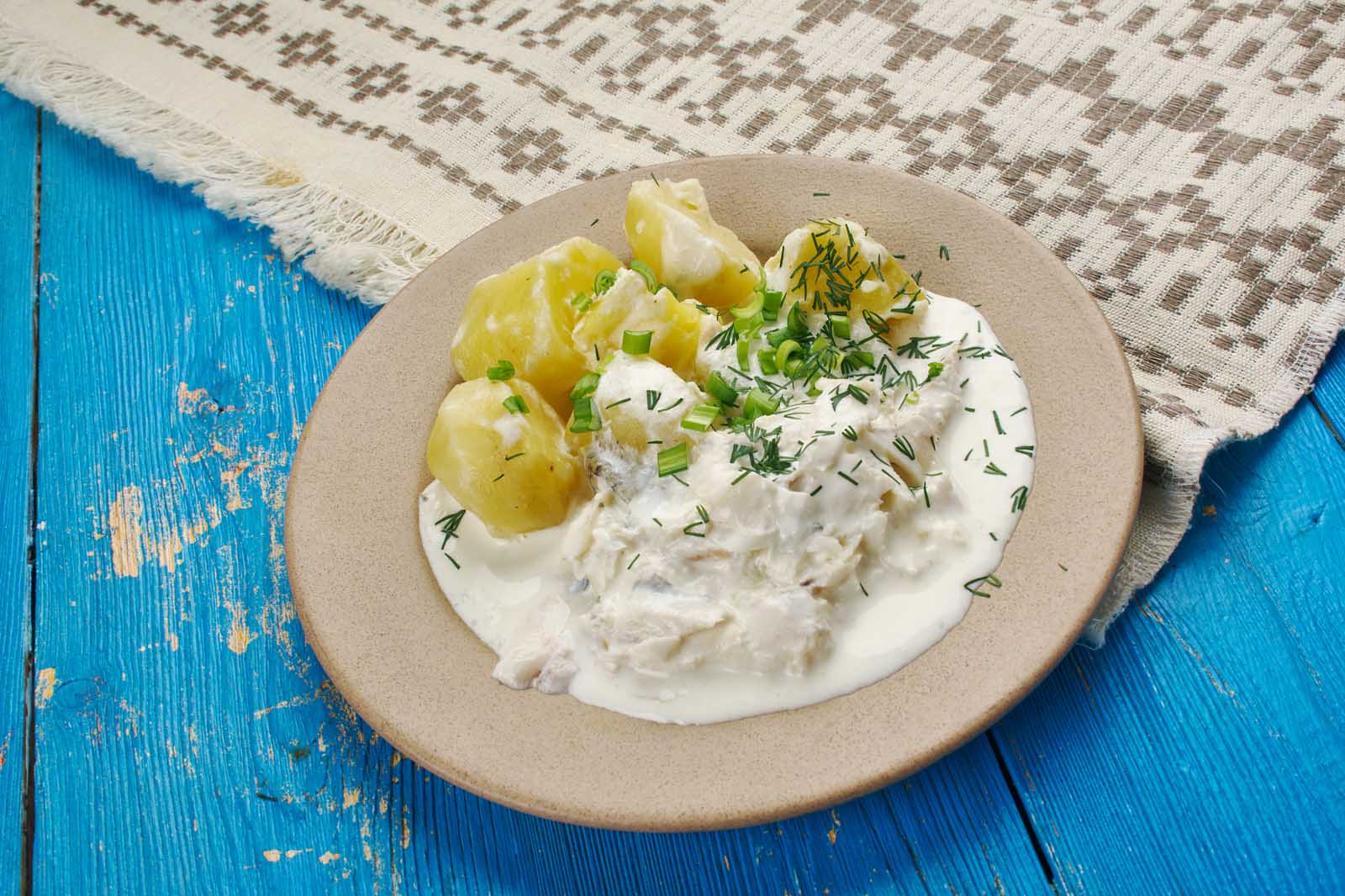
    Some of the best-known falls are Webster’s Falls, Albion Falls, and Tews Falls. If you’ve got a full day, you can easily fit in a few of them and still have time for a brewery stop or two in town. If you’re hunting for the picturesque Bridal Veil Falls, it’s worth a slight detour.

    Spencer Gorge Conservation Area offers incredible views, especially during the fall. We always recommend booking your time slot ahead. During the summer months, the trails can get busy with tourists alike.

    3. Blue Mountain

    Summer day at Blue Mountain Village with visitors walking through

    Blue Mountain is a bit of a drive from Toronto—just over two hours—but we’ve done it as a day trip more times than we can count. In winter, we’re usually snowboarding down the slopes, and in the summer, it’s all about hiking, biking, or just wandering through Blue Mountain Village with an ice cream in hand.

    Other attractions around Blue Mountain include the Scenic Caves in Collingwood, which was one of our first Toronto day trips. There’s a suspension bridge, ziplining, and caves to explore. Nearby scenic hikes offer visitors some of the best views in the area.

    If you’re in need of a recharge, Scandinave Spa is a fantastic place for a romantic getaway. Surrounded by forest, it’s the perfect spot to soak, steam, and let the world fade away.

    4. Ganaraska Forest

    Dirt bike riding through Ganaraska Forest trails

    Located just over an hour from the city, Ganaraska Forest is an off-the-grid gem perfect for outdoor adventure. We took a dirt biking course with Trail Tours and were shocked at how fun and accessible it was. You can also rent canoes nearby and enjoy quiet stretches of water.

    If you’re craving a bit of adventure, Ganaraska Forest is a wild way to spend the day. Located just over an hour from Toronto, it’s where we went to get our first taste of dirt biking—and it did not disappoint. Read all about it here.

    5. Ferris Provincial Park

    Ranney Gorge Suspension Bridge in Ferris Provincial Park

    About two hours from Toronto, Ferris Provincial Park is home to the Ranney Gorge Suspension Bridge and a network of walking trails that lead to scenic picnic areas. It’s one of those places that flies under the radar but is definitely worth visiting.

    This hidden gem is a quiet spot to escape the crowds, stretch your legs, and get some fresh air—and the suspension bridge alone is worth the drive.

    6. Canada’s Wonderland

    Show at Canada’s Wonderland amusement park
    Deb is on the right

    Located just north of Toronto, Canada’s Wonderland is the amusement park of our youth—and our adrenaline-fueled grown-up escapes. With coasters, splash zones, and Canada’s largest wave pool, it’s a top pick for families visiting Toronto.

    If you’re an animal lover, don’t miss the petting zoo in KidZville. From thrill rides to relaxing by the water, you can easily spend an entire day here.

    7. Stratford

    Avon River and rose garden near Stratford Festival Theatre

    Stratford is one of Ontario’s most charming towns, and we’ve been making trips here for years. Known for its Shakespearean theatre and romantic getaway vibes, the town also boasts local shops, quaint cafés, a rose garden, and lovely art galleries.

    There’s a strong arts and culinary scene here, too. Between the historic architecture, boutique hotels, and local food markets, Stratford is a day trip that blends culture and charm without trying too hard. And if you’re lucky enough to catch a show, that’s the cherry on top.

    8. Niagara Falls

    Niagara Falls Horseshoe Falls with mist rising

    Niagara Falls is a world-class destination that’s surprisingly doable in a day. The Canadian side of Horseshoe Falls offers visitors a closer and more powerful view than the American Falls. From the CN Tower to the falls, this is the kind of day trip that still wows us, no matter how many times we go.

    Book a small group tour or rent a car and hit all the highlights like Journey Behind the Falls, White Water Walk, and the Niagara SkyWheel. When you’re done, stroll Clifton Hill or hop aboard the Hornblower cruise for up-close spray and selfies.

    It’s only 90 minutes away, and if you time it right, you can pack in a ton of experiences without needing to stay overnight.

    Start early. Sunrise over the falls is underrated, and you’ll beat the crowds. Check Niagara Day Tours Here.

    9. Niagara-on-the-Lake

    Winery at Niagara-on-the-Lake with quaint shops

    This historic town on Lake Ontario offers small-town charm, boutique wineries, and the iconic Shaw Festival. Main Street is lined with quaint shops and local cafes. Whether you’re exploring on foot or joining a wine region tasting tour, you’ll fall in love with the slower pace.

    History buffs will love Fort George, and between the vineyards, the lake views, and the downtown heritage district, Niagara-on-the-Lake is the kind of place you’ll want to linger a little longer.

    You can easily combine a Niagara Falls trip with Niagara-on-the-Lake. They are only 20 minutes apart. You can book day tours to Niagara on the Lake and see its top sights.

    10. Muskoka

    Muskoka Chairs on Lake Muskoka in autumn

    With its rolling hills, sparkling lakes, and iconic docks, Muskoka is the ideal outdoor activity destination. Rent canoes, pack a picnic, or just enjoy the views. During the fall, it becomes a painter’s palette of red and gold. In summer, Friday Harbour is also worth a visit for lakeside dining and water sports.

    It’s about two hours from Toronto, but once you’re there, you’ll feel a million miles away. Think winding roads, crystal-clear lakes, and that unmistakable smell of pine trees and campfires. We’ve spent whole days paddling on Lake Muskoka, hiking through the woods, and hunting down butter tarts in Gravenhurst

    There are plenty of towns to explore, too. Bracebridge, Huntsville, and Port Carling all have their own charm, with local cafés, breweries, and shops worth checking out before you head back to the city.
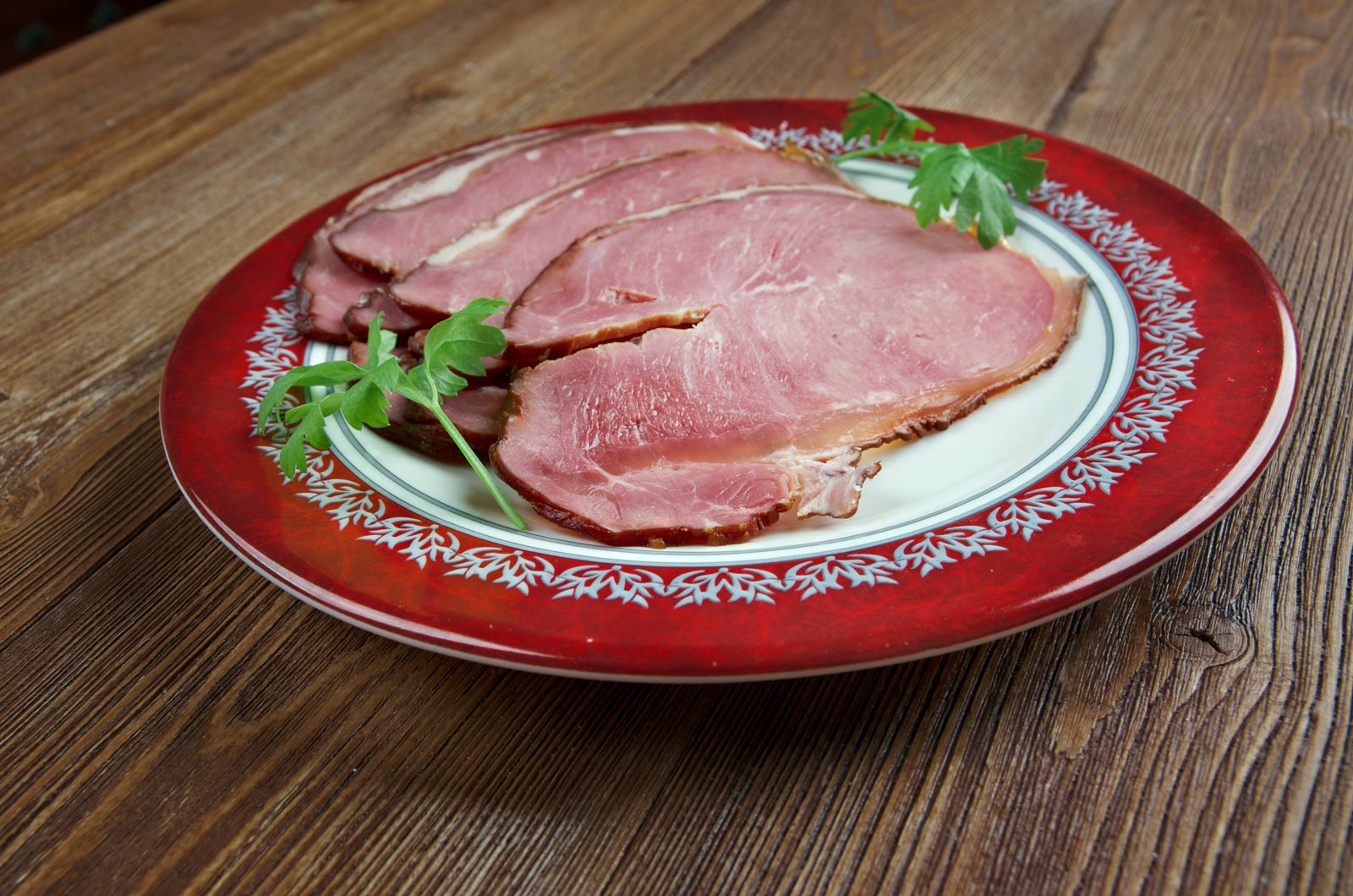
    11. Elora

    Scenic Elora Gorge cliffs above the Grand River

    Elora has always been a bit of a secret spot, though it’s definitely gaining in popularity—and for good reason. It’s only about 90 minutes from Toronto, and it has a mix of natural beauty and small-town character that makes it perfect for a day trip.

    Back in high school, this was where everyone went to escape for the afternoon. Now, it’s a polished little town with boutiques, bakeries, and one seriously beautiful pedestrian square called the Elora Mews. You’ll want to grab a coffee and just wander.

    The Elora Gorge is the real showstopper. The cliffs tower above the Grand River and the hiking trails give you postcard-worthy views at every turn. If you’re into tubing or kayaking, bring your gear or rent some in town—it’s one of the best spots for river adventures in southern Ontario.

    And yes, the Elora Quarry has been in a few Hollywood movies, but it’s even better in person.

    12. Paris

    Kayaking on the Grand River at Paris Ontario

    We might be a little biased, but Paris is one of the prettiest small towns in Ontario, and now that we live here, we’ve gotten to know every trail, river bend, and bakery. It’s just over an hour from Toronto and makes for a perfect, low-key day trip.

    The Grand River runs right through town, and we’re often out on it with our paddleboards or kayaks. After a few hours on the water, we’ll usually stop for lunch at Stillwaters or Camp 31, then stroll through the downtown strip to browse the shops. It’s one street, but it packs a punch.

    If you’re a cyclist, bring your bike. You can ride all the way to Brantford or even Ancaster along connected trails that weave through the countryside. And before you leave, swing by the Wincey Mills Market for local cheese, baked goods, and small-batch everything. It’s our go-to Saturday morning spot.

    13. Brantford

    Bell Homestead National Historic Site in Brantford

    Just a short drive from Paris, Brantford has its own stories to tell. It’s where Alexander Graham Bell made the first-ever long-distance phone call—and you can visit the Bell Homestead to see where it all happened. The house is beautifully preserved and surprisingly fun to tour.

    The Grand River flows through here too, so tubing, kayaking, and riverside strolls are all on the table. The trails between Paris and Brantford are some of our favorites for biking.

    And yes, there’s a casino if you’re feeling lucky, but honestly, the real jackpot is spending a day exploring two river towns that have more to offer than most people realize.

    14. Hardwood Hills

    Mountain biker on trail in Hardwood Hills, Ontario

    Hardwood Hills is where we go when we want to feel like kids again—flying through the forest on mountain bikes, getting covered in dirt, and laughing the whole way. It’s about 90 minutes from Toronto and it’s one of the top spots in Ontario for cross-country biking.

    We’ve spent countless days here tackling everything from mellow green trails to tight, rooty singletrack. If you’re new to mountain biking, don’t worry. They rent gear and offer lessons, so you can ease into it. There’s even a warm-up loop to get your confidence up before you hit the longer routes.

    They’ve got a solid cafeteria too, so no need to pack lunch. Just bring your gear, grab a trail map, and get ready for a full-body workout that ends with a grin.

    15. Caledon

    Cheltenham Badlands in Caledon on a sunny day

    Between the Cheltenham Badlands, Spirit Tree Cidery, and Albion Hills, Caledon is packed with scenic hikes, walking trails, and a great mix of nature and food. A rock garden near the conservation area even reminded us of something out of the Royal Botanical Gardens.

    16. Kitchener Waterloo

    kayaking in Kitchener waterloo

    With tech start-ups and traditional Mennonite culture, Waterloo blends modern charm with old-world values. Don’t miss the St. Jacobs Farmers Market is Canada’s largest year-round farmers’ market, or a visit to the African Lion Safari nearby if you’re traveling with kids or animal lovers.

    Kitchener-Waterloo has always flown a little under the radar, but it’s quietly become one of our favorite day trips from Toronto. Just over an hour away, this twin-city hub blends old-world charm with cutting-edge innovation. You’ve got Google and Blackberry offices on one side of town and Mennonite markets and horse-drawn buggies on the other.

    While you’re out there, check out the Cambridge Butterfly Conservatory or take a stroll through the historic town of Galt. We’ve even cycled all the way here from Paris along the Grand River trails—if you’re feeling ambitious, it’s a beautiful ride.

    17. Wasaga Beach

    Sunset at Wasaga Beach with paddleboarders in water

    Need a beach break? Wasaga Beach offers a long sandy shoreline and great summer energy. Wasaga Beach is a summer classic. It’s about an hour and 40 minutes from Toronto and home to the longest freshwater beach in the world. 14 kilometers of soft sand and shallow, warm water. When we’re in the mood for a proper beach day without driving all the way to a resort, this is where we go.

    You’ll find a mix of beachgoers, families building sandcastles, teens tossing frisbees, and paddleboarders cruising along the shoreline. It gets busy, especially on weekends, but that’s part of the vibe. Grab a bite at a beachside diner, bring a cooler, and settle in for the afternoon.

    18. Port Dover

    Sunset at the pier in Port Dover Ontario

    Port Dover is one of those places that still feels like a proper old-school beach town. We used to drive here from Toronto just to get a hot dog at The Arbor and sit by the water. And honestly, we’d still do it. In Port Dover, we love walking the pier and visiting the Gibraltar Point Lighthouse replica. It’s got that classic Ontario beach town vibe.

    The town has a chill vibe with a sandy beach, a pier that’s perfect for sunset walks, and enough little shops and cafés to keep you busy. If you’re into quirky finds, spend some time browsing the local antiques and vintage shops.

    We like to use Port Dover as a starting point for a mini road trip along Lake Erie. Drive to Turkey Point or Port Burwell, hit a few wineries or brewpubs, and stock up your bar at home. It’s a laid-back day that always ends with full stomachs and clinking bottles in the trunk. Check out TripAdvisor for a list of vineyard and breweries in Norfolk County.

    19. Peterborough and the Kawarthas

    Hydraulic lift lock at Lock 21 in Peterborough

    Peterborough sits right in the heart of the Kawarthas, and if you’ve ever wondered what classic Canadian cottage country looks like, this is it. It’s about 90 minutes from Toronto, and there’s more to do here than you might expect.

    We always make a point of stopping by Lock 21, the world’s highest hydraulic lift lock. It sounds technical, but it’s actually really cool to watch boats rise and fall like they’re on a theme park ride. If you’re into paddling, the Trent-Severn Waterway is a scenic stretch to explore by canoe or kayak. For something truly unique, visit the Lady Immaculate statue for a scenic lookout point.

    The Canadian Canoe Museum is also here, and it’s way more interesting than it sounds. Trust us, we didn’t think we’d be that into canoe history either, but the stories and Indigenous craftsmanship behind it all are pretty moving.
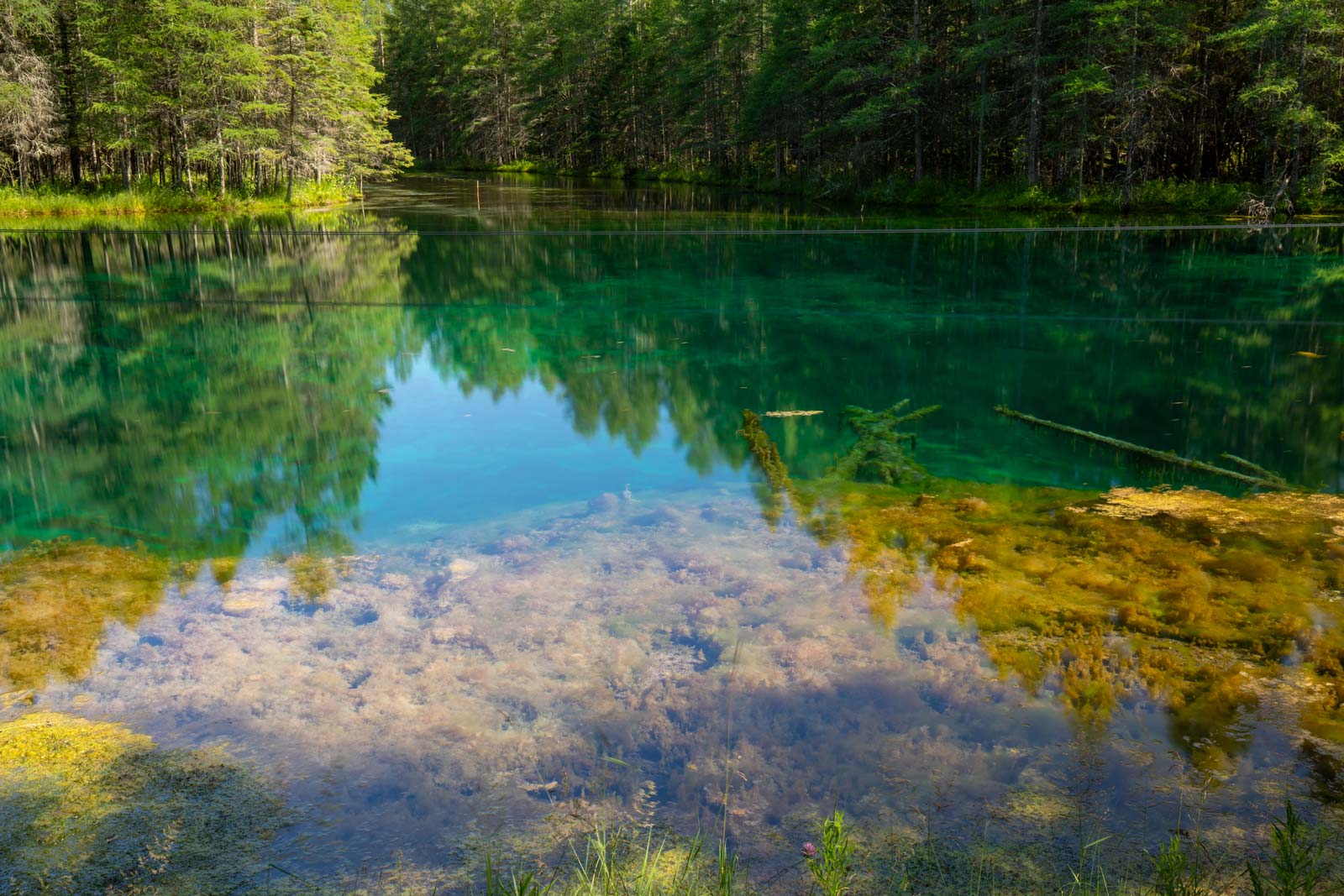
    Peterborough also has a growing food and arts scene. One of our favorite stops is the Whetung Ojibwa Centre, which supports local artists and has a gorgeous collection of paintings, carvings, beadwork, and handmade goods. End the day at Publican House Brewery with a cold beer and pub meal. You’ve earned it.

    20. Prince Edward County

    Wine tasting in Prince Edward County

    Prince Edward County is what happens when wine country meets wild beaches and sunflowers. And it’s only about two hours from Toronto. We usually make it a full-day loop, hitting the vineyards, sandy shores, and small towns along the way.

    Start with a morning drive through the backroads to catch the lavender and sunflower fields in bloom. They’re wildly photogenic, but be respectful, take your photos from the edge and don’t trample the crops. That perfect Instagram shot isn’t worth ruining someone’s harvest.

    Presqu’ile and Sandbanks Provincial Parks are the big draws for beach lovers. We’ve spent afternoons floating on the dunes at Sandbanks and still can’t believe we’re not somewhere tropical.

    And of course, the wine. Prince Edward County is packed with boutique wineries, and most offer tastings. We tend to leave with a few new bottles for the rack and more than a few new favorites. If you’re a cider fan, there are options for that too. Whether you’re planning a romantic getaway or looking for travel tips for visiting Toronto’s best wine region, PEC checks every box.

    21. Algonquin Provincial Park

    canoe at Algonquin Provincial Park in summer

    Okay, we’ll admit it, Algonquin is a bit of a stretch for a day trip. It’s about three hours from Toronto, but we’ve done it more than once, especially when we’re craving nature with a capital N.

    If you leave early, you can still squeeze in a full day of hiking, paddling, or moose spotting before heading back. Oxtongue Lake is a great starting point for beginners, and if you want to dip your toes into backcountry life without committing to a full camping trip, Algonquin Outfitters offers excellent one-day guided tours .

    This park is massive, over 7,600 square kilometers of wilderness, and it’s one of the best places in the world to see moose in the wild. We’ve spotted them at the side of the road more than once, just hanging out like it’s no big deal.

    You won’t see everything in a day, but one taste of Algonquin and you’ll be planning your next overnight before you’ve even left the parking lot. No car? Book this Toronto to Algonquin Provincial Park private Tour.

    22. Bruce Peninsula National Park

    Turquoise waters and cliffs at the Grotto in Bruce Peninsula

    We’re pushing the limits of a day trip here, but if you’re up for a long drive and a full day outdoors, the Bruce Peninsula delivers.

    This rugged stretch of land between Georgian Bay and Lake Huron is about three and a half hours from Toronto. It’s home to some of the clearest water in Ontario and some of the best hiking in the province. The Grotto in Tobermory is the star of the show, a cave filled with turquoise water that looks like it belongs in Greece.

    We’ve spent days here rock climbing at Lion’s Head, hiking along the Bruce Trail, and snorkeling shipwrecks in Fathom Five National Marine Park. If you’re a scuba diver, Tobermory is a bucket list spot with cold, clear water and sunken schooners waiting to be explored. We usually recommend this one as an overnight, but if you leave before sunrise and don’t mind getting home late, it’s doable, and unforgettable.

    23. The Toronto Islands

    sunset Toronto Islands

    You don’t even need to leave the city for a day trip. Hop on a ferry to the Toronto Islands and explore Ward’s Island, picnic near the Gibraltar Point Lighthouse, or just enjoy skyline views of downtown Toronto. It’s open year-round, and during the summer months, it becomes a top destination for both locals and tourists alike. The Toronto Islands are the best place to take in views of the Toronto Skyline. That classic city skyline of Toronto is taken from here.

    24. Bonus: The Toronto Zoo

    Located in the eastern end of the city, the Toronto Zoo is a top attraction for animal lovers. We don’t normally recommend zoos, but the Toronto Zoo is one of the best in the world. Home to over 5,000 exotic animals and a great option for families visiting Toronto, you can easily spend a full day exploring the various regions. It’s also near Rouge Park if you’re looking to add a hike to your outing.

    Final Tips

    Whether you’re planning your first visit or just looking to explore more of your own backyard, these day trips from Toronto offer something for everyone. From scenic hikes to art galleries, and from petting zoos to wine tastings, there’s a world waiting just outside the city.

    Before heading out, check out St. Lawrence Market for snacks and picnic gear. And don’t forget to check ferry and park schedules, many places are open year-round, but some attractions are seasonal.

    Ready to go? Pack the car, grab your camera, and let Ontario surprise you.

    FAQ – Day Trips from Toronto

    What are the best day trips from Toronto under 2 hours?

    Some of the top day trips from Toronto under 2 hours include Niagara Falls, Elora, Stratford, Paris, Wasaga Beach, Caledon, Hamilton, and St. Jacobs. These destinations offer a mix of nature, food, culture, and fun.

    Can you do a day trip to Niagara Falls from Toronto?

    Yes, absolutely. Niagara Falls is just 90 minutes from Toronto by car and can also be reached by bus or train. You can easily visit top attractions like the Hornblower boat cruise, Journey Behind the Falls, and Clifton Hill in a single day.

    What’s the best nature escape near Toronto for a day trip?

    Milton, Elora Gorge, and the Hamilton waterfalls are all excellent choices for nature escapes under 90 minutes from Toronto. For a bigger adventure, head to Algonquin Park or the Bruce Peninsula.

    Are there day trips from Toronto by public transit?

    Yes, you can reach destinations like Niagara Falls, Hamilton, and St. Jacobs by GO Transit, VIA Rail, or coach tours. However, most of the scenic parks and conservation areas are best accessed by car.

    What is the farthest day trip from Toronto on this list?

    The Bruce Peninsula is the farthest recommended day trip, about 3.5 to 4 hours away. It’s a long drive but doable if you start early and plan to stay out late.

    Read More:

    [ad_2]

    Source link