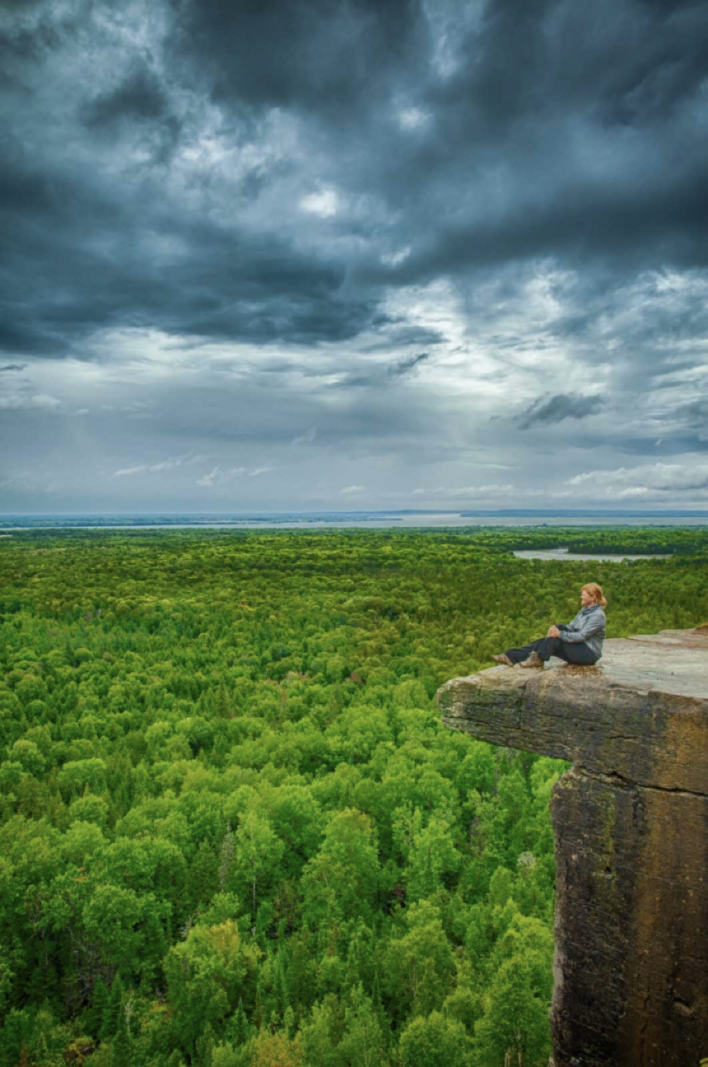
If you’re heading to Moab, Utah, and not planning to hike, you’re doing it wrong. This desert town is a mecca for outdoor adventure, home to some of the most incredible landscapes in the American Southwest. Whether you’re chasing iconic arches, hidden canyons, or epic rim views, the best hikes in Moab deliver it all.
We’ve hiked them. We’ve sweated through them. And now we’re sharing the 12 best Moab hikes, from beginner-friendly trails to backcountry routes that’ll blow your hiking boots off. This is your go-to trail guide for Arches National Park, Canyonlands National Park, Dead Horse Point, and secret local favorites that don’t make every list.
Let’s dive in.
Jump to the Best Hikes in Moab
Compare the Best Moab Hikes
1. Fisher Towers Trail: Best Short Scenic Hike in Moab
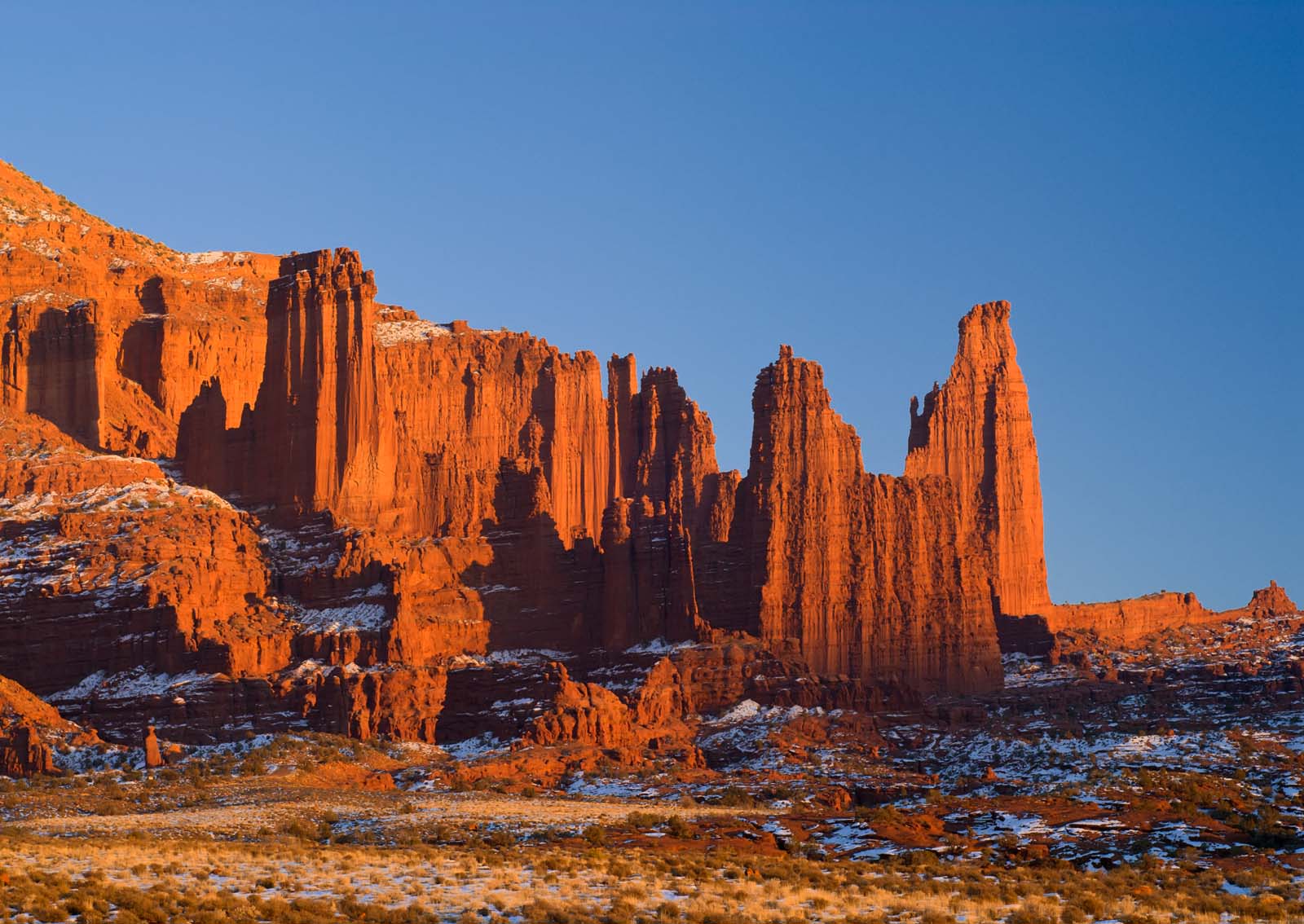
Fisher Towers looks like Mars decided to build a skyline. This short trail winds around towering red spires that have been carved by centuries of wind and water, and they’re as bizarre as they are beautiful.
We tackled this one mid-morning and regretted not going earlier—it gets hot. But the payoff? Incredible views all the way through. The final overlook gives you a panoramic shot of the entire formation, and it’s a photographer’s dream. There’s even a picnic area back at the trailhead for a well-earned break.
Distance: 2.6 miles (4.2 km)Difficulty: ModerateElevation Gain: 448 feetTrailhead: Fisher Towers Picnic Area
2. Hidden Valley Trail: Moab’s Most Underrated Viewpoint
This one’s for the hikers who like earning their solitude. Hidden Valley isn’t on most Moab bucket lists, but it should be. You’ll start with a steep, no-nonsense climb that’ll get your heart pounding, and then suddenly… it opens up into a wide, quiet basin ringed by cliffs.
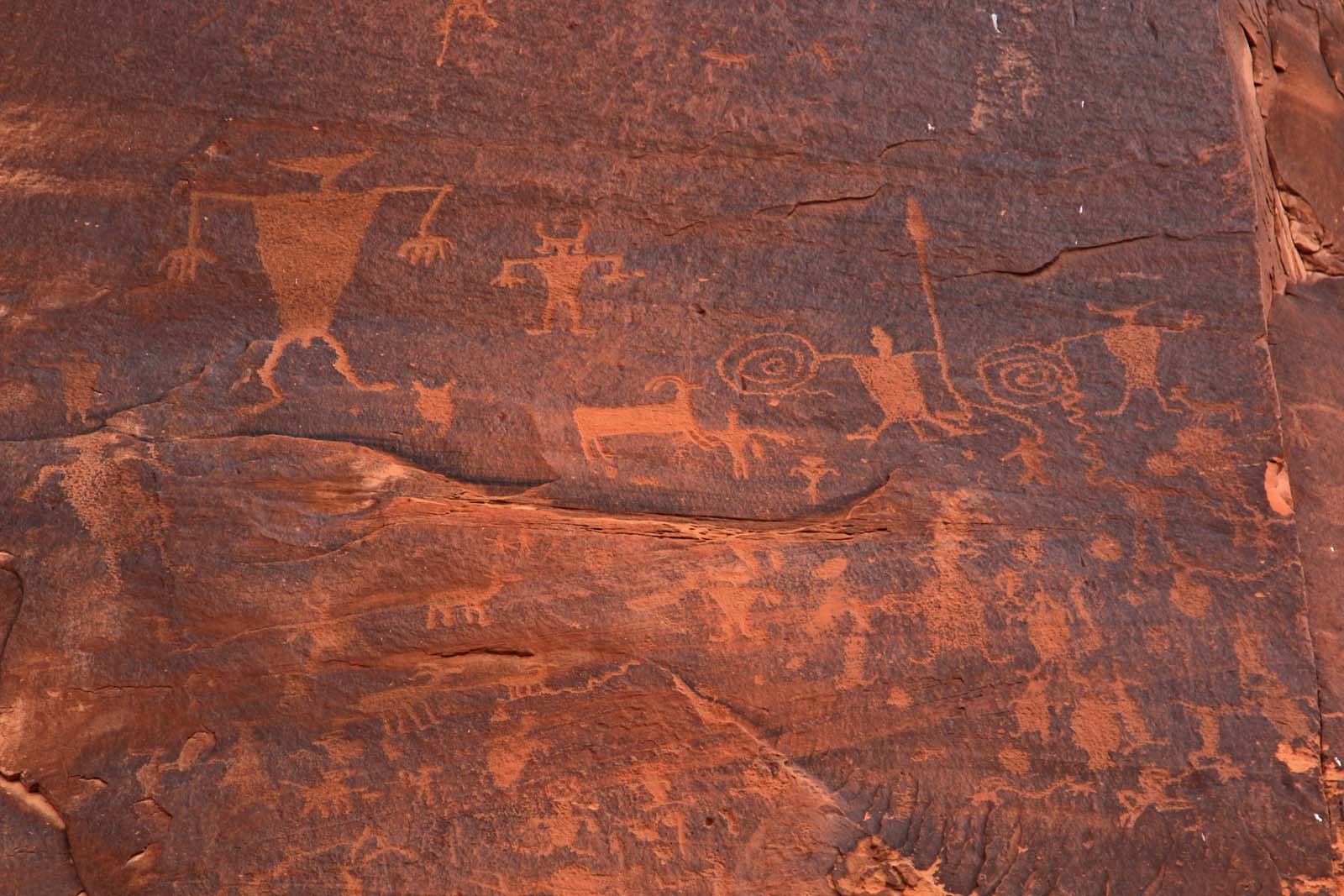
It’s called “Hidden Valley” for a reason. We saw deer, heard nothing but the wind, and had the whole place to ourselves. Follow the right fork near the end to see ancient petroglyphs etched into the rock.
Distance: 2.6 miles (4.2 km)Difficulty: ModerateElevation Gain: 1469 feet (448 m)Trailhead: Hidden Valley Trailhead
3. Delicate Arch (Arches NP)
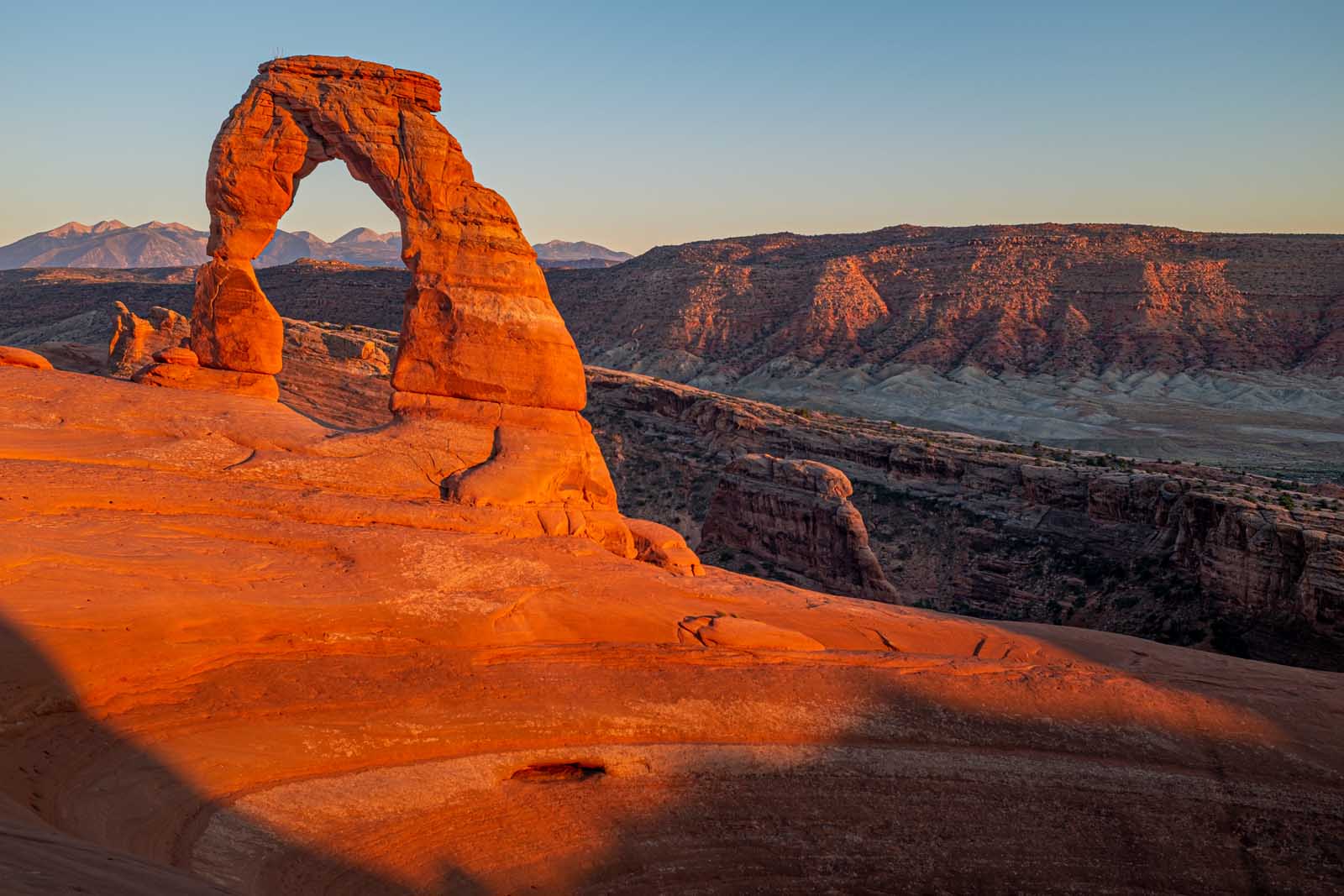
If you only do one hike in Moab, make it this one. Delicate Arch is the superstar of Arches National Park—and easily one of the best hikes in Moab. The 3-mile trail climbs slick rock and hugs the edge of a rock face before revealing the 52-foot freestanding arch in all its glory.
We hit the trail at 6 AM, half-asleep but determined to beat the crowds. By the time the sun broke over the horizon, the arch was glowing orange, and we had it almost entirely to ourselves. Worth every pre-dawn grumble.
Pro tip: Bring a headlamp if you go early or late. There’s no shade, no water, and no forgiveness for unprepared hikers.
This is the Moab hike you take when you’re tired, hungry, or traveling with kids who just need to see an arch already. It’s a quick loop that serves up some of the biggest, most accessible arches in Arches National Park, no sweat required.
We hit it just before sunset, and the whole area lit up like it was on fire. The gravel path is smooth, and you can get great views without much effort. It’s a great “rest day” hike or the perfect first stop if you’re short on time.
Distance: 0.7 miles (1 km)Difficulty: EasyElevation Gain: 98 feet (30 m)Trailhead: The Windows Loop Trailhead
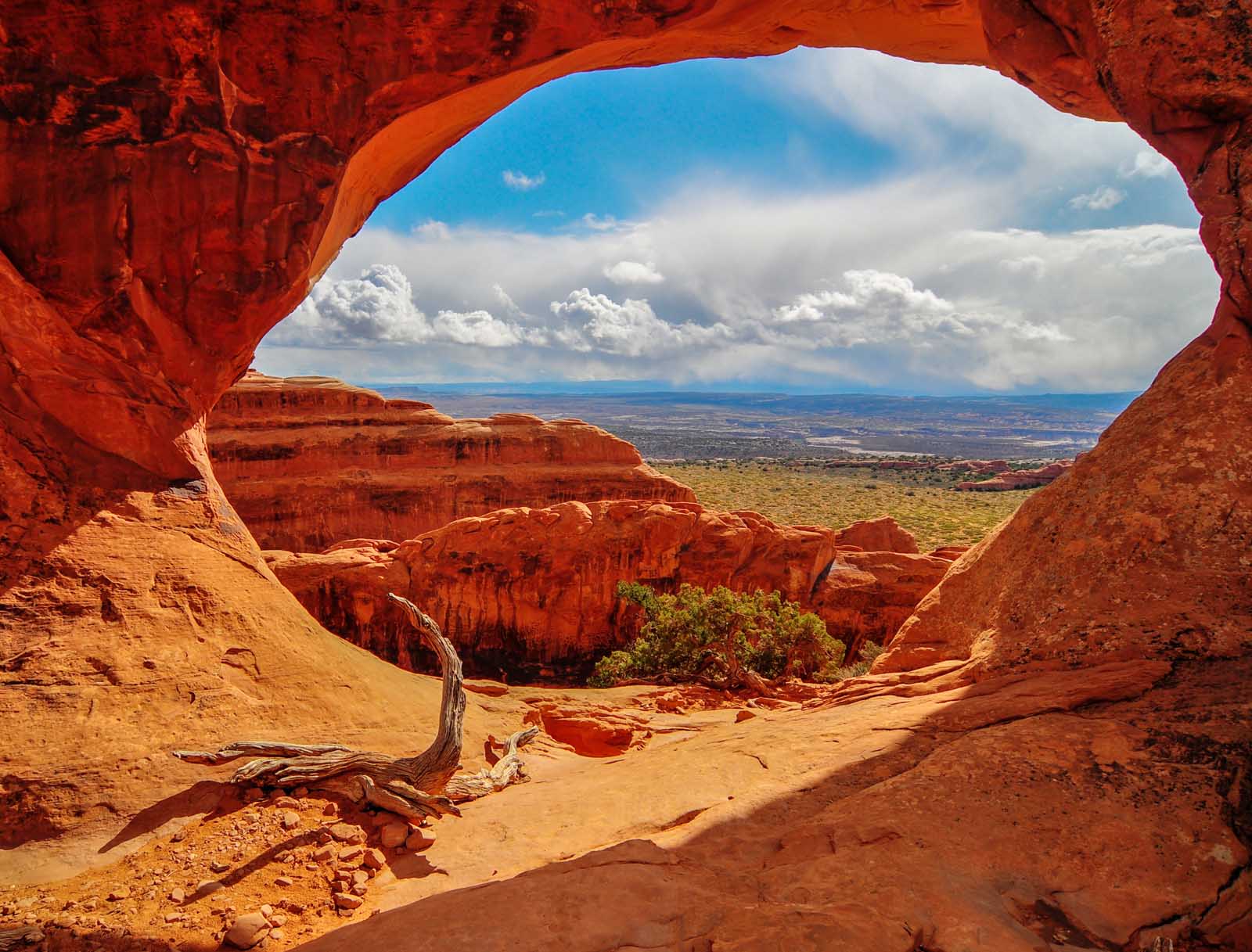
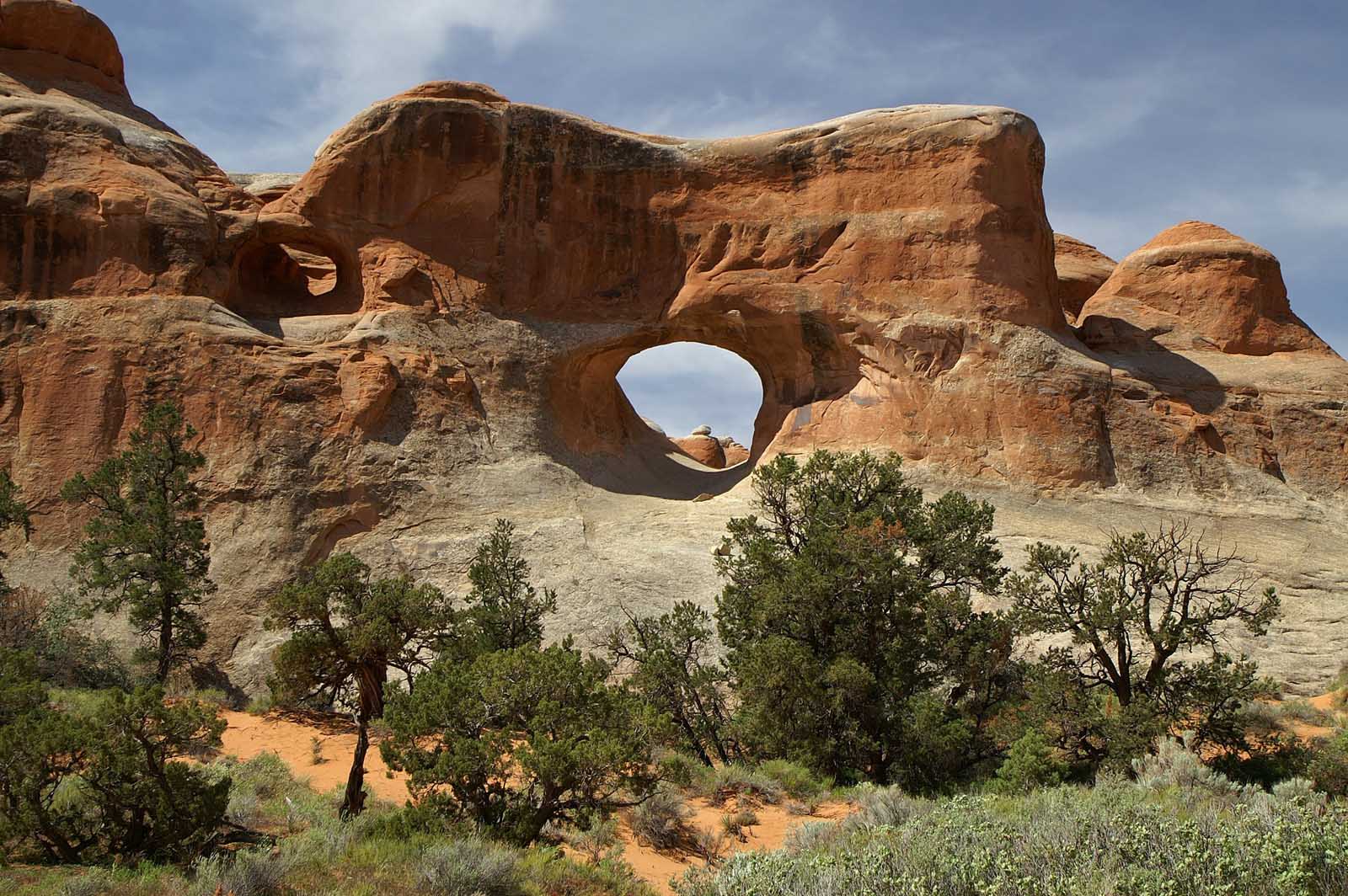
This is the big one. If you’re up for a full-day adventure with jaw-dropping scenery and fewer crowds, Devils Garden is one of the best hikes in Moab. You’ll hit multiple arches—including Landscape Arch (longer than a football field), Double O Arch, and the secluded Private Arch. There is a primitive trail and the main trail, so the choice is yours.
The trail isn’t technically hard, but it demands stamina and confidence. Some parts are unmarked and require a little scrambling. We got turned around once, stood on a ledge wondering if we were mountain goats, and then high-fived when we found our way.
6. Grand View Point Trail: Top Sunset Hike in Canyonlands
Grand View Point lives up to the name. This trail, located in the Island in the Sky district of Canyonlands National Park, is short, easy, and ridiculously scenic. You’ll walk along the edge of a cliffside mesa with panoramic views that stretch all the way to the La Sal Mountains and beyond.
We brought snacks, parked ourselves at the final overlook, and watched the entire desert floor turn gold. If you’re choosing one easy hike for an unforgettable sunset, this is it.
Distance: 2 miles (3.2 km round trip)Difficulty: EasyElevation Gain: 160 feet (49 m)Trailhead: Grand View Point Trailhead
For an even better view of this area, you might want to jump on this super popular Helicopter flight which gives you a great look at this landscape from the sky.
7. Morning Glory Bridge Hike via Grandstaff Canyon
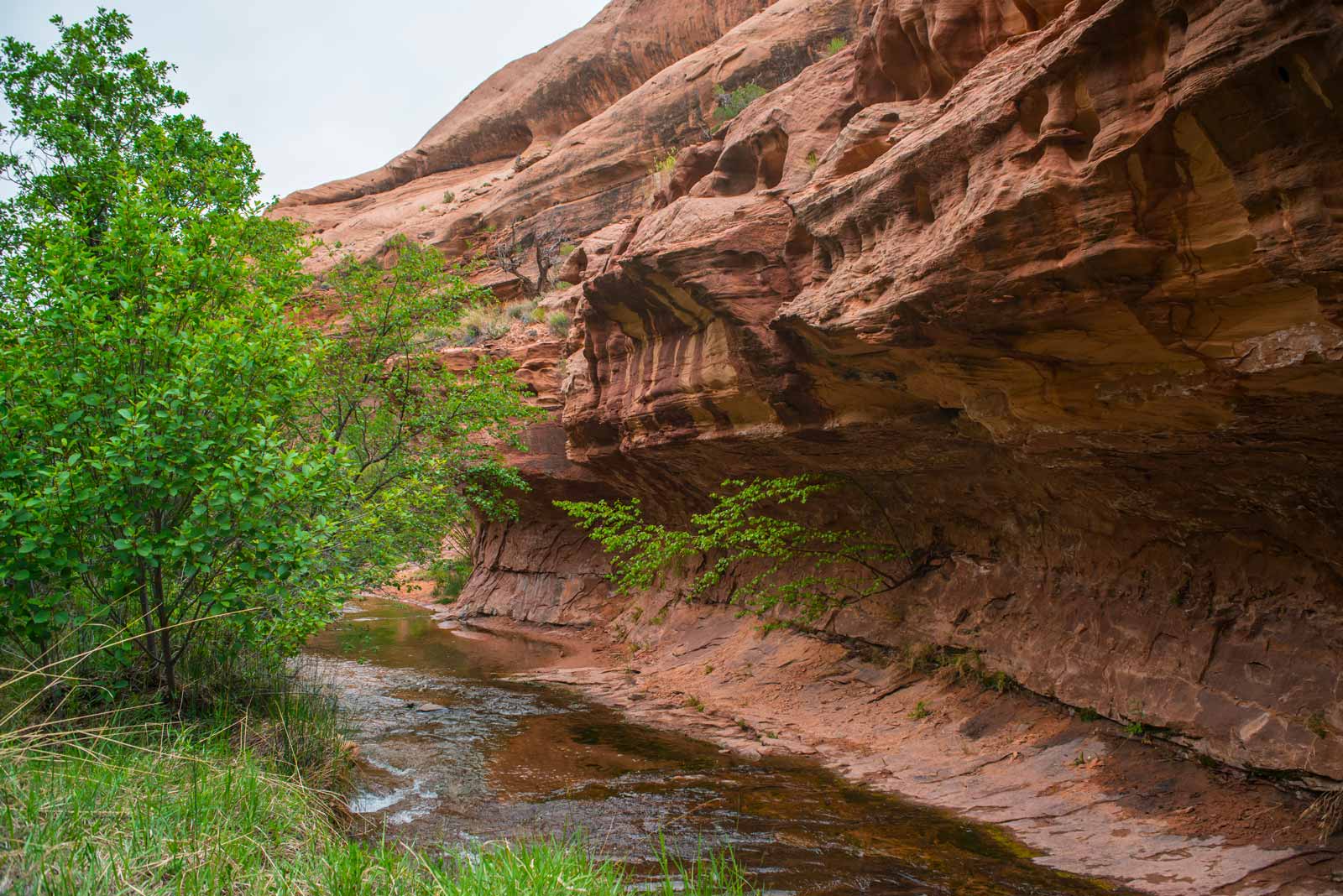
If you want to mix things up, this is the hike. Morning Glory Bridge sits hidden in Grandstaff Canyon, a lush slice of green in the middle of red rock country. The trail winds through willows and cottonwoods, and you’ll hop across a stream more than once. (Bring water shoes—you’ll thank us later.)
At the end, you’re rewarded with a jaw-dropping 243-foot natural bridge. We stayed there for nearly an hour, just watching the light shift and echoing our voices through the canyon.
Distance: 5 miles (8 km)Difficulty: ModerateElevation Gain: ~300 feetTrailhead: Grandstaff Canyon Parking Lot
8. Dead Horse Point Rim Loop: Canyon Views Without Crowds
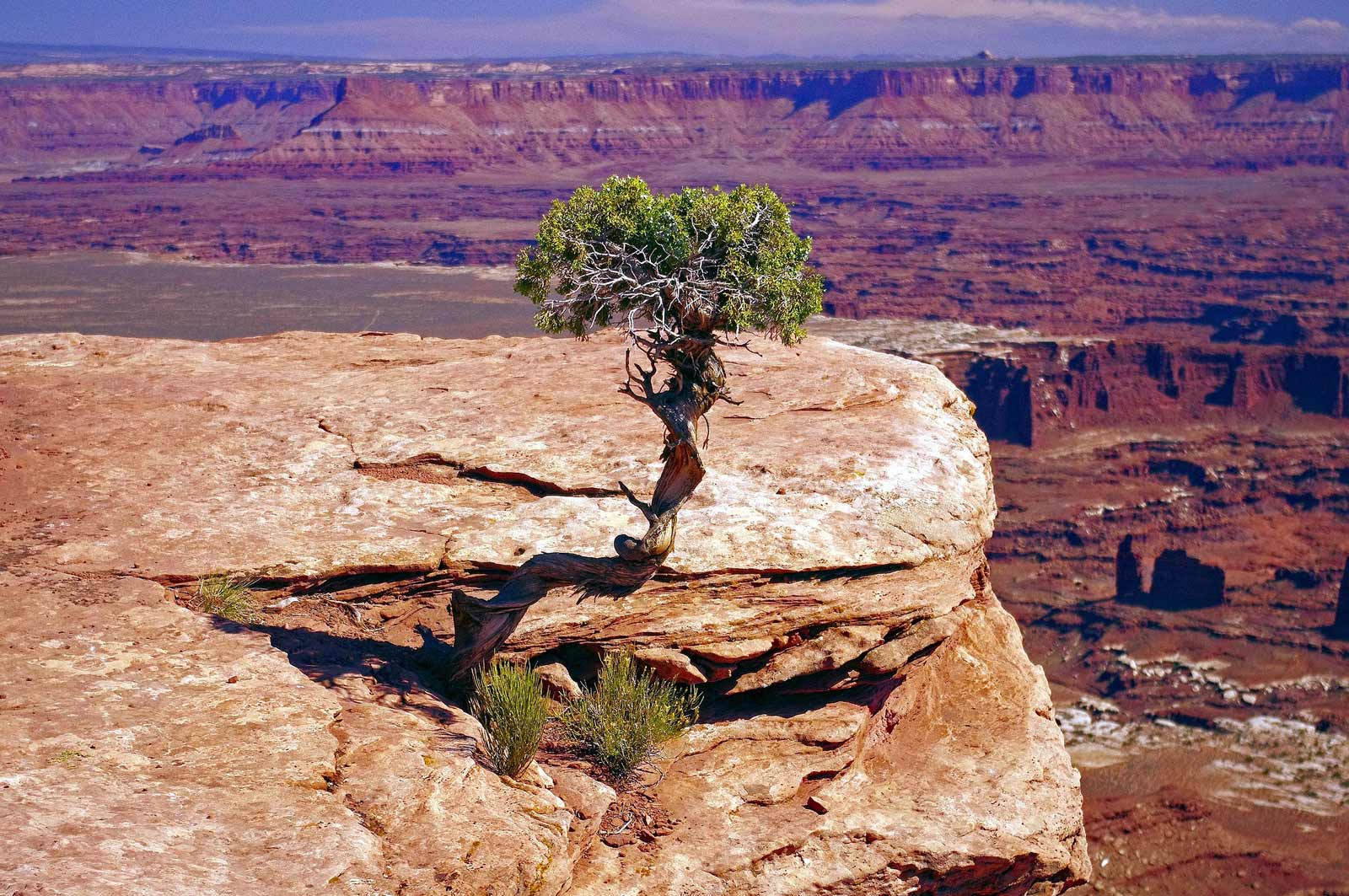
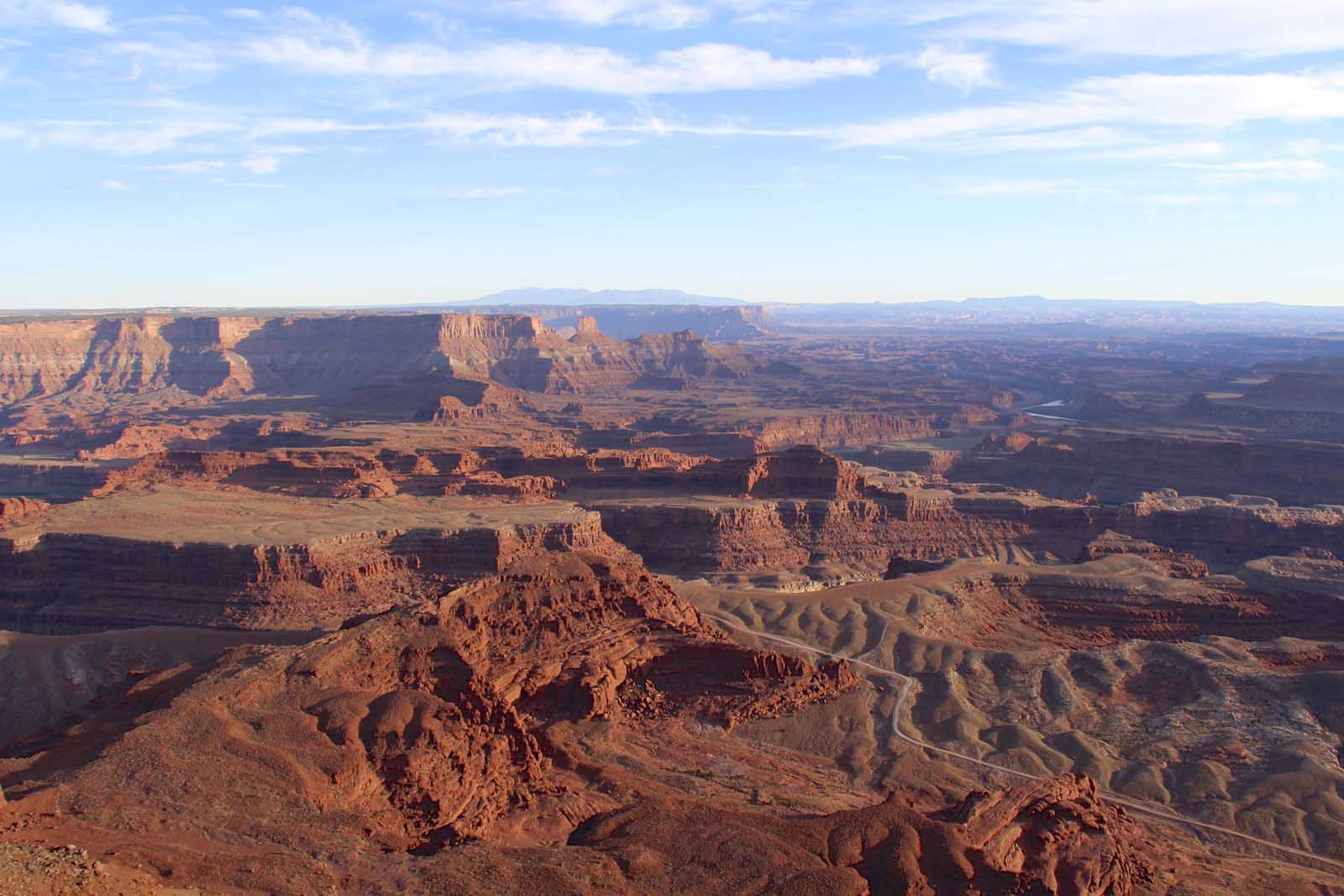
Imagine standing on a cliff 2,000 feet above the Colorado River with no one else around. That’s Dead Horse Point. While the overlook pulls in the crowds, the Rim Loop Trail stays surprisingly quiet, despite offering nonstop views that rival the Grand Canyon.
We looped this trail in just over two hours and barely passed another soul. The dramatic drop-offs and sweeping bends in the river below made it one of our favorite hikes in Moab for photography. Just don’t forget your water, shade is scarce.
Distance: 5 miles (8 km)Difficulty: ModerateElevation Gain: 908 feet (277 m)Trailhead: Basin Overlook Parking Area (Dead Horse Point State Park)
9. Double Arch Trail: Easiest Hike in Arches National Park
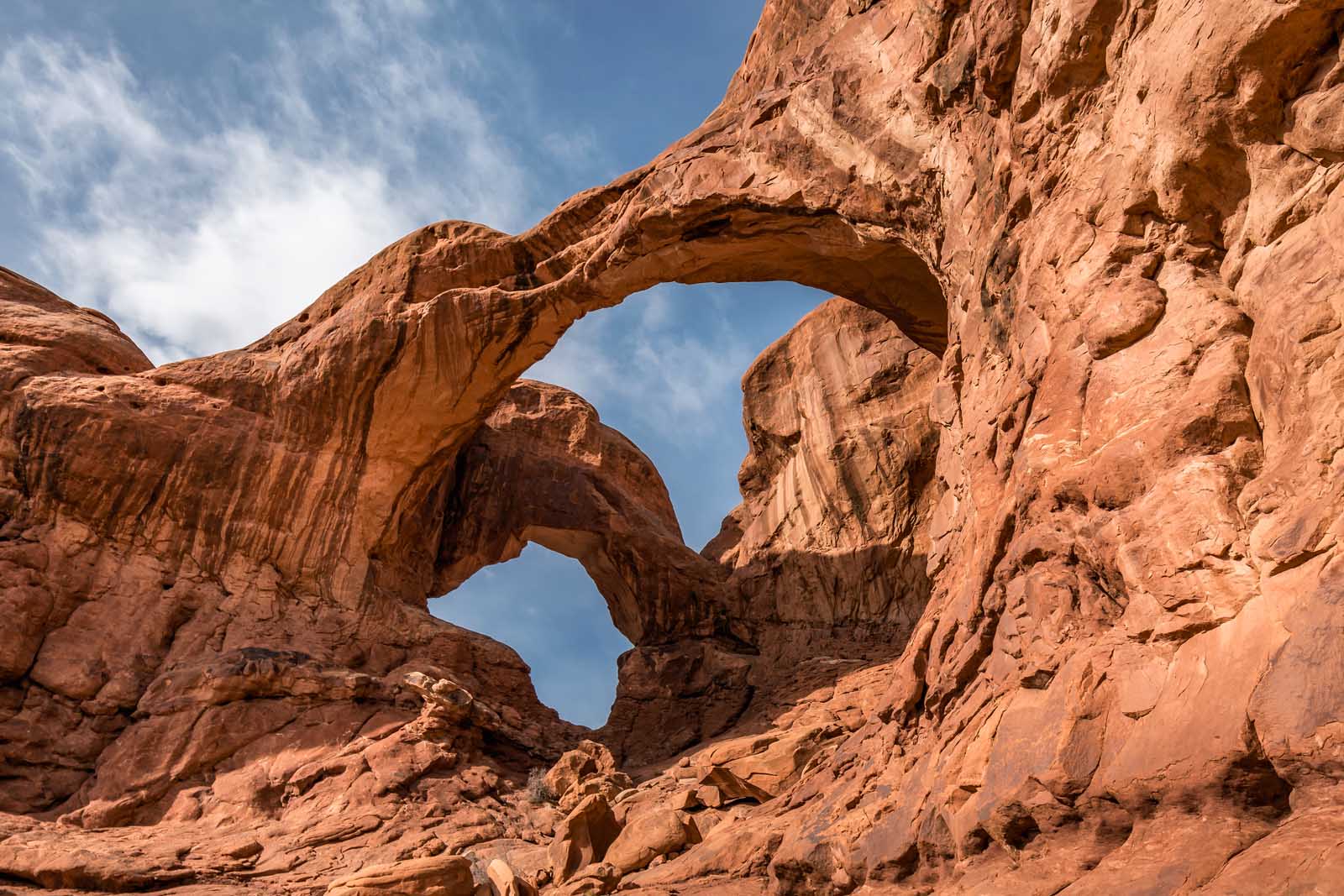
Double Arch might be the easiest hike in Arches National Park—but it’s far from boring. This short trail leads you to a massive twin arch that’s as tall as a four-story building and perfect for scrambling under.
We did this one at high noon (not recommended!) and still loved it. There’s something humbling about standing beneath two giant stone arcs that have stood there for millennia. If you’re short on time or traveling with kids, this is the perfect “wow” hike.
Distance: 0.6 miles (1 km)Difficulty: EasyElevation Gain: 95 feet (29 m)Trailhead: Balanced Rock Parking Area
10. Mesa Arch Sunrise Trail in Canyonlands
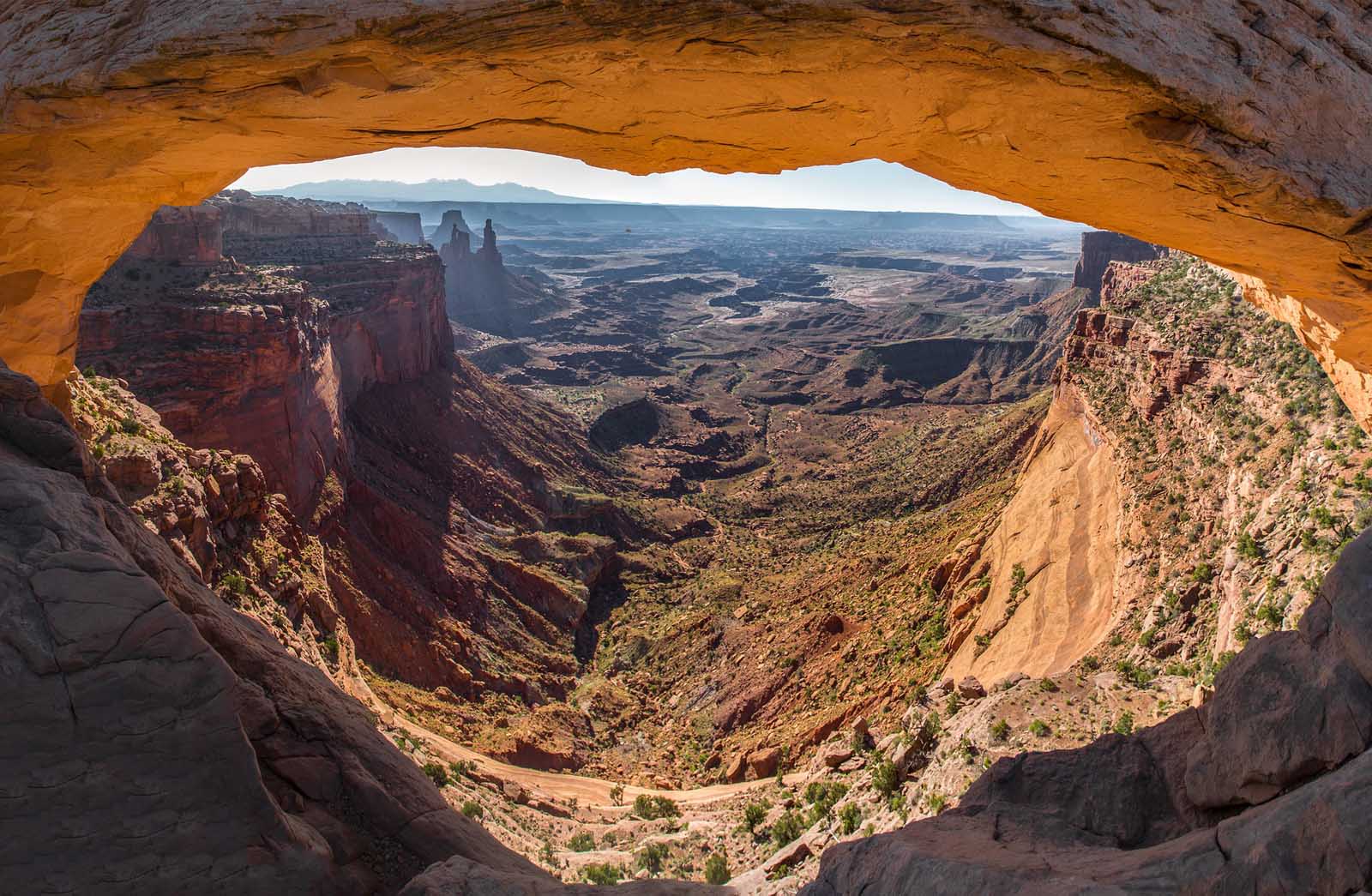
If you’re chasing that perfect Instagram shot, Mesa Arch delivers. This short, well-marked trail leads to one of the most famous sunrise views in Utah. As the sun rises, it shines through the arch, lighting up the red canyon below like it’s been set on fire.
We arrived at Canyonlands National Park in the dark with headlamps and joined a quiet line of sleepy hikers waiting for the show. And when it hit? Absolute magic. Even if you’re not an early riser, Mesa Arch is worth the effort.
Distance: 0.7 miles (1.1 km)Difficulty: EasyElevation Gain: 88 feet (27 m)Trailhead: Mesa Arch Parking Lot (Island in the Sky, Canyonlands)
11. Mill Creek Trail: Swim and Hike Just Minutes from Moab
Need a break from red rock and dry heat? Mill Creek is your oasis. This easy trail follows a shallow creek past small waterfalls, shady groves, and secret swimming spots just minutes from downtown Moab. Yes—real water in the desert.
We did this one in flip-flops and bathing suits, and it felt like we’d stumbled into a local secret. It’s a short hike but super rewarding, especially if you’re traveling in summer and need a quick cooldown.
Distance: 2 milesDifficulty: EasyElevation Gain: 66 feet (20 m)Trailhead: Mill Creek Trailhead (East of Moab)
12. Fiery Furnace Trail: The Most Confusing Hike in Moab
This one’s not really a trail, it’s a labyrinth. Fiery Furnace is a sandstone maze of tight slot canyons, tunnels, and arches that will test your navigation skills. It’s short in distance, but don’t let that fool you. You will get lost, and that’s half the fun.
We joined a ranger-guided hike (highly recommended), and still found ourselves doing the old “wait, have we been here already?” routine. But between the echoing canyons and otherworldly formations, this is one of the most unforgettable hikes in Moab.
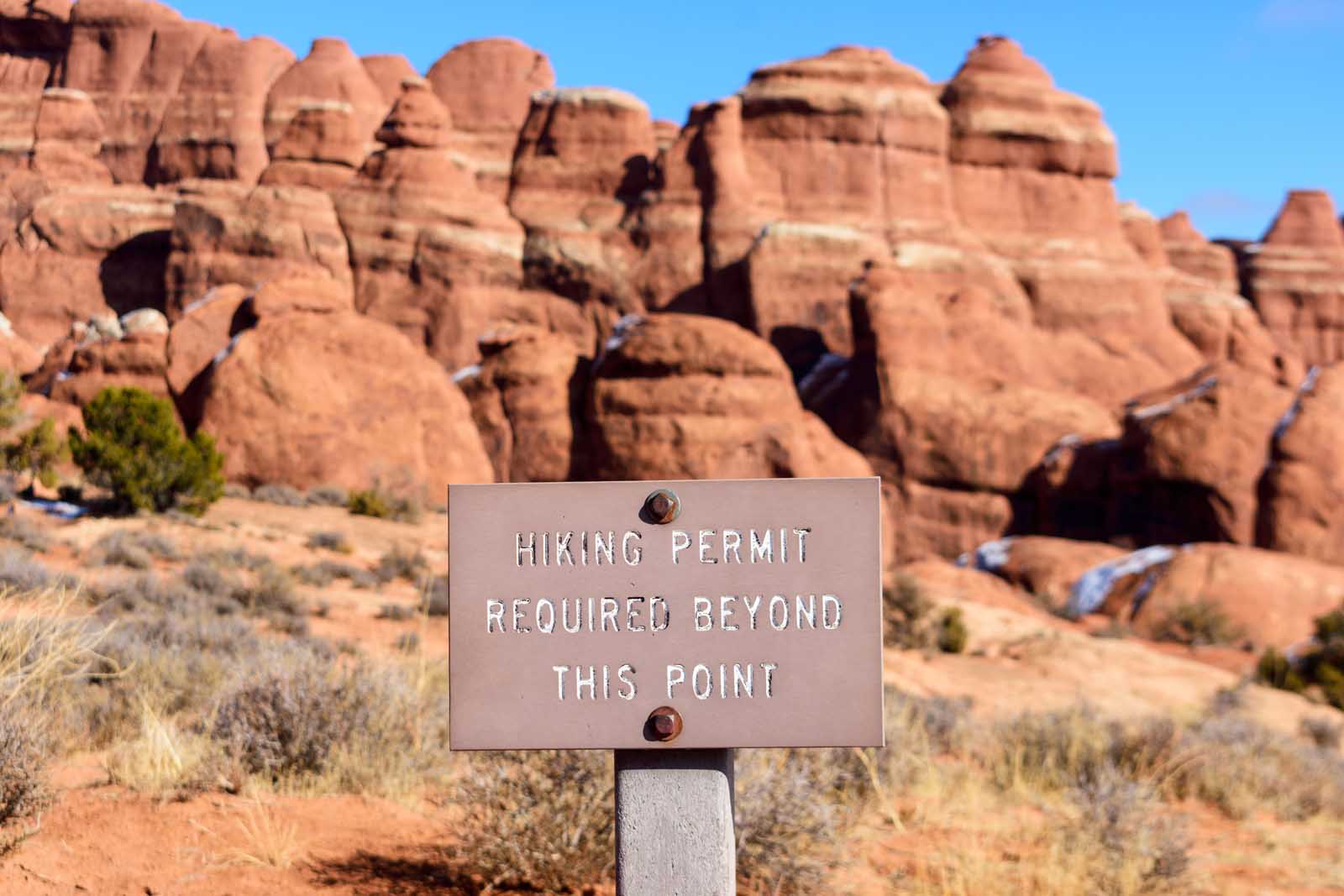
Note: You need a permit or to book a ranger-led tour to hike here legally.
So, now you’ve got some hiking trail inspiration, what else should you know? We’ve prepared some important answers to common questions about Moab hikes.
What is it like hiking in Moab?
Hiking in Moab is adventurous, dry, and full of dramatic red rock scenery. With canyons, arches, and slick rock trails, it’s one of the best hiking destinations in the U.S. Be prepared for extreme weather, limited shade, and occasional flash floods—especially in slot canyons.
What should I pack for hiking in Moab?
Essentials for hiking in Moab include a hydration pack or water bottle, sun protection (hat, sunscreen, sunglasses), layered clothing, insect repellent, first aid kit, sturdy hiking boots, and water shoes for creek trails. Flashlights or headlamps are also useful for sunrise and sunset hikes.
What is the easiest hike in Moab?
Double Arch Trail is the easiest hike in Moab. It’s just 0.6 miles (1 km) round-trip with 95 feet of elevation gain and leads to one of the park’s most impressive arches. Windows Loop is another beginner-friendly option with great views and easy access.
When is the best time to hike in Moab?
Spring (March to May) and fall (September to November) are the best times to hike in Moab. These seasons offer cooler temperatures, fewer crowds, and safer trail conditions compared to the extreme heat of summer or snow in winter.
Where should I stay when hiking in Moab?
Stay near Arches or Canyonlands for early trail access. Budget options include campgrounds and RV sites. Red Cliffs Lodge is a great mid-range hotel with tours and great views, while Hoodoo Moab offers a luxury stay with a pool, spa, and easy access to town.
And if you’ve got more than a few days to spare, don’t stop at Moab. Utah is packed with jaw-dropping parks just waiting to blow your hiking boots off—Zion National Park, Bryce Canyon National Park, Capitol Reef National Park, Goblin Valley… and probably a few hidden gems we haven’t even stumbled across yet. So lace up, hit the road, and happy hiking.
Here are 17 awesome ideas for things to do in Grand Cayman. We had so much fun on this island, we can’t wait to go back. Not only does Grand Cayman have everything needed for an exciting and adventurous escape, but it also has enough comfort and amenities to make you want to stick around.
There are many Caribbean islands that make for excellent tropical vacations, but there is something about Grand Cayman that made Dave and I say, “I could live here.” It has a laid-back vibe with everything you need. So let’s explore all the amazing Grand Cayman things we discovered.
About the Cayman Islands
The Cayman Islands are made up of three islands: Grand Cayman, Cayman Brac, and Little Cayman. Grand Cayman is the largest and most developed, and that’s where we based ourselves. From here, we took day trips and boat tours to see the best attractions across the islands.
Take a Helicopter Tour over the Cayman Trench
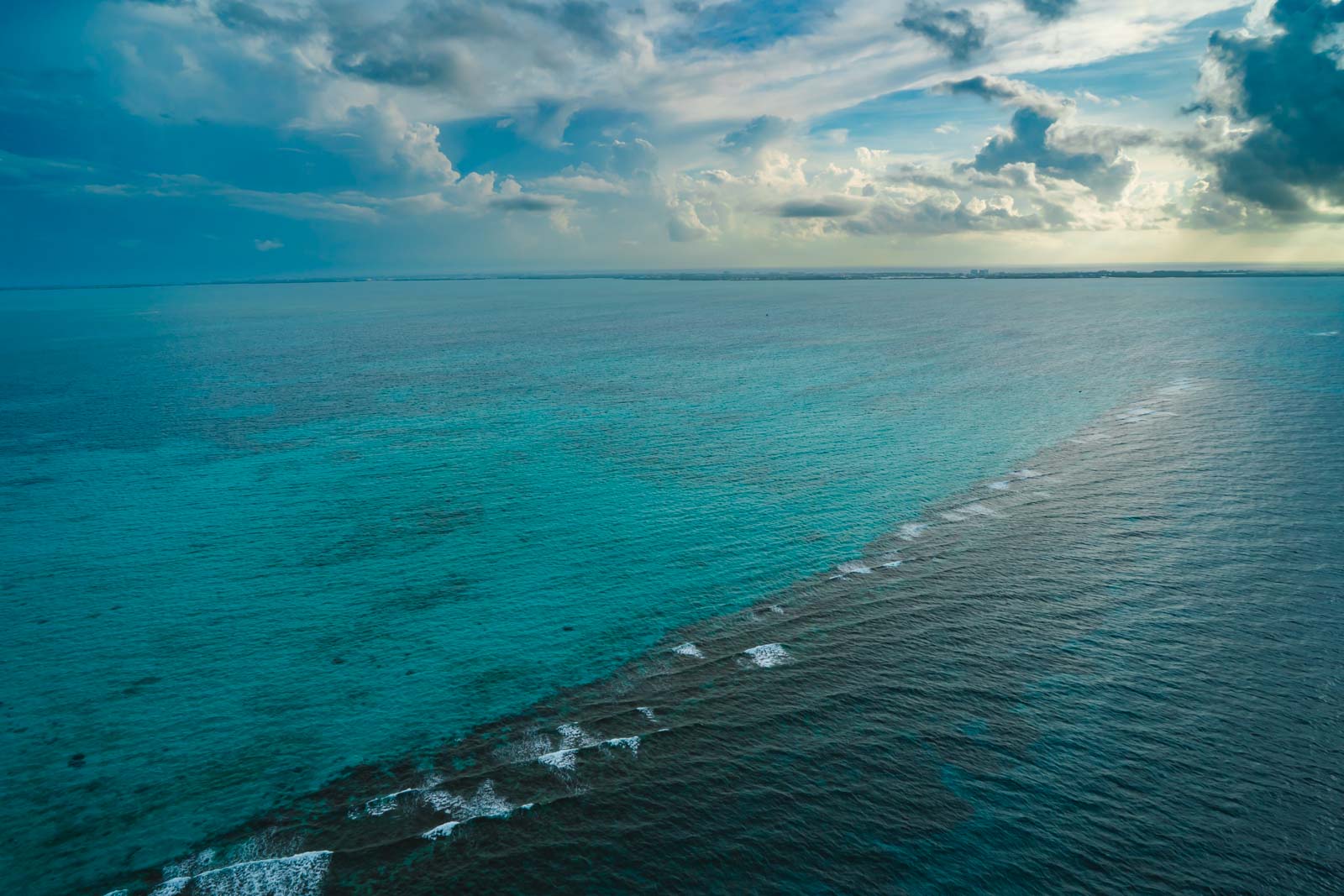
Seeing the Cayman Trench from above is absolutely surreal. With Cayman Islands Helicopters, we flew over the coastline and watched the water change from sapphire blue to deep black as the shelf dropped off. Our pilot blasted classic tunes and pointed out Stingray City, the Kittiwake shipwreck, and the coral reefs along the coast. A must-do for aerial views.
Explore the Cayman Crystal Caves
Located on the North Side, the Cayman Crystal Caves are filled with underground lakes, stalactites, stalagmites, and black limestone formations. Until recently, they were privately owned, which helped preserve their natural beauty. The guided tours are informative and give a different perspective beyond the beaches.
Visit Bioluminescent Bay
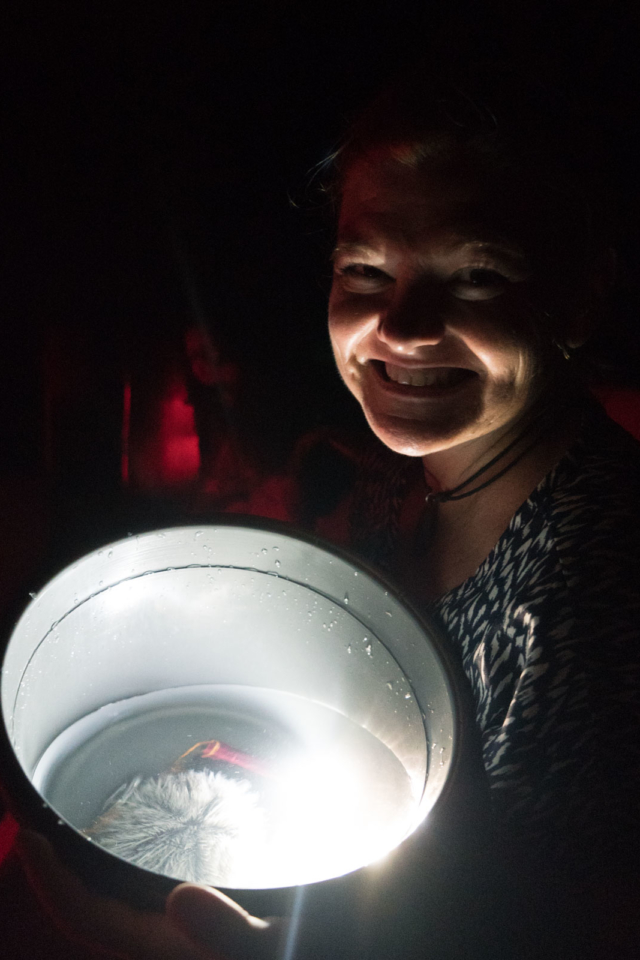
One of the most unforgettable experiences we had was a bioluminescence tour near Rum Point. Cayman Kayaks offers an eco-friendly electric catamaran tour that allows you to witness the glow of microscopic organisms in the water. It feels like magic. You dip your hands in and the water lights up with sparkles. Bio Bay is one of the most unique places to visit in Grand Cayman.
Lounge on Seven Mile Beach
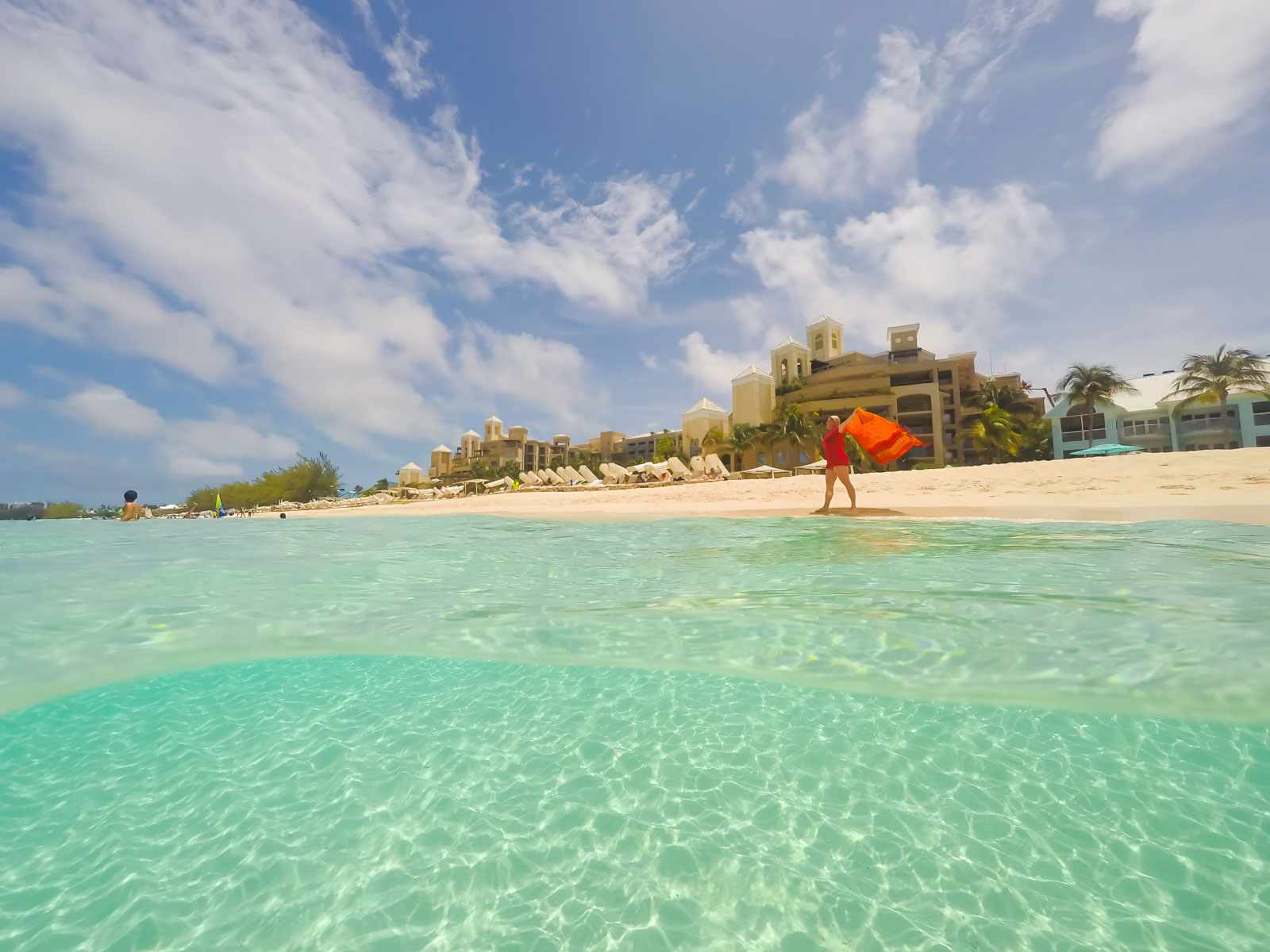
This world-famous beach is as dreamy as it gets. Soft sand, crystal clear water, and tons of water activities. We stayed at the Ritz-Carlton on Seven Mile Beach and loved our morning walks and sunset swims. You can snorkel right off the shore, rent paddleboards, or just sip cocktails in a cabana.
Visit the Cayman Turtle Centre
This is one of the best family-friendly attractions in Grand Cayman. The Cayman Turtle Centre is home to sea turtles of all ages, from tiny young turtles to full-grown adults. You can learn about turtle conservation, see the breeding pond, and even swim in the saltwater lagoon. It’s educational, fun, and a great way to support wildlife protection.
Sample Local Cuisine on the Flavour Tour
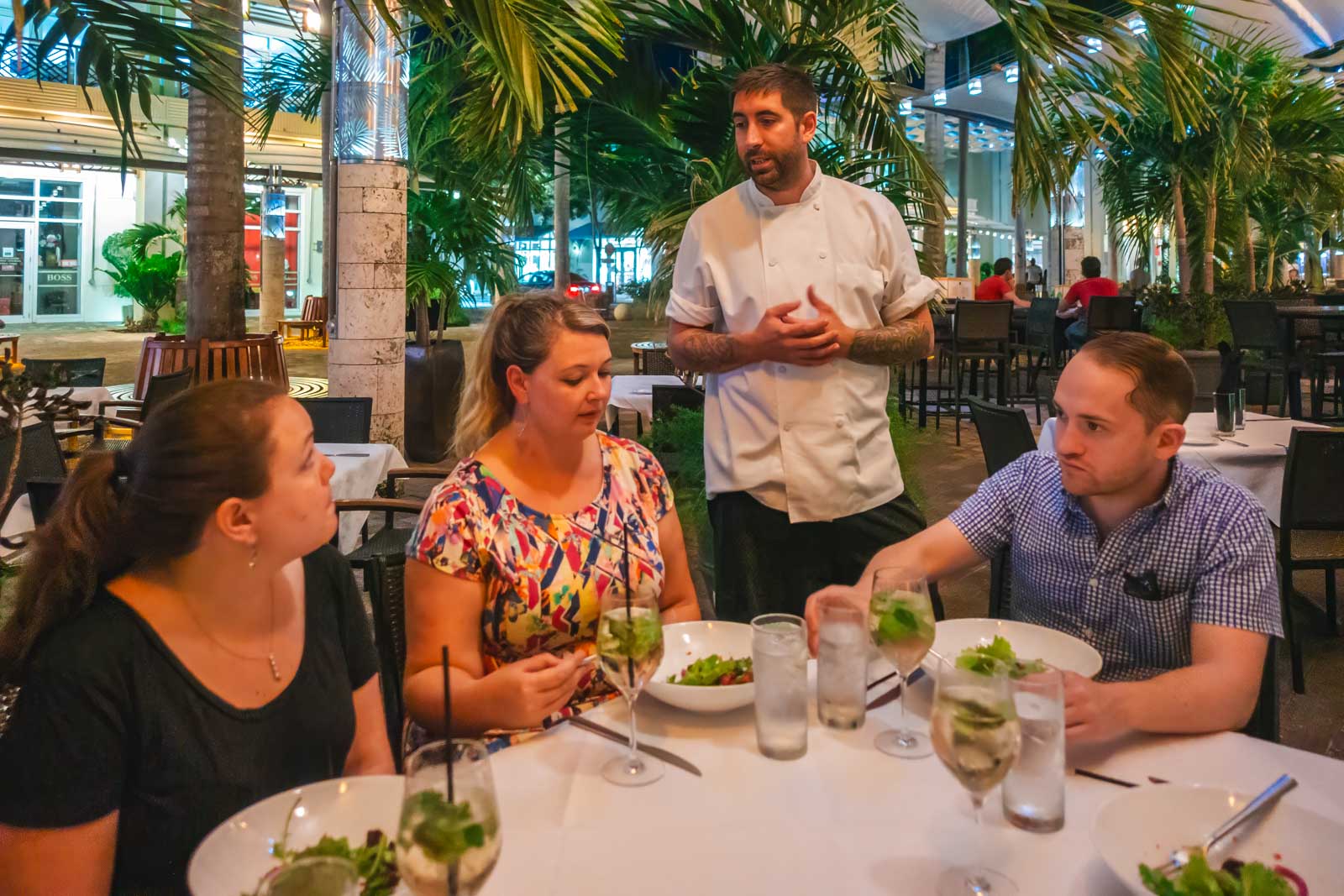
Grand Cayman is considered the Culinary Capital of the Caribbean for a reason. The Flavour Tour in Camana Bay introduces you to some of the best restaurants on the island, with food and drink pairings at each stop. We tasted fresh seafood, lamb, cocktails, and a divine cheesecake to finish it off.
Enjoy Teppanyaki at Mizu
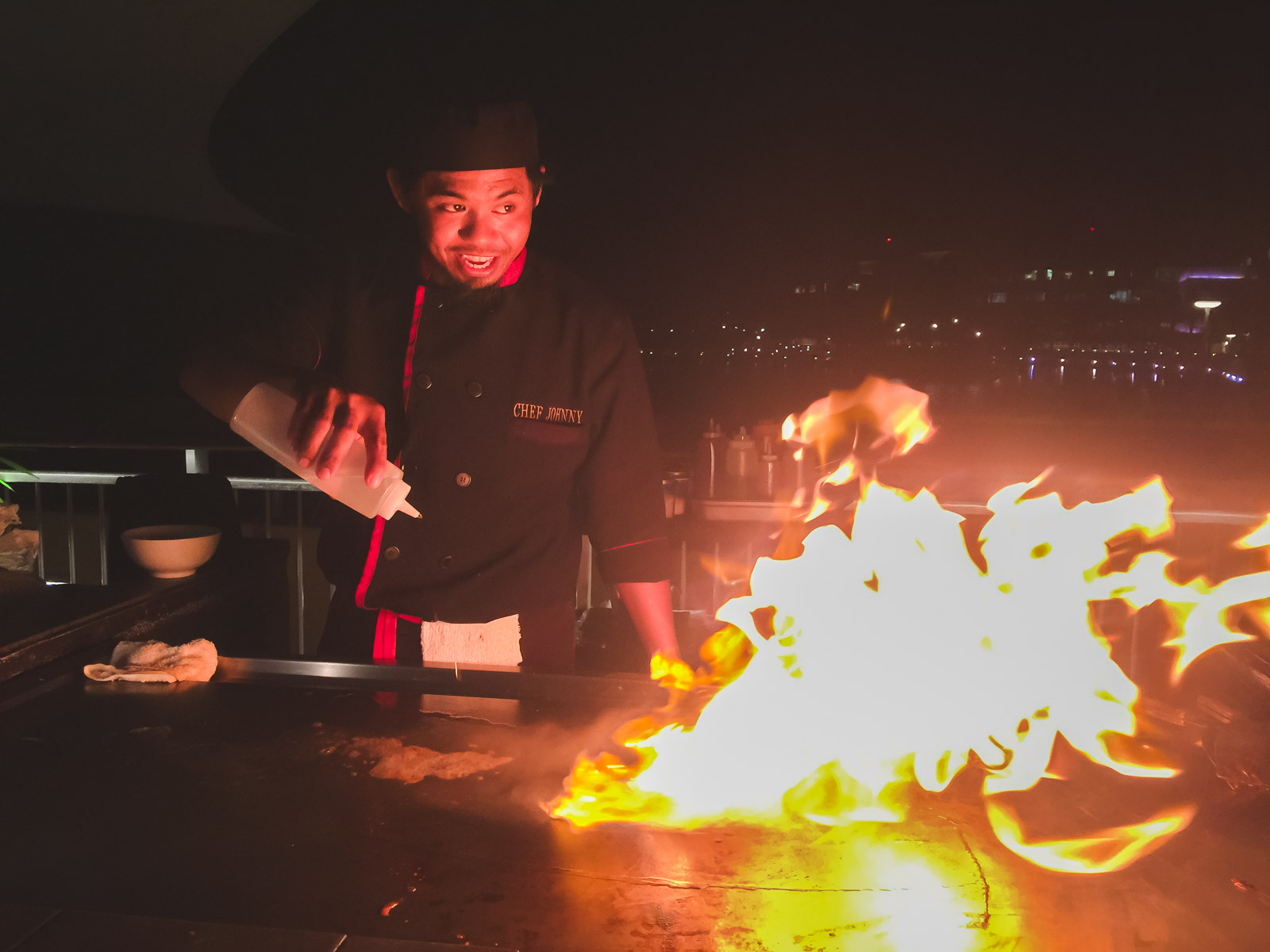
Still in Camana Bay, Mizu puts on one of the most entertaining dinners we’ve had. Chef Johnny is a showman, preparing meals tableside with flair, flames, and flying spatulas. The setting is lively and right on the water, making it one of our favorite fun things to do in Grand Cayman.
Cool Down with Gelato and Co.
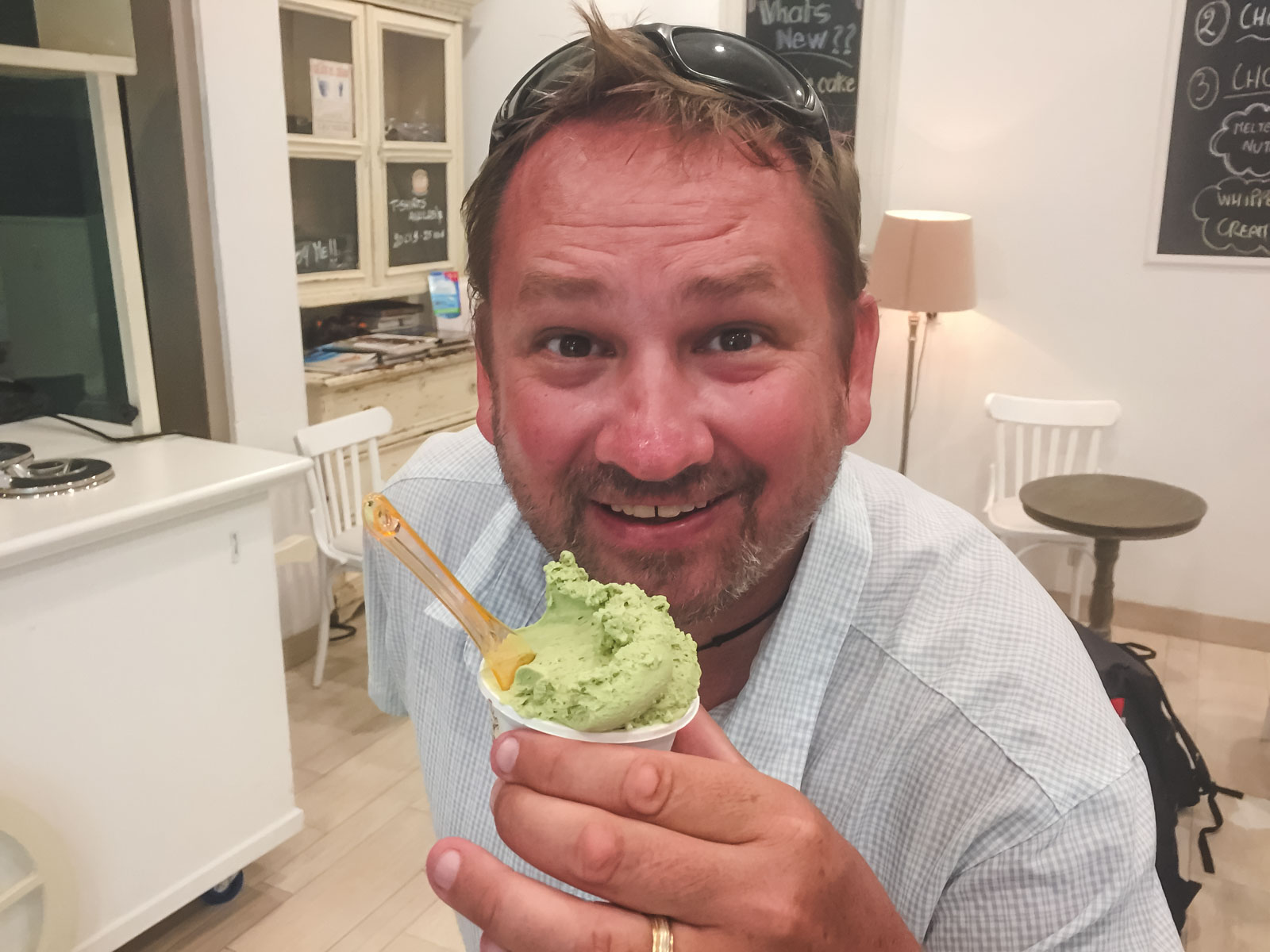
Owned by an Italian family, Gelato and Co. offers authentic Italian gelato and sorbet. We know our gelato, and this place is the real deal. After a day in the sun, this is the perfect sweet treat.
Snorkel at Starfish Point
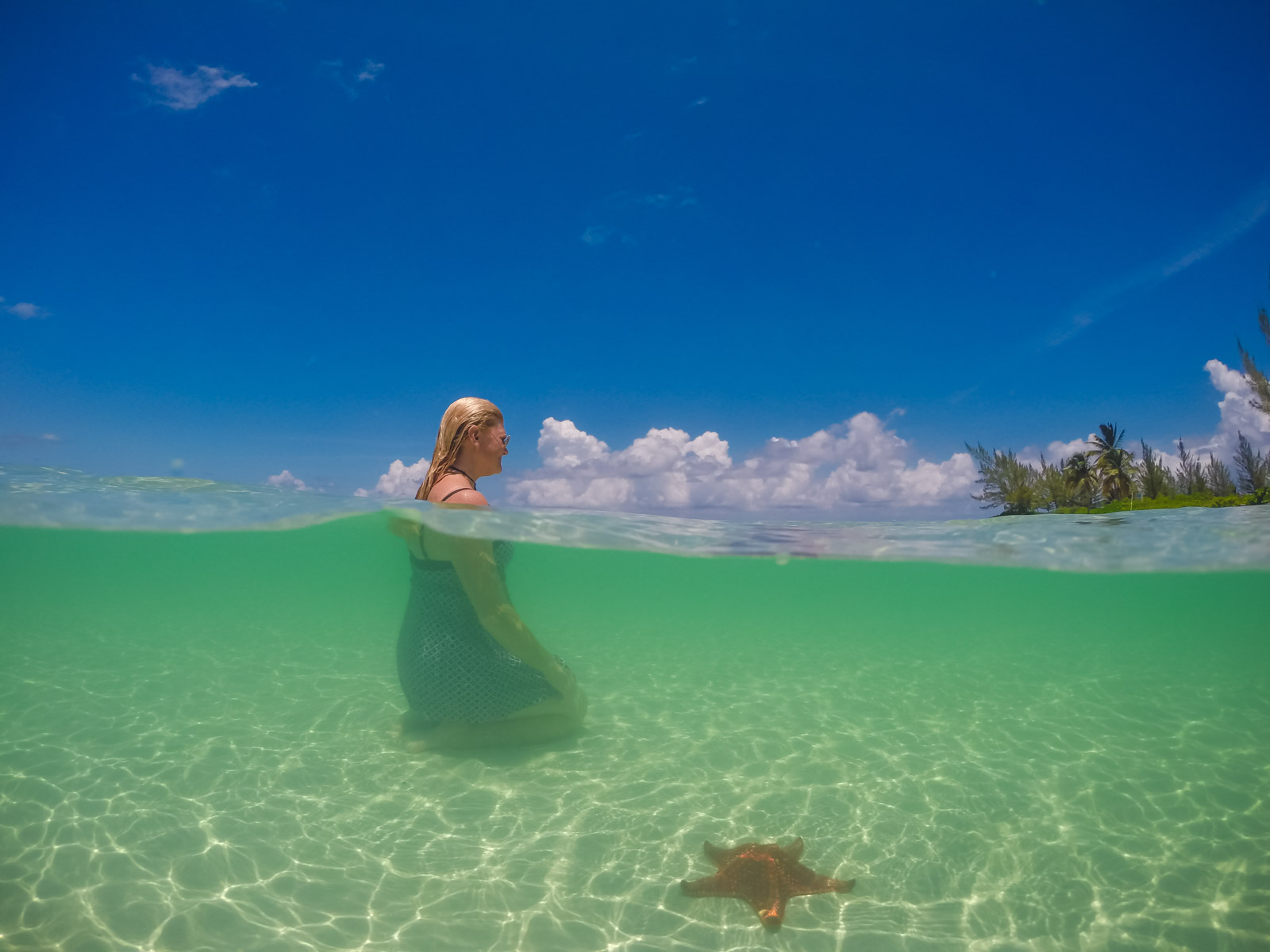
Located on the North Sound, Starfish Point is a quiet, secluded beach where starfish gather in the shallow waters. Please keep them submerged if you pick them up. It’s peaceful, scenic, and great for a picnic or a short paddle.
Take a Private Charter to Stingray City
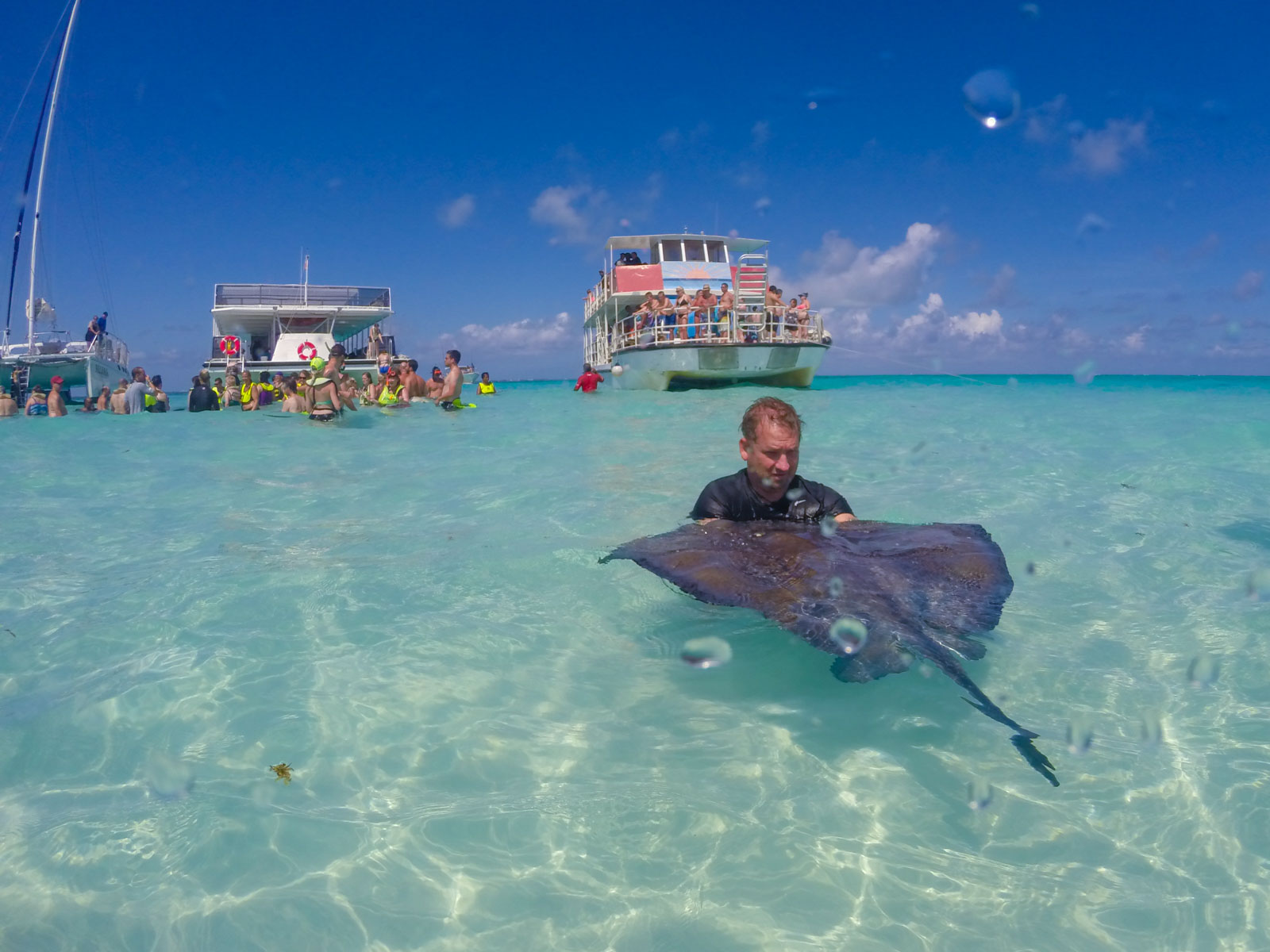
A trip to Grand Cayman isn’t complete without visiting Stingray City. We booked a private charter to avoid the crowds and it was worth every penny. Dozens of stingrays glide through the shallow waters and will swim right up to you. It’s wild.
Relax at the Spa at the Ritz-Carlton
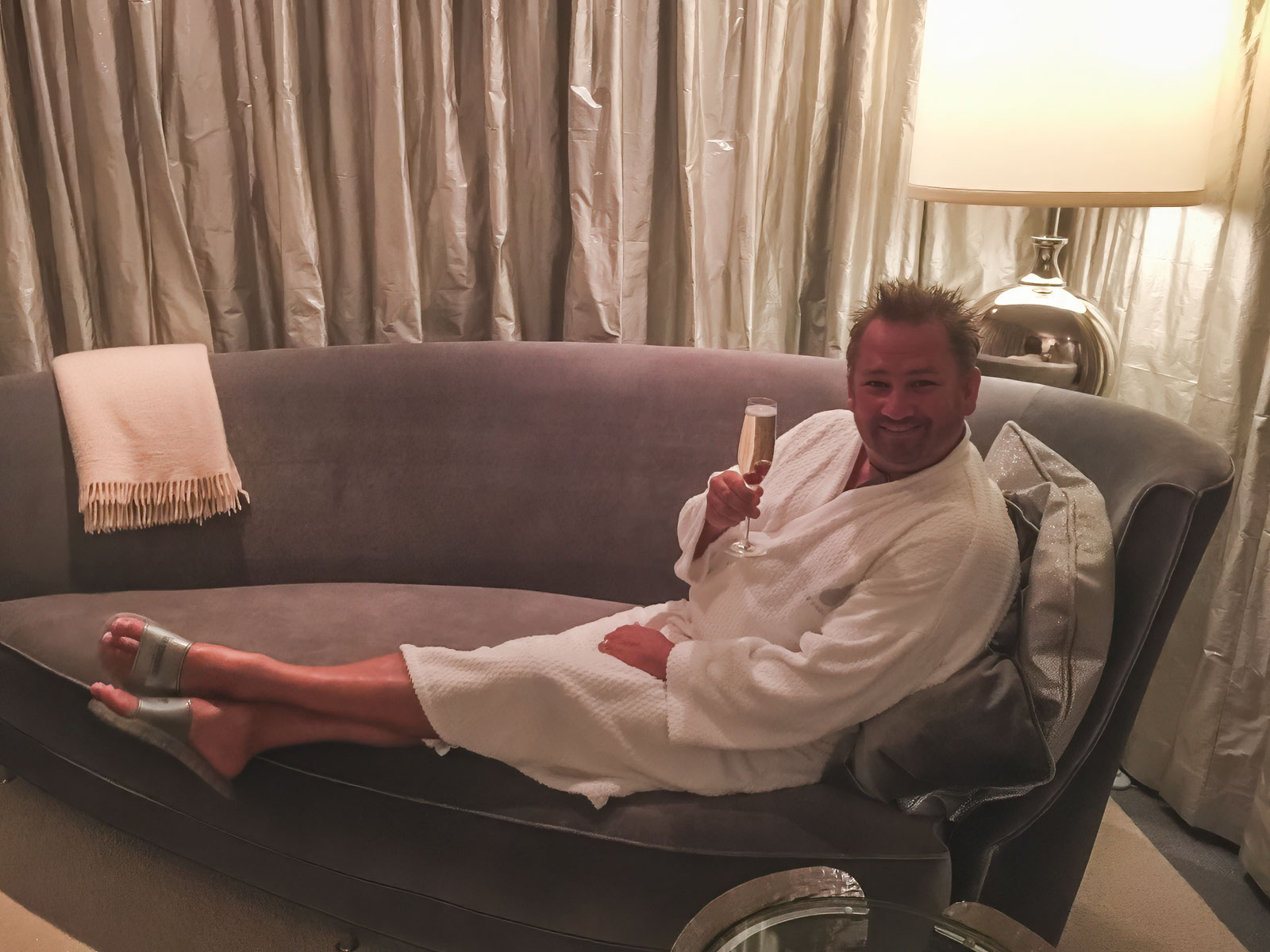
After a few days of snorkeling and sun, treat yourself to a spa day. The Ritz Carlton spa offers deep tissue massages and quiet relaxation lounges. We ended our session with a glass of bubbly, feeling like jelly.
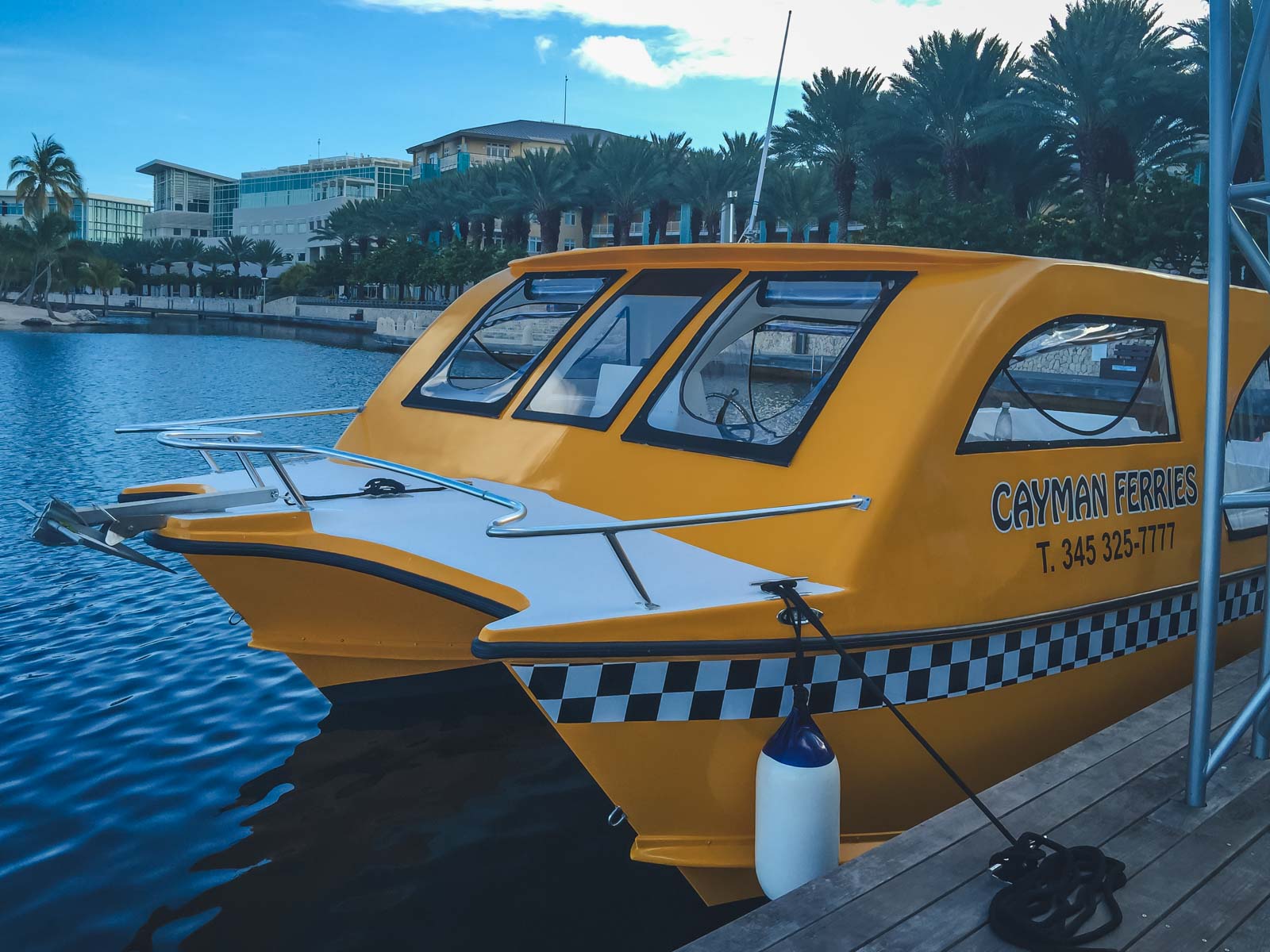
Ride the Ferry to Rum Point
From Camana Bay, you can catch a ferry to Rum Point on the island’s quieter side. It’s a great spot for sunset drinks and dinner. The seafood at Kaibo Restaurant was fresh, and the mudslides were as good as they say.
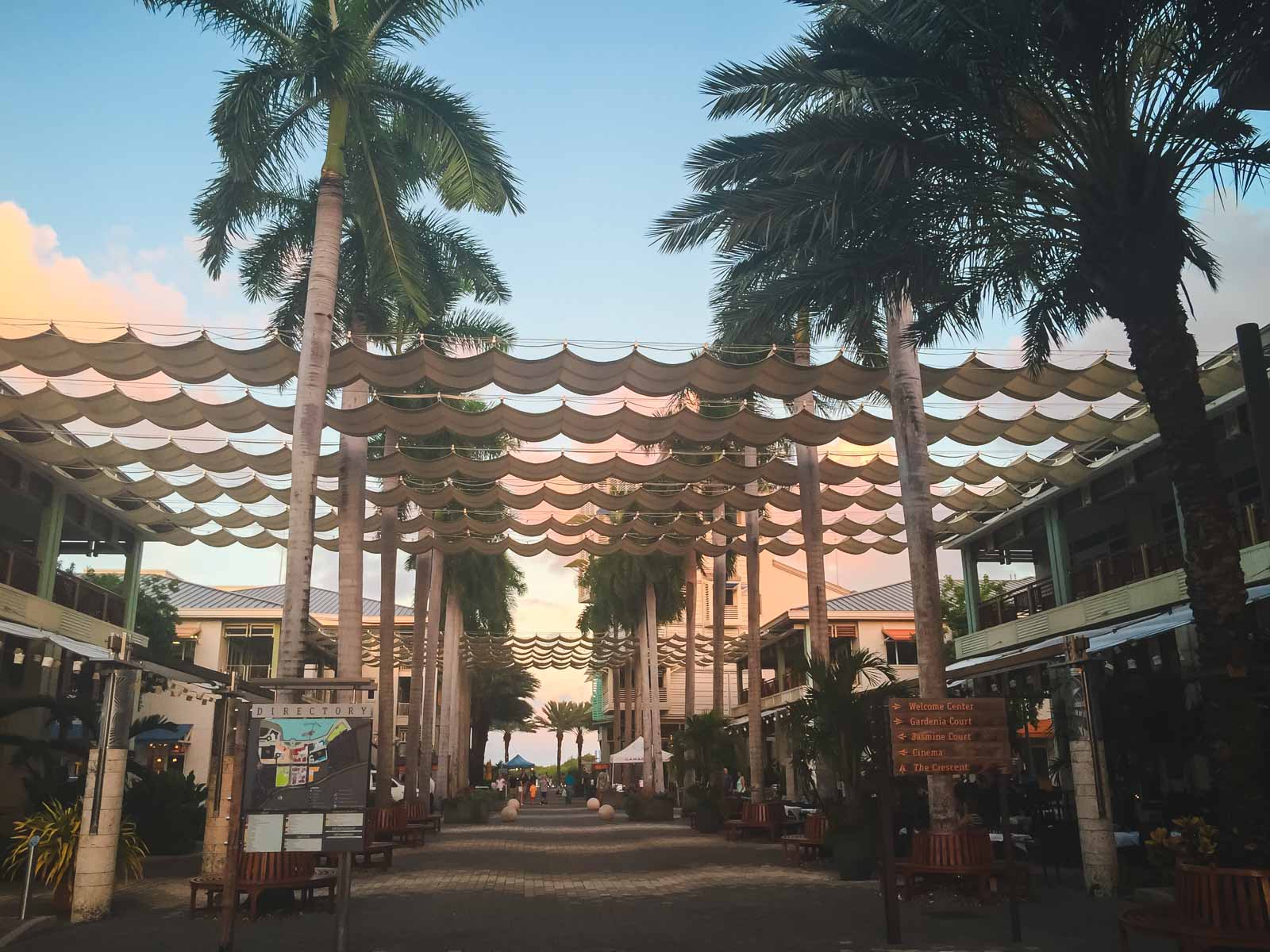
Climb the Camana Bay Observation Tower
This tower offers 360-degree views of Grand Cayman. Take the stairs and enjoy the underwater-themed mosaic walls, or ride the elevator to the top for a panoramic look at the sea and the urban center below.
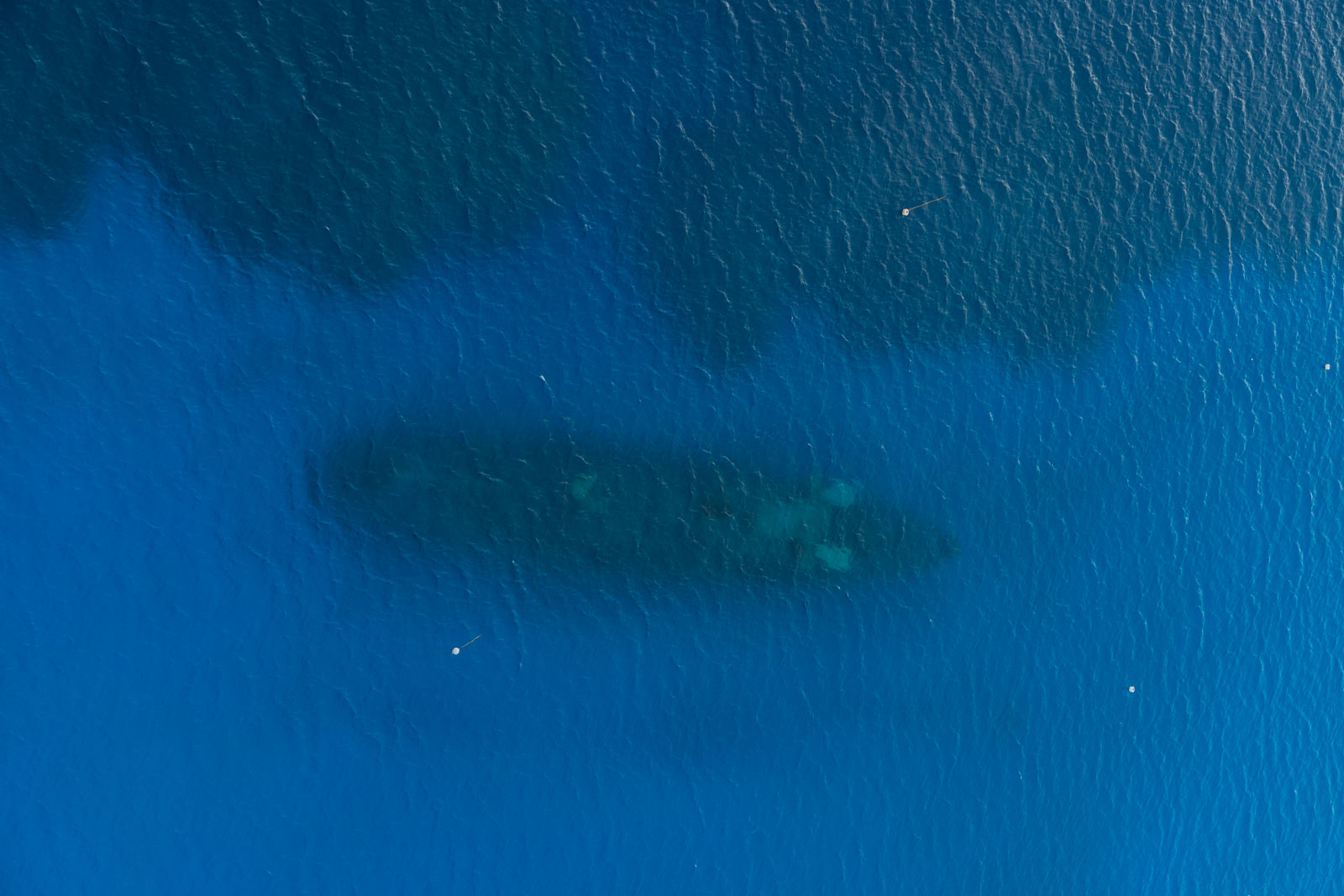
Dive the Kittiwake Shipwreck
Grand Cayman is famous for scuba diving, and the Kittiwake is one of the top dive sites. The sunken ship rests in shallow water, making it accessible for both beginners and experienced divers. Along with the Kittiwake, you can also explore sites like Eden Rock, Devil’s Grotto, and Babylon Reef.
Snorkel at Cemetery Reef or Smith Cove
If diving isn’t your thing, snorkeling at Cemetery Reef or Smith Cove is just as rewarding. These spots offer excellent sea life and coral, and you can swim straight from shore. The water is calm and visibility is fantastic.
Best Non-Touristy Things to Do in Grand Cayman
Shop the Farmers and Artisans Market
Held every Wednesday in Camana Bay, this market showcases local crafts, produce, and treats. We picked up Cayman Pepper Patch jelly and chatted with friendly locals. It’s a great way to support the community and find authentic souvenirs.
Explore Skull Cave and Davinoff’s Sculpture Garden
Just off the East End, Skull Cave is a small but fascinating natural cave that adventurous travelers will love. Nearby, you’ll find Davinoff’s Concrete Sculpture Garden, filled with handmade sculptures of Caymanian wildlife. It’s one of those hidden gems you’ll want to tell your friends about.
Discover Cultural Heritage at Pedro St. James Castle
Located in Bodden Town, Pedro St. James Castle is the oldest surviving stone structure in the Cayman Islands and is known as the “Birthplace of Democracy” in Cayman. It’s beautifully restored and offers a look into the island’s past.
Tour the Cayman Spirits Co. Distillery
For something a little different, head to George Town for a distillery tour at Cayman Spirits Co. You can sample handcrafted rum and learn about how it’s made. The tour is laid-back, informative, and includes some generous tastings.
Catch Live Music in George Town
In the evenings, head into George Town for drinks and live music. Many bars and restaurants feature local bands playing everything from reggae to jazz. It’s a fun, low-key way to wrap up the day.
Take a Day Trip to Cayman Brac
Cayman Brac is smaller, quieter, and perfect for adventurers. The island is known for its dramatic bluff, scenic hiking trails, and excellent diving. Explore caves like Rebecca’s Cave, enjoy panoramic views from The Bluff, and visit the lighthouse for incredible photo ops. It’s a short flight from Grand Cayman and gives a totally different vibe.
FAQs About Visiting Grand Cayman
Is Grand Cayman safe to visit?
Yes, Grand Cayman is one of the safest islands in the Caribbean for tourists.
Do I need a visa to travel to Grand Cayman?
Canadians, Americans, and UK citizens do not need a visa for short visits.
What currency is used in Grand Cayman?
The Cayman Islands Dollar (KYD), but US dollars are accepted nearly everywhere.
Is Grand Cayman good for families?
Absolutely. Attractions like the Cayman Turtle Centre, Stingray City, and Seven Mile Beach are great for all ages.
Grand Cayman Travel Tips
Best time to visit: December through April offers the best weather, but May to November has fewer tourists and better deals.
Currency: Cayman Islands Dollar (KYD), but US dollars are widely accepted.
Getting around: Rent a car to explore beyond Seven Mile Beach. Driving is on the left.
Flights: Owen Roberts International Airport is well connected to the US, Canada, and the UK.
Why We Loved Grand Cayman
There are so many things to do in Grand Cayman, from adventure to luxury to nature. Whether you’re watching the sun dip below the horizon at Rum Point, swimming alongside turtles, or sipping rum at a local distillery, this island leaves a mark. We’ve traveled the world, and Grand Cayman still stands out as one of our top picks. We’ll be back. And maybe next time, we’ll stay longer.
When most people think of European travel, they picture Parisian cafés or Tuscan villas. But what if we told you one of the most powerful travel experiences we’ve ever had was in Sarajevo, the capital of Bosnia & Herzegovina?
Why Visit Bosnia and Herzegovina?For powerful history, resilient culture, affordable travel, and unforgettable experiences in cities like Sarajevo and Mostar.
This country may not be on every traveler’s radar, but it should be. Bosnia & Herzegovina is a place where history isn’t just told, it’s felt. It’s where war-torn buildings stand beside buzzing cafés, and where the pain of the past fuels the pride of the present.
Sarajevo: Europe’s Most Resilient Capital
Welcome to Sarajevo, the heart of Bosnia and Herzegovina, and a must-see destination for travelers seeking more than just postcard views. This is a place that teaches you what war, peace, and resilience really look like.
Sarajevo is a vibrant city and the capital of Bosnia and Herzegovina. Sarajevo is unlike anywhere else in Europe. Minarets rise beside cathedrals. Ottoman bazaars sit beside Austro-Hungarian buildings. Bullet holes scar apartment walls. And yet, Sarajevo pulses with life.
This is a city where mosques, churches, and synagogues share the same skyline. Where Olympic dreams and war nightmares happened within a decade of each other. And where survival isn’t just a chapter in its history, it’s the theme.
Visiting Sarajevo Today: Where the Past Meets the Present
Sarajevo may still carry the trauma of war, but it’s not stuck in it. This compact city is buzzing with life, color, and heart. From museums that share personal stories of wartime survival to cafés that serve the best coffee in Southeast Europe, there’s no other place quite like it. Let’s start your Sarajevo travel guide with the essentials.
Best Things to Do in Sarajevo
1. The Tunnel of Hope
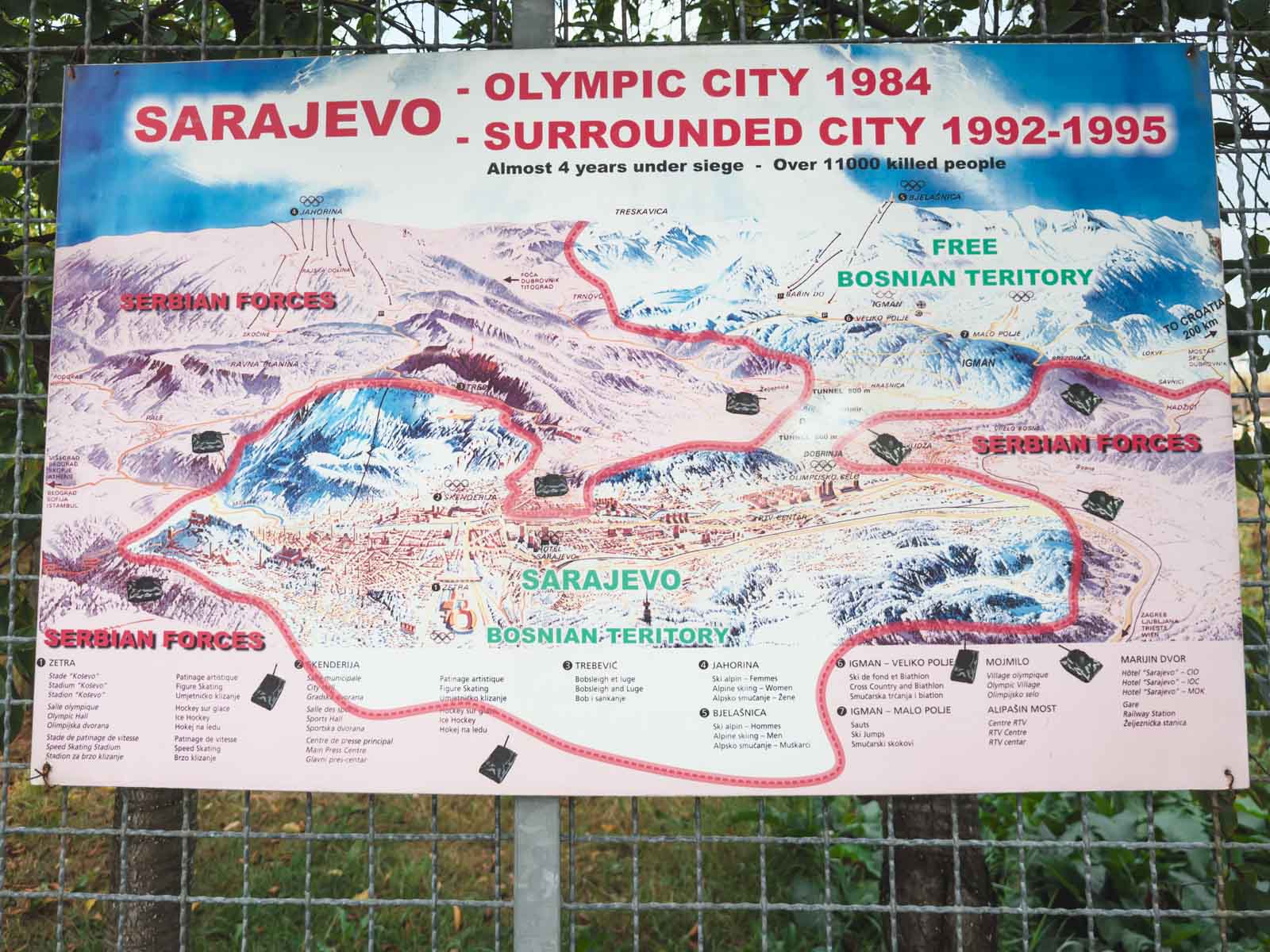
Start your visit at the Tunnel of Hope, a hand-dug lifeline during the nearly four-year Siege of Sarajevo. Located beneath the Sarajevo Airport, this 800-meter-long tunnel once connected the besieged city to free territory. It allowed civilians to transport food, medicine, fuel, and even electricity.
Walking through the cramped tunnel gives you a chilling sense of how Bosnian Muslims risked everything just to survive. It’s one of the most important stops when you visit Sarajevo. This narrow passage, now part of a museum dedicated to survival, allowed humanitarian aid, weapons, and people to pass through when all other routes were cut off. You can book tours to the Tunnel of Hope from Sarajevo here.
2. Sarajevo Roses
Scattered throughout the city center are red-painted craters called Sarajevo Roses. Each one marks a spot where a mortar shell killed civilians. These marks aren’t just memorials, they’re part of the sidewalk. You’ll walk over them while buying coffee or waiting for the tram. It’s one of the many ways Sarajevo wears its scars openly.
3. War Museums That Tell the Truth
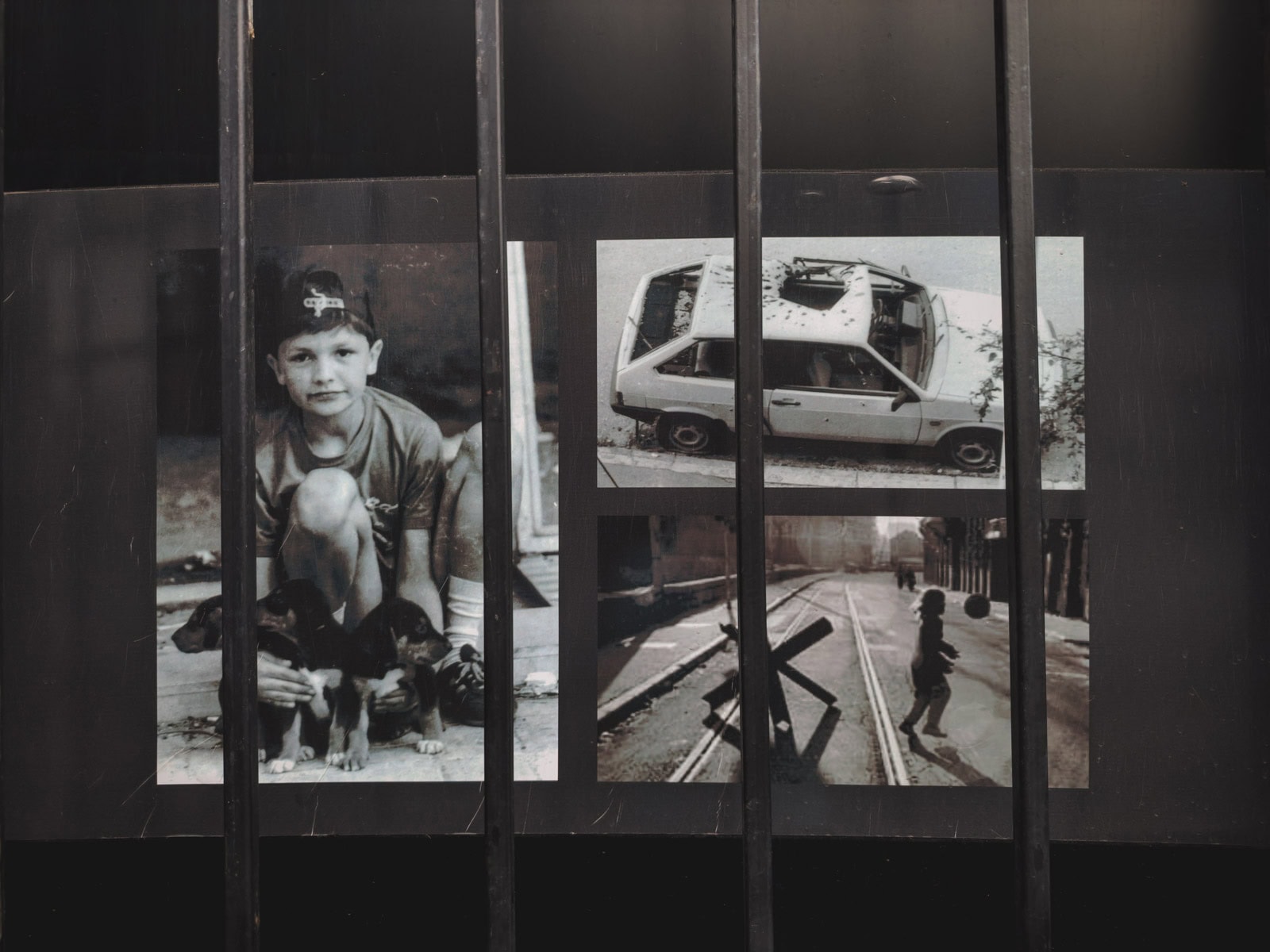
War Childhood Museum: This award-winning museum is one of the most moving in all of Europe. It showcases toys, diaries, and personal belongings from children who grew up during the Bosnian War. Every item tells a story you won’t forget.
Historical Museum of Bosnia and Herzegovina: This cultural center holds archives and exhibitions on modern history, especially the siege years. You’ll see burned-out vehicles, letters, and makeshift tools people used just to cook and survive.
Museum of Crimes Against Humanity and Genocide: Hard-hitting and essential, this museum documents atrocities committed during the Bosnian War, including the Srebrenica genocide and Srebrenica massacre, where more than 8,000 Bosnian Muslims were executed by Bosnian Serb forces.
Jewish Museum of Bosnia and Herzegovina: Housed in a 16th-century synagogue, this museum is a testament to Sarajevo’s long and layered religious diversity. From Sephardic Jews to Muslim Bosniaks, the city was once known as “Little Jerusalem.”
4. Bascarsija and the Old Town
The heart of Sarajevo is its Old Town, where narrow streets wind past copper shops, mosques, and cafés that feel lifted from another century. In Bascarsija, you’ll find the Gazi Husrev-beg Mosque, dating to the Ottoman period, still active and open to visitors.
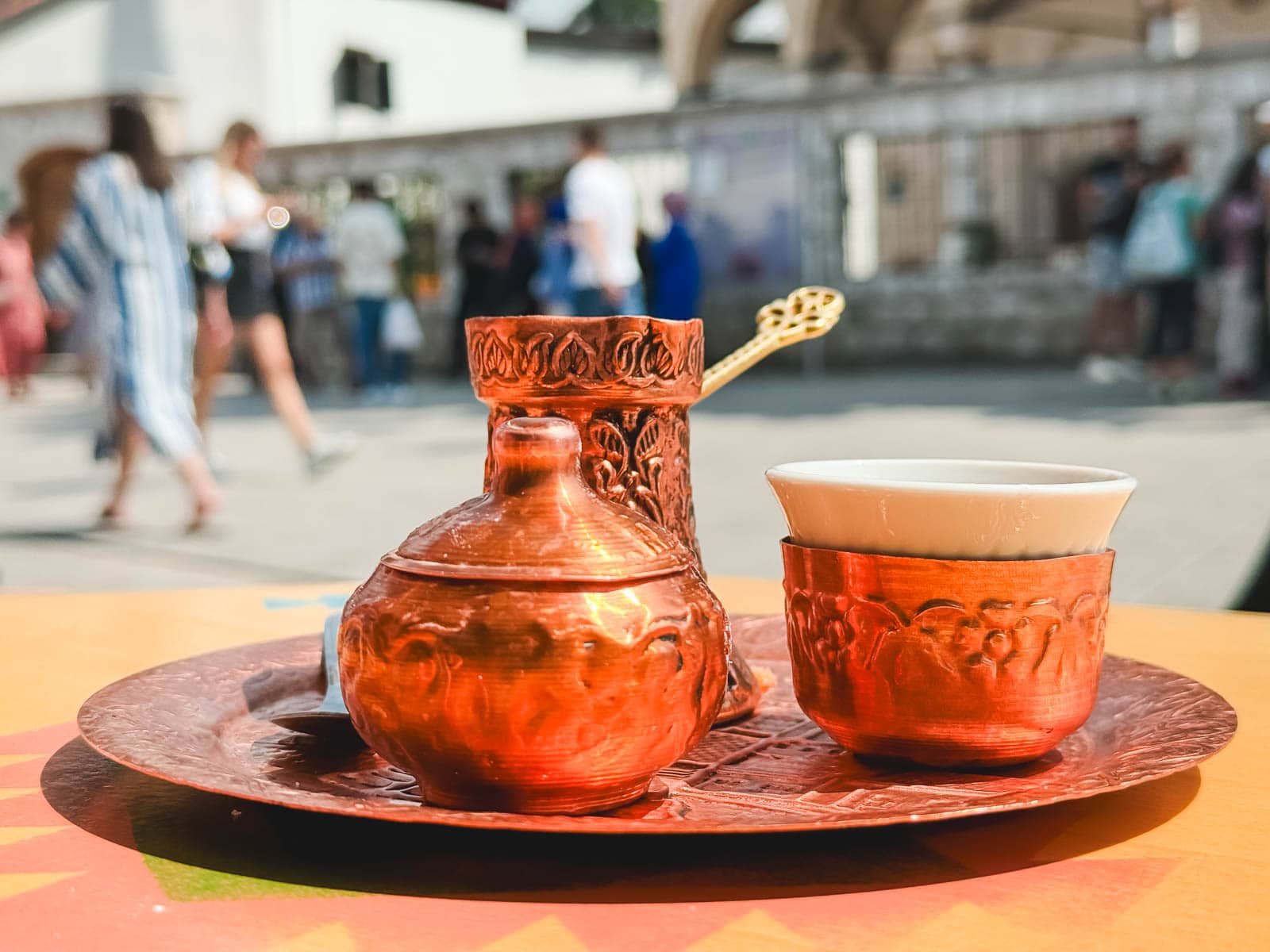
Sip Bosnian coffee at Veliki Park, watch pigeons swirl at Sebilj Fountain, and wander the stone-paved streets where national identity was forged.
5. Latin Bridge & the Spot That Changed the World
One of Sarajevo’s most famous cultural sites is the Latin Bridge. This is where Gavrilo Princip assassinated Archduke Franz Ferdinand, igniting World War I. Today, a small but powerful exhibit beside the bridge walks you through the event that reshaped the 20th century.
6. City Hall (Vijecnica)
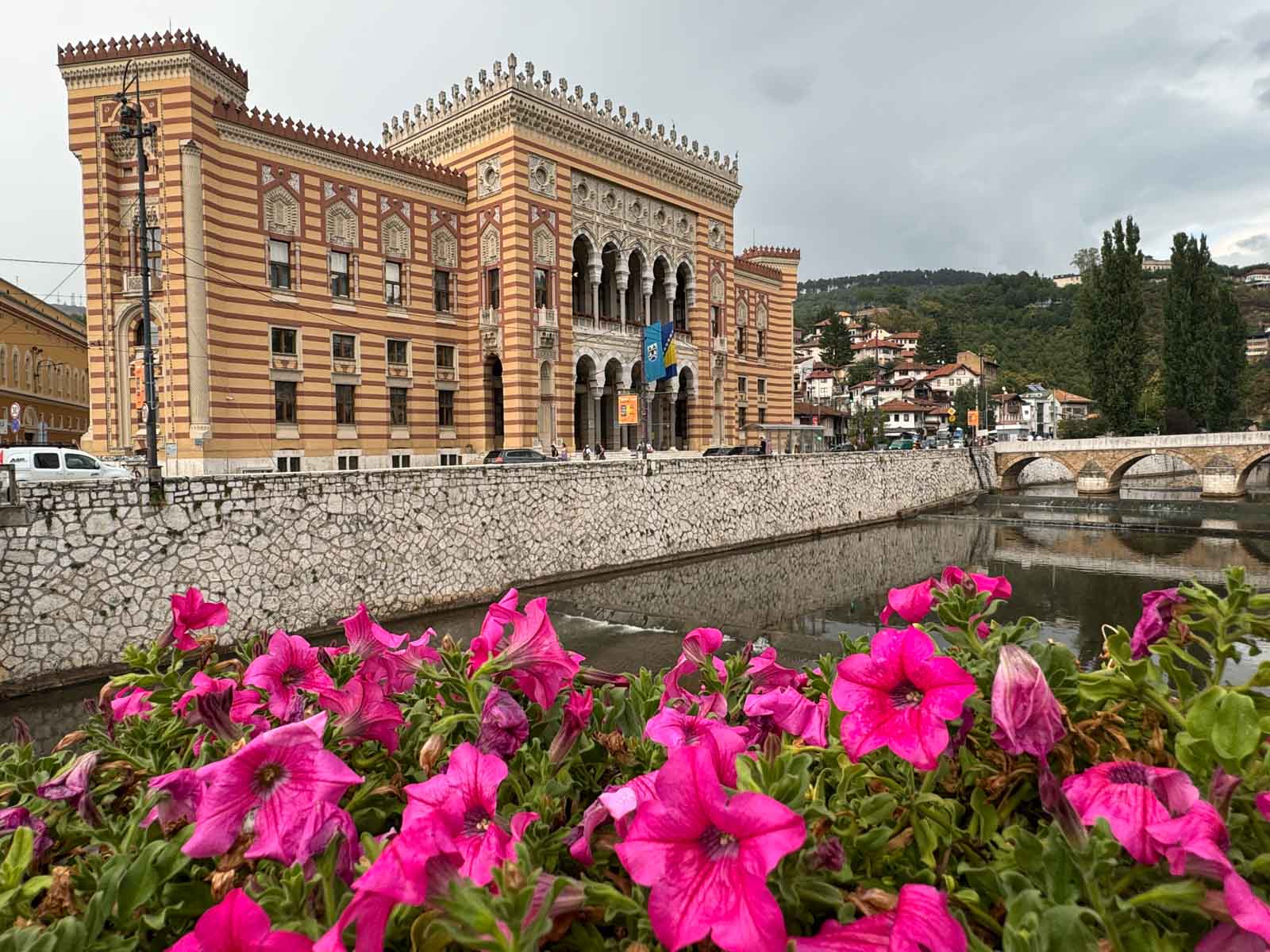
Once the National Library, Sarajevo’s City Hall was destroyed in 1992 by Bosnian Serb forces. Over two million irreplaceable texts were lost. Today, the building has been restored and now hosts exhibitions about Sarajevo’s past and future. It’s one of the best examples of how this city refuses to be defined by destruction.
7. Free Walking Tours in Sarajevo
One of the best ways to enjoy Sarajevo is by joining a free walking tour. Knowledgeable local guides take you through derelict buildings, war memorials, monuments dedicated to resistance, and peaceful parks that were once battlegrounds.
You’ll walk past bullet holes that still scar façades and hear personal stories from survivors. These tours are often tip-based and worth every mark.
8. Sacred Heart Cathedral & the Religious Mosaic
Sarajevo is a rare European capital where mosques, churches, and synagogues share space. Don’t miss the Sacred Heart Cathedral, which sits in the Catholic quarter, and the Old Jewish Cemetery, one of the oldest in the Balkans. The city’s interfaith roots were tested during war—but many Bosnian Serbs, Bosnian Muslims, and Croats still live side by side here.
9. Exploring Sarajevo’s City Center: Where History Meets Daily Life
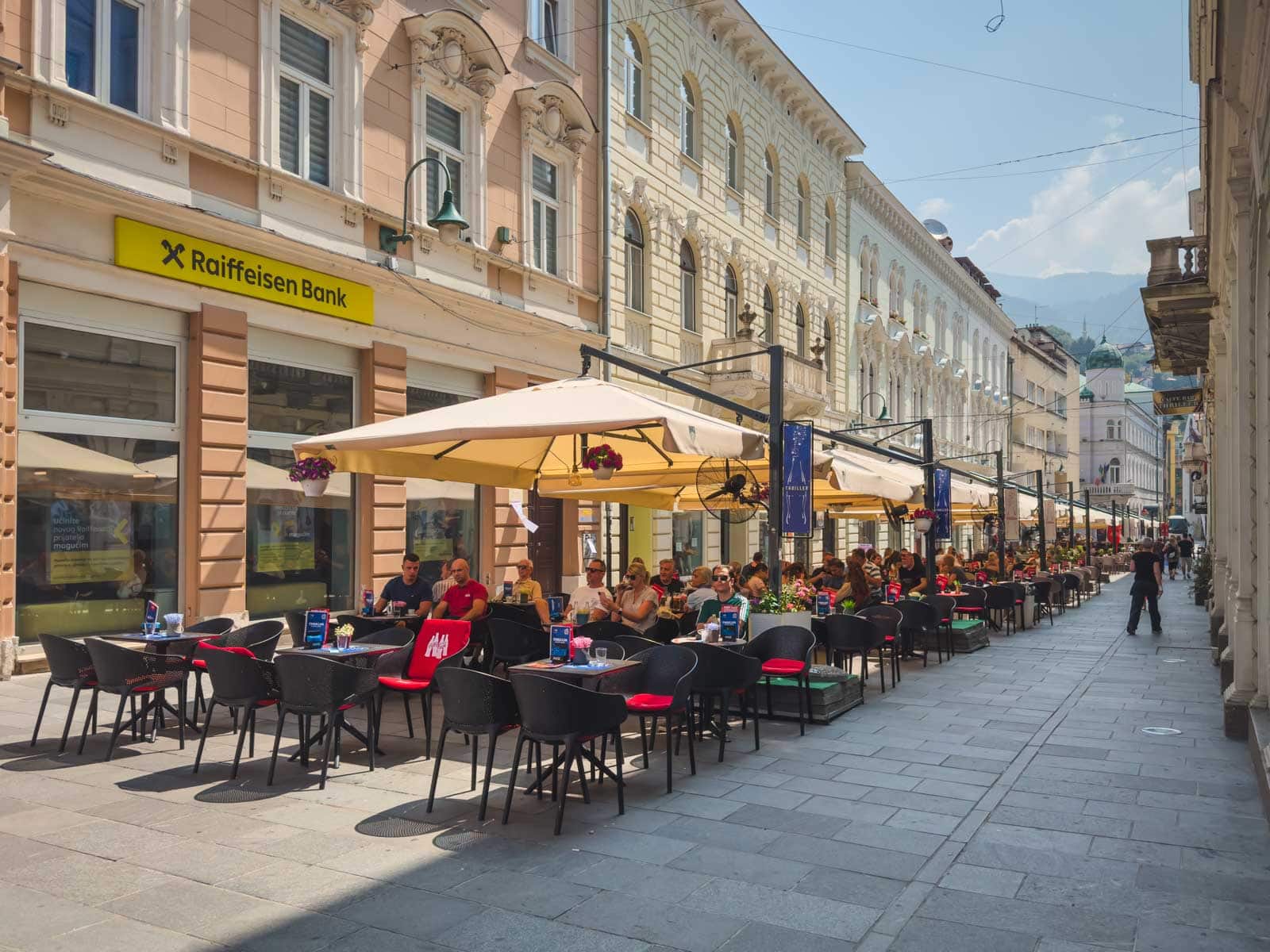
One of the most compelling parts of exploring Sarajevo is that its city center is as much a historical timeline as it is a modern hub. In this compact city, you can stand in a square where emperors once ruled, enjoy coffee just steps from a building pocked with bullet holes, and walk into a museum that used to be a library.
Everything you want to see is within walking distance. It’s what makes visiting Sarajevo so powerful—you’re not just seeing a city; you’re living its history.
10. The National Museum: Understanding Bosnia’s Identity
No trip to Sarajevo is complete without a visit to the National Museum of Bosnia and Herzegovina, located just outside the main tourist zone. This massive cultural complex holds some of the region’s most significant artifacts, including the famed Sarajevo Haggadah, one of the world’s oldest Jewish manuscripts.
It also houses extensive exhibitions on modern history, the Bosnian army, and how Bosnian culture evolved through centuries of occupation and resistance. The museum is a cornerstone for anyone wanting to better understand the identity and resilience of the Bosnian Muslims, Serbs, Croats, and Jews who call this country home.
11. Sarajevo Cable Car & the Yellow Fortress: Viewpoints With a Story
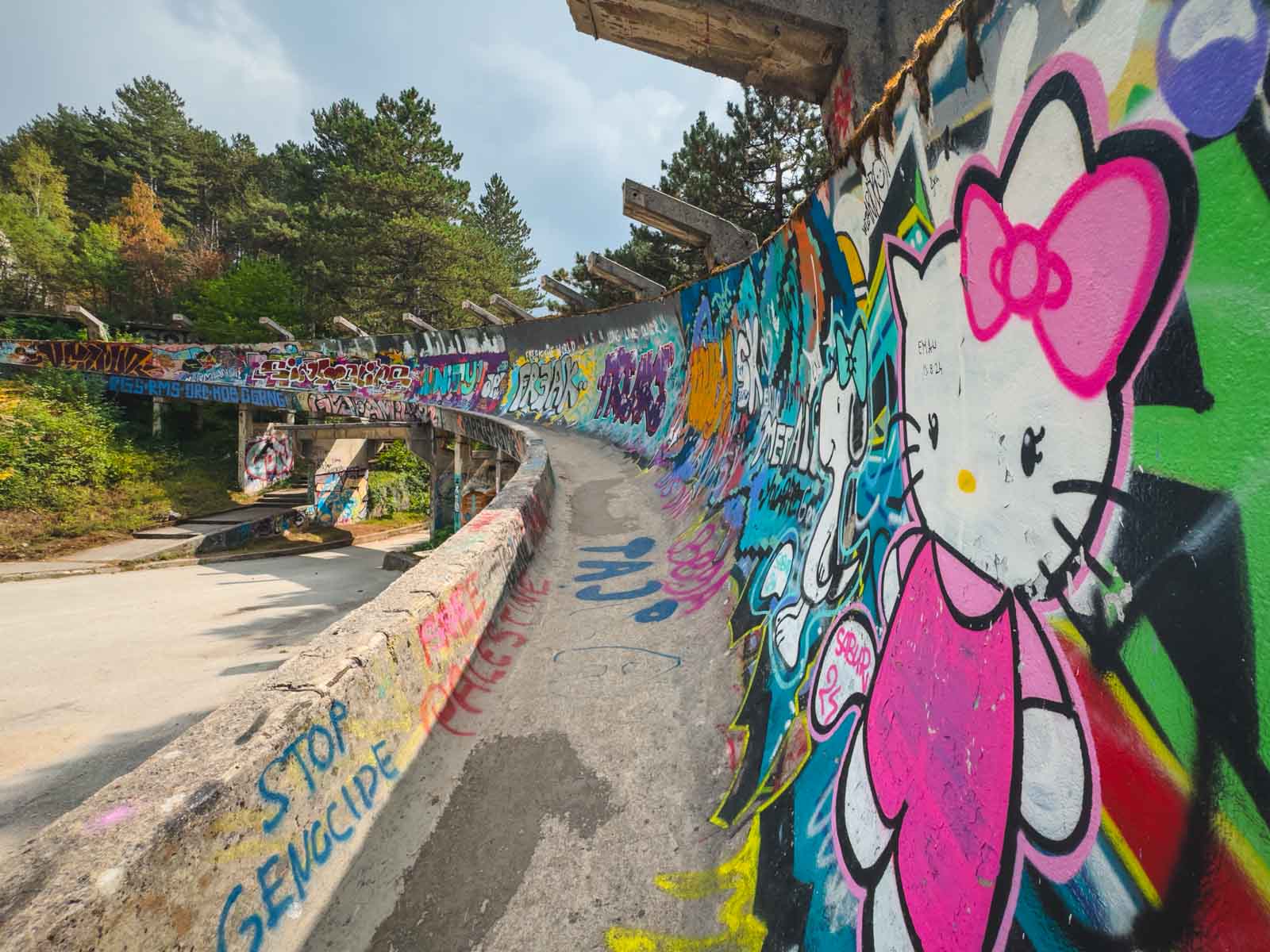
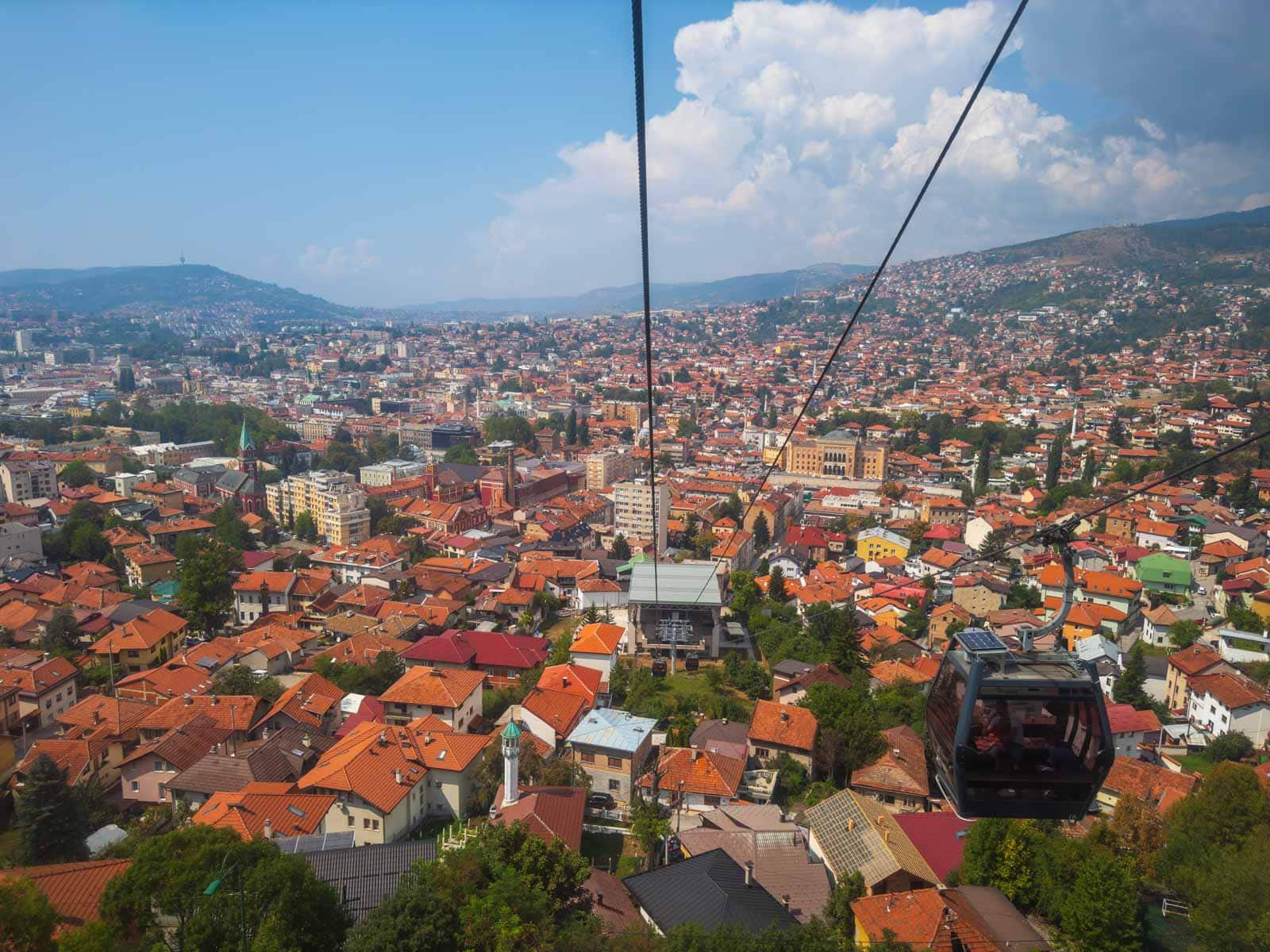
For panoramic views of Sarajevo, ride the Sarajevo Cable Car up to Mount Trebevi?. This area was once used by snipers during the siege. The ruins of the 1984 Winter Olympic bobsled track, now covered in graffiti, lie just a short walk from the summit.
Another must-see is the Yellow Fortress. Come here at sunset to enjoy the best views of the city center and the surrounding hills. Locals gather here to break Ramadan fasts, couples picnic with cevapi, and the call to prayer echoes across the valley. It’s beautiful, humbling, and unforgettable.
12. Sarajevo’s Old Jewish Cemetery: A Silent Witness to History
High above the city, tucked into the surrounding hills, lies the Old Jewish Cemetery, a quiet but powerful place. Dating back to the 16th century, it is one of the largest and most significant Jewish cemeteries in Southeast Europe.
During the Bosnian War, this sacred site was tragically used by snipers due to its strategic elevation. Today, it remains a testament to the long presence and persecution of the Jewish community in Sarajevo.
From the Ottoman Empire to Sniper Alley
Sarajevo’s history is layered with complexity. Over the centuries, it’s been ruled by the Ottoman Empire, shaped by the Austro-Hungarian monarchy, and absorbed into Socialist Yugoslavia. It was here that Archduke Franz Ferdinand was assassinated in 1914, sparking World War I. And decades later, it became the epicenter of another world-changing conflict, the Bosnian War.
After Herzegovina declared independence in 1992, the city found itself under siege by Bosnian Serb forces. The Sarajevo siege became the longest siege of a capital city in modern history, lasting nearly four years.
For nearly 1,400 days, Sarajevo’s compact city center was shelled from the surrounding hills. Serbian forces, armed and supported by the Yugoslav People’s Army, targeted residential blocks, hospitals, schools, and markets. The city’s lifeline, the airport runway, was under international control, cutting it off from the rest of the world.
The international community debated. Civilians were left to dodge mortar shell explosions, sniper fire, and hunger. And yet, they endured. That’s why exploring Sarajevo today is about more than ticking off attractions, it’s about walking through survival.
A Forgotten War, A Canadian Story
Between 1992 and 2004, over 40,000 Canadian troops served in the Balkans as United Nations peacekeepers. It was Canada’s largest military deployment since the Korean War. But this wasn’t peacekeeping as we usually imagine it. They were under fire. They faced war crimes firsthand. And they were largely forgotten back home.
And yet, back home, it barely registered. No embedded reporters. No front-page headlines. Just background noise behind O.J. Simpson and Tonya Harding.
But here in Bosnia & Herzegovina, those Canadians made a difference. They patrolled ceasefires, protected aid convoys, and documented war crimes when others turned away. This trip brought that forgotten story to life, and Sarajevo was the beating heart of it.
In places like the Medak Pocket in 1993, they stood between civilians and violence. It marked a rare moment when Canadian troops directly engaged in combat while protecting civilians. Their reports, documenting war crimes and mass destruction, contributed to international awareness and eventual accountability.
Sarajevo and World War II: A City Torn Twice
While most people associate Sarajevo with the Bosnian War, the city also played a significant role during World War II. Under Nazi occupation, Sarajevo’s Jewish population was devastated, and resistance movements formed deep within the hills and tunnels of the region. The city fell under a fascist puppet regime, later liberated by partisans supported by Tito’s communist government, laying the groundwork for former Yugoslavia.
Walking through Sarajevo’s Old Town, you’ll still find monuments and plaques marking these events, especially near the Jewish Cemetery and memorials dedicated to fallen resistance fighters.
The Bosnian War Ended, But the Story Continues
While the Bosnian War ended in 1995 with the Dayton Accords, the aftershocks are still felt today. The agreement split the country into two main entities: the Federation of Bosnia and Herzegovina and Republika Srpska, where many Serbs live today.
This division has created a complex system of governance, often paralyzing political progress. But on the ground, in places like Sarajevo, locals are choosing connection over separation. It’s this human spirit that defines Bosnian culture today.
Our Sarajevo Hotel Pick
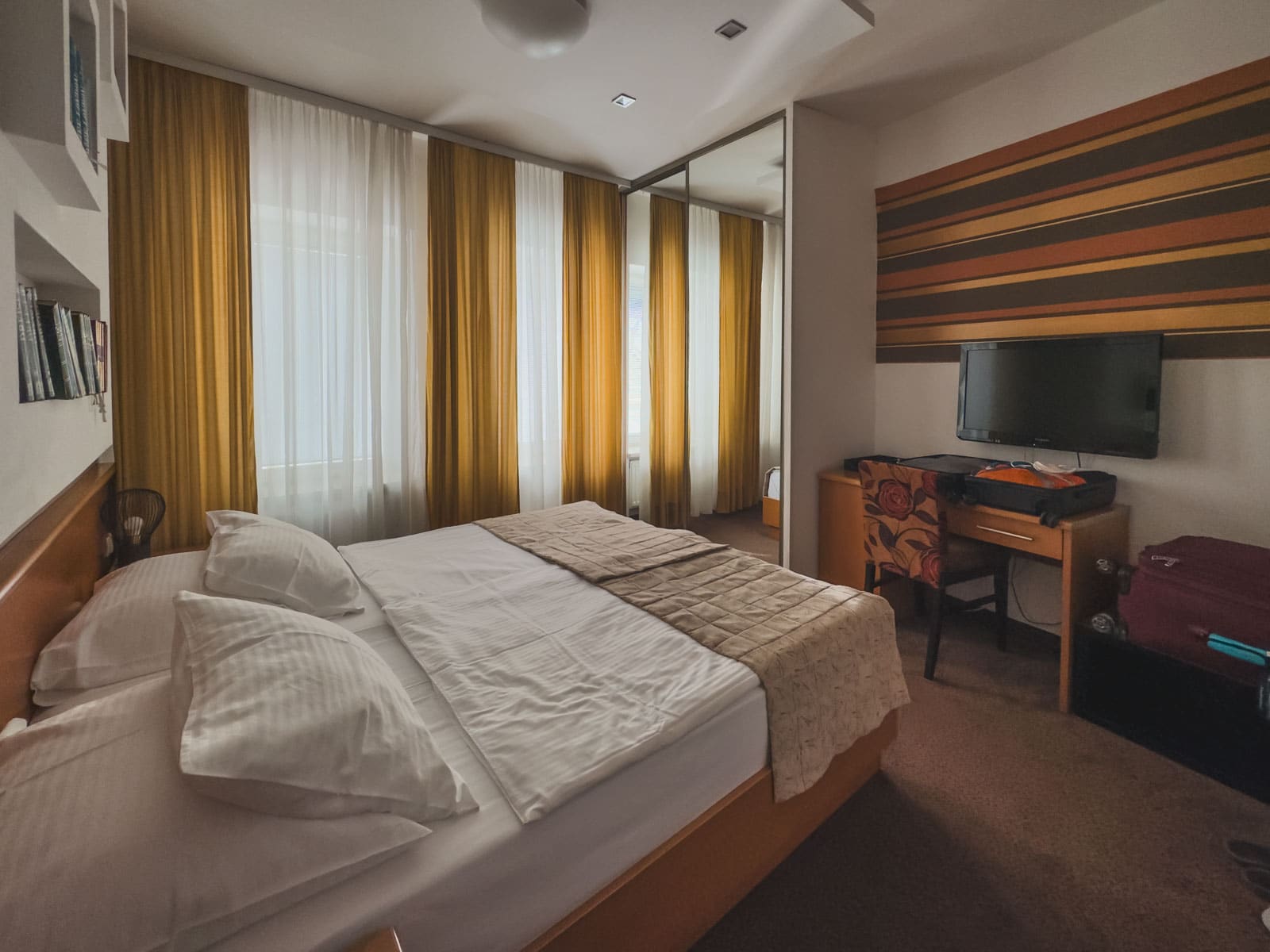
We stayed at Hotel Boutique 36, just steps from Sarajevo’s historic center. With secure parking, comfortable rooms, and first-class service, it’s the perfect base for exploring the city.
Day Trip to Mostar: History in Stone
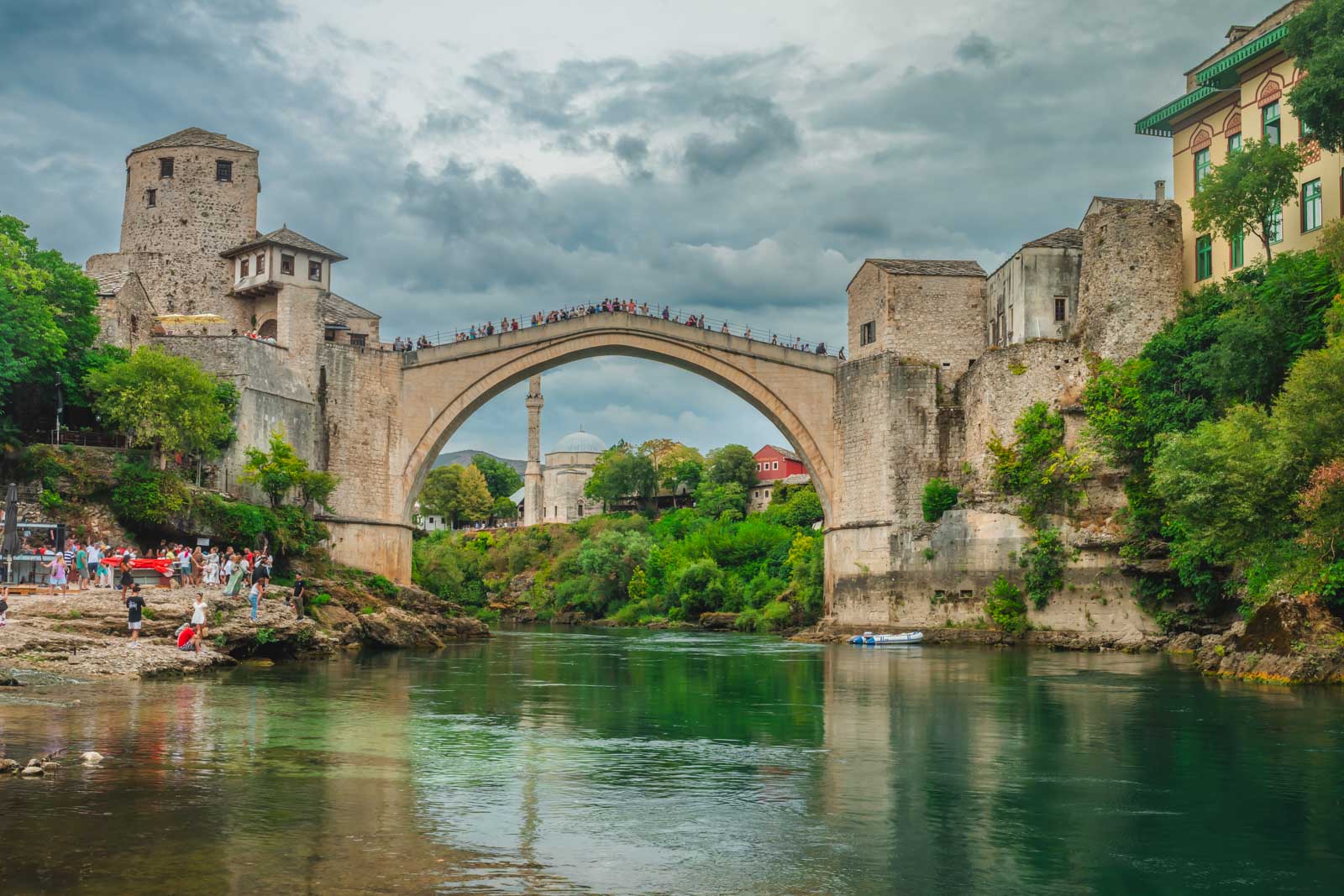
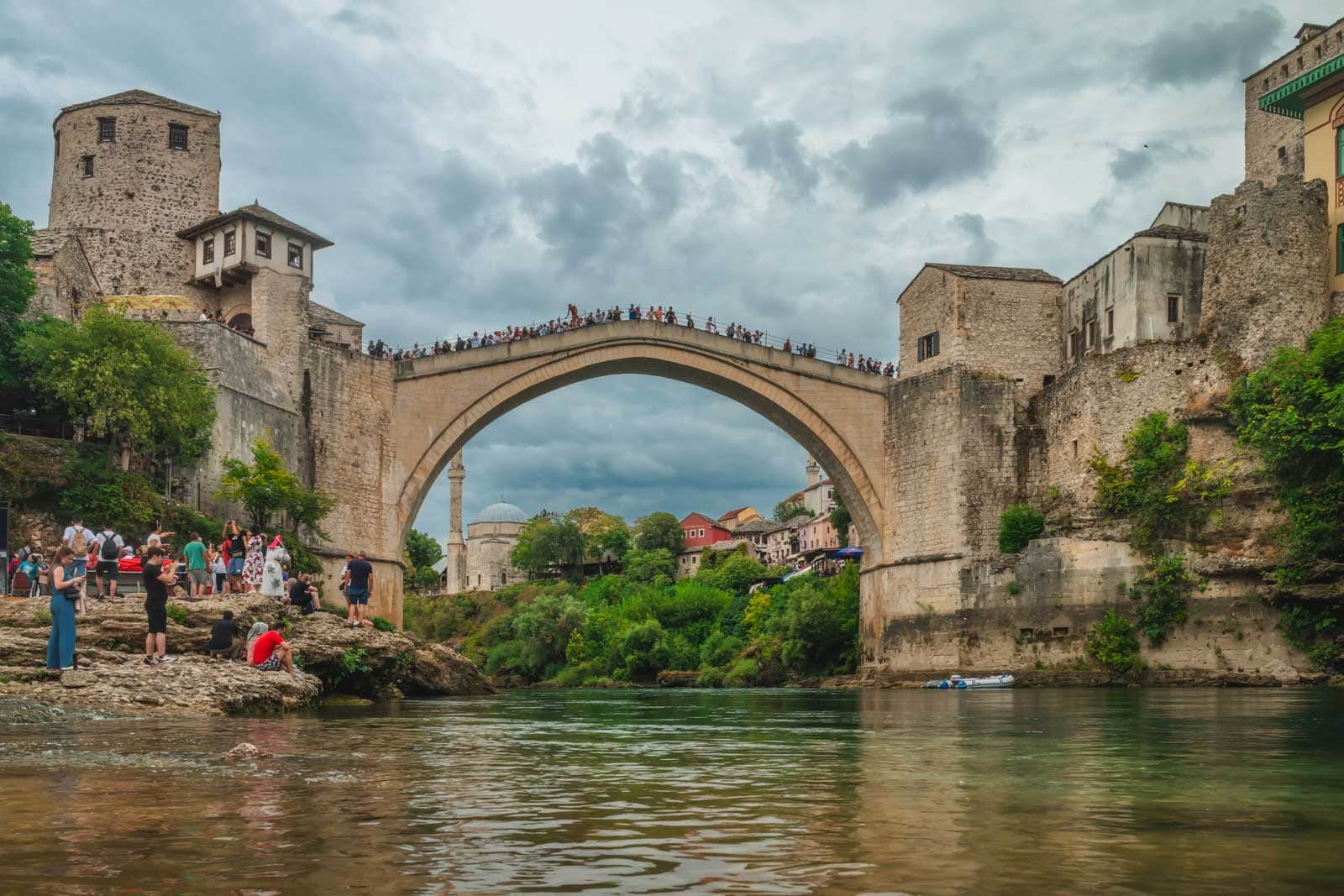
Just a two-hour drive from Sarajevo, the town of Mostar is one of the best places to visit in Bosnia & Herzegovina. Its famous Old Bridge (Stari Most) was destroyed during the war, then rebuilt stone by stone in 2004. Today, it’s a symbol of unity, resistance, and rebirth.
The iconic Stari Most (Old Bridge), originally built in the 1500s, was destroyed during the war and meticulously rebuilt in 2004. Today, local divers leap from it in a ritual that blends tradition and adrenaline.
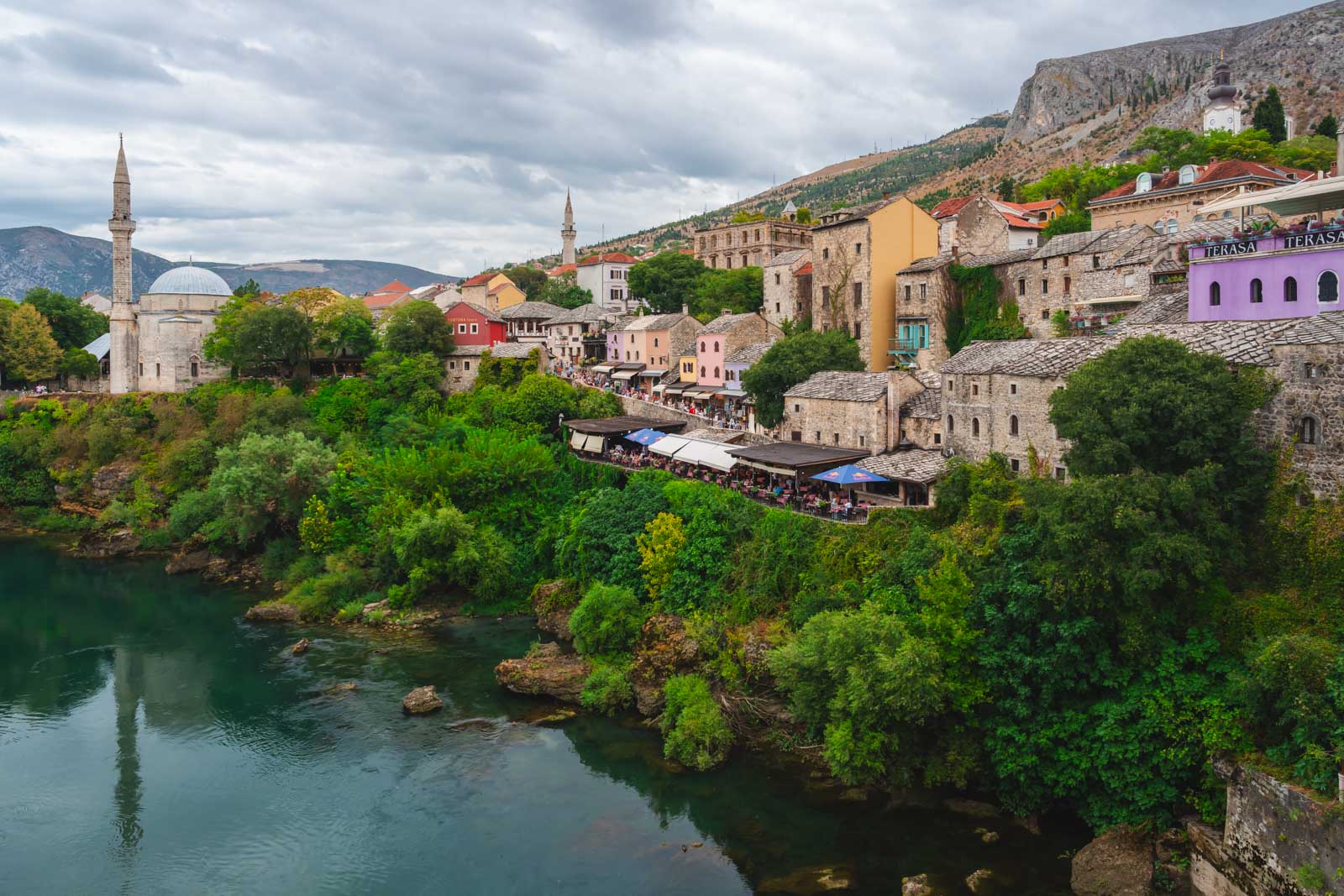
Wander through Mostar’s Ottoman-era streets, sip coffee by the Neretva River, and climb the minaret at Koski Mehmed Pasha Mosque for a panoramic view. The city is still divided, Bosniaks on one side, Croats on the other, but tourism has become a quiet bridge between them.
Wander through the bazaar, sip coffee by the river, and don’t miss:
Koski Mehmed Pasha Mosque – Climb the minaret for stunning city views.
War ruins and cultural museums – Offering context to Mostar’s past.
Hotel Sinan Han – A perfect place to stay, just 100 meters from the bridge.
But Mostar is still divided—Bosniaks on one side, Croats on the other. Two schools. Two realities. Yet, one shared skyline and a longing for unity.
Where to Stay in Mostar: We stayed at Hotel Sinan Han—modern rooms, rooftop terrace, and just 100 meters from the bridge.
Visiting Eastern Bosnia: Echoes of War and Peace
While Sarajevo anchors any itinerary, travelers should also consider visiting Eastern Bosnia, where towns like Srebrenica and Višegrad hold darker, less-touristy chapters of the past. These are areas most impacted by war crimes and ethnic cleansing during the 1990s.
The drive from Sarajevo’s city center to Eastern Bosnia reveals another side of the country, more rural, more rugged, but equally rich in stories. You’ll gain a better appreciation for the complexity of Bosnia and Herzegovina as a nation still healing.
Bosnia & Herzegovina Travel Tips
Planning your Bosnia & Herzegovina adventure? Here’s what to know:
When to Go: Spring and fall are ideal—mild weather, fewer crowds.
Currency: Bosnian Convertible Mark (BAM). Some places accept euros, but BAM is preferred.
Transport: Renting a car is the best way to explore both Sarajevo and Mostar. Roads are good and scenic.
Safety: We always felt safe. The people are welcoming, and hospitality is genuine.
Costs: Bosnia & Herzegovina is incredibly affordable. You can travel well here on a modest budget.
Why You Should Visit Bosnia & Herzegovina in 2025
Bosnia & Herzegovina is one of the most unforgettable places we’ve visited. It’s emotional, educational, and deeply rewarding. Sarajevo, in particular, taught us that beauty and devastation can coexist and that rebuilding is not only possible but also powerful.
This country was abandoned by the West during its darkest hours. And still, people rebuilt. That’s why visiting Bosnia and Herzegovina is so powerful. It’s not just about history. It’s about what comes after.
It’s also about understanding our role, especially as Canadians. Canadian peacekeepers were here before NATO and before the U.S. stepped in. Their contributions were real, and rarely talked about. This isn’t just a destination. It’s a story. One that still matters. One you’ll carry long after you leave.
Bosnia & Herzegovina Will Stay With You
Bosnia and Herzegovina isn’t just a destination, it’s a story. A warning. A celebration of survival. It demands your attention. And if you travel with an open heart, it will reward you with unforgettable memories, breathtaking landscapes, and a deeper understanding of what resilience truly looks like.
Let this be the trip that changes the way you see the world. Because Bosnia doesn’t whisper its past, it speaks it. And if you listen, you’ll never forget it.
Plan Your Trip:
Ready for a journey through Sarajevo and beyond? Bosnia & Herzegovina travel will change the way you see the world.
Discover Sarajevo: A Balanced Guide to Its Culture and History
Introduction to Sarajevo
Sarajevo is a city with a rich history and culture, located in the heart of Bosnia and Herzegovina, with a unique blend of Ottoman, Austro-Hungarian, and communist influences.
The city has a complex past, having been besieged by Bosnian Serb forces during the Bosnian War, which had a profound impact on its development and identity.
Sarajevo is a must-visit destination for anyone interested in history, culture, and resilience, with many cultural sites, historical museums, and war museums to explore.
The city’s compact size and walkability make it easy to explore on foot, with many attractions within walking distance, including the Latin Bridge and the Old Town.
Getting to Sarajevo
The easiest way to get to Sarajevo is by flying into Sarajevo International Airport, which offers international flights to many European cities, including connections to other cities in the region.
From the airport, you can take a taxi or bus to the city center, which is approximately 10-15 minutes away, depending on traffic.
Alternatively, you can use Google Maps to find the best route to your accommodation, with many options available, including public transportation and ride-hailing services.
It’s also possible to take a bus or train from other cities in the region, including Mostar and Belgrade, with regular connections available.
Accommodation
Sarajevo has a wide range of accommodation options, from budget-friendly hostels to luxury hotels, including the Hotel Hecco Deluxe, which offers stunning views of the city.
The best area to stay in Sarajevo is the Old Town, which is close to many attractions and has a lively atmosphere, with many restaurants, cafes, and shops to explore.
You can also consider staying in the surrounding hills, which offer stunning views of the city and are within walking distance to the city center, with many options available, including apartments and guesthouses.
Booking in advance is recommended, especially during peak season, to ensure availability and the best prices.
Sarajevo’s History
Sarajevo has a complex and tumultuous history, having been part of the Ottoman Empire, Austro-Hungarian Empire, and former Yugoslavia, with many cultural and historical sites to explore.
The city was besieged by Bosnian Serb forces during the Bosnian War, which lasted from 1992 to 1995 and had a profound impact on its development and identity.
The war ended with the signing of the Dayton Accords, but the city still bears the scars of the conflict, with many derelict buildings and mortar shell explosions still visible.
The city’s history is still visible in its architecture, with many buildings from the Ottoman and Austro-Hungarian periods still standing, including the Gazi Husrev Beg Mosque and the Yellow Fortress.
Main Attractions
Sarajevo has many main attractions, including the Latin Bridge, where Archduke Franz Ferdinand was assassinated, sparking World War I, and the Old Town, which is filled with historic buildings and cultural sites.
The city is also home to many museums, including the Historical Museum and the War Childhood Museum, which offer a glimpse into the city’s complex past and the experiences of its residents during the war.
The city’s surroundings are also worth exploring, with many natural attractions, including the Trebevi? Mountain and the Veliki Park, which offer stunning views and opportunities for hiking and outdoor activities.
The city’s cable car is also a popular attraction, offering stunning views of the city and the surrounding hills.
Exploring the City
The best way to explore Sarajevo is on foot, with many attractions within walking distance, including the Old Town and the Latin Bridge.
The city has a comprehensive public transportation system, including buses and trams, which make it easy to get around, with many options available, including tickets and passes.
You can also take a free walking tour to learn more about the city’s history and culture, with many guides available, including local residents and experts.
The city’s narrow streets and compact size make it easy to navigate, with many signs and maps available to help you find your way.
Culture and Heritage
Sarajevo is a city with a rich cultural heritage, with many cultural sites and historical museums to explore, including the National Museum and the Jewish Museum.
The city is home to many different ethnic and religious groups, including Bosnian Muslims, Serbs, and Croats, with many cultural events and festivals taking place throughout the year.
The city’s cultural events, including concerts and festivals, are a great way to experience the local culture and meet new people, with many options available, including traditional music and dance performances.
The city’s cultural center is also worth visiting, with many exhibitions and performances taking place throughout the year, including art, music, and theater.
Food and Drink
Sarajevo is known for its delicious cuisine, which includes traditional dishes such as ?evapi and burek, with many restaurants and cafes to choose from, including the Hotel Hecco Deluxe.
The city is also famous for its coffee culture, with many cafes serving high-quality coffee, including the traditional Bosnian coffee, which is an important part of the local culture.
You can also try some of the local drinks, such as rakia and beer, which are popular among locals and visitors alike, with many options available, including traditional pubs and bars.
The city’s food market is also worth visiting, with many fresh produce and local products available, including traditional foods and drinks.
Education and Community
Sarajevo has a strong sense of community, with many cultural events and festivals taking place throughout the year, including traditional music and dance performances.
The city is home to many educational institutions, including the University of Sarajevo, which is one of the oldest and most prestigious universities in the region, with many programs available, including language courses and cultural studies.
The city’s cultural center is also a great resource, with many exhibitions and performances taking place throughout the year, including art, music, and theater.
The city’s community is also very welcoming, with many locals eager to meet and interact with visitors, including language exchange programs and cultural events.
Reconstruction and Revitalization
Sarajevo has undergone significant reconstruction and revitalization efforts since the end of the Bosnian War, with many new buildings and infrastructure projects completed, including the reconstruction of the Old Town and the Latin Bridge.
The city’s historic center has been restored to its former glory, with many historic buildings and cultural sites preserved, including the Gazi Husrev Beg Mosque and the Yellow Fortress.
The city’s surroundings are also being developed, with many new parks and green spaces created, including the Veliki Park and the Trebevi? Mountain.
The city’s reconstruction and revitalization efforts are ongoing, with many new projects and initiatives being implemented, including the development of new cultural and tourist attractions.
Budget-Friendly Options
Sarajevo is a budget-friendly destination, with many affordable accommodation options, including hostels and guesthouses, with prices starting from around 20 BAM (€10) per night.
The city’s food is also affordable, with many traditional dishes available for around 10 BAM (€5), including ?evapi and burek.
The city’s public transportation system is also affordable, with many options available, including buses and trams, with tickets starting from around 1 BAM (€0.50).
The city’s cultural events and attractions are also affordable, with many free or low-cost options available, including guided tours and exhibitions.
Links to Other Cities
Sarajevo is well-connected to other cities in the region, with many bus and train connections available, including connections to Mostar and Belgrade.
The city’s airport also offers international flights to many European cities, with many options available, including connections to other cities in the region.
The city’s tour operators offer many guided tours and excursions to other cities and attractions in the region, including visits to the Srebrenica genocide memorial and the War Childhood Museum.
The city’s location makes it a great base for exploring the surrounding region, with many natural attractions and cultural sites to visit, including the Dinaric Alps and the Neretva River.
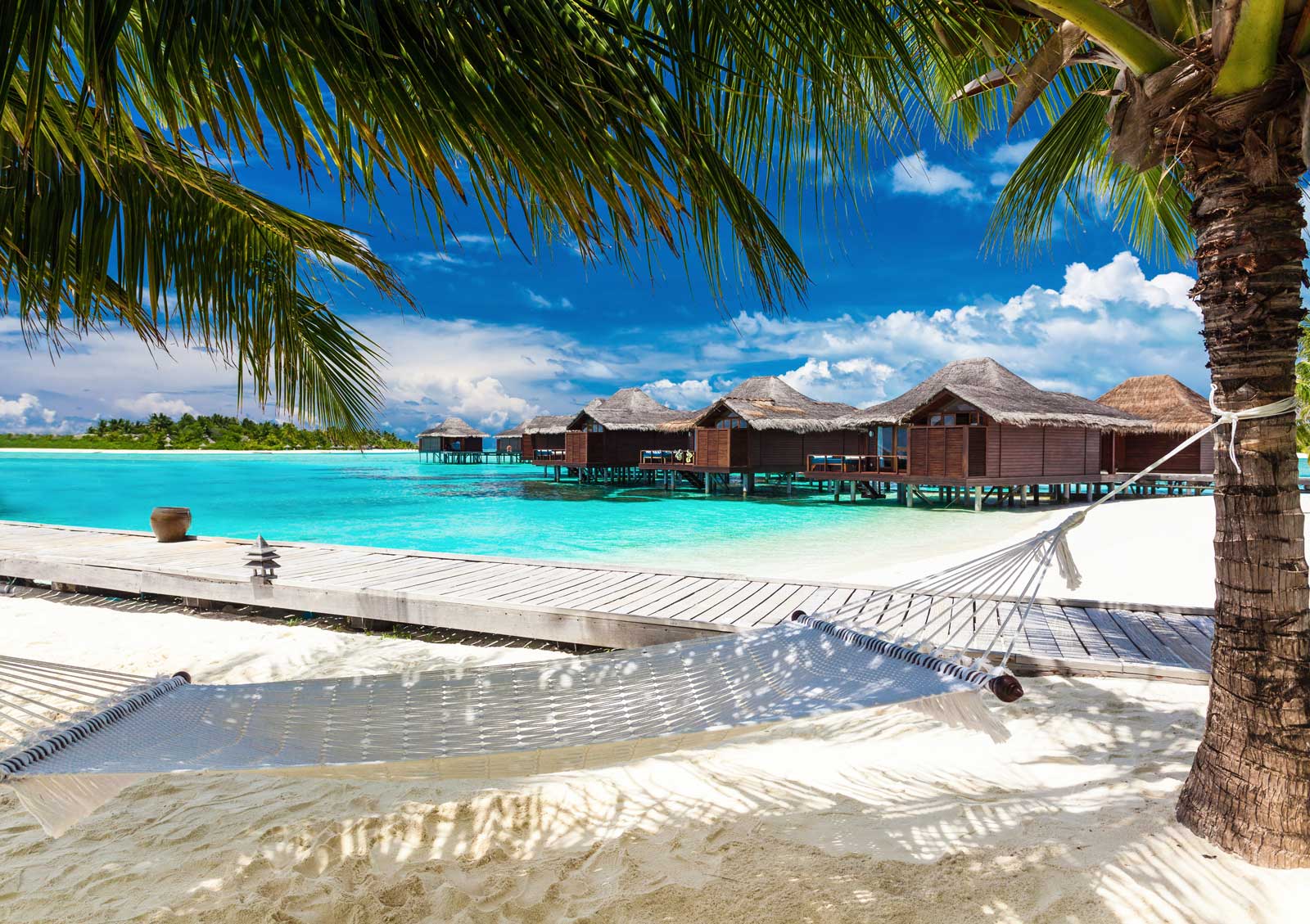
There’s something uniquely magical about staying in an overwater bungalow. It’s the kind of dream vacation that feels like it belongs on a postcard—turquoise waters, private infinity pools, and your own direct access to the sea. And while the Maldives often gets the spotlight, the Caribbean has quietly become a top-tier destination for over the water bungalows Caribbean style. If you’ve ever asked yourself whether overwater bungalows are worth it, the answer, especially in the Caribbean, is yes.
Overwater Bungalows in the Caribbean Sea – Maldives in Your Backyard
The region’s best overwater bungalows now offer luxurious touches, such as glass floors, soaking tubs, and sun-drenched private terraces, all perched over vibrant marine life. Whether you’re escaping to a private island, unwinding in an adults-only resort, or diving into coral reefs from your deck, there’s an unforgettable experience waiting across destinations like Panama’s Caribbean coast, Saint Lucia, and Montego Bay, Jamaica. And of course, many of these dreamy stays are located at world-renowned Sandals Resorts, where villas feature butler service, gourmet dining, and all-inclusive amenities.
Top Overwater Bungalows in the Caribbean at a Glance
If you’re short on time or just browsing for quick inspiration, here’s a snapshot of the best overwater bungalows in the Caribbean. These resorts combine luxury, design, and an unforgettable connection to the Caribbean Sea.
Aruba Ocean Villas – Adults-only retreat in Aruba with private plunge pools, outdoor showers, and overwater hammocks.
Sandals Grande St. Lucian – Romantic suites in Saint Lucia with glass floors, tranquility soaking tubs, and butler service.
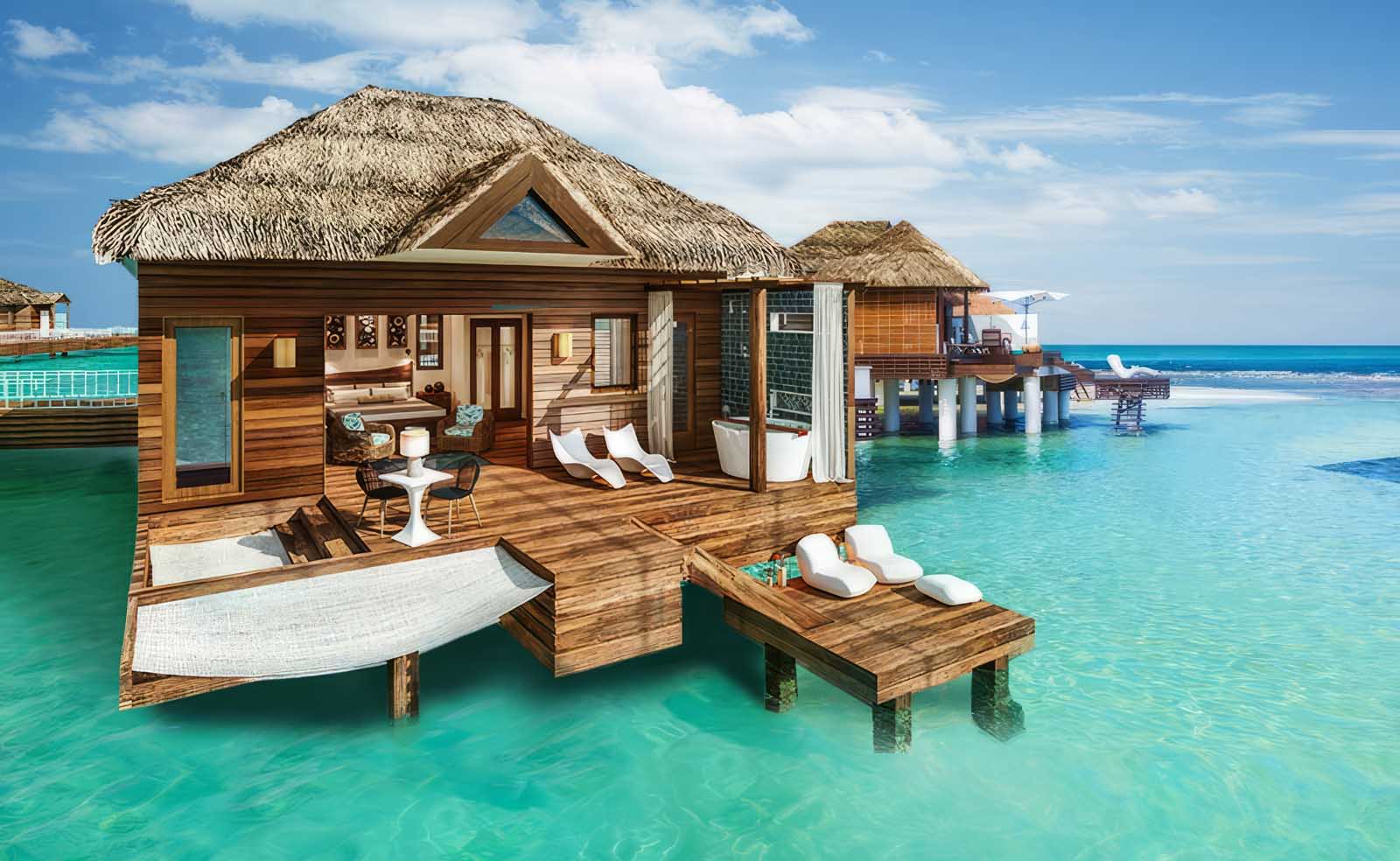
Sandals Royal Caribbean – Located on a private island in Montego Bay, these suites feature floating water hammocks and sea-through glass floors.
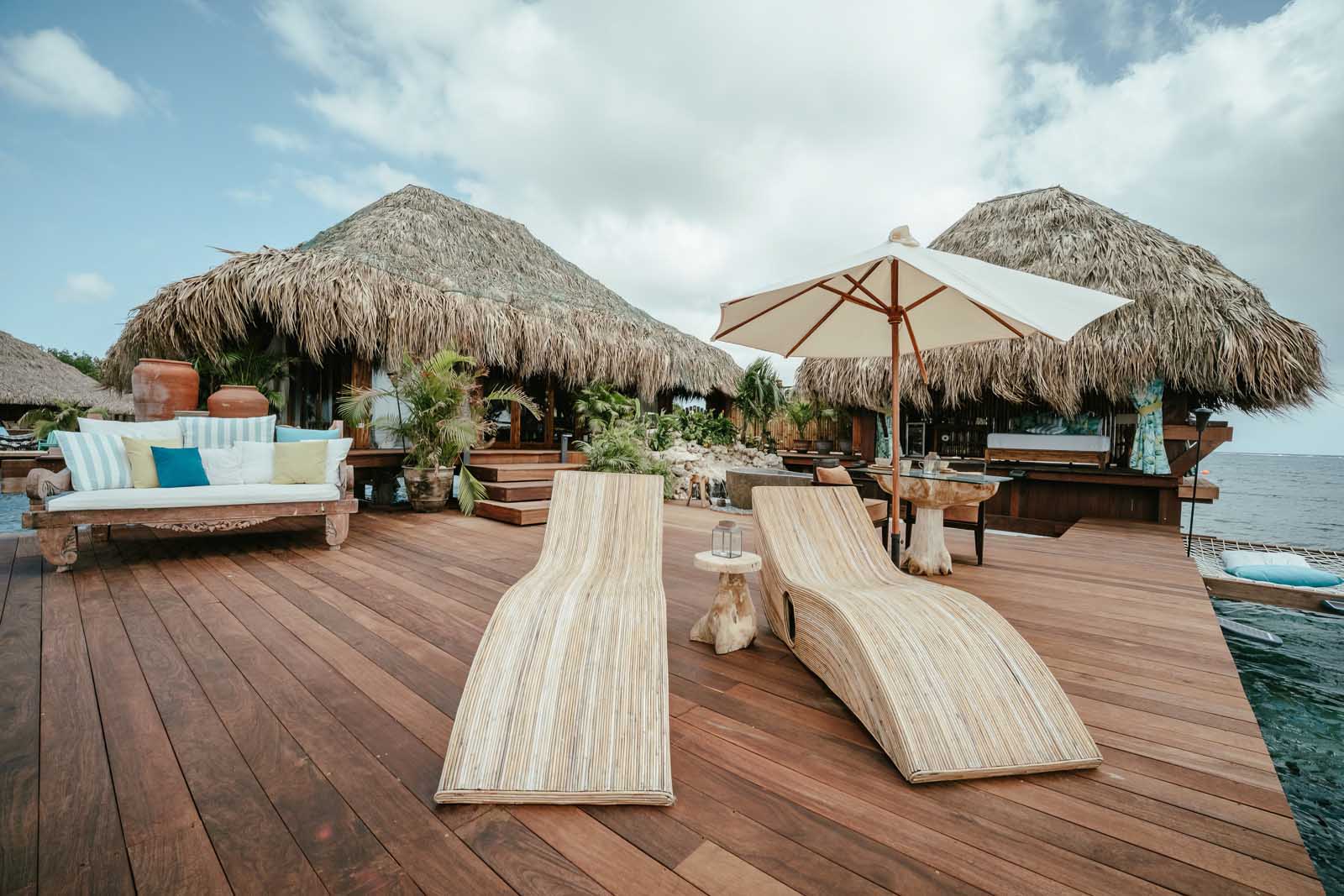
Thatch Caye, Belize – Eco-friendly escape with rustic bungalows and a raw, immersive marine setting.
Punta Caracol Acqua Lodge, Panama – Solar-powered overwater cabins ideal for sustainable travelers seeking peace and privacy.
Palafitos Overwater Bungalows, Mexico – Elegant, adults-only bungalows with direct reef access and private infinity pools in Playa del Carmen.
Royalton Antigua – Features the Chairman’s Overwater Bungalow with a king-size bed, private deck, and infinity pool in Islands Village.
Rosewood Mayakoba – Lagoon studios in Mexico’s Riviera Maya with outdoor soaking tubs and lush jungle surroundings.
St. George’s Caye Resort – Traditional bungalows in Belize offering intimate connections to nature and direct access to the Caribbean Sea.
Banyan Tree Mayakoba – Two-story villas with infinity pools, boutique luxury, and access to a nearby rainforest.
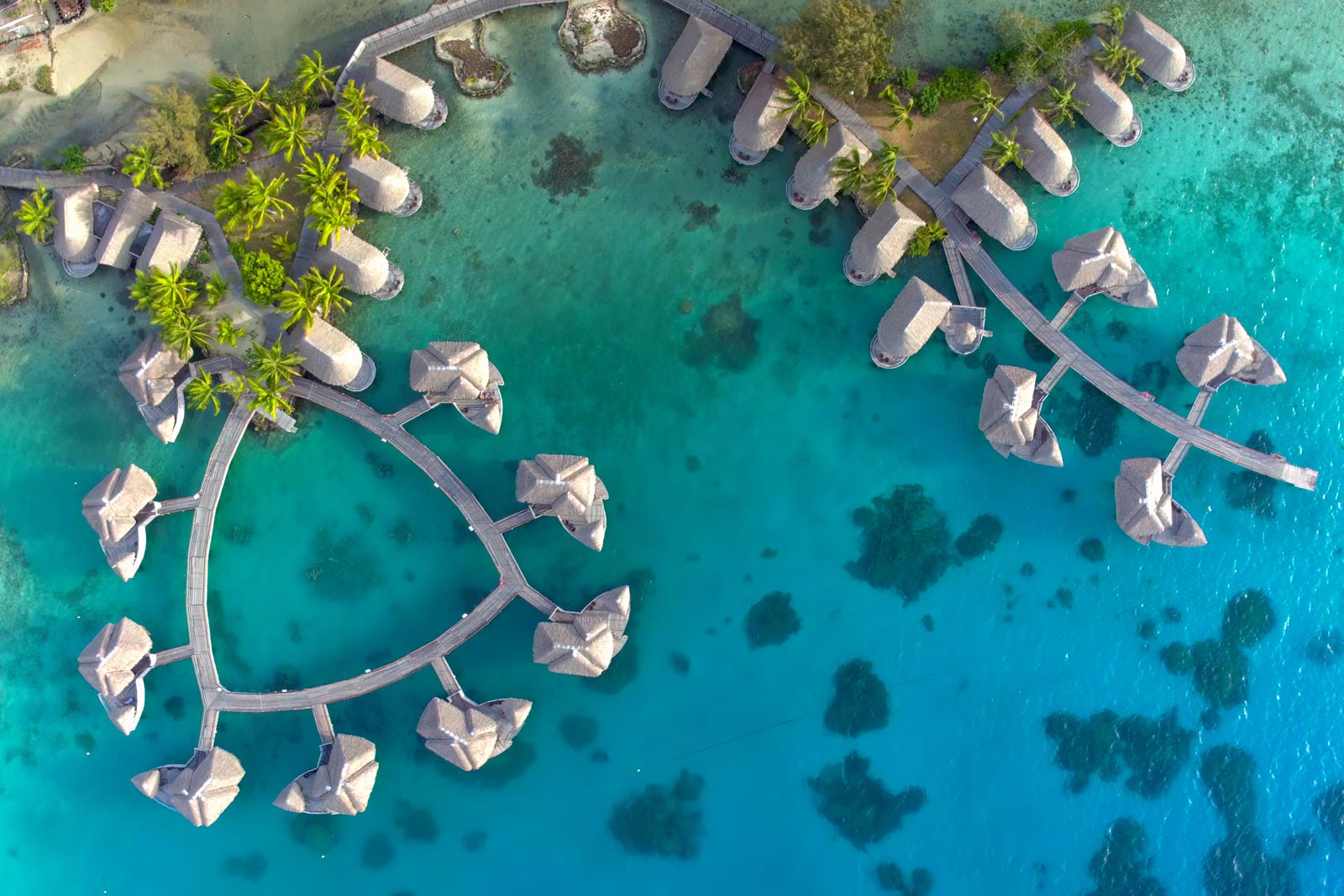
Sandals South Coast – Heart-shaped bungalow layout in Jamaica with plunge pools, glass floor panels, and tranquil ocean views.
Sol Bungalows, Bocas del Toro – Stylish and affordable overwater stays with direct access to vibrant waters and netted floors.
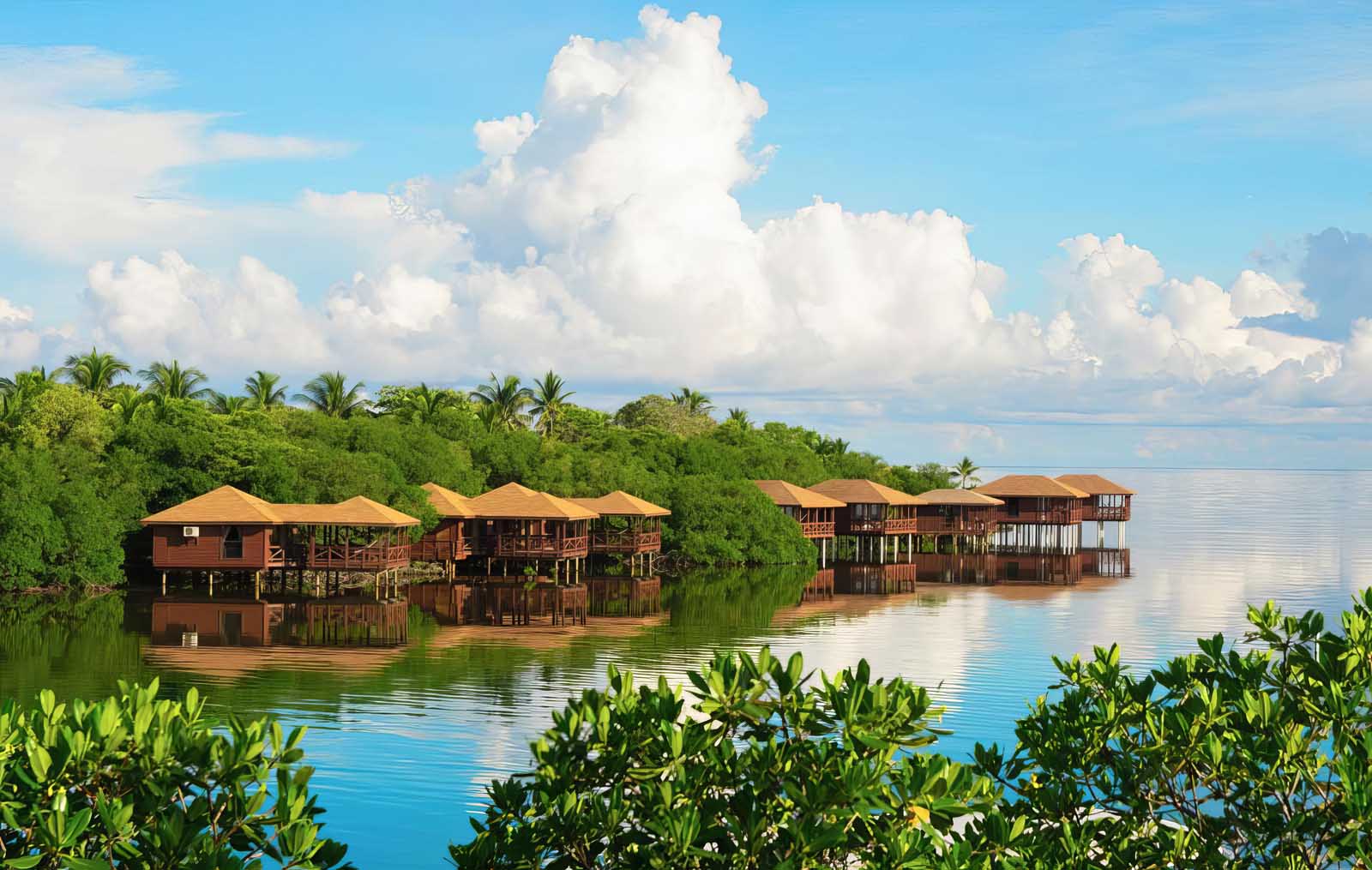
Anthony’s Key Resort, Honduras – Overwater suites designed for divers, with panoramic sea views and easy reef access.
Eclypse de Mar Acqua Lodge – Eco-conscious wooden villas surrounded by rich marine life and nearby rainforest hikes.
Azul Paradise, Panama – Rustic luxury over turquoise waters, perfect for off-the-grid escapes on pristine beaches.
Sandals Saint Vincent – Lavish new escape with heated plunge pools, sumptuous king size beds, and rainforest-meets-lagoon views.
This guide unveils the best overwater bungalows for 2025. Whether you’re seeking a romantic escape, a unique eco friendly resort, or lavish accommodations with a heated plunge pool and overwater bar, each of these overwater suites promises an unmatched connection to nature and the Caribbean Sea. Let’s dive into your tropical paradise.
Ready to discover luxury overwater bungalows in the Caribbean? Whether you want sea through glass floors, plunge pools, or butler service, these Caribbean overwater bungalows are in a league of their own. They offer the only overwater bungalows in the region, making them exclusive and unique.
1. Aruba Ocean Villas Adults Only Overwater Bungalows
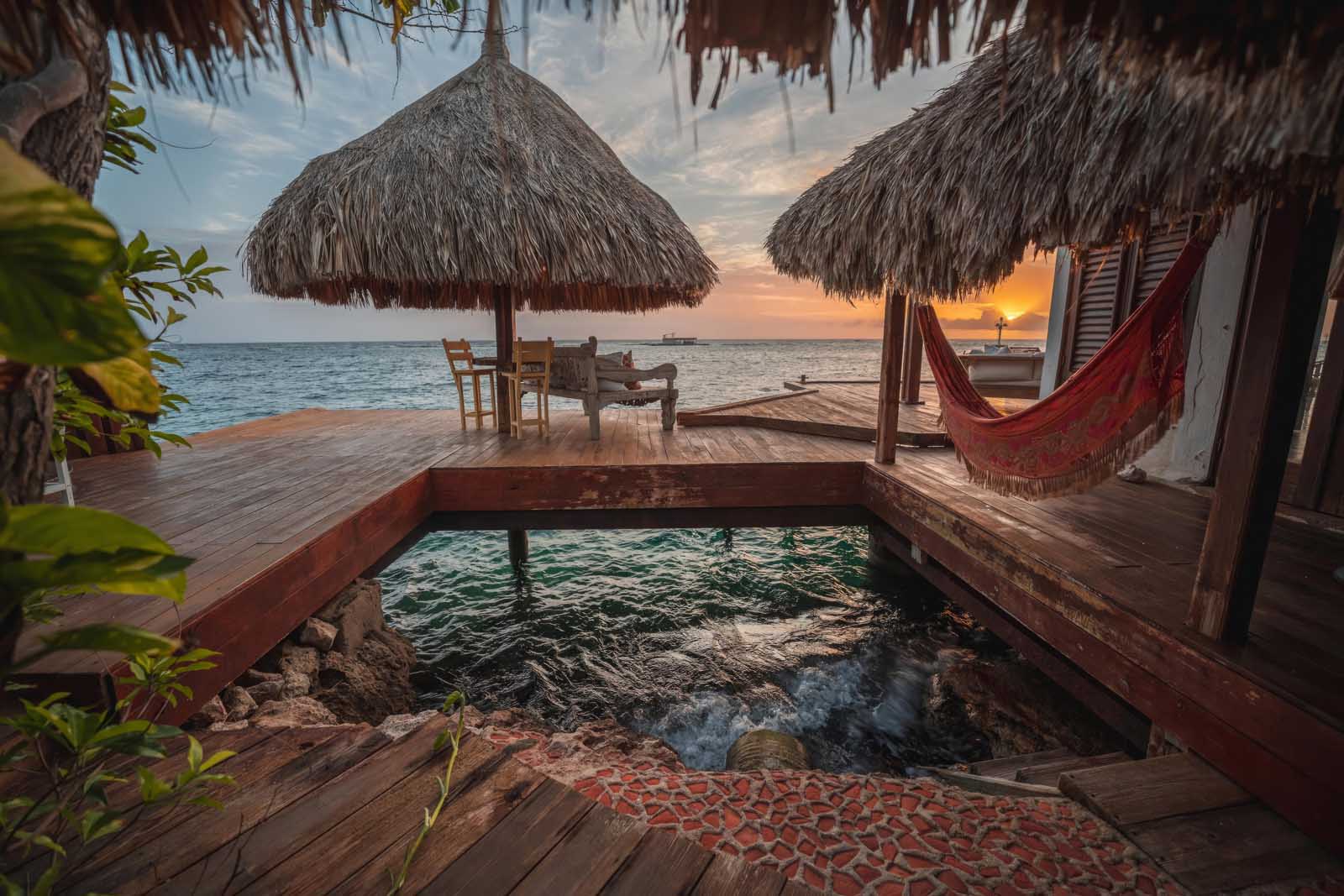
Tucked away in the quiet village of Savaneta, Aruba Ocean Villas is one of the Caribbean’s best-kept secrets and home to some of the only overwater bungalows in Aruba. This adults-only resort offers a boutique, barefoot-luxury experience. With just a handful of villas suspended over the Caribbean Sea, the atmosphere is tranquil and secluded. Each villa features outdoor shower, overwater hammocks, or private plunge pools, and all offer direct access to the Caribbean’s finest turquoise waters. There are no TVs here—just the sounds of nature and the views of the horizon. With rates starting at $1,300 per night, it’s a private retreat that’s hard to match.
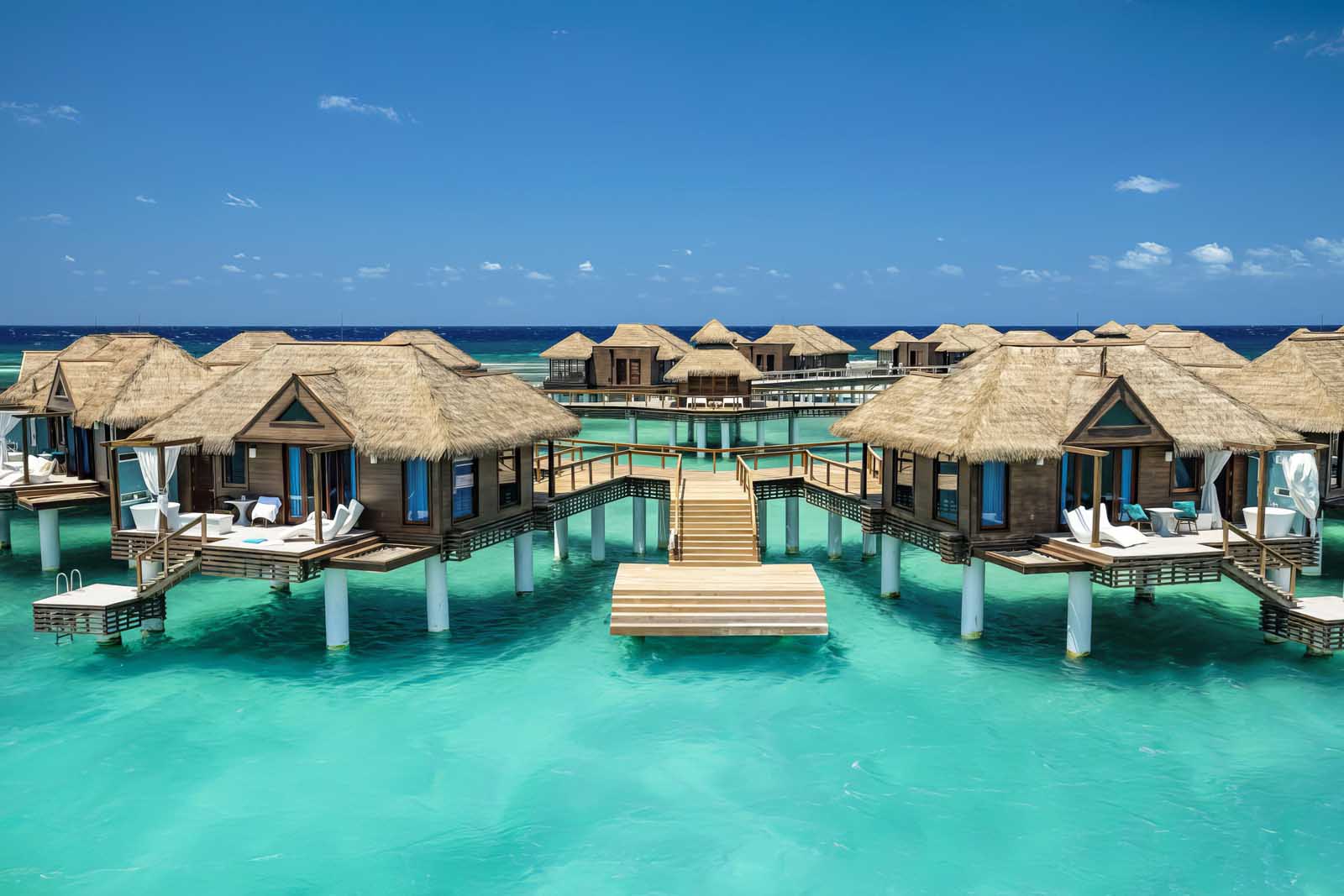
Sandals Royal Caribbean in Montego Bay is the definition of a tropical paradise. Located on its own private island just offshore, this Sandals Resort offers some of the most iconic overwater bungalows in the Caribbean. Each villa features glass floors, tranquility soaking tubs, and an overwater hammock suspended above the vibrant marine life below. Guests enjoy butler service, access to multiple restaurants, and water sports just steps from their door. Whether you’re sunbathing on your private deck or sipping cocktails at sunset, this is an overwater bungalow experience worth splurging on.
Thatch Caye Resort, a Muy’Ono Resort, is on an island off mainland Belize. Thatch Caye Resort has views that seem to outdo most other overwater bungalows with lazy ease. Each bungalow has 180-degree views of the ocean and the resort’s private island from a private suspended patio. It’s impossible not to love the rustic designs and chunky indoor furniture made from beechwood.
Off the coast of Belize, Thatch Caye Resort is a laid-back escape that delivers rustic charm with a luxury edge. The overwater bungalows are simple but beautiful, made with natural wood and perched right above the sea. Each has a suspended patio and ocean views that stretch to the horizon. This is where you come to disconnect. There’s no loud nightlife, just ocean breezes and the gentle sound of waves. If you’re looking for one of the most serene overwater bungalow options in the Caribbean, this is it.
Since Belize City is well-connected for international visitors to fly to, reaching Thatch Caye Resort is surprisingly easy to arrange.
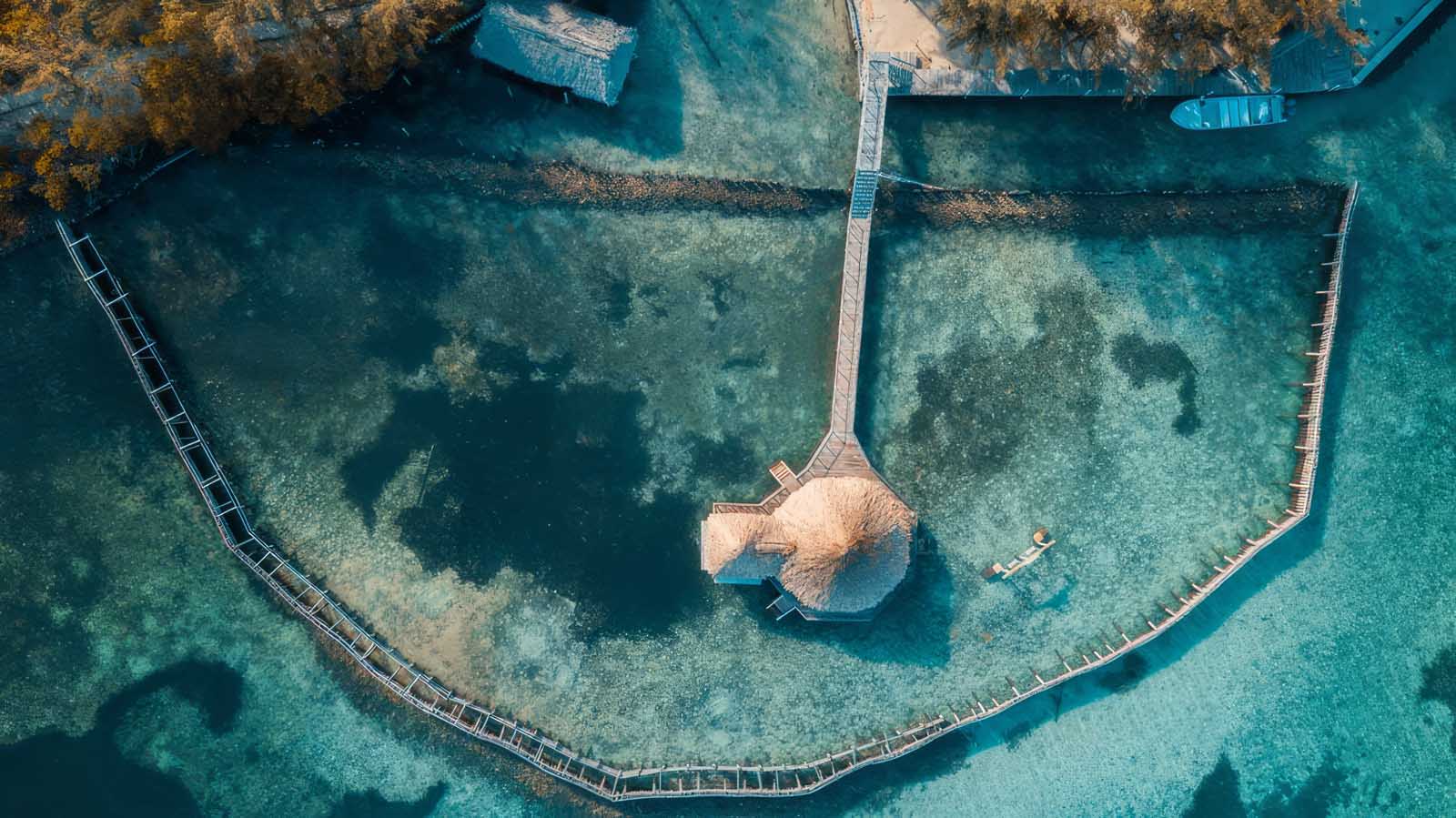
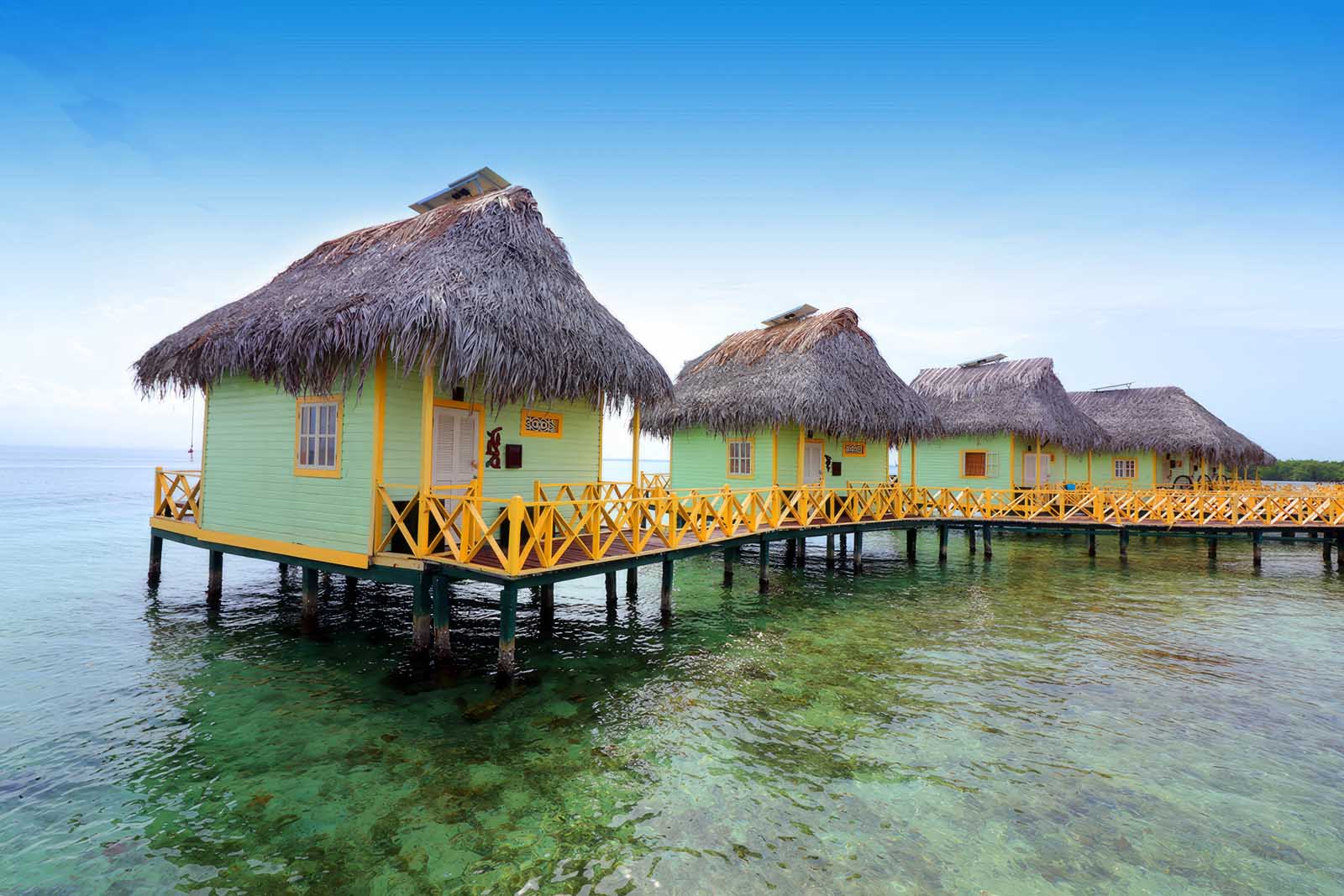
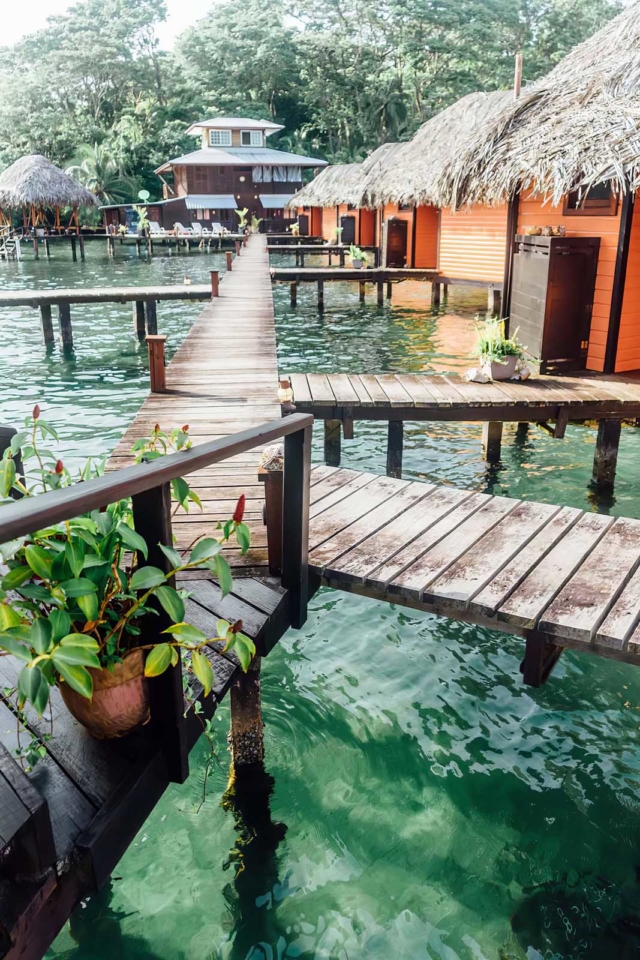
If you thought Thatch Caye was beautiful, wait until you see Punta Caracol Acqua Lodge. Sitting quietly along Panama’s Caribbean coast in Bocas del Toro, Punta Caracol Acqua Lodge is where sustainability meets serenity. These palm-thatched overwater bungalows are solar-powered and built entirely from natural materials.
On Panama’s Caribbean coast in Bocas del Toro, Punta Caracol Acqua Lodge offers solar-powered overwater bungalows with thatched roofs and a deep connection to nature. These eco-conscious villas feature traditional design, minimal energy use, and candlelit evenings. Guests enjoy daily excursions to see dolphins, snorkel coral reefs, and hike through rainforest. For travelers looking for something different from the typical resort, Punta Caracol delivers a quiet, meaningful overwater escape at a fraction of the price.
5. Palafitos Overwater Bungalows at El Dorado Maroma
Something about the white sand beaches and iconic Mexican coastline just lends itself to the dream of staying on the Caribbean Sea for as long as possible. And Palafitos Overwater Bungalows at El Dorado Maroma just proves why.
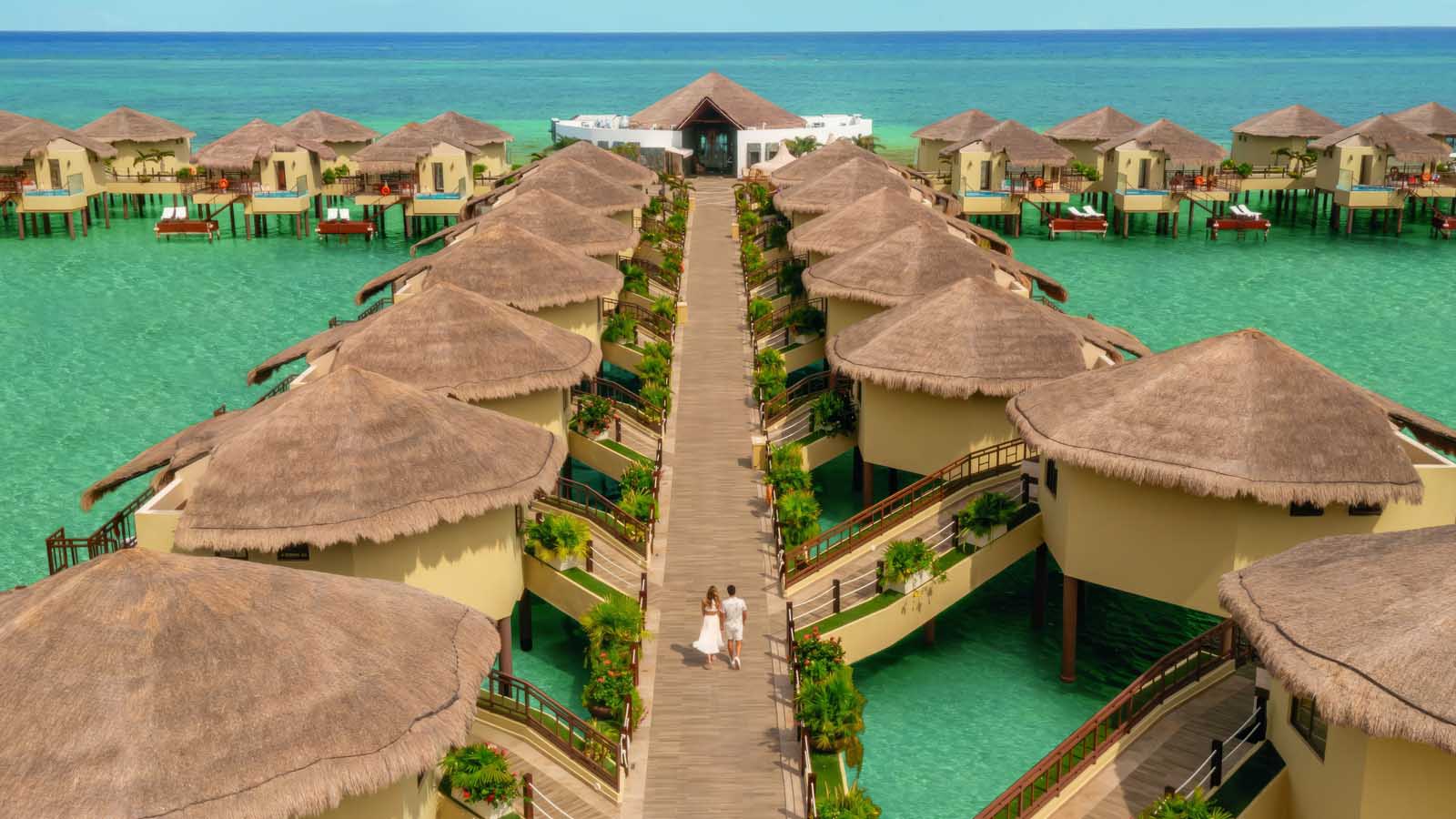
Located along Mexico’s Riviera Maya, these are among the most glamorous overwater bungalows in the Caribbean, featuring private infinity pools, indoor jacuzzis, glass-bottom floors, and direct access to turquoise waters. This adults only resort also includes fine dining room, 24-hour room service, and curated experiences for couples. Palafitos proves that overwater bungalows are not only worth it, they might just be the highlight of your travel year.
Location: Five Islands Village, AntiguaStarting Rate: $400/night Check Prices Here.TripAdvisor Rating: 4.0/5
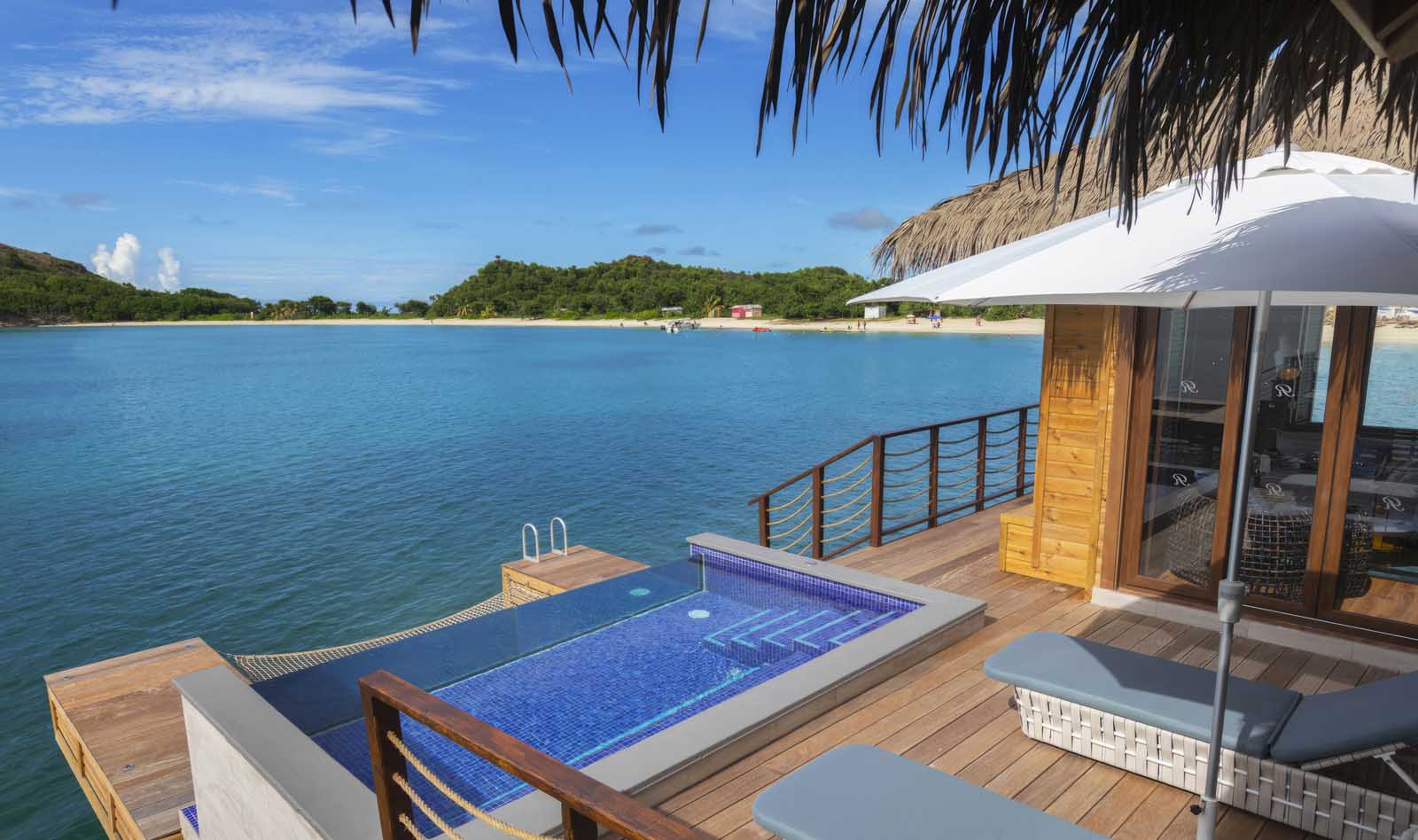
Royalton Antigua Resort combines family-friendly all-inclusiveness with five-star overwater bungalow options, including their signature Chairman’s Overwater Bungalow. Each villa features a master bedroom with a king size bed, a soaking tub, and an outdoor terrace with an infinity pool. There’s butler service, of course, and the resort’s location in Five Islands Village offers incredible sunset views and calm waters. This resort delivers Caribbean luxury that’s approachable and romantic, whether you’re honeymooning or celebrating something special.
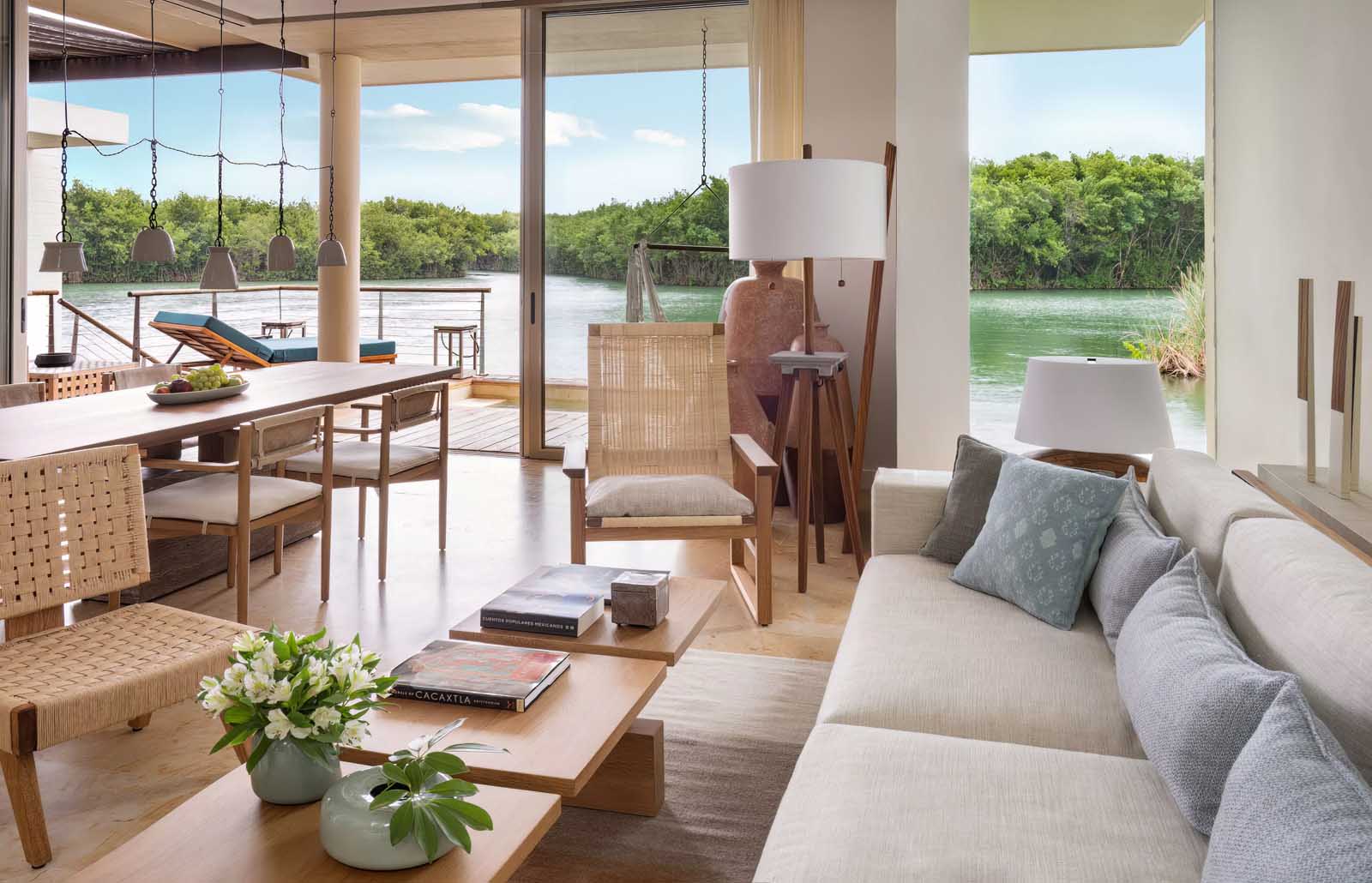
At Rosewood Mayakoba, Mexico, you get to stay amongst mangroves and jungle on the Riviera Maya.
If you’ve ever wanted to explore a mangrove-filled coastline by boat before arriving at your suite, Rosewood Mayakoba is the place. These villas, located in a private enclave along the Riviera Maya, are spacious, serene, and connected to nature. Villas feature outdoor shower, rooftop terraces, and plunge pools facing out over lagoons. Some suites even offer full dining rooms and two-bedroom layouts, perfect for families or small groups. It’s a unique and memorable way to enjoy the Mexican Caribbean.
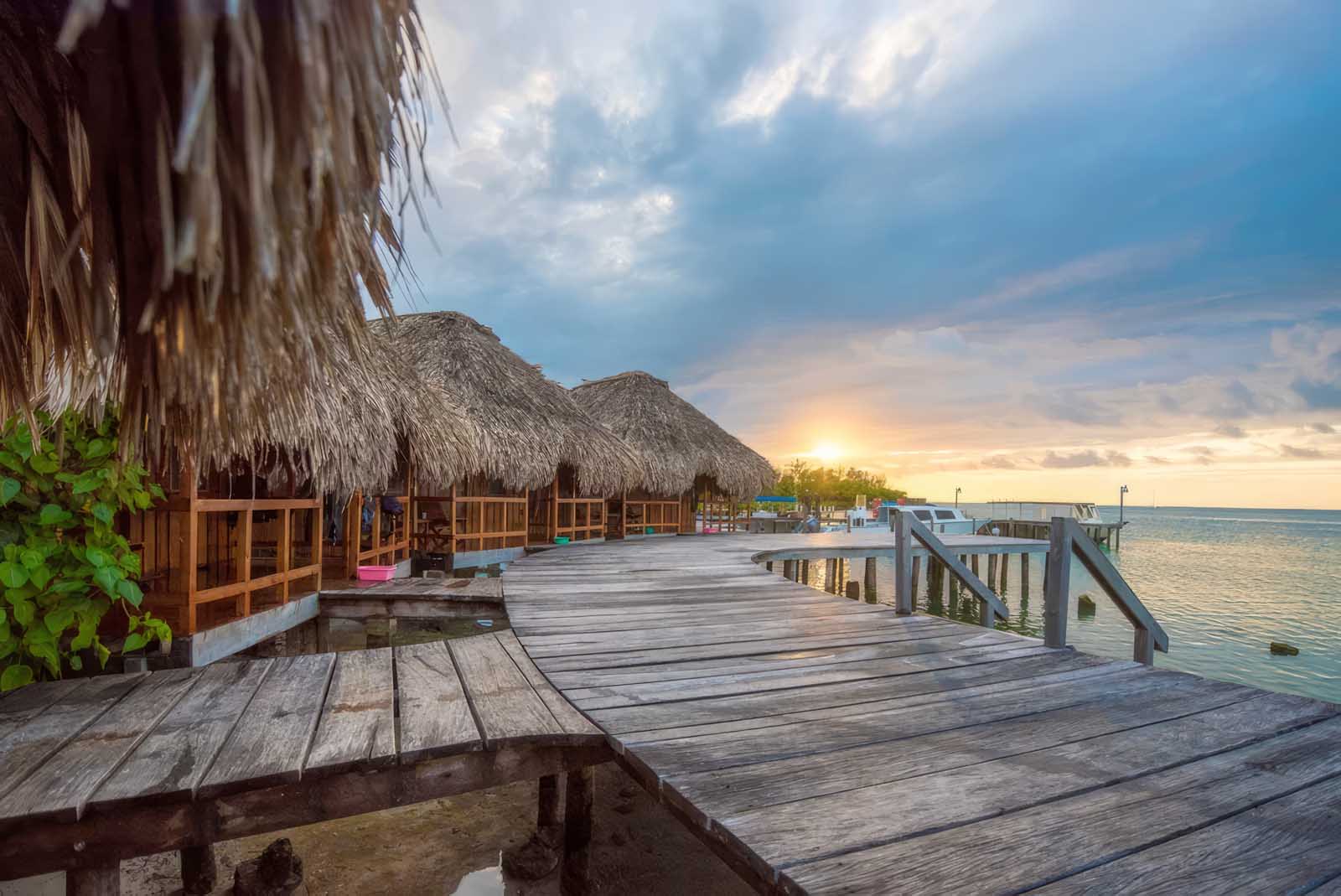
You wouldn’t expect to find St George’s Caye Resort just 7.5 miles off the coast of Belize City. This picturesque Belizan resort is on its own private island, surrounded by some of the Caribbean’s finest turquoise waters and whitest sands.
Just a quick boat ride from Belize City, St. George’s Caye Resort offers that rare blend of remoteness and accessibility. These traditional overwater bungalows are cozy, built from natural wood, and offer ocean views, sun loungers, and overwater hammocks. With all meals included and plenty of water activities, the resort makes it easy to enjoy an off-the-grid escape while still enjoying attentive service and stunning surroundings.
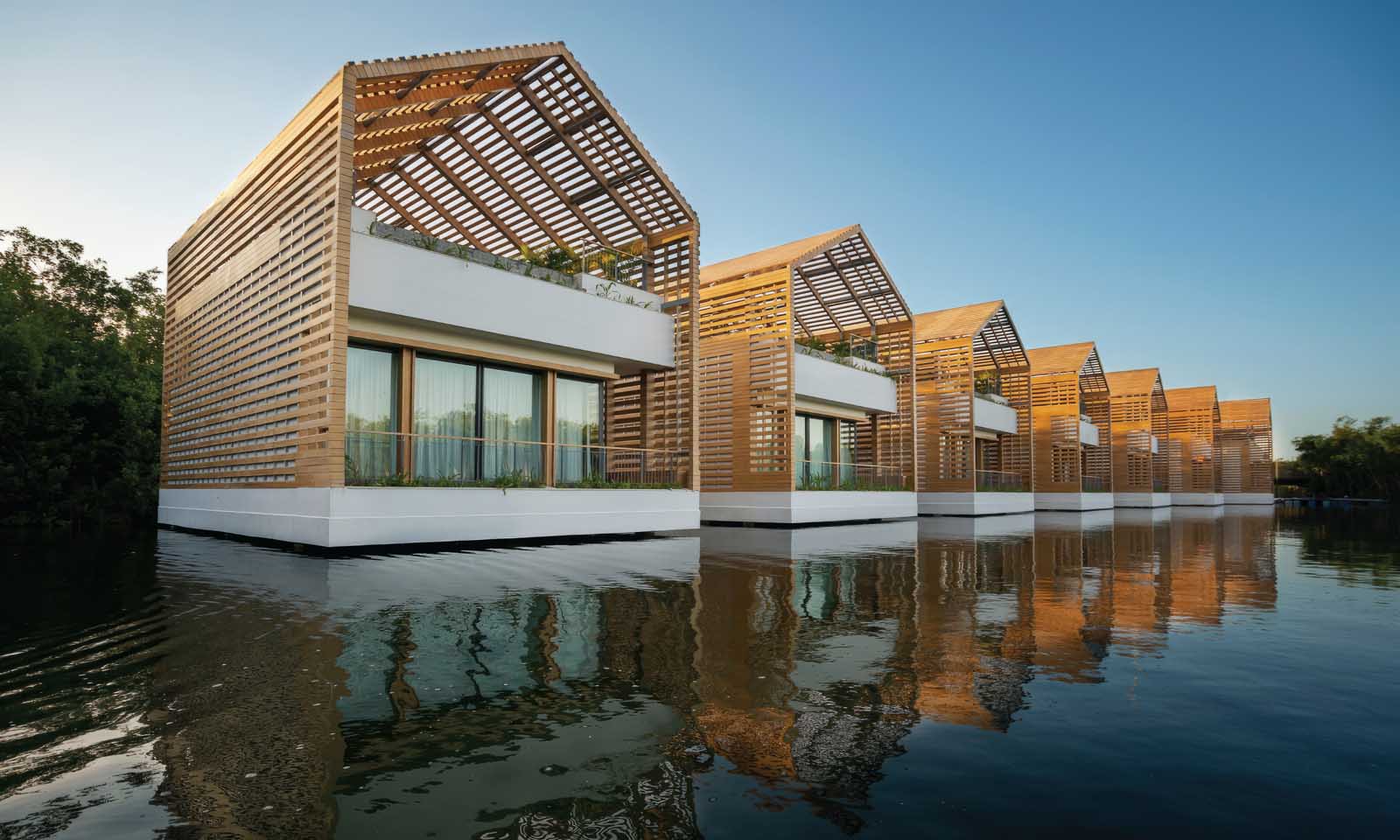
Banyan Tree Mayakoba is easily one of the most famous overwater bungalows in Mexico.
Banyan Tree Mayakoba delivers peace, privacy, and thoughtful luxury. Set inside a nature reserve with canals, lagoons, and jungle, its villas come equipped with private infinity pools, sun-soaked terraces, and elegant architecture. Some are two-story villas designed for couples or families who want space without sacrificing style. This resort’s combination of wellness, luxury, and immersion in nature makes it one of the most unique overwater stays in the Caribbean region.
10. Sandals South Coast All Inclusive – Couples Only
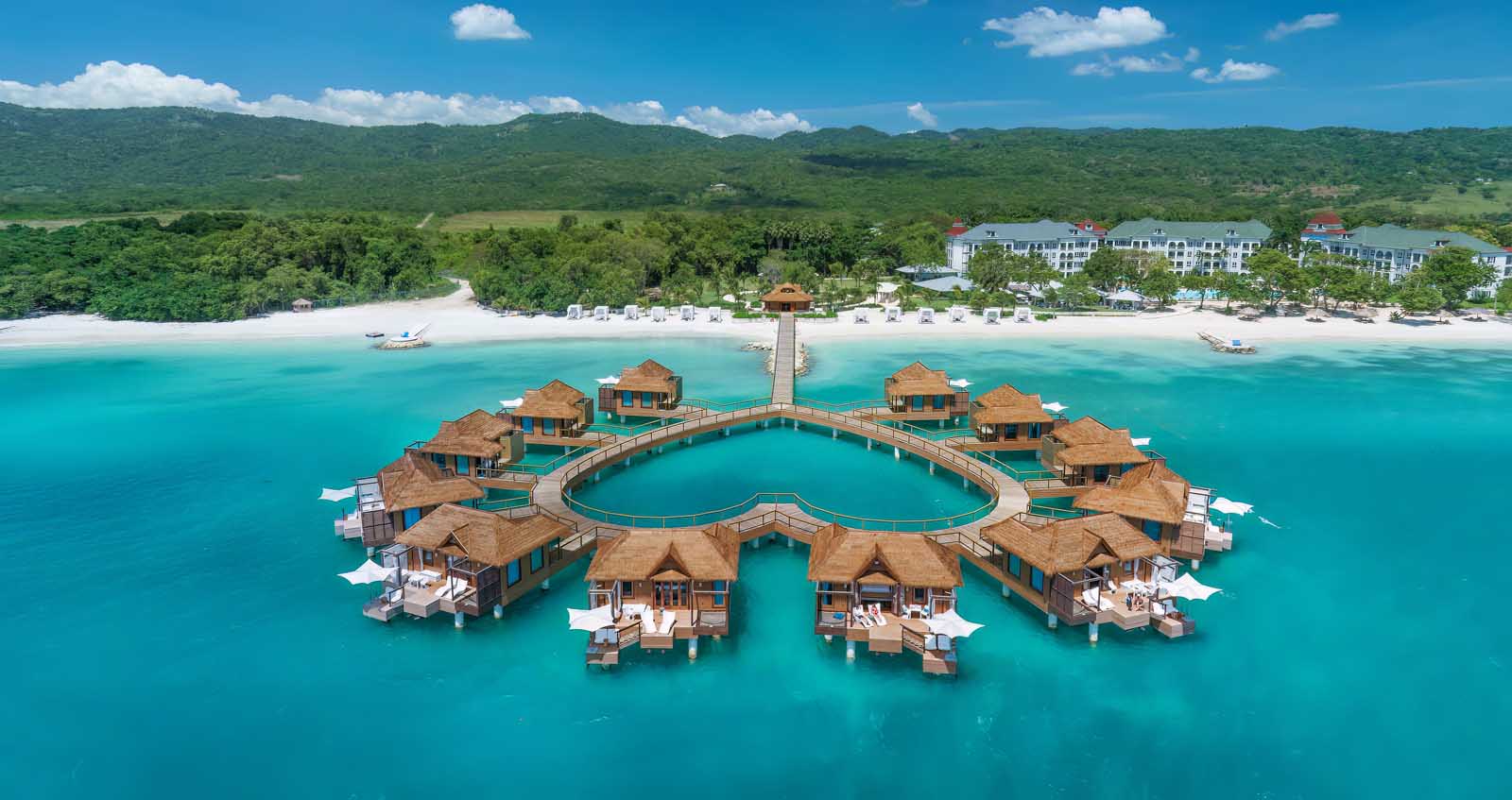
On Jamaica’s lesser-known south coast lies Sandals South Coast a resort designed with couples in mind. The overwater bungalows here are arranged in a heart shape and feature glass floor panels, tranquility soaking tubs, and private decks with floating water hammocks. As part of the Sandals family, guests enjoy butler service, premium dining, scuba diving, and watersports. If you’re looking for a resort that balances luxury with a fun, romantic atmosphere, Sandals South Coast is an excellent choice. It is next to some of the best beaches in Jamaica as well.
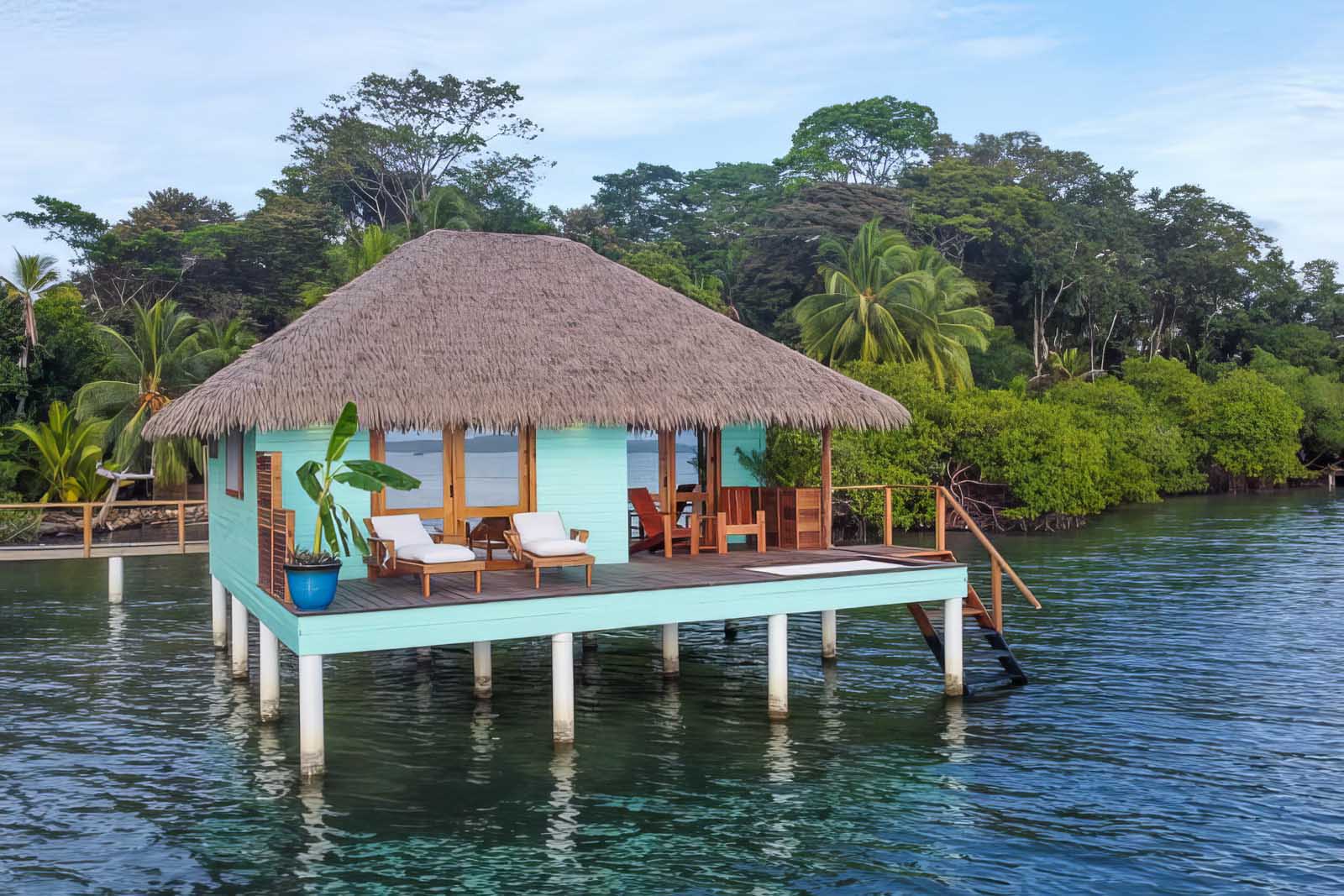
Sol Bungalows Bocas Del Toro is a set of rustic, duck egg-colored overwater bungalows in the Caribbean. Unlike the other plain-colored bungalows on this list, Sol Bungalows have a distinctive allure
Sol Bungalows in Bocas del Toro is the kind of boutique hideaway that feels like a secret. These duck egg-blue bungalows are set over calm waters and include sun decks, netted floors, and easy water access. While more affordable than many resort counterparts, they still offer plenty of charm. Kayaks, paddleboards, and a restaurant on-site round out the experience, perfect for travelers who want an Instagrammable, low-key escape.
Anthony’s Key Resort s a diver’s paradise. Located on Roatan Island, this family-run property has overwater bungalows with private decks and sea views, and an on-site dive center offering access to world-class reefs. The vibe is more casual and community-driven than a high-end resort, but that’s exactly why many people love it. It’s ideal for active travelers looking to combine Caribbean relaxation with underwater adventure.
Apart from its stunning interior design, Anthony’s Key Resort has an outdoor pool, beach, and a restaurant specializing in seafood – all fantastic facilities for a relaxing holiday. But most importantly, the resort offers an exciting list of activities. You can get involved with horseback riding on the beach and even scuba diving if you have your PADI.
If it’s your first time in Honduras, you really can’t go wrong by choosing this collection of Caribbean overwater bungalows. And you can check out our ultimate travel tips for visiting Honduras here.
Eclypse de Mar Acqua Lodge looks like its overwater bungalows have exploded straight out of the jungle – like some luxurious wooden extensions of its most gnarled trees. The lodge is surrounded by nature, backed by miles of dense rainforest, and confronted with miles of bright blue sea.
Set along the edge of Isla Bastimentos National Marine Park, Eclypse de Mar Acqua Lodge is immersed in rainforest and ringed by water. These solar-powered bungalows are built entirely from wood and offer unique views through their glass floors. Here, the wildlife is the star—you’ll likely see tropical birds, reef fish, and maybe even dolphins from your deck. For travelers seeking sustainability and seclusion, it’s a top choice.
Another massive positive of staying at Eclypse de Mar Acqua Lodge is that it’s run with solar panels. It has comfortable facilities and bungalows and connects with local wildlife.
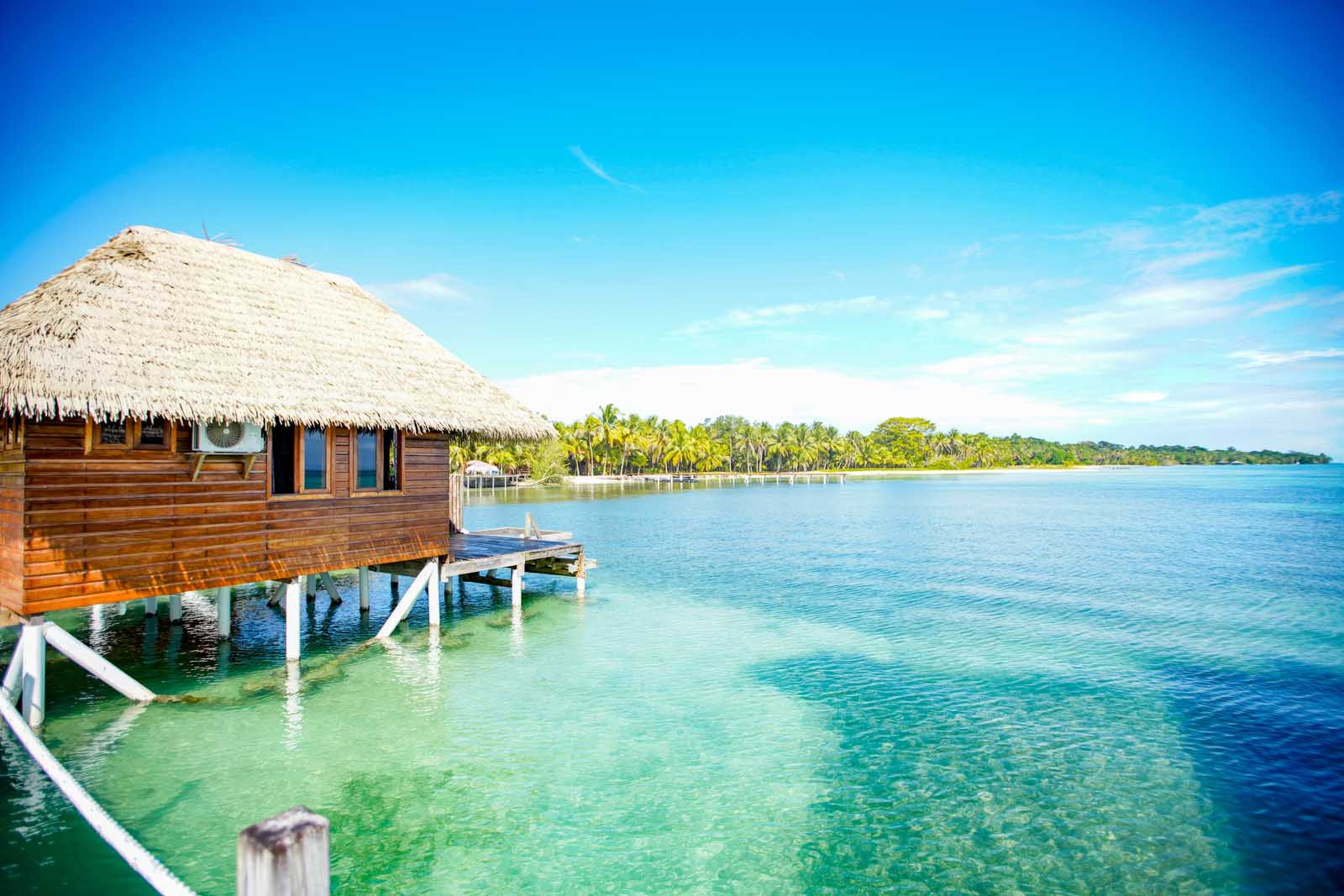
Azul Paradise is a high-quality, yet more affordable option for overwater bungalows. The property has thatched roofs, traditional dark wood interiors, and a beautiful private beach.
Azul Paradise offers rustic elegance and complete seclusion. These thatched-roof villas sit over the water with views of Panama’s Caribbean coast. You’ll find handcrafted wood interiors, overwater hammocks, and coral reefs teeming with marine life just below. It’s a place to disconnect, unwind, and fall asleep to the sound of the sea. Perfect for honeymooners or anyone chasing a true tropical paradise.
Aside from the private beach and beautiful overwater bungalows, Azul Paradise does offer watersport equipment. You can be canoeing on bright blue waters of the Caribbean Sea when you aren’t enjoying your bungalow. It is ideally located to connect with nature and get outdoors in the most luxurious way possible.
15. Sandals Grand St. Lucian Spa and Beach All-Inclusive Resort
Location: Saint LuciaStarting Rate: $700/night Check Prices Here.TripAdvisor Rating: 4.5/5
Sandals Grande St. Lucian Spa and Beach Resort is part of the stunning chain of Sandals resorts. This particular property is located on Pigeon Island Beach in Saint Lucia. Sandals Grande is set on a white-sand beach with vibrant waters that appear bright green. The chain made a wise choice when selecting this location.
Set on a private island peninsula with panoramic views of Saint Lucia’s northern coast, Sandals Grande St. Lucian delivers a show-stopping overwater bungalow experience. These romantic escapes float above crystal-clear waters and come equipped with everything you’d expect from a top-tier Sandals Resort: glass floors, tranquility soaking tubs, sun loungers, and butler service. You’ll also have access to scuba diving, paddleboarding, and gourmet dining. Each sumptuous king size bed faces out toward the sea so you can wake up to paradise. With rates from $700 per night, this is a Caribbean dream come true.
And when you aren’t in your overwater bungalow, there are plenty of water activities like windsurfing to try your hand at. St Lucia is famous for its beautiful beaches and varied things to do.
Overwater bungalows in the Caribbean are hard to beat. These should give a really good idea of what is on offer. Hopefully, at least one has caught your attention. Whichever you choose, we hope that you have a relaxing and memorable experience staying above the ocean.
From Saint Lucia to Panama’s Caribbean coast, the best overwater bungalows in the Caribbean blend nature, indulgence, and adventure. Whether it’s the Chairman’s Overwater Bungalow at Royalton Antigua, a two-story escape at Banyan Tree Mayakoba, or the legendary Sandals Royal Caribbean with its floating bungalows, each offers something unforgettable. These are the kinds of villas where your days begin with ocean swims and end with sunsets viewed from a private infinity pool.
Still wondering if a villa over the water is worth the splurge? Imagine this: you’re on a private island, reclining in an overwater hammock, cocktail in hand, with your personal butler bringing you dinner under the stars. That’s more than just a getaway—it’s the definition of a tropical paradise.
16. Sandals Saint Vincent & The Grenadines
Location: Saint Vincent & The GrenadinesStarting Rate: $1450/night Check Prices Here.TripAdvisor Rating: 4.5/5
Sandals Saint Vincent & the Grenadines is the newest jewel in the Sandals Resorts crown, bringing a fresh level of luxury to the southern Caribbean. Nestled between lush rainforest and the turquoise waters of Buccament Bay, the resort’s overwater villas offer sweeping ocean views, tranquility soaking tubs, and direct sea access from expansive sun decks. These adults-only villas feature modern Caribbean design, butler service, and private infinity pools overlooking the sea. As of 2025, starting rates begin around $1,450 per night, offering a high-end escape on one of the Caribbean’s most untouched islands. With a TripAdvisor rating of 4.5 stars and growing, it’s quickly becoming a favorite for couples looking for a remote and romantic tropical paradise.
Choosing Overwater Bungalows Caribbean Edition
From Saint Lucia to Panama’s Caribbean coast, the best overwater bungalows in the Caribbean blend exclusivity with nature, indulgence with adventure. Whether it’s the two-story villas at Banyan Tree Mayakoba, the Chairman’s Overwater Bungalow at Royalton Antigua, or the Sandals South Coast heart-shaped cluster of honeymoon suites, each property brings its own style to the overwater bungalow experience. Many include infinity pools, outdoor shower, tranquility soaking tub, king-size beds and even full dining room spaces for couples seeking the ultimate romantic hideaway.
If you’re still wondering if an overwater villa is worth the splurge—imagine sipping a cocktail as you lounge on your private terrace, watching the coral reefs come alive beneath you, with your personal butler just a call away. That’s not just a vacation. That’s a once-in-a-lifetime tropical paradise.
For more dream-worthy escapes, be sure to explore our favorite Caribbean islands, junior suites in Saint Vincent, and scuba diving hotspots across the region. Your private overwater retreat is waiting.
About Caribbean Overwater Bungalows
sand of beach caribbean sea
Are there overwater bungalows in the Caribbean?Yes! While rarer than in the Maldives or Bora Bora, the Caribbean now has several luxury resorts offering true overwater bungalow experiences.
What is the most affordable overwater bungalow in the Caribbean in 2025?
Eclypse de Mar Acqua Lodge in Panama starts at just $256/night, offering excellent value in a natural setting.
Which is the best overwater bungalow for couples?
Sandals South Coast in Jamaica and Sandals Grande St. Lucian are both top picks for romantic getaways.
Do overwater bungalows in the Caribbean include all-inclusive options?
Yes! Resorts like Sandals, Royalton Antigua, and El Dorado Maroma offer all-inclusive luxury with food, drinks, and activities.
What country has the most overwater bungalows in the Caribbean?
Mexico and Panama are tied for the most variety, especially in the Riviera Maya and Bocas del Toro region
Looking for more inspiration about traveling in the Caribbean? Check out our articles on the best Caribbean dishes and the 20 best Caribbean islands for your bucket list. Otherwise, have a wonderful trip.
Plan Your Next Trip To The Caribbean With These Resources
Looking for a vacation where everything is taken care of? All-inclusive resorts in the USA make travel easy by bundling meals, activities, and sometimes even drinks into one stress-free package. Whether you’re traveling as a family, planning a romantic escape, or craving a wellness retreat, there’s an all-inclusive resort for you.
Some all-inclusive vacation packages offer vacation rentals instead of standard hotel rooms, giving families and groups extra space and privacy. Others include extras like spa credits, guided hikes, or unlimited margaritas by the pool. And the best part? You don’t have to cross a border — these incredible resorts are right here in the United States, from mountaintops to beaches and everything in between.
Best All-Inclusive Resorts in the USA (2025 Edition)
Before we dive in, here’s a quick comparison of the best U.S. all-inclusive resorts by type and price. The nightly room rate often includes various luxurious amenities and meals, enhancing the overall value of your stay.
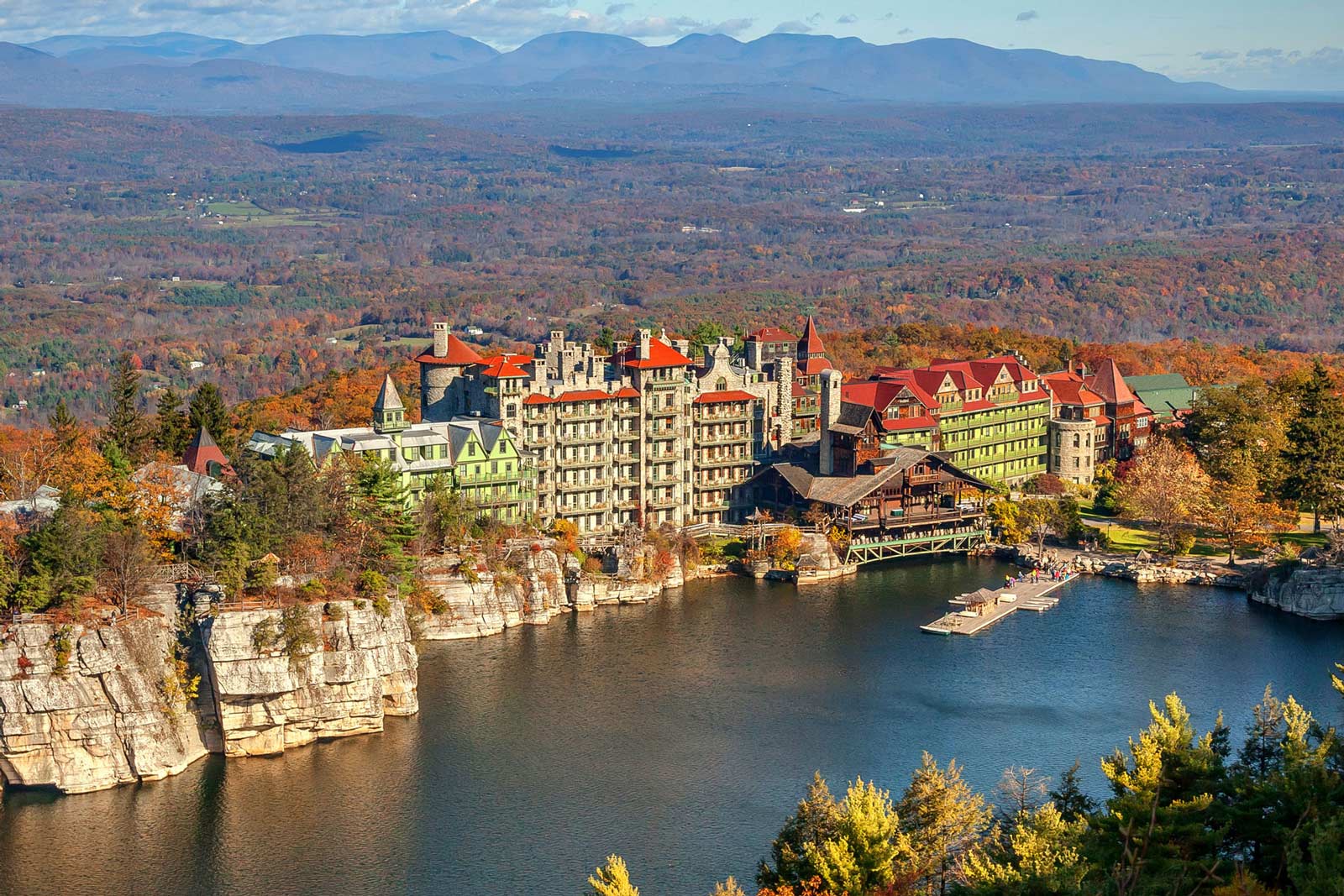
Resort NameLocationBest ForPriceHighlightsBookBungalows Key LargoFlorida Keys, FLCouples$$$$Adults-only, Overwater bungalows, SpaBookMiraval Arizona Resort & SpaTucson, AZWellness$$$All-inclusive wellness, Spa, MindfulnessBookClub Med Sandpiper BayPort St. Lucie, FLFamilies$$Sports academy, Kids club, All meals incl.BookLittle Palm Island ResortFlorida Keys, FLCouples$$$$Private island, No phones/TV, Adults-onlyBookTwin FarmsBarnard, VTWinter$$$$Personalized service, Fine dining, NatureBookRed Mountain ResortIvins, UTWellness$$Hiking, Yoga, Healthy cuisineBookBlackberry FarmWalland, TNCouples$$$$Farm-to-table, Scenic Smoky MountainsBookMohonk Mountain HouseHudson Valley, NYWinter$$$Victorian-style, Lake views, Outdoor activitiesBookVista Verde Guest RanchSteamboat Springs, COFamilies$$$Dude ranch, Horseback riding, Winter funBook
Best All-Inclusive Resorts for Couples
Looking to disconnect from the world and reconnect with each other? These romantic getaways deliver adults-only property experiences, luxury dining, and beautiful settings for two.
Little Palm Island Resort & Spa, Florida
Photo credit: Little Palm Island Resort
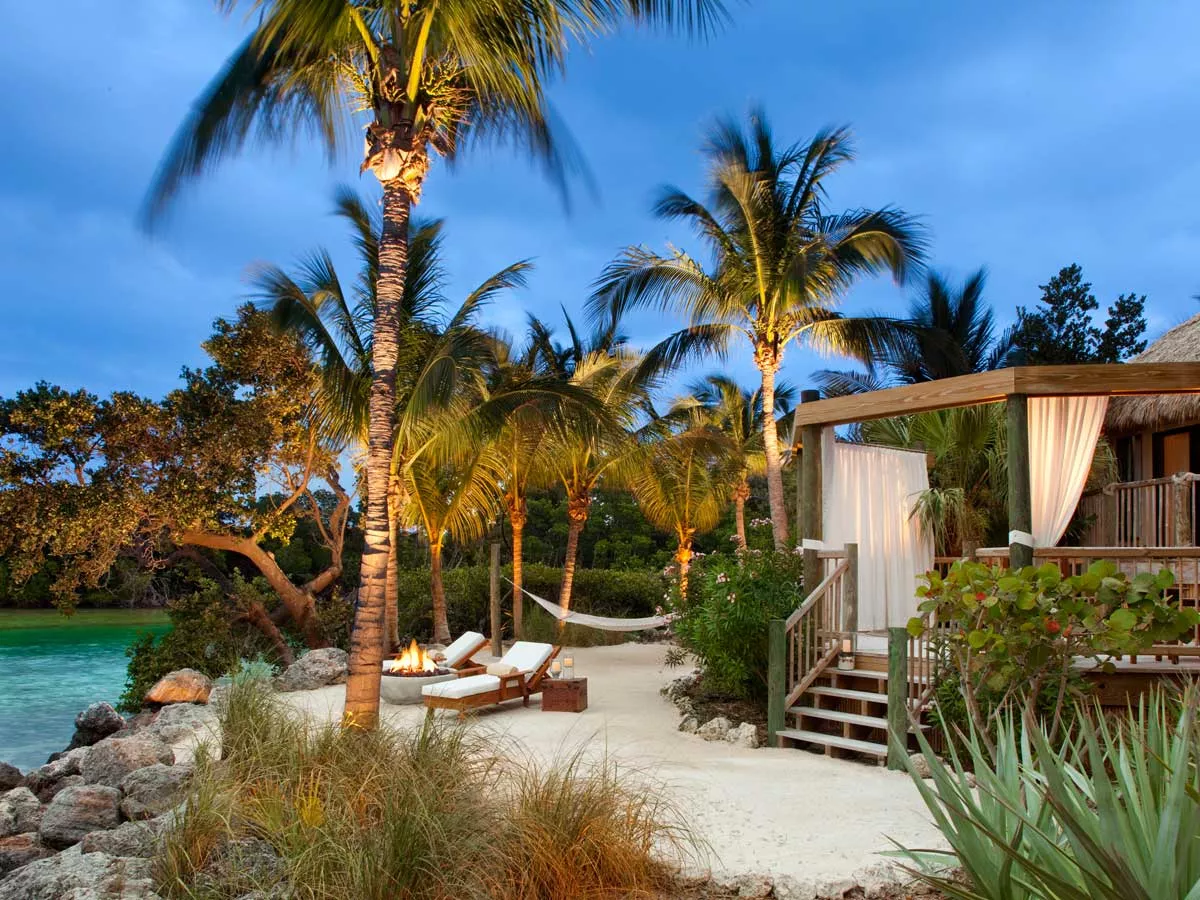
Looking for a Robinson Crusoe experience with a bit more luxury? Little Palm Island Resort is one of the best all-inclusive properties and is set on its own private island. You may also like The Best All-Inclusive Resorts in Florida
Expect luxurious accommodation in thatched-roof beachfront bungalows. If you are craving some adults-only time, you can also be reassured of a peaceful, child-free environment since Little Palm Island Resort is an adults-only resort with an over-18 policy.
You can relax on the island with the spa facilities, lounge on the private beach, or head for some ocean activities. The inclusive resort offers fly fishing, snorkeling, and even scuba diving. The resort also offers relaxation tailored to individual preferences, ensuring a personalized and comprehensive experience.
For the ultimate all-inclusive experience, book the ‘Culinary Paradise Package’. Guests receive daily breakfast, three-course lunch, a four-course dinner, and a welcome bottle of champagne. You also get $100 spa credit per person per night – just picture the bliss.
Check Rates here: Little Palm Island Resort
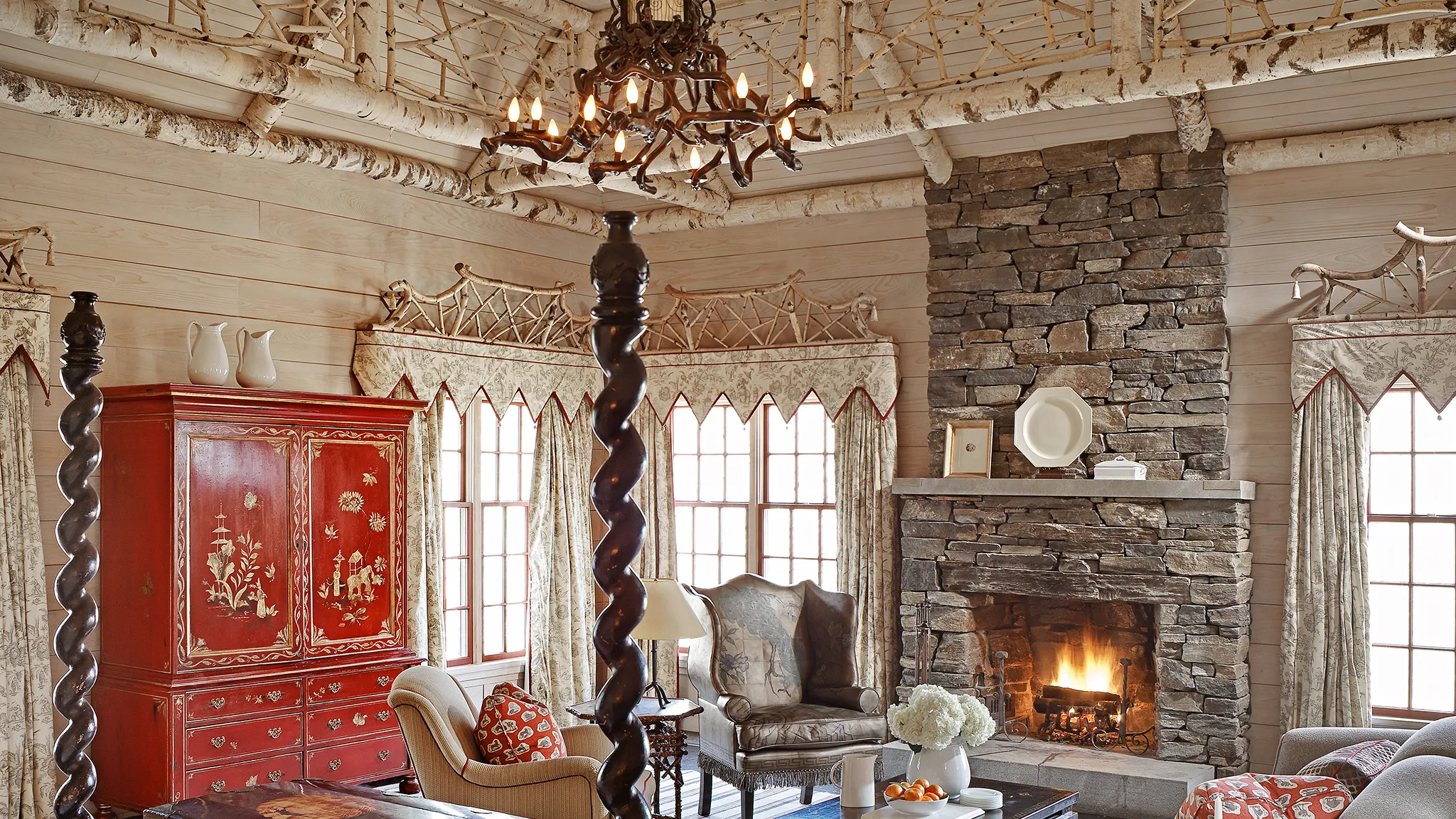
Twin Farms, Vermont
Photo credit: Twin Farms
Twin Farms is a mountain-surrounded, all-inclusive retreat in Vermont. Not only does Twin Farms provide three meals a day, but you can also request meals like picnics. The experienced kitchen staff will happily arm you with a wicker basket and advise you of the best spots in the 300 acres of surrounding woodland and meadows.
Forget a private island and choose the resort with a private mountain. In Winter, Twin Farms offers cross-country skiing and slopes to tackle – so keep it in mind, skiing enthusiasts! When you get back, there will be spa treatments and cocktail and canapé evenings to warm up with. Twin Farms’ inclusive rate depends on what accommodation you choose, although all dining, beverages, and activities are included in the tariff.
Check Rates here: Twin Farms
Blackberry Farm, Tennessee
Set in the Great Smoky Mountains, Blackberry Farm is another luxurious resort that offers an escape to nature.
The 4,200-acre Tennessee property is a working farm and prides itself on connecting luxury and rural living. Guests receive three healthy meals per day and are even encouraged to pick their own herbs from the herb garden for infused steam showers. Of course, Blackberry Farm also provides fitness and wellbeing classes – so you can fill your mornings with barre, Zumba, restorative yoga, or perhaps pilates.
In addition to these activities, the resort includes a fitness center as part of its wellness amenities.
Blackberry Farm is an idyllic candidate for a couples break, solo wellness retreat, or self-care holiday with friends. The rate of your room choice includes activities, facility access, and all meals. However, eating outside of traditional mealtimes does incur extra charges, so we advise enquiring about meal times upon arrival.
Check Rates here: Blackberry Farm
Best Wellness All-Inclusive Resorts
If your dream trip includes yoga sessions, spa days, and healthy cuisine, this section’s for you. These resorts blend luxury with mindfulness and are designed to rejuvenate your body and mind.
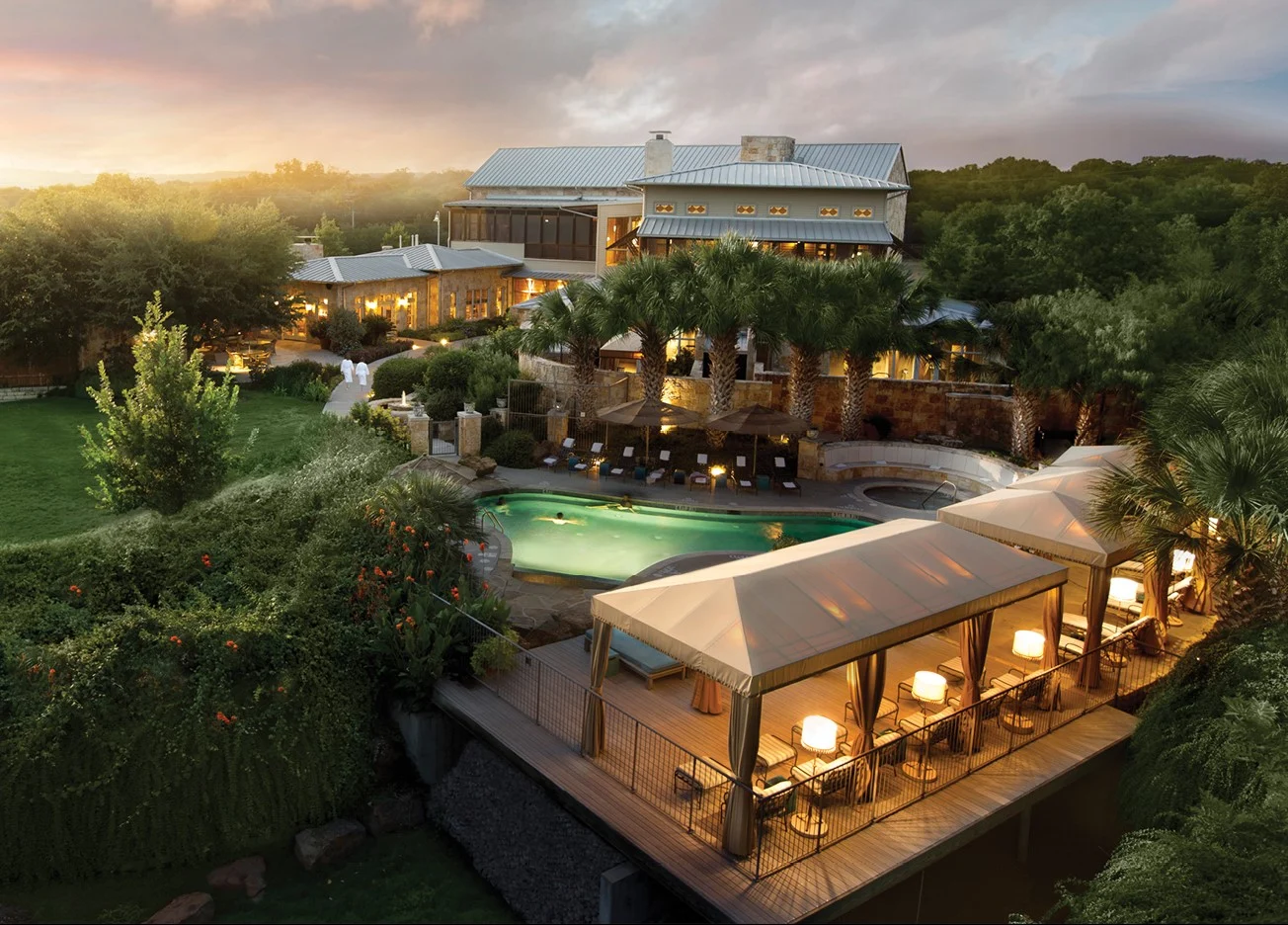
Lake Austin Spa Resort, Texas
Photo credit: Lake Austin Spa Resort
With the catchphrase ‘wellness meets water’, this award-winning spa offers all-inclusive stays in private lakefront lodges.The Lake Austin Spa Resort provides healthy, farm-to-table meals, cooking classes, spa treatments, and fitness classes. If you want somewhere to escape and unwind holistically, this Lake Austin resort is a beautiful place to do so.
If you want to go inclusive, purchase the ‘Resort Package’, which includes accommodation, meals, unlimited soft drinks, facility access, and activities. The lakefront resort caters to all aspects of wellness, and you can expect a fulfilling experience from their all-inclusive package.
Check Rates here: Lake Austin Spa Resort
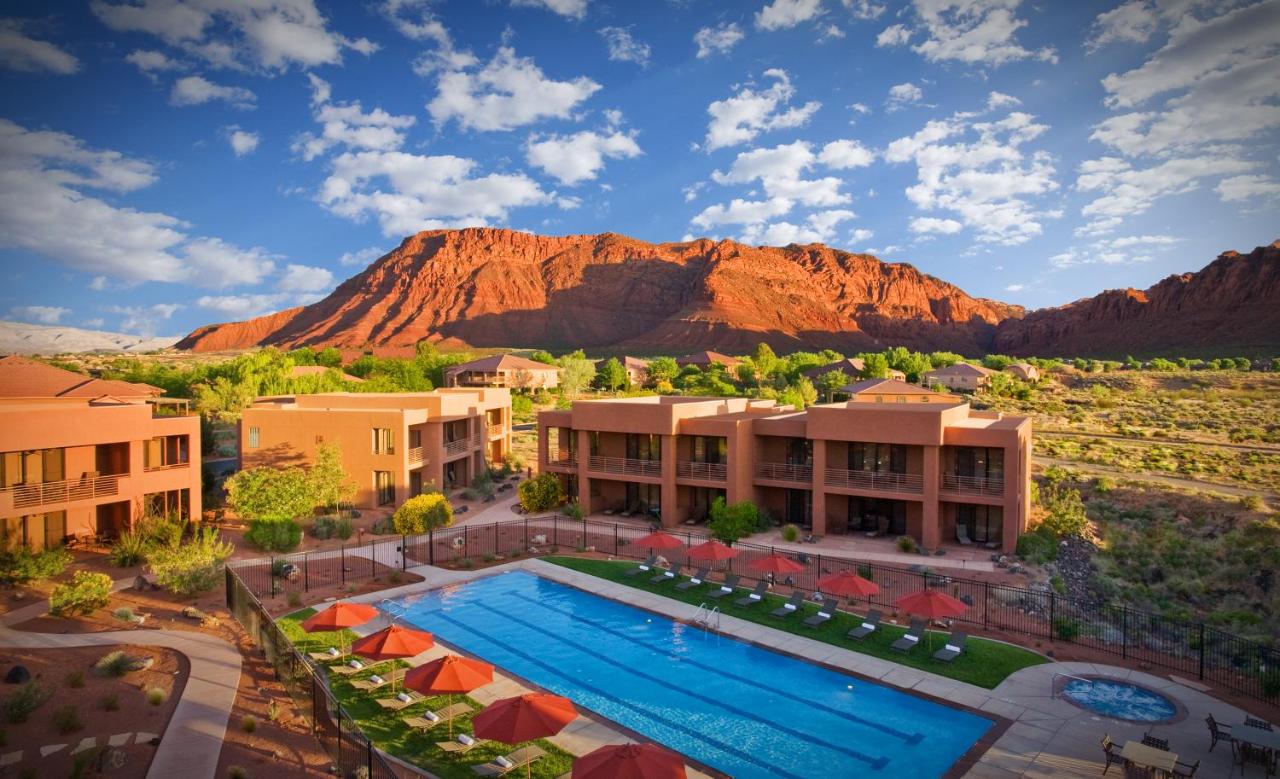
Red Mountain Resort, Utah
Photo credit: Red Mountain Resort
Red Mountain Resort is one of the best all-inclusive resorts in Utah. The location is incredible for those wanting to explore the nearby National Parks, with Zion and Bryce Canyon National Park right on your doorstep!
The wellness retreat offers expert-led excursions and outdoor activities in different all-inclusive package options. You can take a guided mountain bike ride, embark on a rock climbing experience, or follow your guide on one of Zion’s hiking trails
Red Mountain Resort is a stunning resort in an even more stunning area. The resort has many different package options, including basics like accommodation and meal plans, alongside themed activities and excursions. And the resort amenities even include complimentary airport transfers from St George Regional Airport – just notify the resort ahead of time.
Check Rates here: Red Mountain Resort
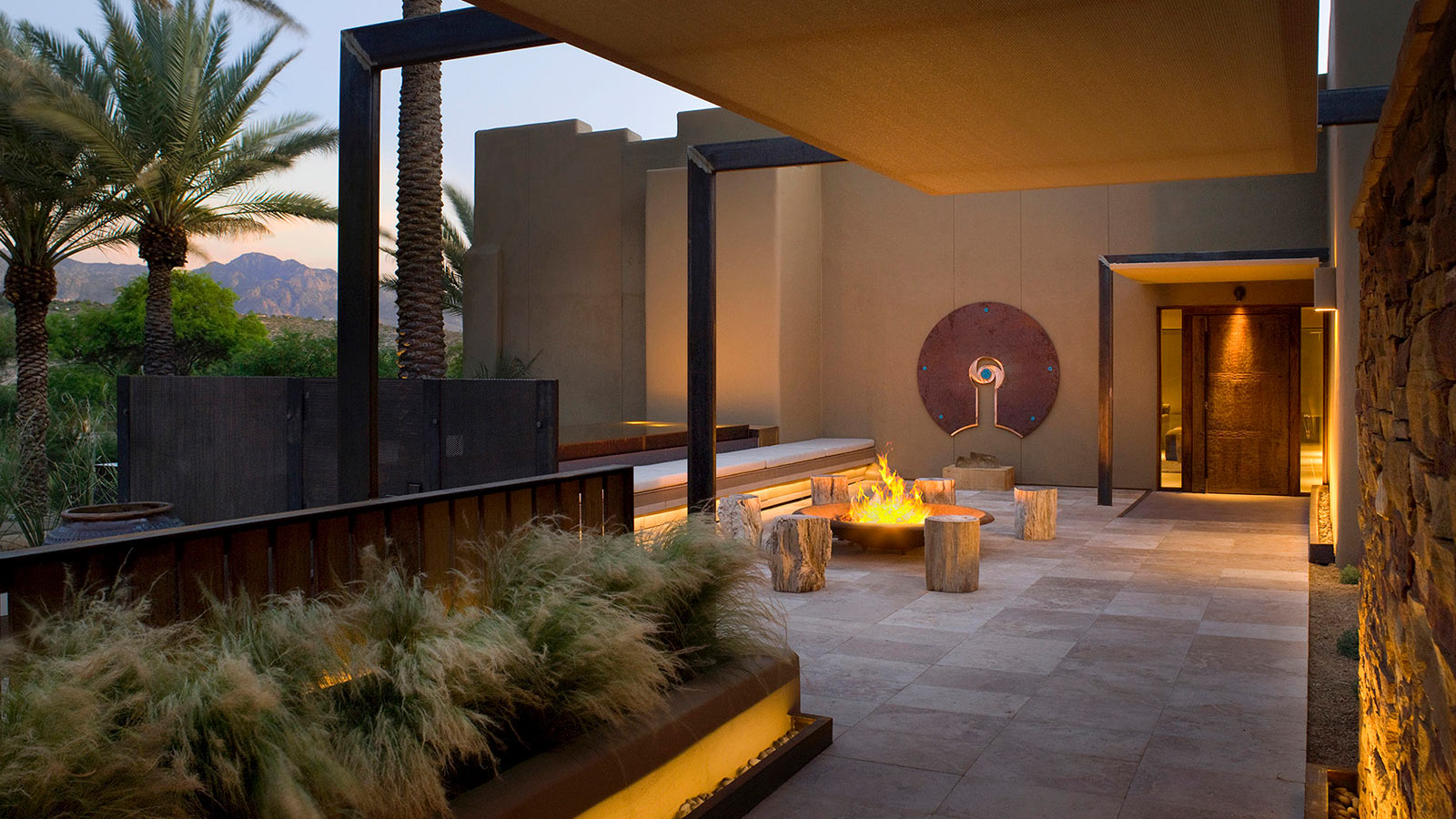
Miraval Arizona Resort, Arizona
Photo credit: Miraval Arizona Resort
The Miraval Arizona Resort has an interesting package that differs from the other all-inclusive resorts that we’ve covered so far. Instead of having a list of included and non-included amenities, services, and experiences, Miraval Arizona Resort has a credit system. You don’t need to use credits to access any food or non-alcoholic beverages. But, for extras like spa treatments, each guest can choose to allocate the credit in exchange for the experience, making it a unique all inclusive stay.
Guests with the Miraval Unlimited Package receive a $275 credit per night, including complimentary and unlimited fitness and photography classes. The package also treats guests to unlimited outback hiking, climbing, and spa access.
The Miraval Arizona Spa is well worth visiting. The spa venue has three heated outdoor pools, steam rooms, saunas, and even a zipline to connect with oneself and promote mindfulness. If you want to unwind with exercise, nature, and spa days, the Miraval Arizona Resort is best for you.
Check Rates here: Miraval Arizona Resort
Canyon Ranch Lenox, Massachusetts
Photo credit: Canyon Ranch Lenox
Canyon Ranch Lenox is a luxury property in the Canyon Ranch resort chain. If you feel like you’d benefit from direction and personal guidance as well as a holiday, Canyon Ranch Lenox is an excellent choice.
Canyon Ranch Lenox aims to provide a transformative, all-inclusive resort experience and offers a whole team of specialists who operate as part of bespoke wellness packages. You can receive support from personal trainers, mental health specialists, physicians, and life coaches – all in a day if you want! General resort facilities include a spa and a fully-equipped fitness suite.
Canyon Ranch provides lots of pre-arrival support, including a consultation where you will decide and plan your itinerary. The resort also provides airport transfers from the Albany and Bradley International Airports. Instead of standard all-inclusive rates, the cost of staying at Canyon Ranch depends on the services you choose to fill your itinerary. While some aspects, like your meal arrangements, are always covered, the rest is entirely bespoke.
Currently, there’s a special offer providing a $300 nightly service credit for stays through June 30, 2025.
Check Rates here: Canyon Ranch Lenox
Best All-Inclusive Resorts for Families
Family vacations don’t have to be chaotic. These all-inclusive resorts are built for fun across all age groups, with everything from kids’ programs to lakeside adventures — and most importantly, meals and activities included.
Tyler Place Family Resort, Vermont
Photo credit: Tyler Place Family Resort
The Tyler Place Family Resort is another family-friendly, all-inclusive resort. The resort runs childcare programs for infants to teens – providing exciting entertainment for the kids and relaxation for the parents!
The Tyler Place Family Resort has incredible facilities and activities to enjoy as a couple, family, or alone. Guests have full access to heated indoor and outdoor pools, tennis courts, and even picnic baskets for adventures around the property’s 165 acres of countryside.
Guests stay in private log cabins and cottages. All accommodation options come with kitchenettes, although these are for optional use, as Tyler Places provides three meals a day in its standard all-inclusive package. The resort offers various guest rooms with amenities tailored for families. In each accommodation choice, you receive full activity access, all meals, children’s programs, facility access, and evening entertainment.
Check Rates here: Tyler Place Family Resort
Vista Verde Guest Ranch, Colorado
For a taste of old-world Western hospitality, the Vista Verde Guest Ranch is a great all-inclusive resort. Unlike the Ranch at Rock Creek, Vista Verde Guest Ranch has different seasons for different guest types. The property has set dates where it provides an adult-only experience and set dates where it opens to families with children. The Ranch has a full program with kids’ activities during kid-friendly periods.
Of course, everyone can indulge in seasonal activities like ice fishing, ice skating, horseback riding in the snow, and snowshoeing! If you are looking for a US winter escape, consider Vista Verde, as its winter outdoor activities are second to none. All-inclusive is truly all-inclusive at Vista Verde, with meals, activities, kids’ programs, and facility access included in each room price.
Check Rates here: Vista Verde Guest Ranch
Ranch at Rock Creek, Montana
Photo Credit: Ranch at Rock Creek
Horses meet all-inclusive luxury at the Ranch at Rock Creek. If you love horseback riding, you will really love this Montana property. The ranch has working stables, with 73 horses living on-site!
The 6,600-acre ranch runs along Rock Creek and is flanked by the Sapphire and Pintler Mountains. Whether you want to go horseback riding, explore the hiking trails, fly fishing, or mountain biking, the property is large enough to keep you well-entertained outdoors.
The Ranch at Rock Creek is perfect for a family vacation, with a kids’ club and outdoor activities tailored to all ages and skill levels. At this resort, the whole family can embrace the cowboy lifestyle and the beauty of the great outdoors.
This is easily one of the best all-inclusive resorts in the United States. Each standard room comes with all meals, an open bar, facility access, all activities, entertainment, airport transfers, and all equipment rentals.
Check Rates here: Ranch at Rock Creek
Woodloch Pines Resort, Pennsylvania
Photo credit: Woodloch Pines Resort
Woodloch Pines Resort is an amazing family holiday destination. Woodloch is primarily a family resort with lots of fun, lighthearted activities to partake in. You could participate in the scavenger hunt, win a bakery war, or compete in an athletic contest. While for the older children, there is an ice skating rink, go-kart racing, and snow tubing! Plus, the on-site 18-hole golf course and spa are great for adult guests.
Woodloch is a fantastic all-inclusive resort to keep everyone in the family entertained. The inclusive experience includes two to three meals per day, access to all activities, accommodation, and evening entertainment.
Check Rates here: Woodloch Pines Resort
Rocking Horse Ranch Resort, New York
Photo credit: Rocking Horse Ranch Resort
The Rocking Horse Ranch Resort in New York is a brilliant all-inclusive resort for a family vacation. In fact, TripAdvisor actually lists the ranch as the best for families out of all the resorts in the USA!
Guests can enjoy an indoor waterpark, exciting kids programs, outdoor hot spring tubs, and horseback riding experiences catered to all abilities. And, if the weather isn’t cooperating, there is the Lucky Horseshoe Arcade. The game room has classic gaming machines and a mini-bowling alley – the perfect rainy day or nightly entertainment option.
This property is an action-packed, all-inclusive resort with plenty to do and see. Each room price includes all meals, activities, and entertainment. The all-inclusive package also includes breakfast as part of the meal plan.
Check Rates here: Rocking Horse Ranch Resort
Fair Hills Resort, Detroit Lakes, Minnesota
Photo credit: Fair Hills Resort
Fair Hills Resort is a multi-award-winning all-inclusive resort. Fair Hills Resort covers a respectable range of hospitality options, from family holidays to special events like weddings. And, situated right on the shore of Pelican Lake, guests can enjoy a fun, all-inclusive experience in a serene natural setting.
The resort has scheduled meals throughout the day, with optional alcoholic beverages available for purchase. The hotel’s dining options include farm-to-table meals, ensuring that guests enjoy the freshest, locally sourced ingredients. You can choose from a three-meal, two-meal, or breakfast-only package when booking. The prices for each meal package vary by age. Note that outside of peak dates, kids under five eat free!
Fair Hills similarly runs a schedule of complimentary activities – including waterslides, cocktail parties, and even slime-making. These activities are included in your overall tariff. Guests can also enjoy house wine as part of the dining experience. Read more: Best Things to do in Detroit
Check Rates here: Fair Hills Resort
Sandpiper Bay by Wyndham -Formerly Club Med Sandpiper Bay, Florida
The Club Med Sandpiper Bay was closed as of September 2022. It was a sudden closure. However, there is good news! The Trademark Collection by Wyndham did a full-scale renovation to the 307-room, 216-acre property, and it looks like it has already been reopened.
Over the next two years, the marina and the additional amenities of the full-service, all-inclusive resort will be updated, but it will remain open to guests during the renovations. You may also want to check out The Best Places to Stay in Florida. Located in Port Saint Lucie, Florida: You can check rates, availability, and more information here. Sandpiper Bay by Wyndham
Skytop Lodge, Pennsylvania
Photo credit: Skytop Lodge
Skytop Lodge is one of the United States’ most traditional yet luxury accommodations. In addition to traditional hotel rooms, the resort offers cottages as vacation rentals, providing more space and privacy for families and groups.
Not only does it offer a fantastic all-inclusive package, but Skytop Lodge is also a member of the National Trust Historic Hotels of America. Skytop Lodge opened its doors in 1928 and has been welcoming guests since!
Of course, Skytop Lodge may be historical, but it’s far from dated. The property provides fantastic guest facilities, including a 24-hour fitness room, lawn games, indoor and outdoor pools, and private hiking trails. With 5,500 acres to explore, you should be kept well and truly busy during your stay.
You can view the daily schedule on the Skytop Lodge, which is packed with over twenty events per day. Attendance for the majority of activities is on a complimentary basis. Some activities charge extra, like the $10 grounds history tour, but these prices are listed where applicable on the schedule.
Skytop Lodge offers a ‘Bed & Breakfast’ and ‘Summer Fun’ package including breakfast, accommodation, facility access, and specific activities. This option is great for those who want independence over lunch and dinner, which you can eat on-site or at a nearby restaurant.
Check Rates here: Skytop Lodge
Best Winter All-Inclusive Resorts
Winter doesn’t mean you need to hibernate. These snowy-season resorts offer downhill skiing, snowshoeing, cozy fireplaces, and all the cocoa (or wine) you want included.
Mohonk Mountain House, New York
Photo credit: Mohonk Mountain House
Mohonk Mountain House is just North of New York City and is surrounded by 40,00 acres of forest in the Hudson Valley.
Mohonk Mountain House offers a unique chance to get back to basics without sacrificing luxury amenities. The perfect example of this is how the property’s farm-to-table restaurant is only a few minutes walk away from an award-winning luxurious spa! At Mohonk, you are aware of your food source and are rewarded with the freshest possible produce for each meal.
Activity-wise, you can head off the grid with a guided hike or boating experience on the Mohonk Mountain House private lake. Alternatively, bathe in the indoor heated pool while listening to underwater music or purchase a spa treatment as an extra treat.
If you want a natural, all-inclusive escape from city life in New York, Mohonk Mountain House is one of the best all-inclusive resorts in the USA. Your tariff entitles you to all meals, including afternoon tea and weekend brunch. You also receive total access to all activities (on-site and off-site), entertainment, wellness sessions, and spa facilities. The resort also features hot tubs for guests to enjoy after a day of activities.
Check Rates here: Mohonk Mountain House
The Devil’s Thumb Resort and Spa, Colorado
Photo credit: The Devil’s Thumb Resort and Spa
Do you want to experience rural Colorado? The Devil’s Thumb Resort and Spa is the perfect family vacation. You can choose from various packages, including ski and ranch getaways. These packages include breakfast, lunch, dinner, and snacks – apart from the ‘Bed and Breakfast’ deal. Of course, you’ll also receive access to specialist activities that align with your package theme and all the resort facilities.
You are guaranteed an adventurous holiday with horseback riding, cross-country skiing, paddleboard yoga, and archery activities. But there is plenty of luxury back at the ranch for you to rejuvenate after an action-packed day. Guests can relax any sore muscles with a complimentary daily massage and soak in the outdoor heated pool and hot tub.
Check Rates here: The Devil’s Thumb Resort and Spa
Best All-Inclusive Beach Resorts
Whether you’re dreaming of beautiful beaches with ocean breezes or sun-soaked sand, these resorts offer beachside luxury with all the perks of all-inclusive service.
Hotel Del Coronado, California
The Hotel Del Coronado is a beach resort with a lot of history. The hotel’s location on the Californian coast has made it a hotspot for celebrities over the years, attracting the likes of Charlie Chaplin and Marilyn Monroe.
On the private Del Beach, guests can grab a daybed, cabanas, or stick to a classic sand chair and umbrella. These costs aren’t included, but well worthwhile as they entitle you to beach games and food and drink service. Surf, swim, or sunbathe – a glorious beach break is made better with the beach just outside your door.
The resort offers experiences similar to those found in the Caribbean Sea, with serene sandy beaches and vibrant sea life creating an inviting atmosphere.
At Hotel Del Coronado, you can choose from several inclusive packages. Like the Miraval Arizona Resort, the Hotel Del Coronado operates on a resort credit basis. Guests receive a $150 daily credit with the Beach Village Beach Escape package. Of course, you can spend this on dining, a spa experience, or cocktails by the pool – it is up to you how you wish to allocate your credit budget.
Check Rates here: Hotel Del Coronado
Margaritaville Resort Orlando, Florida
The Margaritaville Resort is a four-star resort offering breakfast and non-alcoholic refreshments in its part inclusive package. If you want incredible amenities and a resort environment, yet the freedom to choose your own lunch and dinner, this resort is for you.
Guests receive lagoon, pool, and hot tub access. Plus, the Margaritaville Resort offers complimentary shuttles to Walt Disney World, Universal Orlando, and SeaWorld. You’ll have daily and nightly entertainment to enjoy as and when you wish, with lobby concierge services to help you plan any extra excursions.
The Margaritaville Resort has all the benefits of an all-inclusive resort, just without lunch and dinner included. The best hotel inclusions are the shuttle services around Orlando, entertainment, and facility access. Read more: Things to do in Orlando.
Check Rates here: Margaritaville Resort Orlando
Unique & Historic All-Inclusive Resorts
These properties stand out for their character, history, or distinctive settings. Think ghost towns turned luxury or legendary porches from a bygone era.
Dunton Hot Springs, Colorado
Photo credit: Dunton Hot Springs Lodge
Fancy staying in an 1800s ghost town? Dunton Hot Springs resort is a luxury, all-inclusive experience, and a history lesson all-in-one. The resort is full of refurbished hand-hewn log cabins and was once a small but productive mining town. After becoming abandoned and derelict, the old town was bought in 1994 and refurbished over seven years into one of the most unique resorts in the United States.
However, Dunton Hot Springs is equally renowned for its springs – not just its fascinating story. There are six hot spring pools to enjoy, all heated geothermally by a natural fault in the tectonic plates. Enjoy indoor and outdoor spring pools, which range from 85-104 Degrees Fahrenheit.
The rates at Dunton Hot Springs vary depending on which cabin you choose. But the tariff always includes meals and beverages.
Check Rates here: Dunton Hot Springs Resort
Grand Hotel Mackinac Island, Michigan
The Grand Hotel is an all-inclusive hotel situated on Mackinac Island in Michigan. From afternoon tea to horse-drawn carriages and the world’s longest porch – the Grand Hotel has a foot firmly in different centuries.
The Grand Hotel has been welcoming guests to Mackinac Island since 1887, and it shows no sign of stopping any time soon! Guests can enjoy the afternoon tea we promised in the traditional parlor or wander the Grand Hotel Gardens. There is a definite old-world charm and sense of patriotism, which makes staying a memorable experience.
To go further afield, you can collect a bike and cycle around the 70 miles of scenic trails on Mackinac Island. Or, for some extra indulgence, you can go shopping for souvenirs or an evening outfit at the boutique stalls on-site.
Check Rates here: Grand Hotel
Dining Options
All-inclusive resorts offer a variety of dining options to suit different tastes and preferences. From farm-to-table meals to fine dining experiences, guests can enjoy delicious cuisine without worrying about extra costs. Many resorts also offer multiple dining venues, including buffets, restaurants, and bars, providing ample opportunities to try new foods and drinks. Some resorts, like Bungalows Key Largo, even offer private dining experiences and room service, making it easy to enjoy a romantic dinner or a family meal in the comfort of your own space.
Sustainability
Many all-inclusive resorts are committed to sustainability and environmental responsibility. From using local ingredients and reducing waste to implementing energy-efficient practices and conserving water, these resorts are taking steps to minimize their impact on the environment. Some resorts, like Castle Hot Springs, even offer eco-friendly activities and excursions, allowing guests to explore the natural beauty of the surrounding area while promoting conservation and sustainability. By choosing an all-inclusive resort that prioritizes sustainability, guests can enjoy a guilt-free vacation and support environmentally responsible practices.
Our Recommendations
The United States has some incredible all-inclusive resorts. For a top beachfront experience, consider staying at the bungalows Key Largo, which offer private waterfront or garden bungalows and a variety of on-site activities. You can opt for the traditional all-inclusive American holiday experience – with beach resorts like Sandpiper Bay, Florida. Or, you can mix things up and head on an all-inclusive dude ranch experience. Check out The Best Beaches in Florida for fun in the sun
Lounge by the pool with a cocktail, tackle rock climbing on a privately owned mountain, or just indulge in plenty of delicious meals. All-inclusive holidays are divine.
FAQ: All-Inclusive Resorts in the USA
1. What does “all-inclusive” mean at U.S. resorts?
In the U.S., “all-inclusive” typically means your room rate includes accommodations, meals, and some activities. However, unlike many Caribbean resorts, alcohol and certain amenities like spa treatments or guided excursions may cost extra, so always check what’s included before booking.
2. Are all-inclusive resorts in the U.S. worth it?
Yes, especially for families, couples, or wellness travelers who want to simplify their trip and avoid surprise costs. U.S. resorts often bundle meals, activities, kids’ clubs, and outdoor adventures into one price, making them a great value when planned right.
3. What are the best states for all-inclusive resorts in the USA?
Florida, Colorado, Vermont, New York, and Arizona are top picks. Florida leads for beach resorts, while Colorado and Montana shine for dude ranches and winter getaways. Arizona and Texas offer excellent wellness retreats.
Planning your trip to Switzerland? Fantastic choice! Switzerland is easily one of the most beautiful countries we’ve ever visited. From breathtaking views of the Swiss Alps to charming lakeside towns, every corner offers something magical. We’ve explored this beautiful country multiple times, and we’re excited to share our perfect two-week Switzerland itinerary with you. Let’s dive in!
The Best 14-Day Switzerland Itinerary
Switzerland is a dream destination for travelers of all kinds, offering dramatic landscapes, fairytale towns, and endless opportunities for outdoor adventure. From the snow-capped peaks of the Swiss Alps to the mirror-like lakes and cultural hubs like Zurich and Geneva, this beautiful country truly has something for everyone. When planning your itinerary, it’s wise to factor in the possibility of bad weather—especially in alpine regions like the Bernese Oberland—so you can keep your trip flexible and stress-free.
Introduction to Switzerland
Switzerland is the most beautiful country located in the heart of Europe, known for its dramatic mountains, picturesque lakes, and storybook villages. The country offers a unique blend of traditional and modern culture, with a strong emphasis on quality of life, innovation, and sustainability. From the snow-capped peaks of the Swiss Alps to the serene shores of Lake Geneva, Switzerland is a destination that has something to offer for every kind of traveler. Whether you’re interested in outdoor activities like hiking, skiing, or paragliding, or prefer to explore the country’s rich history and culture, Switzerland is a must-visit destination. With its well-developed public transportation system, including trains, buses, and boats, getting around the country is easy and convenient. Consider purchasing a Swiss Travel Pass for unlimited access to public transportation, including scenic trains like the Glacier Express and the Bernina Express.
Day 1 of Switzerland Itinerary: Arrival in Zurich airport
Morning: Explore Zurich City
Welcome to Switzerland! After arriving at Zurich Airport, grab your bags and take a train to the city center—the Swiss Pass is ideal and convenient for your whole trip. Spend the morning strolling through Zurich’s Old Town, Niederdorf, where cobblestone streets weave past centuries-old buildings, boutique shops, and bustling cafés. Visit the historic Grossmünster church and admire the stained glass windows designed by Marc Chagall at Fraumünster. Don’t miss Bahnhofstrasse for a quick peek at luxury shopping or even just to people-watch as trams glide through the city center.
Afternoon: Relax by Lake Zurich
After lunch, take a short tram to Bürkliplatz and hop on a scenic boat ride across Lake Zurich. The views of the surrounding mountains and lakeside villas are spectacular. Consider hopping off in the lakeside town of Rapperswil for a short visit—home to a beautiful rose garden and a small castle. Back in Zurich, walk along the lakeside promenade to Sechseläutenplatz, the perfect spot to grab a gelato and take in the view. If you have more time, you can spend a half day exploring Zurich and its many attractions.
Evening: Traditional Dinner
End your day enjoying local specialties like cheese fondue or Zürcher Geschnetzeltes in a cozy Zurich restaurant. We love Swiss Chuchi in the Hotel Adler—it’s one of the best spots in the Old Town for traditional fare. For a more upscale experience, try Restaurant Zeughauskeller, a Zurich institution located in a 15th-century armory. After dinner, take a stroll down Augustinergasse, one of the most photogenic streets in Zurich, before heading back to your hotel.
Where to Stay in Zurich
For a central location and great service, we recommend Hotel Storchen, right on the Limmat River with views of Old Town. For budget-friendly options, the citizenM Zürich offers a modern and fun stay within walking distance of all the main sights.
Planning Day Trips
Planning day trips is an essential part of any trip to Switzerland. With its compact size and efficient public transportation system, it’s easy to explore different parts of the country in just a day. From the charming lakeside town of Lucerne to the picturesque Lauterbrunnen Valley, there are countless options for day trips in Switzerland. Consider taking a cable car ride to the top of a mountain, such as Mount Pilatus or the Schilthorn, for breathtaking views of the surrounding mountains and lakes. Or you can take a boat ride on Lake Geneva or Lake Como. With a little planning, you can make the most of your time in Switzerland and experience all that this has to offer. Don’t forget to purchase a Swiss Travel Pass for convenient and affordable travel on public transportation, including trains, buses, and boats.
Day 2: Zurich to Rhine Falls & Stein am Rhein
Morning: Rhine Falls
Start your morning early by taking a short train ride from Zurich to Schaffhausen, followed by a local connection to the Rhine Falls. We recommend arriving before 10:00 a.m. to beat the crowds and enjoy the views in peace. You’ll want to spend about 2–3 hours here to truly soak it all in. Don’t just admire the falls from the viewing platforms—purchase tickets for the boat ride that takes you right to the base of the crashing water. It’s loud, exhilarating, and completely unforgettable.
There’s also a panoramic lift and walking trails that offer a stunning view of the Rhine and the surrounding countryside. For lunch, grab a riverside table at Schlössli Wörth, where you can dine on Swiss specialties while gazing at the falls.
Afternoon, Stein am Rhein
In the afternoon, hop on a short train ride to Stein am Rhein. This postcard-perfect town looks like it belongs in a fairy tale, with its charming squares, cobblestone lanes, and half-timbered houses adorned with colorful frescoes. Spend a couple of hours wandering, taking photos, and maybe enjoying a scoop of gelato in the main square.
Evening Zurich West
Back in Zurich for the evening, head to Zurich West for dinner and a bit of nightlife. Once an industrial district, this neighborhood is now full of trendy restaurants, converted warehouses, and cool bars. We love Frau Gerolds Garten for its laid-back atmosphere and market-style seating. If you’re in the mood for something more upscale, LaSalle inside a former shipbuilding hall offers great modern Swiss cuisine. Finish the night with a drink at the rooftop bar of Clouds, located in the Prime Tower—the tallest building in Zurich. 3 days in Zurich Day 3: Zurich to Lucerne
Take a short train ride to Lucerne, famous for its iconic wooden Chapel Bridge. Explore the city on foot, visiting landmarks like the Lion Monument. Lucerne is beautiful, and its charming old town is perfect for photos.
Day 3: Zurich to Lucerne
Morning:
Take a short train ride—just under an hour—from Zurich Hauptbahnhof to Lucerne’s main train station. It’s a smooth, scenic journey and one of the best ways to kick off your day. Lucerne is one of Switzerland’s most photogenic towns, known for its cobbled streets, medieval architecture, and jaw-dropping alpine backdrop. Start your walking tour by heading straight to the Chapel Bridge (Kapellbrücke), one of the oldest wooden covered bridges in Europe and a top highlight of any Switzerland itinerary. Yes, it’s free to cross and absolutely worth seeing for its painted interior panels and flower boxes.
Next, make your way to the Lion Monument, a touching tribute to Swiss Guards who lost their lives during the French Revolution. Then stroll the city walls at Museggmauer, where a few towers are open to climb for excellent views of the town and Lake Lucerne. Wander the Old Town and pop into local shops or relax at a lakeside café along the promenade.
For lunch, check out Wirtshaus Galliker for authentic Lucerne-style dishes or Zur Werkstatt for something a bit more modern but equally delicious.
Afternoon: Mount Pilatus Adventure
In the afternoon, take a boat from Lucerne’s dock to Alpnachstad, where the world’s steepest cogwheel railway awaits. This famous ride up to Mount Pilatus costs around CHF 78 round trip, but it’s included with the Swiss Travel Pass during summer months. The journey itself is stunning, with the cogwheel train climbing through forests, rocky cliffs, and panoramic alpine meadows.
At the summit, enjoy breathtaking views of the Swiss Alps and surrounding mountains. There are short hiking trails, a cliff walk, and even a café where you can sip a cappuccino at 2,100 meters above sea level. On the return journey, take the cable car down to Kriens and hop on a short bus back to Lucerne—it’s a fun loop and gives you two modes of mountain transport in one day. At the top of Mount Titlis, don’t miss the exciting ice cave, a unique attraction that adds to the adventure.
Where to Stay in Lucerne
We recommend Hotel des Balances, located right in the heart of the Old Town with views of the Reuss River. For a budget-friendly stay, Barabas Hotel—a former prison turned stylish accommodation—is fun and unique. If you prefer lake views, the Hotel Schweizerhof Luzern is a gorgeous historic option right on the waterfront.
Afternoon: Mount Pilatus Adventure
Ride the world’s steepest cogwheel railway to the summit of Mount Pilatus, offering stunning views of the Swiss Alps and the surrounding mountains.
Day 4: Lucerne to Bern
Morning: Scenic Train Ride
Catch a direct train from Lucerne’s main train station to Bern—it’s about a one-hour journey through pastoral landscapes, small villages, and rolling hills. While not as dramatic as mountain routes, it’s a beautiful train ride that offers a relaxing transition between two of Switzerland’s most charming cities. Trains depart regularly, and your Swiss Travel Pass covers this route, making it easy to hop on without needing a seat reservation.
Afternoon: Explore Bern
Once you arrive, check into your hotel and then set off to explore Switzerland’s understated capital. Bern’s entire Old Town is a UNESCO World Heritage Site, and it’s easy to see why. Stroll past sandstone arcades, clock towers, and fountains, and be sure to visit the famous Zytglogge—a medieval clock that performs a whimsical show on the hour. You can even join a short guided tour inside the clock tower.
Continue your walking tour by heading down to the Aare River, where you can see the Bear Park—home to Bern’s animal mascot—and then hike uphill to Rosengarten. From here, you’ll get one of the best panoramic views of the city’s red rooftops and the surrounding mountains.
Pop into the Einstein Museum if you’re a history buff, or just enjoy wandering the city center. For something sweet, stop at Confiserie Tschirren for handmade Swiss chocolate and truffles.
Where to Eat and Stay in Bern
For dinner, head to Restaurant Della Casa, a local favorite serving up hearty Bernese cuisine. For something more upscale, try Kornhauskeller—a grand former wine cellar turned elegant restaurant with vaulted ceilings and Swiss classics.
If you’re staying the night, Hotel Schweizerhof Bern offers luxurious rooms right across from the train station. For a boutique option, check out Hotel Savoy, which is modern and centrally located. On a budget? Bern Backpackers Hotel Glocke offers clean rooms in the heart of the Old Town.
Day 5: Bern to Interlaken
Morning: Scenic Train Ride from Bern to Interlaken
The train ride from Bern to Interlaken takes about an hour and a half and is covered by the Swiss Pass. Sit on the left-hand side of the train for the best lake views as you pass through the beautiful countryside and small villages that define this part of Switzerland. It’s one of those journeys that really remind you why train travel is the way to go here.
Afternoon: Outdoor Adventures and Lakeside Fun in Interlaken
Once in Interlaken, you’ll quickly notice the energy shift—this lakeside town is the adventure capital of Switzerland. Nestled between Lake Thun and Lake Brienz and backed by the towering peaks of the Jungfrau region, Interlaken is far from sleepy. For outdoor lovers, there are a ton of options. You can paraglide from Beatenberg for incredible aerial views, rent a kayak or paddleboard and explore the lakes, or book a canyoning or jet boat tour if you’re after adrenaline. For something more relaxed, hop on a boat ride across Lake Thun or Lake Brienz. They’re both included in your Swiss Travel Pass and make for perfect afternoon escapes. Consider spending an extra day in the Bernese Oberland to explore more activities and sightseeing opportunities.
Evening: Base Yourself in Interlaken or Grindelwald
Interlaken itself is a great base for exploring the Bernese Oberland, but if you’re looking for something even more picturesque, consider staying in Grindelwald instead. It’s just 30 minutes away by train and offers a more alpine vibe with direct access to the Eiger and several hiking trails.
Where to Stay
In Interlaken, Hotel Interlaken is a long-standing favorite with great mountain views and a lovely garden. For budget travelers, Backpackers Villa Sonnenhof is a top-rated hostel with excellent amenities. In Grindelwald, check out Hotel Belvedere Grindelwald for a classic mountain stay with stunning views and a spa to unwind after a long day.
Where to Eat
For lunch, check out Restaurant Taverne in Interlaken, where you can sample traditional dishes with a modern twist. For dinner, head to The 3 Tells Irish Pub for a casual vibe, or if you’re in Grindelwald, treat yourself to a hearty mountain meal at Barry’s Restaurant, which serves up regional cuisine in a cozy alpine setting.
Day 6: Jungfraujoch – Top of Europe
Morning: Scenic Train and Cable Car Journey
Start your day early and take the train from Interlaken to Grindelwald Terminal, where you’ll board the Eiger Express gondola. This express route connects to the Jungfraujoch railway, with a scenic stop at Kleine Scheidegg, and brings you up to the Top of Europe much faster than the traditional full train route. Even if you’re in second class, the panoramic windows provide jaw-dropping views of the surrounding mountains and glaciers as you ascend. Be sure to use your Swiss Pass to get discounted rates on the ride—round trip tickets cost around CHF 210 without discounts.
Midday: Explore Jungfraujoch Summit
Once at the top, you’ll have time to explore the Ice Palace, the Sphinx Observatory, and snow activities at the Snow Fun Park (in summer). Grab lunch at Restaurant Crystal or the self-service cafeteria for quicker service—expect prices around CHF 25–30 for a main dish. Don’t forget to take photos from the observation deck, one of the highest accessible points in Europe.
Afternoon: Hike the Eiger Trail
After descending back to the Eiger Glacier station, switch gears and enjoy the beautiful Eiger Trail hike. This scenic route leads you downhill toward Alpiglen and takes about 2 to 2.5 hours. The trail hugs the base of the Eiger North Face and offers unforgettable views over the Lauterbrunnen Valley and small villages below. It’s a fantastic way to get out into nature without committing to a full-day mountain hike.
Evening: Dinner and Relaxation
Return to Interlaken or Grindelwald by early evening. For dinner in Grindelwald, Restaurant Alpenblick serves traditional Swiss alpine cuisine in a rustic setting. If you’re back in Interlaken, head to Husi Bierhaus for hearty pub fare and a great local beer selection. End the evening with a relaxing walk along the lakeside promenade or unwind in your hotel’s spa—trust us, your legs will thank you!
Day 7: Lauterbrunnen Valley
Morning: Explore Lauterbrunnen and Trümmelbach Falls
Take a short train ride from Interlaken to Lauterbrunnen—it’s about 20 minutes and offers lovely views along the way. Once you arrive, you’re in one of the most iconic valleys in the Swiss Alps. Lauterbrunnen is famous for its 72 waterfalls, dramatic cliffs, and alpine meadows. Start with a walk to Trümmelbach Falls, an underground series of glacial waterfalls tucked inside the mountain. These are the only glacier waterfalls in Europe accessible by lift, galleries, tunnels, and paths—entry is CHF 12 for adults and well worth it.
Afternoon: Grindelwald First Adventure or Mürren Excursion
You have two fantastic options this afternoon. If you’re up for thrills and iconic views, head to Grindelwald First. Accessible by gondola from the center of Grindelwald, this mountain area offers incredible experiences like the First Cliff Walk—a heart-racing suspension walkway built into the side of the mountain. For the adventurous, you can also try the First Flyer zip line, mountain cart, or trotti bike back down to the village. Plan about 3–4 hours to take it all in.
If you prefer a more relaxed but equally scenic afternoon, stick with the original plan to take the cable car up to Grütschalp and the scenic train to Mürren—a car-free alpine village with jaw-dropping views of the Eiger, Mönch, and Jungfrau. This is a wonderful spot for a slower-paced afternoon of mountain air, photo ops, and a short hike between Grütschalp and Mürren (about 1.5 hours).
Alternatively, head to Wengen on the opposite side of the valley via a short train ride. Both villages offer incredible viewpoints and charming alpine vibes. Another great afternoon option is the walk to Staubbach Falls, just outside Lauterbrunnen village, where you can walk behind the cascading water.
Evening: Dinner and Relaxation in Lauterbrunnen or Grindelwald
Return to Lauterbrunnen in time for dinner. We recommend Hotel Oberland’s restaurant for hearty Swiss fare and a lovely outdoor terrace. If you’re staying in Grindelwald, Barry’s is once again a top choice for atmosphere and delicious alpine specialties. End your day with a stroll through town or grab a drink with a view if you’re in a hotel with a terrace—you’ve earned it after a full day of exploring one of the most beautiful valleys in the world.
Day 8: Interlaken to Montreux (Golden Pass Line)
Morning: Ride the Golden Pass Line
Start your day with one of the most beautiful train rides in Switzerland. The Golden Pass Line from Interlaken to Montreux is part of the legendary scenic route that connects the Bernese Oberland to Lake Geneva. This express route takes approximately 3 hours and passes through charming villages, rolling green meadows, and dramatic mountain landscapes. The section between Zweisimmen and Montreux is particularly stunning, offering panoramic views as the train descends into the French-speaking region of Switzerland. While seat reservations aren’t required, we recommend purchasing a reservation for a panoramic carriage, especially during high season.
Afternoon: Explore Montreux and Lake Geneva
After checking into your hotel, spend the afternoon exploring Montreux. This lakeside town is famous for its microclimate, Belle Époque architecture, and stunning setting along the shores of Lake Geneva. Walk along the lakeside promenade—lined with exotic flowers and sculptures—and snap some Instagram-worthy shots of the Dents du Midi in the background. Stop at the Freddie Mercury statue, a tribute to the Queen frontman who recorded here, and enjoy a relaxed vibe that feels more Riviera than Alps.
If you’re up for a short walk or bike ride, head toward Château de Chillon (you’ll visit more in-depth tomorrow) to get a feel for its fairy-tale exterior.
Evening: Lakeside Dining
As the sun sets, settle in for dinner at Montreux Jazz Café located inside the Fairmont Le Montreux Palace—great food and fantastic ambiance. Another excellent option is Restaurant La Rouvenaz, offering delicious Italian and seafood dishes right near the waterfront. After dinner, enjoy a glass of Swiss wine by the lake or pop into a local wine bar for a taste of Lavaux’s finest.
Where to Stay in Montreux
For lakeside luxury, you can’t beat the Fairmont Le Montreux Palace. If you’re traveling on a mid-range budget, Eurotel Montreux offers beautiful views and a prime location. For something more boutique, Hotel Eden Palace au Lac has old-world charm and a stunning setting right on the water.
Day 9: Montreux and Château de Chillon
Morning: Visit Château de Chillon
Start your morning with a visit to the iconic Château de Chillon, located just a short bus or scenic lakeside walk from central Montreux. This medieval fortress sits right on the edge of Lake Geneva and is one of the most photographed castles in Switzerland. Admission is around CHF 13.50, and guided tours or audio guides are available to help you explore the dungeons, towers, and great halls. Lord Byron even carved his name in one of the dungeon pillars, and you can see it for yourself.
Afternoon: Explore Montreux and Lavaux Vineyards
After your castle adventure, spend some time strolling through Montreux’s charming city center. Explore the boutiques along Grand Rue, enjoy a coffee at one of the lakefront cafés, and wander the floral-lined promenade. In the afternoon, take a short train ride or boat to the Lavaux Vineyard Terraces—this UNESCO World Heritage Site is an absolute dream. Hike the scenic trails between villages like Cully and Epesses or do a local wine tasting at a family-run vineyard. The views over the terraced hills and Lake Geneva are breathtaking.
Evening: Sunset Dining by the Lake
Head back to Montreux for dinner and enjoy lakeside dining at Restaurant Le Jaman or Caveau des Vignerons in nearby Vevey if you’re in the mood for a short trip. These spots offer cozy settings with excellent Swiss wines and cuisine. After dinner, enjoy an evening walk along the lakeside promenade as the sun dips behind the Alps—pure magic.
Day 10: Montreux to Gruyères and Broc
Morning: Day Trip to Gruyères
Catch a morning train from Montreux to Gruyères, which takes about 1 hour and 45 minutes. Start your visit at Château de Gruyères, perched on a hill with panoramic views of the surrounding region. The castle dates back to the 13th century and costs CHF 12 to enter. Afterward, walk down to La Maison du Gruyère cheese factory, where you can learn about the cheesemaking process and sample the region’s famous product. Entry is around CHF 7 and includes tastings.
Afternoon: Chocolate Heaven in Broc
After your cheese fix, hop on a short train or bus to Broc to visit La Maison Cailler—Switzerland’s most beloved chocolate factory. Their interactive tour ends with unlimited chocolate tasting, which is exactly as dreamy as it sounds. Admission is CHF 15, and if you’re traveling with kids (or are a kid at heart), this is one of the most memorable stops of your whole trip to Switzerland.
Evening: Travel to Zermatt
From Broc, return to Montreux to collect your bags and consider the convenience of a rental car for the journey to Zermatt. The journey takes about 2.5 hours and includes a transfer in Visp. No cars are allowed in Zermatt, so you’ll complete the final leg by electric shuttle or on foot. Settle in for the night and get ready to explore Zermatt and the Matterhorn tomorrow.
Where to Stay in Zermatt
We recommend Hotel Matterhorn Focus for design lovers, or the family-run Hotel Alpenblick for cozy alpine charm. On a budget? Check out the stylish youth hostel with Matterhorn views.
Day 11: Zermatt and the Matterhorn
Morning: Matterhorn Sunrise and 5 Lakes Hike
Wake up early and catch the sunrise over the Matterhorn—it’s a magical experience that makes the early alarm totally worth it. From there, take the funicular or gondola to Blauherd and begin the 5-Seenweg (5 Lakes Trail), one of the best hikes in the Zermatt region. The trail takes around 2.5 hours and brings you past five picturesque alpine lakes, including Stellisee, where you’ll have a chance to photograph that iconic Matterhorn reflection if the conditions are right. This hike is relatively easy and great for enjoying at your own pace, with panoramic views of the Swiss Alps and charming wildflower-dotted meadows.
Afternoon: Ride the Gornergrat Cogwheel Train
After your hike, return to town, grab a light lunch at a café like Petit Royal or Fuchs Bakery, and then board the Gornergrat Bahn. This scenic cogwheel train climbs to 3,089 meters and is truly one of the most beautiful train rides in Switzerland. The ride takes about 30–40 minutes, with stunning views of surrounding peaks, glaciers, and, of course, the mighty Matterhorn. At the summit, you’ll find an observatory, photo ops galore, and a café if you want to linger over the view.
Evening: Explore Old Town Zermatt and Dinner
Back in Zermatt, wander the Old Town and its charming laneways like Hinterdorfstrasse, filled with centuries-old wooden chalets. Stop by the Matterhorn Museum if you have time—it’s small but interesting, detailing the early climbs and life in the region.
For dinner, Schäferstube is always a winner for traditional fare like cheese fondue, rösti, and grilled meats. Prefer something a little more elevated? The Omnia serves up gourmet dining in a chic setting. Wrap up your day with a stroll down Bahnhofstrasse or a nightcap at Harry’s Ski Bar.
Day 12: Glacier Paradise and Zermatt Relaxation
Morning: Matterhorn Glacier Paradise
Today is all about high-altitude adventure. Take the cable car from Zermatt to Matterhorn Glacier Paradise—Europe’s highest cable car station at 3,883 meters. The views from the summit are astonishing, offering a sweeping panorama of 38 alpine peaks and 14 glaciers across three countries. At the top, walk through the Glacier Palace, an ice tunnel carved inside the glacier with ice sculptures and a frosty ambiance. An exciting attraction here is the ice cave, which adds to the unique experiences available. Tickets cost around CHF 100–120, but your Swiss Pass will save you some francs.
Afternoon: Lunch and Scenic Views
After taking in the icy views, stop for lunch at the mountain-top restaurant. They serve alpine favorites like rösti, sausages, or warming soup—ideal comfort food with a view. Once you’re back in town, enjoy a more relaxed afternoon. If you skipped the Matterhorn Museum the day before, now’s a great time to visit. Or just soak up the alpine scenery from a cozy café like Cup’s Coffee Bar.
Evening: Final Night in Zermatt
For your final night in Zermatt, treat yourself to dinner at the charming Restaurant Julen, which serves traditional recipes with a gourmet twist. If you’re still in the mood for adventure, consider booking a stargazing session or enjoying a fireside drink at your hotel. Zermatt is also the start or end point of the famous Glacier Express—so if you’re continuing the journey or just passing through, you’ll feel the legacy of one of the world’s most beautiful train rides all around you.
Day 13: Zermatt to Locarno via Domodossola
For this section, you can rent a car and enjoy the drive. We found that having a car rental was the best way to get around the Locarno region of Switzerland.
Morning: Scenic Journey to Locarno
After breakfast, begin your scenic journey to Locarno via the famous Centovalli Railway. First, take a train from Zermatt to Visp and connect to Domodossola, just across the Italian border. From here, hop on the Centovalli Railway (the “One Hundred Valleys” line), which is one of the most beautiful train rides in Switzerland. This short train ride winds past dramatic gorges, waterfalls, vineyards, and charming villages.
Afternoon: Explore Locarno’s Lakeside Charm
Once you arrive in Locarno, drop your bags and explore this sun-drenched lakeside town located on the shores of Lake Maggiore. Take a stroll along the lakeside promenade, relax by the waterfront, or enjoy a coffee in the main square, Piazza Grande. For panoramic views, ride the funicular up to the Madonna del Sasso Sanctuary, a pilgrimage site perched above the city.
If you have time, explore the nearby valleys—Maggia and Verzasca—for a walk across the famous stone bridge in Lavertezzo or a refreshing dip in crystal-clear rivers. These areas are full of charming villages, lush trails, and postcard-perfect scenery. You’ll get a taste of the Italian-speaking region of Switzerland at its best.
Evening: Swiss-Italian Dinner and Sunset
Locarno is all about great food and warm evenings. For dinner, we recommend Grotto Broggini, a rustic outdoor restaurant in nearby Losone famous for grilled meats and Ticinese specialties. Or stay in town and try Ristorante Sensi for lakeside views and elevated Mediterranean flavors. End your day with a glass of Merlot from the region and soak in the relaxed ambianceDay 14: Locarno to Lake Como & Back to Zurich
Day 14: Locarno to Lugano and the Verzasca Valley
Morning: Day Trip to Lugano
For your final day in Switzerland, head south from Locarno to Lugano, the largest town in the Ticino region. The short train ride takes about 45 minutes and offers beautiful views along Lake Maggiore. Once in Lugano, explore Parco Ciani, one of the most beautiful lakeside parks in Switzerland, and stroll along the lakeside promenade with views of Monte Brè and Monte San Salvatore. Wander through the cobbled streets of the Old Town and browse boutiques or grab an espresso in Piazza della Riforma.
Afternoon: Visit the Verzasca Valley
Return to Locarno by early afternoon and head out on one last scenic adventure to the Verzasca Valley. This area feels like stepping into a postcard, with emerald rivers, ancient stone bridges, and picturesque villages. Walk across the famous Ponte dei Salti (the double-arched stone bridge in Lavertezzo), go for a swim in the crystalline water (weather permitting), or enjoy a picnic in the shade. This region is perfect for those final breathtaking views and Instagram stories that capture Switzerland’s quieter, more relaxed side.
Evening: Final Meal in Zurich or Stay in Locarno
Return to Locarno to collect your luggage and board the direct train to Zurich via the Gotthard Base Tunnel. The ride takes just over 2 hours and gives you one last scenic journey through Switzerland’s heart. If you’re flying home the next morning, stay near Zürich Airport for convenience. Plan your travel arrangements for the flight home from Zurich to ensure a smooth and timely departure.
Practical Information
Getting Around
Public transport in Switzerland is excellent. We strongly recommend the Swiss Pass for unlimited travel by train, bus, boat, and even cable car discounts. While renting a car is an option, it’s not necessary due to the efficiency of Swiss trains.
Budgeting
Expect to spend around $6,000-$7,000 USD per person for two weeks, covering accommodation, transport (second class), meals, and activities.
Currency and Language
Switzerland uses the Swiss Franc (CHF), though Euros are sometimes accepted. German, French, Italian, and Romansh are the official languages, but English is widely spoken.
Best Time to Visit Switzerland
Visit between May and September for the best weather and hiking opportunities. Winter months (December to March) are ideal for winter sports enthusiasts.
We’ve traveled extensively through Switzerland, and this two-week itinerary includes our absolute favorite places and experiences. From breathtaking mountain excursions and charming villages to delightful culinary experiences and stunning lakeside promenades, this itinerary offers something for everyone. Enjoy your amazing trip to Switzerland—we know you’ll love it as much as we do!
Planning a trip to Panama City and wondering if it’s safe? The short answer is yes, but with some caveats. Like any major urban destination, it has its safer neighborhoods and its rougher edges. The good news is, most travelers enjoy their time in Panama City without any issues, especially when they stick to popular areas and follow a few smart precautions. Exploring a new city can be exciting and rewarding, but it’s important to balance adventure with safety considerations.
Introduction to Panama City
Panama City, the major city and capital of Panama, is a vibrant hub of commerce, culture, and entertainment in Central America. Located along the Pan American Highway, it serves as a key transit point for travelers and goods alike. While Panama City is generally safe, it’s crucial to monitor local media and stay informed about any advisories from local authorities. This proactive approach helps ensure a smooth and enjoyable trip. Like any big city, Panama City has areas with higher crime rates, particularly in the southern parts of the city. Violent crime and petty theft can occur, but with proper precautions and awareness, visitors can significantly minimize their risk of encountering problems.
Understanding the Safety Landscape
Panama City is one of the more secure capitals in Central America. Its economy is relatively strong, the infrastructure is modern, and tourism is well-developed. Still, that doesn’t mean you can let your guard down entirely. Knowing where to go, what to avoid, and how to prepare makes all the difference.
While Panama City is generally safe, it’s important to stay informed about safety in other parts of the country as well. Exploring the concept of “Panama safe,” you should be aware that some areas may require more caution.
It is a major city along the Pan American Highway, making it a strategic transit point, not just for travelers but, unfortunately, also for drug traffickers. This reality reinforces the need for a strong police presence, particularly at ports, border crossings, and along the southern route to the Colombian border.
Where You Go Matters
Safety in Panama City often comes down to location and behavior. If you’re wandering through well-traveled parts of the city like Casco Viejo or Punta Pacifica, you’re likely to feel safe and see plenty of other visitors. But drift too far into lesser-known neighborhoods after dark, and things can change quickly.
Crime Trends and Illegal Drugs
Panama City generally experiences low levels of violent crime compared to other countries in Central America, particularly in areas frequented by tourists. That being said, it is always good to check the news or government websites before hitting any big cities. The main concern is petty theft, pickpocketing, bag snatching, and phone grabs. These are opportunistic crimes that tend to happen in crowded areas, markets, shopping centres, or on public transportation. Staying alert and keeping your belongings close goes a long way. Wealso recommend checking out your countries Travel Warnings for Panama.
There have been numerous reports of theft around bus stations, especially near Avenida Central. Areas near the Colombian border are also monitored more heavily due to cross-border smuggling and drug offences. Anyone caught with even a small quantity of illegal drugs could face penalties of up to two years in prison.
Neighborhoods to Approach with Caution
Some areas do have a reputation for being less safe. Neighborhoods like El Chorrillo, San Miguelito, and Pedregal have higher crime rates and are best avoided, especially at night. While there’s often a visible presence of police officers in these zones, it’s not always enough to deter more serious crimes like armed robberies.
Civil unrest in the form of political protests can occasionally flare up in the city, often without warning. While typically peaceful, these events can disrupt traffic and public safety, and tourists are advised to steer clear of demonstrations to avoid legal complications under Panama’s strict local laws.
Where to Stay Safely in Panama City
When it comes to choosing a place to stay, several neighborhoods offer both safety and character. Casco Viejo is a favorite among tourists. The historic center has undergone significant revitalization, transforming into a vibrant cultural hub with colonial architecture, boutique hotels, rooftop bars, and galleries. The area is also well-patrolled by police, especially at night.
Punta Pacifica is another safe option, known for its modern high-rises, upscale shopping, and medical centers. It offers a more polished, international vibe. Obarrio, the city’s business district, blends work and play with offices, nightlife, and restaurants, all set in a zone that’s generally well-monitored. El Cangrejo is more relaxed, home to expats, students, and locals. It’s walkable, filled with cafes and street art, and offers budget-friendly lodging.
Tourist resorts in these areas usually provide 24-hour security and are located in more populated areas, offering peace of mind without sacrificing convenience or access to attractions.
Assessing Mixed-Reputation Areas
Not every neighborhood in Panama City has the same reputation. Calidonia, for example, is a central area that can feel a bit rougher around the edges, especially at night. It’s close to attractions but also sees more transient foot traffic. If you do visit areas like this during the day, stay aware and keep your valuables hidden. At night, it’s best to stick to better-lit, more populated areas.
Navigating the City Safely
Getting around the city is straightforward, especially if you use rideshare apps like Uber. Uber is widely available, affordable, and considered much safer than hailing a cab on the street. It also removes the language barrier by letting you enter your destination in the app. Traditional taxis are plentiful but can be inconsistent with pricing and safety. Be cautious with taxi drivers who pick up multiple passengers or resist using the meter.
If you’re arriving at the airport, book your ride inside the terminal before heading out. This reduces your chances of being overcharged or scammed. While public buses and the Metro are cheap and efficient, they can be crowded, which raises the risk of pickpocketing.
Tips for Avoiding Theft
When it comes to crime, tourists are rarely targets of anything violent, but theft can and does happen. The key is not to make yourself an easy target. Avoid using your phone while walking, especially in less busy areas. Don’t hang your bag over the back of a chair at a restaurant. Use anti-theft bags that zip securely and carry minimal cash. Always lock your bags in your hotel or hostel when you’re out.
Staying Smart at ATMs
ATMs are another area where caution is important. Always try to use ATMs that are located inside banks, shopping centers, or hotels. These are monitored and much safer than machines on the street. Use ATMs during the day, and avoid withdrawing large amounts of money at once. Cover the keypad with your hand when entering your PIN and be aware of your surroundings. When you withdraw money, tuck it away discreetly and avoid lingering outside the ATM.
Nightlife and After-Dark Advice
Nighttime safety is a major consideration. Panama City has an active nightlife, especially in areas like Casco Viejo and Obarrio. These zones are relatively safe when bustling with activity, but things can feel different when the crowds thin out. Use Uber to get home instead of walking. Stay on main roads and well-lit paths. Avoid isolated viewpoints like the Madden Dam overlook or empty beach areas.
This advice extends to more remote destinations, too. If you’re heading out to places like Bocas del Toro for a beach break, be cautious at night, especially in areas without much lighting or foot traffic. Petty crime in tourist beach towns tends to spike when people are more relaxed and distracted.
Adventure Tourism and Safety
Panama is a paradise for adventure tourism, offering lush rainforests, stunning beaches, and a vibrant cultural scene. However, engaging in adventure sports and activities comes with inherent risks. To ensure safety, it’s essential to research and choose reputable tour operators that adhere to safety guidelines and regulations. Additionally, being aware of local laws, especially those related to drug offenses, is crucial. Respecting the environment and local customs is also important, as Panama has implemented measures to promote sustainable tourism, including the establishment of privately owned nature reserves and conservation areas. Travel insurance that covers medical emergencies, evacuations, and adventure activities is highly recommended to provide peace of mind during your adventures.
Health and Medical Readiness
Healthcare in Panama City is quite good, especially at private facilities. Pacifica Salud Hospital Punta Pacífica is one of the top hospitals in the city, offering modern care and English-speaking staff. Public hospitals exist and are cheaper, but the wait times and services may not be what you’re used to. Bring any necessary prescriptions with you, and consider purchasing travel insurance that includes coverage for medical emergencies, evacuation, and theft.
Rescue services are available, but you should ensure your travel insurance plan includes coverage for air evacuation, particularly if you plan to engage in outdoor activities like hiking or adventure tourism in privately owned nature reserves. These reserves often offer stunning landscapes, but they can be remote and difficult to access in an emergency.
Weather Risks and Seasonal Awareness
Unlike much of the Caribbean, Panama is rarely hit by hurricanes or much extreme weather. However, the country does experience a distinct rainy season from May through November. During this time, heavy rains can lead to flash flooding and landslides, particularly in rural or hilly areas like Boquete. Plan outdoor adventures early in the day and check local forecasts before you set out. Always have a backup plan in case your plans get washed out.
Respecting Local Laws
Understanding and respecting local laws can also keep you out of trouble. Panama has very strict drug laws. Possession of even a small amount of marijuana or other substances can result in jail time. Smoking and vaping are prohibited in public areas and carry fines. You should also avoid political demonstrations and large gatherings. Foreigners have occasionally been detained simply for being in the wrong place at the wrong time.
Tourists are also expected to carry valid identification, including your passport and entry stamp, while out and about. Police officers have the right to request ID, and failure to produce it can lead to complications.
Local Customs and Traditions
Panama is a culturally rich and diverse country, influenced by indigenous, Spanish, and African heritage. When visiting, it’s important to respect local customs and traditions, especially when interacting with indigenous communities in places like the San Blas Islands or Bocas del Toro. Understanding and adhering to local laws, such as those related to same-sex relationships, is also essential. While Panama is generally welcoming and inclusive, visitors should remain mindful of their surroundings and take necessary precautions to stay safe, particularly in populated areas like Avenida Central. Embracing and respecting the local way of life will enhance your travel experience and ensure a positive interaction with the local community.
Why Tours Are a Smart Choice
One smart way to explore more of Panama safely is by booking organized tours. These tours not only provide transportation and a guide, but they also take you to vetted destinations that have been checked for safety and reliability. Tours like the Monkey Island and Panama Canal Eco Tour are popular for a reason—they offer incredible experiences without the guesswork. We have done walking in tours everywhere, from Mexico City to Lisbon and find it the best way to start off your exploration of any city. Cultural tours to communities like the Embera people are best done through reputable operators to ensure both safety and respectful engagement.
If something goes wrong, it’s important to know who to call. The general emergency number in Panama is 911. For police specifically, dial 104. For fire emergencies, dial 103. Having these numbers stored in your phone or written down can save time in a crisis.
Safety in Panama City
While it’s unlikely you’ll face serious problems in Panama City, being prepared is always a good idea. Travel insurance is highly recommended. It not only covers medical emergencies but also lost luggage, cancellations, and other travel hiccups.
In the end, Panama City rewards cautious, informed travelers with rich culture, great food, and unforgettable experiences. The key is to travel smart. Stick to the well-known neighborhoods, keep an eye on your belongings, and don’t take unnecessary risks. With the right mindset and preparation, your trip to Panama City in 2025 will be memorable for all the right reasons.
Frequently Asked Questions
Is Panama City generally safe for tourists?
Panama City is generally safe for tourists, although it’s advisable to exercise increased caution in specific areas. Staying aware of your surroundings and following local advice can enhance your safety.
What are some safe neighborhoods to stay in Panama City?
For a safe stay in Panama City, consider neighborhoods like Casco Viejo, Punta Pacifica, Obarrio, and El Cangrejo. These areas are known for their security and vibrant atmosphere.
How can I ensure my safety while using ATMs in Panama City?
To ensure your safety while using ATMs in Panama City, use them during daylight in well-lit, secure locations and remain vigilant by avoiding isolated machines. Staying aware of your surroundings is crucial for your safety.
What should I do in case of a medical emergency in Panama City?
In case of a medical emergency in Panama City, you should dial 911 for immediate assistance or contact Pacifica Salud Hospital Punta Pacífica at 507-204-8184 for medical support.
Are there any legal considerations I should be aware of in Panama City?
You should be aware of local laws in Panama City, particularly regarding strict drug regulations and smoking in public spaces. Understanding these legal considerations is crucial to avoid potential issues.
We have spent 15 years traveling through countries where democracy collapsed, slowly at first, then all at once. We have walked through towns where people were tortured by regimes, heard stories of families silenced by propaganda, and visited places where freedom was stripped away one policy at a time.
From Cambodia to Hungary, Brazil to Russia, and the echoes of 1930s Germany, we have seen what happens when division prevails and truth is lost. Now, for the first time, we are starting to see those same warning signs at home. And it scares us.
What Democracy Looks Like, And How It Dies
Democracy is not just about casting a ballot. It is about a free press, transparency, the peaceful transfer of power, and the ability to criticize political leaders without fear. It is about protecting human rights and ensuring that political opposition can exist without being crushed.
Looking back at historical dictatorships, a clear pattern emerges. Democracies do not collapse overnight. They erode gradually through fear, division, and disinformation. From the fall of the Roman Republic to the rise of modern dictatorships, the lesson remains the same: once authoritarian rule takes hold, it is incredibly hard to reverse.
The Historical Warning Signs We’ve Witnessed Firsthand
The fragility of democracy is something we saw firsthand while visiting countries where people lived under totalitarian regimes. The cost of losing democratic freedoms is measured not only in political rights but in lives destroyed through widespread human rights abuses.
Myanmar
Myanmar is currently living under a brutal military dictatorship, following a coup in February 2021 that overthrew the democratically elected government of Aung San Suu Kyi. The military junta, led by General Min Aung Hlaing, has since ruled through fear and violence—jailing political leaders, silencing journalists, and killing thousands of civilians who dared to protest. Promises of future elections are widely seen as a facade to legitimize authoritarian rule. What was once a fragile democracy is now a country gripped by repression, resistance, and the daily struggle of its people to reclaim their freedom.
Cambodia: Rise of the Khmer Rouge
In Cambodia, we stood in the Killing Fields and walked through the Tuol Sleng Genocide Museum. We saw where the Khmer Rouge turned their country into a totalitarian state where personal power mattered more than life itself. Under the banner of equality, the communist party led by Pol Pot created a system where political opponents, intellectuals, and even children were brutally eliminated.
Between 1975 and 1979, nearly two million Cambodians died. It was a cultural revolution soaked in blood, where even wearing glasses could mark you for execution. People were stripped of their humanity, tortured and killed, all to maintain power for a tiny ruling elite.
Cambodia’s nightmare was not isolated. It followed the same chilling playbook used by other totalitarian states across history — the Soviet Union under Joseph Stalin, Mao’s China during the Cultural Revolution, Saddam Hussein’s Iraq, and modern dictatorships like North Korea under Kim Jong Un.
Adolf Hitler and World War II Nazi Germany
In Germany, the collapse came after World War I left the country devastated. The Treaty of Versailles shattered Germany’s economy and national pride. Into that void stepped Adolf Hitler, a political leader who offered angry slogans instead of real solutions.
We walked the streets of Berlin and Nuremberg, where the Nazi Party rose from a fringe group to the dominant force in German politics. Hitler seized power not through violence, but through legal means, exploiting fear and division. After the Reichstag Fire, he demanded a temporary grant of emergency powers that quickly turned into totalitarian rule. Democracy was dead, and dictatorship had taken its place.
Political opponents were among the first targets. Dissenters disappeared into concentration camps, often after show trials or midnight arrests. The state glorified military uniforms and used mass rallies to create a cult of personality around Hitler. The world would soon pay the price during World War II, as the Axis powers unleashed devastation across Europe and beyond.
From Joseph Stalin to Putin’s Russia
In Russia, we saw the shadows of the Soviet Union still lingering today. Joseph Stalin created one of history’s most brutal totalitarian regimes, using purges, forced labor camps, and mass executions to eliminate any threat to his personal power. Millions died during the Great Purge, a terror campaign that wiped out political opposition and sowed fear across Eastern Europe.
Today, under Vladimir Putin, many of the same tactics have returned. Political opponents like Boris Nemtsov and Alexei Navalny have been murdered or imprisoned. Independent media has been silenced. Elections are hollow rituals designed to legitimize a government that has already decided its own victories. Modern authoritarian rule in Russia is a chilling reminder that dictatorship can evolve without needing to announce itself.
Cold War Hungary
In Hungary, we saw how the dream of freedom was crushed under Soviet domination after World War II. The Hungarian Revolution of 1956 was a desperate cry for democracy, led by students and workers who wanted to reclaim their country’s future. For a brief moment, it looked like they might succeed. But when the Soviet Union sent tanks into Budapest, the uprising was brutally crushed. Thousands were killed, and hundreds of thousands more fled the country. Hungary became another pawn in the Cold War chess game, another example of how totalitarian states use violence to suppress dissent and destroy the hope of political freedom.
Chile – Latin America
In Chile, we traced the bloody path of Augusto Pinochet’s military dictatorship. After overthrowing a democratically elected government in 1973, Pinochet ruled Chile with an iron fist for nearly two decades. His regime engaged in widespread human rights abuses, including torture, disappearances, and executions of political opponents. Chile’s economy was reshaped through neoliberal reforms, but the human cost was staggering. Under Pinochet’s military uniforms and carefully controlled propaganda, the country became a brutal reminder that Latin America, like other regions, was not immune to the seductive promises of strongman rule.
When you study military dictatorships, communist party-led regimes, or fascist movements, you start to recognize the familiar signs. It almost always begins after a crisis: a war, an economic collapse, or a massive cultural shift. In Latin America, we saw countries fall into authoritarian rule during the Cold War as military leaders seized power, promising stability.
Such leaders often emerge when public support for democracy has been weakened by fear and frustration. They promise quick solutions. They offer scapegoats. They use the language of patriotism while undermining the very institutions that protect freedom.
In central and eastern Europe, authoritarian regimes often arose by dismantling democratic structures from within. The one-party rule of the Soviet satellite states turned vibrant societies into gray, paranoid places where loyalty to the party mattered more than talent or truth.
Benito Mussolini
In Italy, Benito Mussolini set the stage for future dictators by combining nationalism with authoritarianism. As the first major European fascist, the Italian dictator showed how easily a democratic system could be manipulated when a country seeks a strongman instead of a government based on law.
The Roman Empire itself transitioned from a republic to dictatorship when Julius Caesar and later emperors concentrated absolute power into their own hands. Ancient dictators laid the groundwork for the oppressive rule we would see repeated across the centuries.
Kim Jong Un and North Korea
In modern times, totalitarian rule may take different forms, but its goals remain the same: total control. Party members are rewarded, dissenters are silenced, and military uniforms fill the streets. Whether it is the People’s Republic of China, North Korea under Kim Jong Un, or other authoritarian states, the patterns remain horrifyingly familiar.
The Dangerous Parallels We Are Seeing Today
Today, the Western Hemisphere is not immune. Looking south toward the United States, the warning signs are flashing red.
Donald Trump’s administration shows how easily democratic norms can be eroded. Through constant attacks on the media, loyalty tests, executive orders bypassing Congress, and personal glorification, he mirrors tactics we had seen before in dictatorships across history.
By calling journalists enemies of the people, praising dictators like Vladimir Putin, and undermining public trust, and encouraging rage instead of reason, he’s pushing America closer to authoritarian rule. His leadership style is less about serving the country and more about securing personal power.
In Canada, we are seeing echoes of this same playbook. Pierre Poilievre fuels division instead of unity, attacks trusted institutions, and dismisses facts when they are inconvenient. Danielle Smith’s flirtation with separatism and cozying up to right-wing American influencers is no accident. It is part of a strategy to break trust, just as other dictators have done in two countries after another.
Today, the Western Hemisphere is not immune. Looking south toward the United States, the warning signs are flashing red.
Donald Trump’s administration shows how easily democratic norms can be eroded. Through constant attacks on the media, loyalty tests, executive orders bypassing Congress, and personal glorification, he mirrors tactics we had seen before in dictatorships across history.
By calling journalists enemies of the people, praising dictators like Vladimir Putin, and undermining public trust, and encouraging rage instead of reason, he’s pushing America closer to authoritarian rule. His leadership style is less about serving the country and more about securing personal power.
In Canada, we are seeing echoes of this same playbook. Pierre Poilievre fuels division instead of unity, attacks trusted institutions, and dismisses facts when they are inconvenient. Danielle Smith’s flirtation with separatism and cozying up to right-wing American influencers is no accident. It is part of a strategy to break trust, just as other dictators have done in two countries after another.
We are watching the seeds of authoritarianism being sown, and if history has taught us anything, it is that waiting until it is obvious is far too late.
What We Can Do Before It’s Too Late
The good news is that we still have time. But democracy does not survive by accident. It demands public support, vigilance, and courage.
We must defend human rights, protect political opposition, and stay informed through reliable sources like the Washington Post and other real journalism. We must vote not just as an obligation, but as an act of hope. We must remember that democracy is fragile, that it requires maintenance, and that every time a dictator has risen to power — from ancient dictators in Rome to modern tyrants today — it happened because ordinary people stopped believing their voice mattered.
Democracy is not perfect, but the alternative is clear. The 20th century was scarred by the actions of dictators who caused untold suffering: Adolf Hitler, Joseph Stalin, Benito Mussolini, Saddam Hussein, and so many others.
The next chapter is ours to write. But if we do not act with urgency, we risk repeating the darkest chapters of history. Canada is still worth fighting for. And if we remember the lessons carved into the battlefields, graveyards, and broken cities of history, maybe this time, we can protect what others lost.
Read Next: We Asked AI The Truth About Trump – What it Said Will Shock You.
Discover the best weekend getaways in Ontario—from romantic escapes and cozy cottage retreats to thrilling outdoor adventures and vibrant city breaks. Your ultimate 2025 guide to weekend travel in Ontario.
Top Weekend Getaways in Ontario
1. Niagara Falls
Best For: Romance, families, wine loversNiagara Falls brings the drama, but it also delivers on romance. Couples can indulge in spa packages, dine while overlooking the falls, and sip ice wine at nearby vineyards. Just a short ride away is the quaint town of Niagara-on-the-Lake, where you can unwind by a wood-burning fireplace after a day of boutique browsing and French cuisine.
Plan Your Trip to Niagara Falls
Getting there: 1.5 hours from Toronto by car and Niagara is an hour’s drive from Hamilton and an hour and a half from Toronto. How to Get From Toronto to Niagara Falls – Bus, Train, Transit, And Car
Top Stay: Niagara Falls Marriott Fallsview Hotel & Spa
2. Ottawa
Best For: History buffs, couples, and familiesCanada’s capital offers a scenic blend of culture, architecture, and outdoor activities. Stroll Parliament Hill, skate the Rideau Canal in winter, or explore the culinary scene featuring everything from comfort food to elevated table d’hôte menus.
Book a foodie tour to really delve into the Ottawa Experience.
Plan your trip to Ottawa
3. Toronto
Best For: Urban explorers, foodies, nightlifeExplore world-class museums, waterfront biking trails, and thriving local breweries. Toronto’s neighborhoods are bursting with culture, cuisine, and entertainment—perfect for a weekend getaway packed with energy.
Plan your trip to Toronto
Best accommodation option in Toronto – The Ritz Carlton is close to the Fairmont Royal York, Roy Thompson Hall and the Princess of Wales Theatre, the CN Tower, the Entertainment District, and the Harbourfront.
4. Prince Edward County
Best For: Wine, food, and art loversHome to some of Ontario’s best sparkling wine and beautiful beaches, “The County” is ideal for adults looking to indulge in farm-to-table dining, boutique inns, and serene lakefront walks.
Plan Your Trip to Prince Edward County
It is about a 2.5-hour drive from Toronto Pearson International Airport, 3 hours from Ottawa’s Macdonald-Cartier International Airport, and 3.5 hours from the Montreal-Trudeau International Airport.
5. Blue Mountain & Collingwood
Best For: Skiing, spa weekends, hiking trailsA year-round resort town packed with outdoor activities. Hit the slopes, soak in Scandinave Spa, hike to panoramic lookouts, or simply relax by the fire.
Collingwood is an action-packed destination in Ontario. In the summer, you can explore limestone caves, and in winter, it is the best place in Ontario for skiing. You can get all your family zipping down the slopes at Blue Mountain Resort in winter and then escape to the hot tub apres ski. It truly is the perfect weekend getaway anytime of the year.
Plan Your Trip to Blue Mountain
Getting there: Blue Mountain Village is just over a two-hour drive from Toronto and is full of things to do.
6. Stratford
Best For: Theatre, strolls, and French cuisineEnjoy a romantic escape in this walkable town known for the Stratford Festival, its Victorian architecture, and cozy dining spots perfect for dinner with a special someone.
Plan Your Trip to Stratford
Getting There: Stratford is easily accessible from major cities like Toronto and London, either by car or via a scenic train ride on VIA Rail.
Top Stay: The Bruce Hotel
7. Muskoka
Best For: Cottage getaways, lakes, natureLocated in the heart of cottage country, Muskoka takes the cake. Think tranquil mornings by the lake, hiking trails through fall foliage, and evenings curled up in a lodge with a roaring fire. Muskoka is the quintessential Ontario cottage destination.
Plan Your Trip to Muskoka
Top Stay: JW Marriott The Rosseau Muskoka
8. Paris, Ontario
Best For: River tubing, romance, Wellington County charmKayak the Grand River, browse boutique shops, or take in views from the scenic footbridge. This small-town gem is ideal for a relaxing weekend getaway with friends or a romantic escape.
Plan Your Trip to Paris
Apart from shopping and enjoying the cafes of downtown Paris, you can try some activities like river tubing or kayaking on the Grand River, visiting Alexander Graham Bells House, or cycling the Hubs of Ontario Trails. Read our complete guide: 27 Things to do in Paris, Ontario – A Local’s Guide
Accommodation in Paris – Arlington Hotel established in 1851 and offers historical, chic accommodation.
9. Tobermory & Bruce Peninsula
Best For: Hiking, diving, and Georgian Bay adventuresKnown for its crystal waters and epic hiking trails, this destination is a haven for nature lovers. Don’t miss the Grotto or a boat ride to Flowerpot Island.
Bruce Peninsula Park is over 30,000 acres in size and is an absolute haven for outdoor lovers.
The best thing to do in the park is to visit its natural attractions, like Flowerpot Island, Little Cove, and Fathom Five National Marine Park in Tobermory. Read our guide on things to do in Tobermory.
Plan Your Trip to Tobermory
Getting There: From Toronto, it is a three-and-a-half-hour drive.
You can book a day trip from Toronto to Tobermory. This tour includes a guide and driver that takes you to visit the lighthouse and hiking to see the beautiful cliffs of Georgian Bay. You’ll visit The Grotto, Indian Head Cove, and Marr Lake.
Top Stay: Tobermory Princess Hotel This beautiful waterfront cottage is 5km from downtown Tobermory. It offers kayaking and beautiful views for sunset. Camping is one of the best options for accommodation in Tobermory in the summer. Tobermory Village Campground or Cyprus Lake Campground.
10. Kingston
Best For: History and lake viewsTour Fort Henry, enjoy a Thousand Islands cruise, or relax with a lakeside dinner. Kingston mixes heritage with waterside relaxation.
Plan Your Trip to Kingston
Getting There: Kingston is located just a three-hour drive from Toronto or two hours and twenty minutes by train.
Best accommodation option in Kingston – Delta Hotels by Marriott Kingston Waterfront is beautiful, though. The three-star hotel features an indoor rooftop pool and an onsite restaurant.
11. Elora
Best For: Romance, spa, and Elora Gorge adventureWith its cliffside views, the Elora Mill Hotel & Spa is one of the top accommodations in Ontario. Soak in luxury while exploring the nearby gorge or enjoying a couple’s pampering package.
Plan Your Trip to Elora
Elora is also located next to Elora Gorge – a dramatic gorge cutting through cliffs with the Grand River running through the middle. You can admire the gorge from multiple viewpoints. If you feel inspired for some adventure, go tubing or kayaking on a different section of the Grand River.
Getting There: It is just an hour and a half from Toronto, so book a hotel and stay for dinner.
Best accommodation option in Elora – Elora Mill Hotel & Spa. The historic hotel is set in an old riverside mill and features rooms with a fireplace, a full-service spa, a gym, and yoga facilities.
12. Grand Bend
Best For: Summer vibes, beautiful beaches, and nightlifeWith golden sands, vibrant summer energy, and epic sunsets over Lake Huron, Grand Bend is an Ontario beach getaway favorite.
My family had a cottage here growing up and my parents retired here for about 10 years, so we know Grand Bend well.
Plan Your Trip to Grand Bend
Nature lovers will enjoy a visit to Pinery Provincial Park for some camping. You can relax on a patio in one of the downtown restaurants. Catch a show at Huron Country Playhouse, or enjoy its excellent beach.
Getting There: Grand Bend is approximately two hours from Hamilton and one hour from Windsor and is ideally situated for a relaxing getaway.
Best accommodation option in Grand Bend – Amber Hotel is the best accommodation TripAdvisor here.
13. Killarney Provincial Park
Best for: Nature photography, hiking, and serenityUnplug and explore pink granite cliffs and peaceful inland lakes. This is a top destination for breathtaking views and peaceful hikes.
Plan Your Trip to Grand Killarny
Top Stay: Killarney Lodge is an all-inclusive park hotel with rustic lakeside cabins – well worth a look at.
15. Langdon Hall – Cambridge
Another complete Romantic Ontario getaway is Langdon Hall in Cambridge. This property has the distinction of being recognized by Relais & Châteaux for a standard of excellence.
The Five Diamond dining experience is the perfect romantic evening out and its spa packages include a half-day retreat of a Swedish massage, facials, and manicure and pedicure. There is a huge hot tub, saunas, and steam rooms to chill out in for the afternoon. Compare prices on TripAdvisor
16. St. Jacobs
Best For: Markets, dining, and Mennonite charmNot far from Langdon Hall is St. Jacobs. Browse local food stalls, shop artisan goods, and dive into culture in this charming Waterloo Region destination.
Plan Your Trip to St. Jacobs
Top Stay: Hotel 52 St. Jacobs
16. Haliburton Highlands
Best For: Lakes, hiking, and forest adventureHit the trails, book a couples’ package at a nearby inn, or simply enjoy outdoor activities like snowshoeing in winter or canoeing in summer.
And when you aren’t enjoying outdoor activities around Haliburton, Stay at Sir Sams where can enjoy complimentary spa access to its waterspa. There are plenty of activities for both summer and winter trips, from skiing and snowshoeing to boating and fishing. Book your weekend getaway here
Plan Your Trip to Haliburton
Getting There: Haliburton is a three-and-a-half-hour drive from Ottawa, so it is well-placed for a weekend of luxury.
Top Stay: Sir Sams Resort and Spa
16. Temagami
Best For: Wilderness and stargazingA backcountry paradise where guests can paddle, portage, and truly unwind beneath the stars. Perfect for reconnecting with nature.
Top Stay: Smoothwater Outfitters & Lodge
18. Lake of Bays
Best For: Adults-only serenity and natureHome to upscale lodges, lakefront resorts, and endless opportunity for rest and relaxation. Watch the night sky beside a wood-burning fireplace.
Top Stay: Port Cunnington Lodge
19. Bon Echo Provincial Park
Best For: Canoeing, hiking, and scenic cliffsAn underrated gem for nature lovers—paddle past Indigenous pictographs or hike the Mazinaw Rock Trail for panoramic views.
Top Stay: Nearby cottage rentals or glamping sites
20. Niagara-on-the-Lake
Best For: Romance, wine, and charming innsThis historic town is one of the best romantic getaways in Ontario. With its elegant restaurants, boutique inns, and vineyard views, it’s the perfect place to unwind with your special someone.
This town in Ontario is packed with culture, from post-1812 war buildings like Old Fort York and Laura Secord’s house to world-class theater productions at the Shaw Festival. If you want a romantic getaway, book this wine tasting tours and a relaxing hotel for you and your significant other. In the winter, don’t miss visiting the Cie-Wine Festival.
Plan your trip to Niagara-on-the-Lake.
Getting There: Niagara-on-the-Lake is 20 minutes from Niagara Falls, an hour’s drive from Hamilton and an hour and a half from Toronto.
21. Idlewyld Inn and Spa
Idlewyld Inn and Spa is the number one destination for an elegant getaway in Western Ontario. Located in London, Ontario, Idelwyld Inn and Spa is set in a classic mansion.
The property features a full-service spa, onsite restaurant, courtyard garden, and stained glass windows throughout. It is perfect for anyone wanting an inspiring property for a relaxing city break. Get ready to step back in time.
Plan Your Trip to Idlewyld Inn and Spa
Apart from its facilities, Idlewyld Inn and Spa also offers an all-inclusive package with a complimentary breakfast. And located in the heart of London, it is a deluxe base for a city break. See more details here.
22. Ste. Anne’s Spa
Best For: Pampering, pools, and spa getawaysThis all-inclusive spa resort in Grafton is the perfect place to relax and indulge. Breakfast in bed, outdoor hot tubs, and soothing treatments await.
Top Stay: Ste. Anne’s Spa
23. Sauble Beach
Sauble Beach is a fantastic destination. The tiny beach community on the shores of Lake Huron is famous for its calm, shallow waters are perfect for younger children to learn to swim and older children to hone their water skills.
Plan Your Trip to Sauble Beach
Sauble Beach is just under a three-hour drive from Toronto.
Best accommodation option in Sauble Beach – It’s a tough call, but Sauble Beach’s best accommodation is Bel-Air Motel & Cottages.
23. Manitoulin Island
As the world’s largest freshwater island, Manitoulin Island offers an array of activities, from exploring the stunning Bridal Veil Falls to hiking the Cup and Saucer Trail, which boasts some of the most spectacular views in Ontario.
Visit the charming villages of Little Current and Kagawong and immerse yourself in local culture at the Ojibwe Cultural Foundation.
Plan Your Trip to Manitoulin Island
Getting There: Manitoulin is 6 hours from Toronto. It is a 4-hour scenic drive from Sudbury or a ferry ride from Tobermory aboard the MS Chi-Cheemaun, adding to the adventure. Read: Best Things to do in Manitoulin Island
What are the best romantic getaways in Ontario?
Some of the best romantic getaways in Ontario include Niagara-on-the-Lake for its vineyard views and charming inns, the Elora Mill Hotel & Spa for luxury with a view of Elora Gorge, and Muskoka for its cozy lakeside lodges with wood-burning fireplaces. These destinations are perfect for couples looking to relax, unwind, and reconnect.
Where can I go for a luxury spa weekend in Ontario?
Top luxury spa weekend destinations in Ontario include Ste. Anne’s Spa in Grafton, Elora Mill Hotel & Spa, and Scandinave Spa at Blue Mountain. These resorts offer pampering amenities like hot pools, massages, gourmet dining, and serene settings for the ultimate weekend of indulgence.
What are some affordable weekend trips from Toronto?
Affordable weekend getaways from Toronto include Paris, Ontario for river tubing and boutique stays, Prince Edward County for wine and beach vibes, and St. Jacobs for local food and artisan shopping. All are within a 2–3 hour drive and offer unique experiences without breaking the bank.
Is Muskoka worth visiting in winter?
Absolutely. Muskoka in winter transforms into a cozy wonderland ideal for snowshoeing, cross-country skiing, and relaxing by a roaring fire in a lakeside lodge. Many resorts offer seasonal packages that include outdoor activities, spa treatments, and candlelit dining.
Tips
Book early for popular summer and winter resorts
Check for packages that include breakfast, spa access, or dinner
Plan around local events and seasonal outdoor activities
Whether you’re looking to explore the outdoors, pamper yourself at a luxury resort, or share a romantic dinner beside a roaring fire, Ontario offers the ultimate mix of destinations. So pack a bag, grab your special someone or your closest friends, and plan your next escape today
We’re Canadian. And like most Canadians, we love a good deal, a scenic road trip, and politely grumbling about politics. But let’s get one thing straight—we’re not stepping foot in the United States right now. Not for shopping, not for sunshine, and definitely not for the “land of the free,” where border agents interpret your reasons for traveling like tarot cards.
Travel Advisories for the USA Are on the Rise in 2025
In case you missed it: New Zealand, Australia, The UK, Germany, And yes, even Canada… All have issued updated travel advisories for the United States. The reasons?
Civil unrest
Unpredictable border crossings
Increasing political instability
Rising incidents of violent crime and mass shootings
And this isn’t alarmism—it’s smart travel planning. Tourism from Canada to the U.S. is down. Conferences are relocating. Creators and public figures are skipping appearances. And honestly? We get it.
Travel Warnings Are Piling Up—And It’s Not Just Canada Sounding the Alarm
We’re not the only ones tapping the brakes on American road trips. Several of Canada’s closest allies are updating their own travel advisories—and let’s just say, it’s not because of high gas prices or long TSA lines.
Here’s what other countries are saying about traveling to the U.S. in 2025:
United Kingdom: The British government warns its citizens that even minor rule-breaking could lead to arrest or detention, reminding travelers that U.S. authorities enforce entry rules very strictly.
Germany: Their advisory now states that even with a visa waiver program, entry isn’t guaranteed. This update followed multiple cases of German citizens being refused entry or detained at the U.S. border.
Denmark: Danish authorities now advise transgender travelers to contact the U.S. Consulate General before travel due to growing concerns over state laws targeting LGBTQ+ individuals.
Finland: Issued a similar warning following Trump’s executive order limiting gender recognition rights.
Canada: Our government has also updated its travel advisory USA. Canadians and other foreign nationals visiting for more than 30 days must now register with immigration services.
These aren’t fringe countries. These are G7 partners, NATO allies, and some of America’s strongest supporters. And they’re all warning that traveling to the U.S. in 2025 comes with increased risk.
The Double Standard: If This Were Any Other Country…
Let’s be honest: if any other country had this level of violence, political unrest, and instability, Canada would issue a full-blown travel advisory. But because it’s America, we get mixed messages and diplomatic gymnastics.
Canada’s own advisory mentions plenty of red flags:
The rate of firearm possession in the U.S. is high. It’s legal in many states for citizens to openly carry firearms in public. Incidents of mass shootings occur, resulting in casualties. Although tourists are rarely involved, there is a risk of being in the wrong place at the wrong time.”
If this were happening in certain countries—Colombia, Turkey, even China—we’d all be avoiding it like an area prone to natural disasters.
Canada warns that attacks could occur year-round. Potential targets include:
Always be aware of your surroundings in crowded areas. Monitor local media and follow local authorities for updates.” Oh—and yes, the U.S. Department of Homeland Security maintains a public alert system for terrorism. That’s a thing.
Demonstrations Turning Violent
Even peaceful demonstrations can turn violent at any time. Avoid affected areas, follow evacuation orders if issued, and check relevant state sources for disruptions.”
Add in weather conditions, active volcanoes, hurricane season, and the risk of being stranded without essential services, and it’s starting to sound more like a survival guide than a vacation brochure.
NEW Requirement: Travel Registration for Canadians
Here’s something many Canadians don’t know:
Canadians and other foreign nationals visiting the U.S. for more than 30 days must now register with U.S. authorities.
This registration requirement is tied to your I-94 form. If you’re not automatically registered, you’ll need to do it yourself via the U.S. Customs and Border Protection (CBP) or immigration services portal.
Failure to comply could lead to:
Fines
Penalties
Misdemeanor prosecution
Basically, they treat an overstayed holiday like a serious violation of national security.
Is It Safe to Travel to the United States?
Short answer: Not really.
Even if you have your permanent resident card, visa, or travel authorization, you can still be denied entry or refused entry by a CBP officer with little warning or short notice.
Just ask Jasmine Mooney, a Canadian with a valid visa who was detained for nearly two weeks. No charges. No legal counsel. Just held in conditions worse than some prisons.
This is the reality for travelers with even minor issues—like a criminal record, a flagged medical condition, or not carrying sufficient funds.
What Can Get You Flagged at the Border?
Carrying prescription medication without documentation
Inadvertently bringing controlled substances
Ignoring local laws like drinking alcohol in public
Visiting a destination recently impacted by volcanic eruptions or weather reports warning of natural disasters
Traveling from certain countries or with unclear educational ties
You’re expected to know the entry requirements, follow emergency procedures, and be able to re-enter Canada with the right paperwork. One wrong move, and you’re out.
Why We’re Avoiding the U.S. (And Why It Matters)
This isn’t just about skipping a trip.It’s about defending your safety.It’s about refusing to normalize a broken system.
So no, we’re not stepping foot in the U.S. right now. But we are stepping up for something better.
Canada, It’s Time to Lead
Canada has a choice. We can cling to fading influence—or we can lead. While others chase culture wars, we can build real bridges.
Because if we don’t take control of our future, Trump, Putin, and the chaos crowd will gladly choose the route for us.
Share this post if you’re not giving up on the world and want to help others monitor local media, protect their travel plans, and travel smart in 2025.
So, Is It Safe to Travel to the U.S. in 2025?
Q: Has Canada issued a travel warning for the U.S.?A: Yes, Canada has issued a warning about having proper paperwork. It doesn’t outright give a warning, but on the website, it mentions gun violence, terrorism, demonstrations, and mass shootings, and requires Canadians and other foreign nationals staying over 30 days to register.
Q: Can I still be denied entry to the U.S. with a valid visa?A: Yes. U.S. border protection does not guarantee entry even with valid documents. You can be refused entry by a CBP officer at their discretion.
Q: What are the entry requirements for Canadians visiting the U.S.?A: You may need travel authorization, proof of sufficient funds, no criminal record, and must comply with all entry rules and state laws. Always check with immigration services and monitor local media for real-time alerts.
Q: What should I do in an emergency?A: Follow evacuation orders, check weather conditions, and contact the Department of State, consulate general, or nearest Canadian embassy.
Q: Is it safe to rent a car or visit places like San Francisco or New Mexico?A: While many tourist destinations remain popular, travelers should check for active alerts, protests, or violent crime risks. Always verify local weather reports, obey local laws, and double-check your rental car coverage.
Stay informed. Stay safe. And when in doubt, travel somewhere that doesn’t feel like a gamble.